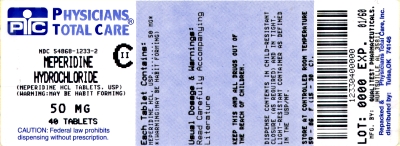
Description
Meperidine hydrochloride is a white crystalline substance with a melting point of 186°C to 189°C. It is readily soluble in water and has a neutral reaction and a slightly bitter taste. The solution is not decomposed by a short period of boiling.
Each tablet, for oral administration, contains 50 mg or 100 mg meperidine hydrochloride. In addition, each tablet contains the following inactive ingredients: microcrystalline cellulose, pregelatinized starch, sodium starch glycolate and stearic acid.
Chemically, meperidine hydrochloride is 4-Piperidinecarboxylic acid, 1-methyl-4-phenyl-, ethyl ester, hydrochloride and has the following structure:
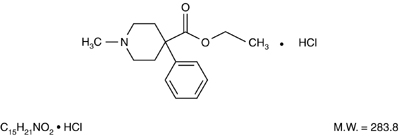
This Is An Image Of The Structural Formula For Meperidine Hydrochloride. (Meperid 1)