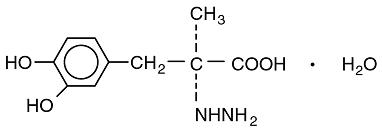
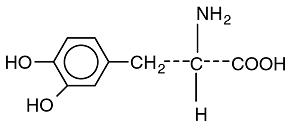
The most common adverse reactions reported with carbidopa and levodopa have included dyskinesias, such as choreiform, dystonic, and other involuntary movements, and nausea.
The following other adverse reactions have been reported with carbidopa and levodopa:
Body as a Whole
Chest pain, asthenia.
Cardiovascular
Cardiac irregularities, hypotension, orthostatic effects including orthostatic hypotension, hypertension, syncope, phlebitis, palpitation.
Gastrointestinal
Dark saliva, gastrointestinal bleeding, development of duodenal ulcer, anorexia, vomiting, diarrhea, constipation, dyspepsia, dry mouth, taste alterations.
Hematologic
Agranulocytosis, hemolytic and non-hemolytic anemia, thrombocytopenia, leukopenia.
Hypersensitivity
Angioedema, urticaria, pruritus, Henoch-Schonlein purpura, bullous lesions (including pemphigus-like reactions).
Musculoskeletal
Back pain, shoulder pain, muscle cramps.
Nervous System/Psychiatric
Psychotic episodes including delusions, hallucinations, and paranoid ideation, neuroleptic malignant syndrome (NMS, see WARNINGS), bradykinetic episodes (“on-off” phenomenon), confusion, agitation, dizziness, somnolence, dream abnormalities including nightmares, insomnia, paresthesia, headache, depression with or without development of suicidal tendencies, dementia, pathological gambling, increased libido including hypersexuality, impulse control symptoms. Convulsions also have occurred; however, a causal relationship with carbidopa and levodopa has not been established.
Respiratory
Dyspnea, upper respiratory infection.
Skin
Rash, increased sweating, alopecia, dark sweat.
Urogenital
Urinary tract infection, urinary frequency, dark urine.
Laboratory Tests
Decreased hemoglobin and hematocrit; abnormalities in alkaline phosphatase, SGOT (AST), SGPT (ALT), lactic dehydrogenase, bilirubin, blood urea nitrogen (BUN), Coombs test; elevated serum glucose; white blood cells, bacteria, and blood in the urine.
Other adverse reactions that have been reported with levodopa alone and with various carbidopa-levodopa formulations, and may occur with carbidopa and levodopa tablets are:
Body as a Whole
Abdominal pain and distress, fatigue.
Cardiovascular
Myocardial infarction.
Gastrointestinal
Gastrointestinal pain, dysphagia, sialorrhea, flatulence, bruxism, burning sensation of the tongue, heartburn, hiccups.
Metabolic
Edema, weight gain, weight loss.
Musculoskeletal
Leg pain.
Nervous System/Psychiatric
Ataxia, extrapyramidal disorder, falling, anxiety, gait abnormalities, nervousness, decreased mental acuity, memory impairment, disorientation, euphoria, blepharospasm (which may be taken as an early sign of excess dosage; consideration of dosage reduction may be made at this time), trismus, increased tremor, numbness, muscle twitching, activation of latent Horner’s syndrome, peripheral neuropathy.
Respiratory
Pharyngeal pain, cough.
Skin
Malignant melanoma (see also CONTRAINDICATIONS), flushing.
Special Senses
Oculogyric crises, diplopia, blurred vision, dilated pupils.
Urogenital
Urinary retention, urinary incontinence, priapism.
Miscellaneous
Bizarre breathing patterns, faintness, hoarseness, malaise, hot flashes, sense of stimulation.
Laboratory Tests
Decreased white blood cell count and serum potassium; increased serum creatinine and uric acid; protein and glucose in urine.