Humalog Mix75/25 is
contraindicated during episodes of hypoglycemia and in patients sensitive
to insulin lispro or
any of the excipients contained in the formulation.
Humalog differs
from Regular human insulin
by its rapid onset of action as well as a shorter duration of activity. Therefore,
the dose of Humalog Mix75/25 should
be given within 15 minutes before a meal.
Hypoglycemia
is the most common adverse effect associated with the use of insulins, including Humalog Mix75/25. As
with all insulins, the timing of hypoglycemia may differ among various insulin
formulations. Glucose monitoring is recommended for all patients with diabetes.
Any change of
insulin should be made cautiously and only under medical supervision. Changes
in insulin strength, manufacturer, type (e.g., Regular,
NPH, analog), species, or method of manufacture may result
in the need for a change in dosage.
Hypoglycemia and hypokalemia are among the potential clinical adverse
effects associated with the use of all insulins. Because of differences in
the action of Humalog Mix75/25 and
other insulins, care should be taken in patients in whom such potential side
effects might be clinically relevant (e.g., patients who are fasting, have
autonomic neuropathy, or are using potassium–lowering drugs or patients
taking drugs sensitive to serum potassium level). Lipodystrophy and hypersensitivity
are among other potential clinical adverse effects associated with the use
of all insulins.
As with all insulin preparations, the time course of Humalog Mix75/25 action may vary in
different individuals or at different times in the same individual and is
dependent on site of injection, blood supply, temperature, and physical activity.
Adjustment of dosage of any insulin may be necessary if patients change
their physical activity or their usual meal plan. Insulin requirements may
be altered during illness, emotional disturbances, or other stress.
Hypoglycemia —
As with all insulin preparations, hypoglycemic reactions may be associated
with the administration of Humalog Mix75/25. Rapid
changes in serum glucose concentrations may induce symptoms of hypoglycemia
in persons with diabetes, regardless of the glucose value. Early warning symptoms
of hypoglycemia may be different or less pronounced under certain conditions,
such as long duration of diabetes, diabetic nerve disease, use of medications
such as beta–blockers, or intensified diabetes control.
Renal Impairment —
As with other insulins, the requirements for Humalog Mix75/25 may
be reduced in patients with renal impairment.
Hepatic Impairment —
Although impaired hepatic function does not affect the absorption or disposition
of Humalog,
careful glucose monitoring and dose adjustments of insulin, including Humalog Mix75/25, may
be necessary.
Allergy — Local Allergy —
As with any insulin therapy, patients may experience redness, swelling, or
itching at the site of injection. These minor reactions usually resolve in
a few days to a few weeks. In some instances, these reactions may be related
to factors other than insulin, such as irritants in the skin cleansing agent
or poor injection technique.
Systemic
Allergy — Less common, but potentially more serious, is generalized
allergy to insulin, which may cause rash (including pruritus) over the whole
body, shortness of breath, wheezing, reduction in blood pressure, rapid pulse,
or sweating. Severe cases of generalized allergy, including anaphylactic reaction,
may be life threatening. Localized reactions and generalized myalgias have
been reported with the use of cresol as an injectable excipient.
Antibody
Production — In clinical trials, antibodies that cross-react with human insulin and insulin lispro were
observed in both human insulin mixtures and insulin lispro mixtures
treatment groups.
Patients should be informed of the potential risks and advantages of Humalog Mix75/25 and
alternative therapies. Patients should not mix Humalog Mix75/25 with
any other insulin. They should also be informed about the importance of proper
insulin storage, injection technique, timing of dosage, adherence to meal
planning, regular physical activity, regular blood glucose monitoring, periodic hemoglobin A1c testing,
recognition and management of hypo- and hyperglycemia, and periodic assessment
for diabetes complications.
Patients should be advised to inform their physician if they are pregnant
or intend to become pregnant.
Refer patients to the Patient Information leaflet for information
on normal appearance, timing of dosing (within 15 minutes before a meal),
storing, and common adverse effects.
For
Patients Using Insulin Pen Delivery Devices: Before starting therapy,
patients should
read the Patient Information leaflet that accompanies
the drug product and the User Manual that accompanies the delivery device
and re-read them each time the prescription is renewed. Patients should be
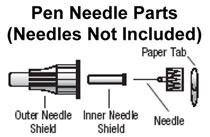
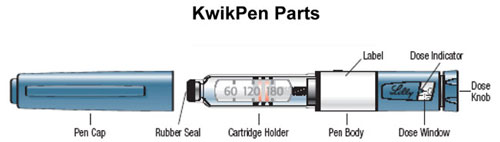
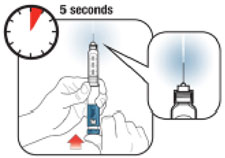
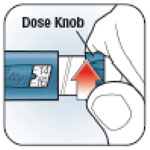
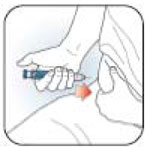
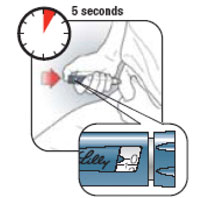
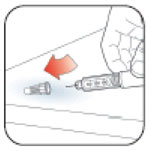
instructed on how to properly use the delivery device, prime the Pen to a stream of insulin, and
properly dispose of needles. Patients should be advised not to share their
Pens with others.
As with all insulins, the therapeutic response to Humalog Mix75/25 should
be monitored by periodic blood glucose tests. Periodic measurement of hemoglobin A1c is
recommended for the monitoring of long–term glycemic control.
Insulin requirements may be increased by medications with hyperglycemic
activity such as corticosteroids, isoniazid, certain lipid-lowering drugs
(e.g., niacin), estrogens, oral contraceptives, phenothiazines, and thyroid
replacement therapy.
Insulin requirements may be decreased in the presence of drugs that increase insulin sensitivity or have hypoglycemic
activity, such as oral antidiabetic agents, salicylates, sulfa antibiotics,
certain antidepressants (monoamine oxidase inhibitors), angiotensin-converting-enzyme
inhibitors, angiotensin II receptor blocking agents, beta-adrenergic blockers,
inhibitors of pancreatic function (e.g., octreotide), and alcohol. Beta–adrenergic
blockers may mask the symptoms of hypoglycemia in some patients.
Long-term studies in animals have not been performed to evaluate the
carcinogenic potential of Humalog, Humalog Mix75/25, or Humalog Mix50/50. Insulin lispro was
not mutagenic in a battery of in
vitro and in
vivo genetic toxicity assays (bacterial mutation tests, unscheduled
DNA synthesis, mouse lymphoma assay, chromosomal aberration tests, and a micronucleus
test). There is no evidence from animal studies of impairment of fertility
induced by insulin lispro.
Literature
revised March 16, 2009
KwikPens
manufactured by
Eli Lilly and Company, Indianapolis,
IN 46285, USA
Pens
manufactured by
Eli Lilly and Company,
Indianapolis, IN 46285, USA or
Lilly
France, F-67640 Fegersheim, France
Vials manufactured by
Eli
Lilly and Company, Indianapolis, IN 46285, USA or
Lilly France,
F-67640 Fegersheim, France
for Eli Lilly and
Company, Indianapolis, IN 46285, USA
www.humalog.com
Copyright © 2007, 2009, Eli Lilly and
Company. All rights reserved.
PV 5551 AMP
Additional bar code labeling applied by:
Physicians Total Care, Inc.
Tulsa, Oklahoma 74146