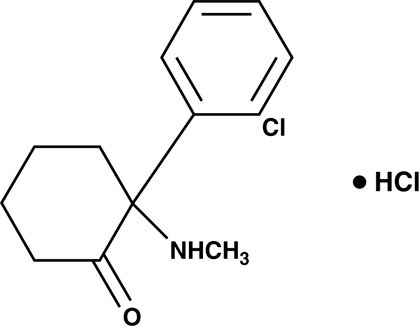
Toxicity
The
acute toxicity of ketamine has been studied in several species. In mature
mice and rats, the intraperitoneal LD50 values are approximately
100 times the average human intravenous dose and approximately 20 times the
average human intramuscular dose. A slightly higher acute toxicity observed
in neonatal rats was not sufficiently elevated to suggest an increased hazard
when used in children. Daily intravenous injections in rats of five times
the average human intravenous dose and intramuscular injections in dogs at
four times the average human intramuscular dose demonstrated excellent tolerance
for as long as 6 weeks. Similarly, twice weekly anesthetic sessions of one,
three, or six hours’ duration in monkeys over a four- to six-week period
were well tolerated.
Interaction
with other Drugs Commonly Used for Preanesthetic Medication
Large
doses (three or more times the equivalent effective human dose) of morphine,
meperidine, and atropine increased the depth and prolonged the duration of
anesthesia produced by a standard anesthetizing dose of ketamine in Rhesus
monkeys. The prolonged duration was not of sufficient magnitude to contraindicate
the use of these drugs for preanesthetic medication in human clinical trials.
Blood Pressure
Blood pressure
responses to ketamine vary with the laboratory species and experimental conditions.
Blood pressure is increased in normotensive and renal hypertensive rats with
and without adrenalectomy and under pentobarbital anesthesia.
Intravenous
ketamine produces a fall in arterial blood pressure in the Rhesus monkey and
a rise in arterial blood pressure in the dog. In this respect the dog mimics
the cardiovascular effect observed in man. The pressor response to ketamine
injected into intact, unanesthetized dogs is accompanied by a tachycardia,
rise in cardiac output and a fall in total peripheral resistance. It causes
a fall in perfusion pressure following a large dose injected into an artificially
perfused vascular bed (dog hindquarters), and it has little or no potentiating
effect upon vasoconstriction responses of epinephrine or norepinephrine. The
pressor response to ketamine is reduced or blocked by chlorpromazine (central
depressant and peripheral α-adrenergic blockade), by β-adrenergic
blockade, and by ganglionic blockade. The tachycardia and increase in myocardial
contractile force seen in intact animals does not appear in isolated hearts
(Langendorff) at a concentration of 0.1 mg of ketamine nor in Starling dog
heart-lung preparations at a ketamine concentration of 50 mg/kg of HLP. These
observations support the hypothesis that the hypertension produced by ketamine
is due to selective activation of central cardiac stimulating mechanisms leading
to an increase in cardiac output. The dog myocardium is not sensitized to
epinephrine and ketamine appears to have a weak antiarrhythmic activity.
Metabolic Disposition
Ketamine
is rapidly absorbed following parenteral administration. Animal experiments
indicated that ketamine was rapidly distributed into body tissues, with relatively
high concentrations appearing in body fat, liver, lung, and brain; lower concentrations
were found in the heart, skeletal muscle, and blood plasma. Placental transfer
of the drug was found to occur in pregnant dogs and monkeys. No significant
degree of binding to serum albumin was found with ketamine.
Balance
studies in rats, dogs, and monkeys resulted in the recovery of 85% to 95%
of the dose in the urine, mainly in the form of degradation products. Small
amounts of drug were also excreted in the bile and feces. Balance studies
with tritium-labeled ketamine in human subjects (1 mg/lb given intravenously)
resulted in the mean recovery of 91% of the dose in the urine and 3% in the
feces. Peak plasma levels averaged about 0.75 mcg/mL, and CSF levels were
about 0.2 mcg/mL, 1 hour after dosing.
Ketamine
undergoes N-demethylation and hydroxylation of the cyclohexanone ring, with
the formation of water-soluble conjugates which are excreted in the urine.
Further oxidation also occurs with the formation of a cyclohexanone derivative.
The unconjugated N-demethylated metabolite was found to be less than one-sixth
as potent as ketamine. The unconjugated demethyl cyclohexanone derivative
was found to be less than one-tenth as potent as ketamine. Repeated doses
of ketamine administered to animals did not produce any detectable increase
in microsomal enzyme activity.
Reproduction
Male and female rats, when given five times
the average human intravenous dose of ketamine for three consecutive days
about one week before mating, had a reproductive performance equivalent to
that of saline-injected controls. When given to pregnant rats and rabbits
intramuscularly at twice the average human intramuscular dose during the respective
periods of organogenesis, the litter characteristics were equivalent to those
of saline-injected controls. A small group of rabbits was given a single large
dose (six times the average human dose) of ketamine on Day 6 of pregnancy
to simulate the effect of an excessive clinical dose around the period of
nidation. The outcome of pregnancy was equivalent in control and treated groups.
To
determine the effect of ketamine on the perinatal and postnatal period, pregnant
rats were given twice the average human intramuscular dose during Days 18
to 21 of pregnancy. Litter characteristics at birth and through the weaning
period were equivalent to those of the control animals. There was a slight
increase in incidence of delayed parturition by one day in treated dams of
this group. Three groups each of mated beagle bitches were given 2.5 times
the average human intramuscular dose twice weekly for the three weeks of the
first, second, and third trimesters of pregnancy, respectively, without the
development of adverse effects in the pups.
| | |
©Hospira 2005 | EN-0861 | Printed in USA |
HOSPIRA, INC., LAKE FOREST,
IL 60045 USA