Monotherapy Use
Adults and Pediatric Patients 10 Years and Older
The recommended dose for TOPAMAX® monotherapy in adults and pediatric patients 10 years of age and older is 400 mg/day in two divided doses. Approximately 58% of patients randomized to 400 mg/day achieved this maximal dose in the monotherapy controlled trial; the mean dose achieved in the trial was 275 mg/day. The dose should be achieved by titration according to the following schedule (Table 1):
Table 1: Monotherapy Titration Schedule for Adults and Pediatric Patients 10 years and older | Morning Dose | Evening Dose |
|---|
| Week 1 | 25 mg | 25 mg |
| Week 2 | 50 mg | 50 mg |
| Week 3 | 75 mg | 75 mg |
| Week 4 | 100 mg | 100 mg |
| Week 5 | 150 mg | 150 mg |
| Week 6 | 200 mg | 200 mg |
Children Ages 2 to <10 Years
Dosing of topiramate as initial monotherapy in children 2 to < 10 years of age with partial onset or primary generalized tonic-clonic seizures was based on a pharmacometric bridging approach [see Clinical Studies (14.1)].
Dosing in patients 2 to <10 years is based on weight. During the titration period, the initial dose of TOPAMAX® should be 25 mg/day administered nightly for the first week. Based upon tolerability, the dosage can be increased to 50 mg/day (25 mg twice daily) in the second week. Dosage can be increased by 25–50 mg/day each subsequent week as tolerated. Titration to the minimum maintenance dose should be attempted over 5–7 weeks of the total titration period. Based upon tolerability and seizure control, additional titration to a higher dose (up to the maximum maintenance dose) can be attempted at 25–50 mg/day weekly increments. The total daily dose should not exceed the maximum maintenance dose for each range of body weight (Table 2).
Table 2: Monotherapy Target Total Daily Maintenance Dosing for Patients 2 to <10 Years| Weight (kg) | Total Daily Dose (mg/day) Administered in two equally divided doses Minimum Maintenance Dose | Total Daily Dose (mg/day) Maximum Maintenance Dose |
|---|
| Up to 11 | 150 | 250 |
| 12 – 22 | 200 | 300 |
| 23 – 31 | 200 | 350 |
| 32 – 38 | 250 | 350 |
| Greater than 38 | 250 | 400 |
Adjunctive Therapy Use
Adults 17 Years of Age and Over - Partial Onset Seizures, Primary Generalized Tonic-Clonic Seizures, or Lennox-Gastaut Syndrome
The recommended total daily dose of TOPAMAX® as adjunctive therapy in adults with partial onset seizures is 200 to 400 mg/day in two divided doses, and 400 mg/day in two divided doses as adjunctive treatment in adults with primary generalized tonic-clonic seizures. It is recommended that therapy be initiated at 25 to 50 mg/day followed by titration to an effective dose in increments of 25 to 50 mg/day every week. Titrating in increments of 25 mg/day every week may delay the time to reach an effective dose. Doses above 400 mg/day (600, 800 or 1,000 mg/day) have not been shown to improve responses in dose-response studies in adults with partial onset seizures. Daily doses above 1,600 mg have not been studied.
In the study of primary generalized tonic-clonic seizures, the initial titration rate was slower than in previous studies; the assigned dose was reached at the end of 8 weeks [see Clinical Studies (14.1)].
Pediatric Patients Ages 2 – 16 Years – Partial Onset Seizures, Primary Generalized Tonic-Clonic Seizures, or Lennox-Gastaut Syndrome
The recommended total daily dose of TOPAMAX® as adjunctive therapy for pediatric patients with partial onset seizures, primary generalized tonic-clonic seizures, or seizures associated with Lennox-Gastaut syndrome is approximately 5 to 9 mg/kg/day in two divided doses. Titration should begin at 25 mg/day (or less, based on a range of 1 to 3 mg/kg/day) nightly for the first week. The dosage should then be increased at 1- or 2-week intervals by increments of 1 to 3 mg/kg/day (administered in two divided doses), to achieve optimal clinical response. Dose titration should be guided by clinical outcome.
In the study of primary generalized tonic-clonic seizures, the initial titration rate was slower than in previous studies; the assigned dose of 6 mg/kg/day was reached at the end of 8 weeks [see Clinical Studies (14.1)].
Adult Patients
Cognitive-Related Dysfunction
The majority of cognitive-related adverse reactions were mild to moderate in severity, and they frequently occurred in isolation. Rapid titration rate and higher initial dose were associated with higher incidences of these reactions. Many of these reactions contributed to withdrawal from treatment [see Adverse Reactions (6)].
In the add-on epilepsy controlled trials (using rapid titration such as 100–200 mg/day weekly increments), the proportion of patients who experienced one or more cognitive-related adverse reactions was 42% for 200 mg/day, 41% for 400 mg/day, 52% for 600 mg/day, 56% for 800 and 1,000 mg/day, and 14% for placebo. These dose-related adverse reactions began with a similar frequency in the titration or in the maintenance phase, although in some patients the events began during titration and persisted into the maintenance phase. Some patients who experienced one or more cognitive-related adverse reactions in the titration phase had a dose-related recurrence of these reactions in the maintenance phase.
In the monotherapy epilepsy controlled trial, the proportion of patients who experienced one or more cognitive-related adverse reactions was 19% for TOPAMAX® 50 mg/day and 26% for 400 mg/day.
In the 6-month migraine prophylaxis controlled trials using a slower titration regimen (25 mg/day weekly increments), the proportion of patients who experienced one or more cognitive-related adverse reactions was 19% for TOPAMAX® 50 mg/day, 22% for 100 mg/day (the recommended dose), 28% for 200 mg/day, and 10% for placebo. These dose-related adverse reactions typically began in the titration phase and often persisted into the maintenance phase, but infrequently began in the maintenance phase. Some patients experienced a recurrence of one or more of these cognitive adverse reactions and this recurrence was typically in the titration phase. A relatively small proportion of topiramate-treated patients experienced more than one concurrent cognitive adverse reaction. The most common cognitive adverse reactions occurring together included difficulty with memory along with difficulty with concentration/attention, difficulty with memory along with language problems, and difficulty with concentration/attention along with language problems. Rarely, topiramate-treated patients experienced three concurrent cognitive reactions.
Psychiatric/Behavioral Disturbances
Psychiatric/behavioral disturbances (depression or mood) were dose-related for both the epilepsy and migraine populations [see Warnings and Precautions (5.4)].
Somnolence/Fatigue
Somnolence and fatigue were the adverse reactions most frequently reported during clinical trials of TOPAMAX® for adjunctive epilepsy. For the adjunctive epilepsy population, the incidence of somnolence did not differ substantially between 200 mg/day and 1,000 mg/day, but the incidence of fatigue was dose-related and increased at dosages above 400 mg/day. For the monotherapy epilepsy population in the 50 mg/day and 400 mg/day groups, the incidence of somnolence was dose-related (9% for the 50 mg/day group and 15% for the 400 mg/day group) and the incidence of fatigue was comparable in both treatment groups (14% each). For the migraine population, fatigue and somnolence were dose-related and more common in the titration phase.
Additional nonspecific CNS events commonly observed with topiramate in the add-on epilepsy population included dizziness or ataxia.
Pediatric Patients
In double-blind adjunctive therapy and monotherapy epilepsy clinical studies, the incidences of cognitive/neuropsychiatric adverse reactions in pediatric patients were generally lower than observed in adults. These reactions included psychomotor slowing, difficulty with concentration/attention, speech disorders/related speech problems, and language problems. The most frequently reported neuropsychiatric reactions in pediatric patients during adjunctive therapy double-blind studies were somnolence and fatigue. The most frequently reported neuropsychiatric reactions in pediatric patients in the 50 mg/day and 400 mg/day groups during the monotherapy double-blind study were headache, dizziness, anorexia, and somnolence.
No patients discontinued treatment due to any adverse reactions in the adjunctive epilepsy double-blind trials. In the monotherapy epilepsy double-blind trial, 1 pediatric patient (2%) in the 50 mg/day group and 7 pediatric patients (12%) in the 400 mg/day group discontinued treatment due to any adverse reactions. The most common adverse reaction associated with discontinuation of therapy was difficulty with concentration/attention; all occurred in the 400 mg/day group.
Hyperammonemia/Encephalopathy Without Concomitant Valproic Acid (VPA)
Topiramate treatment has produced hyperammonemia (in some instances dose-related) in clinical investigational programs of adolescents (12–16 years) who were treated with topiramate monotherapy for migraine prophylaxis (incidence above the upper limit of normal, 22% for placebo, 26% for 50 mg/day, 41% for 100 mg/day) and in very young pediatric patients (1–24 months) who were treated with adjunctive topiramate for partial onset epilepsy (8% for placebo, 10% for 5 mg/kg/day, 0% for 15 mg/kg/day, 9% for 25 mg/kg/day). TOPAMAX® is not approved as monotherapy for migraine prophylaxis in adolescent patients or as adjunctive treatment of partial onset seizures in pediatric patients less than 2 years old. In some patients, ammonia was markedly increased (≥50% above upper limit of normal). In adolescent patients, the incidence of markedly increased hyperammonemia was 6% for placebo, 6% for 50 mg, and 12% for 100 mg topiramate daily. The hyperammonemia associated with topiramate treatment occurred with and without encephalopathy in placebo-controlled trials and in an open-label, extension trial. Dose-related hyperammonemia was also observed in the extension trial in pediatric patients up to 2 years old. Clinical symptoms of hyperammonemic encephalopathy often include acute alterations in level of consciousness and/or cognitive function with lethargy or vomiting.
Hyperammonemia with and without encephalopathy has also been observed in post-marketing reports in patients who were taking topiramate without concomitant valproic acid (VPA).
Hyperammonemia/Encephalopathy With Concomitant Valproic Acid (VPA)
Concomitant administration of topiramate and valproic acid (VPA) has been associated with hyperammonemia with or without encephalopathy in patients who have tolerated either drug alone based upon post-marketing reports. Although hyperammonemia may be asymptomatic, clinical symptoms of hyperammonemic encephalopathy often include acute alterations in level of consciousness and/or cognitive function with lethargy or vomiting. In most cases, symptoms and signs abated with discontinuation of either drug. This adverse reaction is not due to a pharmacokinetic interaction.
Although TOPAMAX® is not indicated for use in infants/toddlers (1–24 months), VPA clearly produced a dose-related increase in the incidence of treatment-emergent hyperammonemia (above the upper limit of normal, 0% for placebo, 12% for 5 mg/kg/day, 7% for 15 mg/kg/day, 17% for 25 mg/kg/day) in an investigational program. Markedly increased, dose-related hyperammonemia (0% for placebo and 5 mg/kg/day, 7% for 15 mg/kg/day, 8% for 25 mg/kg/day) also occurred in these infants/toddlers. Dose-related hyperammonemia was similarly observed in a long-term extension trial in these very young, pediatric patients [see Use in Specific Populations (8.4)].
Hyperammonemia with and without encephalopathy has also been observed in post-marketing reports in patients taking topiramate with VPA.
The hyperammonemia associated with topiramate treatment appears to be more common when topiramate is used concomitantly with VPA.
Monitoring for Hyperammonemia
Patients with inborn errors of metabolism or reduced hepatic mitochondrial activity may be at an increased risk for hyperammonemia with or without encephalopathy. Although not studied, topiramate treatment or an interaction of concomitant topiramate and valproic acid treatment may exacerbate existing defects or unmask deficiencies in susceptible persons.
In patients who develop unexplained lethargy, vomiting, or changes in mental status associated with any topiramate treatment, hyperammonemic encephalopathy should be considered and an ammonia level should be measured.
Adults ≥16 Years
The adverse reactions in the controlled trial that occurred most commonly in adults in the 400 mg/day TOPAMAX® group and at a rate higher (≥ 5 %) than in the 50 mg/day group were: paresthesia, weight decrease, anorexia, somnolence, and difficulty with memory (see Table 5).
Approximately 21% of the 159 adult patients in the 400 mg/day group who received topiramate as monotherapy in the controlled clinical trial discontinued therapy due to adverse reactions. The most common (≥ 2% more frequent than low-dose 50 mg/day TOPAMAX® ) adverse reactions causing discontinuation in this trial were difficulty with memory, fatigue, asthenia, insomnia, somnolence, and paresthesia.
Pediatric Patients 6 to <16 Years of Age
The adverse reactions in the controlled trial that occurred most commonly in pediatric patients in the 400 mg/day TOPAMAX® group and at a rate higher (≥ 5%) than in the 50 mg/day group were fever, weight decrease, mood problems, cognitive problems, infection, flushing, and paresthesia (see Table 5).
Approximately 14% of the 77 pediatric patients in the 400 mg/day group who received TOPAMAX® as monotherapy in the controlled clinical trial discontinued therapy due to adverse reactions. The most common (> 2% more frequent than low-dose 50 mg/day TOPAMAX® ) adverse reactions resulting in discontinuation in this trial were difficulty with concentration/attention, fever, flushing, and confusion.
Table 5: Incidence of Treatment-Emergent Adverse Reactions in Monotherapy Epilepsy Where the Rate Was at Least 2% in Any TOPAMAX® Group and the Rate in the 400 mg/day TOPAMAX® Group Was Greater Than the Rate in the 50 mg/day TOPAMAX® Group for Adults (≥16 Years) and Pediatric (6 to <16 Years) Patients in Study TOPMAX-EPMN-106 | Age Group |
|---|
| Pediatric
(6 to <16 Years) | Adult
(Age ≥16 Years) |
|---|
| TOPAMAX® Daily Dosage Group (mg/day) |
|---|
| 50 | 400 | 50 | 400 |
|---|
| Body System | (N=74) | (N=77) | (N=160) | (N=159) |
|---|
| Adverse Reaction | % Percentages calculated with the number of subjects in each group as denominator | % | % | % |
|---|
| Body as a Whole - General Disorders |
| Asthenia | 0 | 3 | 4 | 6 |
| Chest pain | | | 1 | 2 |
| Fever | 1 | 12 | | |
| Leg pain | | | 2 | 3 |
| Central & Peripheral Nervous System Disorders |
| Ataxia | | | 3 | 4 |
| Dizziness | | | 13 | 14 |
| Hypertonia | | | 0 | 3 |
| Hypoesthesia | | | 4 | 5 |
| Muscle contractions involuntary | 0 | 3 | | |
| Paresthesia | 3 | 12 | 21 | 40 |
| Vertigo | 0 | 3 | | |
| Gastro-Intestinal System Disorders |
| Constipation | | | 1 | 4 |
| Diarrhea | 8 | 9 | | |
| Gastritis | | | 0 | 3 |
| Gastroesophageal reflux | | | 1 | 2 |
| Dry mouth | | | 1 | 3 |
| Liver and Biliary System Disorders |
| Gamma-GT increased | | | 1 | 3 |
| Metabolic and Nutritional Disorders |
| Weight decrease | 7 | 17 | 6 | 17 |
| Platelet, Bleeding & Clotting Disorders |
| Epistaxis | 0 | 4 | | |
| Psychiatric Disorders |
| Anorexia | | | 4 | 14 |
| Anxiety | | | 4 | 6 |
| Cognitive problems | 1 | 6 | 1 | 4 |
| Confusion | 0 | 3 | | |
| Depression | 0 | 3 | 7 | 9 |
| Difficulty with concentration/attention | 7 | 10 | 7 | 8 |
| Difficulty with memory | 1 | 3 | 6 | 11 |
| Insomnia | | | 8 | 9 |
| Libido decreased | | | 0 | 3 |
| Mood problems | 1 | 8 | 2 | 5 |
| Personality disorder(behavior problems) | 0 | 3 | | |
| Psychomotor slowing | | | 3 | 5 |
| Somnolence | | | 10 | 15 |
| Red Blood Cell Disorders |
| Anemia | 1 | 3 | | |
| Reproductive Disorders, Female
|
| Intermenstrual Bleeding | 0 | 3 | | |
| Vaginal Hemorrhage | | | 0 | 3 |
| Resistance Mechanism Disorders |
| Infection | 3 | 8 | 2 | 3 |
| Infection viral | 3 | 6 | 6 | 8 |
| Respiratory System Disorders |
| Bronchitis | 1 | 5 | 3 | 4 |
| Dyspnea | | | 1 | 2 |
| Rhinitis | 5 | 6 | 2 | 4 |
| Sinusitis | 1 | 4 | | |
| Upper respiratory tract infection | 16 | 18 | | |
| Skin and Appendages Disorders |
| Acne | | | 2 | 3 |
| Alopecia | 1 | 4 | 3 | 4 |
| Pruritus | | | 1 | 4 |
| Rash | 3 | 4 | 1 | 4 |
| Special Senses Other, Disorders |
| Taste perversion | | | 3 | 5 |
| Urinary System Disorders |
| Cystitis | | | 1 | 3 |
| Dysuria | | | 0 | 2 |
| Micturition frequency | 0 | 3 | 0 | 2 |
| Renal calculus | | | 0 | 3 |
| Urinary incontinence | 1 | 3 | | |
| Urinary tract infection | | | 1 | 2 |
| Vascular (Extracardiac) Disorders |
| Flushing | 0 | 5 | | |
Pregnancy Registry
Patients should be encouraged to enroll in the North American Antiepileptic Drug (NAAED) Pregnancy Registry if they become pregnant. This registry is collecting information about the safety of antiepileptic drugs during pregnancy. To enroll, patients can call the toll-free number 1-888-233-2334. Information about the North American Drug Pregnancy Registry can be found at http://www.massgeneral.org/aed/.
Human Data
Data from the NAAED Pregnancy Registry indicate an increased risk of oral clefts in infants exposed to topiramate monotherapy during the first trimester of pregnancy. The prevalence of oral clefts was 1.2% compared to a prevalence of 0.39% – 0.46% in infants exposed to other AEDs, and a prevalence of 0.12% in infants of mothers without epilepsy or treatment with other AEDs. For comparison, the Centers for Disease Control and Prevention (CDC) reviewed available data on oral clefts in the United States and found a similar background rate of 0.17%. The relative risk of oral clefts in topiramate-exposed pregnancies in the NAAED Pregnancy Registry was 9.6 (95% Confidence Interval = CI 3.6 – 25.7) as compared to the risk in a background population of untreated women. The UK Epilepsy and Pregnancy Register reported a similarly increased prevalence of oral clefts of 3.2% among infants exposed to topiramate monotherapy. The observed rate of oral clefts was 16 times higher than the background rate in the UK, which is approximately 0.2%.
TOPAMAX® treatment can cause metabolic acidosis [see Warnings and Precautions (5.3)]. The effect of topiramate-induced metabolic acidosis has not been studied in pregnancy; however, metabolic acidosis in pregnancy (due to other causes) can cause decreased fetal growth, decreased fetal oxygenation, and fetal death, and may affect the fetus' ability to tolerate labor. Pregnant patients should be monitored for metabolic acidosis and treated as in the nonpregnant state [see Warnings and Precautions (5.3)]. Newborns of mothers treated with TOPAMAX® should be monitored for metabolic acidosis because of transfer of topiramate to the fetus and possible occurrence of transient metabolic acidosis following birth.
Animal Data
Topiramate has demonstrated selective developmental toxicity, including teratogenicity, in multiple animal species at clinically relevant doses. When oral doses of 20, 100, or 500 mg/kg were administered to pregnant mice during the period of organogenesis, the incidence of fetal malformations (primarily craniofacial defects) was increased at all doses. The low dose is approximately 0.2 times the recommended human dose (RHD) 400 mg/day on a mg/m2 basis. Fetal body weights and skeletal ossification were reduced at 500 mg/kg in conjunction with decreased maternal body weight gain.
In rat studies (oral doses of 20, 100, and 500 mg/kg or 0.2, 2.5, 30, and 400 mg/kg), the frequency of limb malformations (ectrodactyly, micromelia, and amelia) was increased among the offspring of dams treated with 400 mg/kg (10 times the RHD on a mg/m2 basis) or greater during the organogenesis period of pregnancy. Embryotoxicity (reduced fetal body weights, increased incidence of structural variations) was observed at doses as low as 20 mg/kg (0.5 times the RHD on a mg/m2 basis). Clinical signs of maternal toxicity were seen at 400 mg/kg and above, and maternal body weight gain was reduced during treatment with 100 mg/kg or greater.
In rabbit studies (20, 60, and 180 mg/kg or 10, 35, and 120 mg/kg orally during organogenesis), embryo/fetal mortality was increased at 35 mg/kg (2 times the RHD on a mg/m2 basis) or greater, and teratogenic effects (primarily rib and vertebral malformations) were observed at 120 mg/kg (6 times the RHD on a mg/m2 basis). Evidence of maternal toxicity (decreased body weight gain, clinical signs, and/or mortality) was seen at 35 mg/kg and above.
When female rats were treated during the latter part of gestation and throughout lactation (0.2, 4, 20, and 100 mg/kg or 2, 20, and 200 mg/kg), offspring exhibited decreased viability and delayed physical development at 200 mg/kg (5 times the RHD on a mg/m2 basis) and reductions in pre- and/or postweaning body weight gain at 2 mg/kg (0.05 times the RHD on a mg/m2 basis) and above. Maternal toxicity (decreased body weight gain, clinical signs) was evident at 100 mg/kg or greater.
In a rat embryo/fetal development study with a postnatal component (0.2, 2.5, 30, or 400 mg/kg during organogenesis; noted above), pups exhibited delayed physical development at 400 mg/kg (10 times the RHD on a mg/m2 basis) and persistent reductions in body weight gain at 30 mg/kg (1 times the RHD on a mg/m2 basis) and higher.
Adjunctive Treatment for Partial Onset Epilepsy in Infants and Toddlers (1 to 24 months)
Safety and effectiveness in patients below the age of 2 years have not been established for the adjunctive therapy treatment of partial onset seizures, primary generalized tonic-clonic seizures, or seizures associated with Lennox-Gastaut syndrome. In a single randomized, double-blind, placebo-controlled investigational trial, the efficacy, safety, and tolerability of topiramate oral liquid and sprinkle formulations as an adjunct to concurrent antiepileptic drug therapy in infants 1 to 24 months of age with refractory partial onset seizures were assessed. After 20 days of double-blind treatment, topiramate (at fixed doses of 5, 15, and 25 mg/kg/day) did not demonstrate efficacy compared with placebo in controlling seizures.
In general, the adverse reaction profile in this population was similar to that of older pediatric patients, although results from the above controlled study and an open-label, long-term extension study in these infants/toddlers (1 to 24 months old) suggested some adverse reactions/toxicities (not previously observed in older pediatric patients and adults; i.e., growth/length retardation, certain clinical laboratory abnormalities, and other adverse reactions/toxicities that occurred with a greater frequency and/or greater severity than had been recognized previously from studies in older pediatric patients or adults for various indications.
These very young pediatric patients appeared to experience an increased risk for infections (any topiramate dose 12%, placebo 0%) and of respiratory disorders (any topiramate dose 40%, placebo 16%). The following adverse reactions were observed in at least 3% of patients on topiramate and were 3% to 7% more frequent than in patients on placebo: viral infection, bronchitis, pharyngitis, rhinitis, otitis media, upper respiratory infection, cough, and bronchospasm. A generally similar profile was observed in older children [see Adverse Reactions (6)].
Topiramate resulted in an increased incidence of patients with increased creatinine (any topiramate dose 5%, placebo 0%), BUN (any topiramate dose 3%, placebo 0%), and protein (any topiramate dose 34%, placebo 6%), and an increased incidence of decreased potassium (any topiramate dose 7%, placebo 0%). This increased frequency of abnormal values was not dose-related. Creatinine was the only analyte showing a noteworthy increased incidence (topiramate 25 mg/kg/day 5%, placebo 0%) of a markedly abnormal increase [see Warnings and Precautions (5.15)]. The significance of these findings is uncertain.
Topiramate treatment also produced a dose-related increase in the percentage of patients who had a shift from normal at baseline to high/increased (above the normal reference range) in total eosinophil count at the end of treatment. The incidence of these abnormal shifts was 6 % for placebo, 10% for 5 mg/kg/day, 9% for 15 mg/kg/day, 14% for 25 mg/kg/day, and 11% for any topiramate dose [see Warnings and Precautions (5.15)]. There was a mean dose-related increase in alkaline phosphatase. The significance of these findings is uncertain.
Topiramate produced a dose-related increased incidence of treatment-emergent hyperammonemia [see Warnings and Precautions (5.9)].
Treatment with topiramate for up to 1 year was associated with reductions in Z SCORES for length, weight, and head circumference [see Warnings and Precautions (5.3) and Adverse Reactions (6)].
In open-label, uncontrolled experience, increasing impairment of adaptive behavior was documented in behavioral testing over time in this population. There was a suggestion that this effect was dose-related. However, because of the absence of an appropriate control group, it is not known if this decrement in function was treatment-related or reflects the patient's underlying disease (e.g., patients who received higher doses may have more severe underlying disease) [see Warnings and Precautions (5.5)].
In this open-label, uncontrolled study, the mortality was 37 deaths/1000 patient years. It is not possible to know whether this mortality rate is related to topiramate treatment, because the background mortality rate for a similar, significantly refractory, young pediatric population (1–24 months) with partial epilepsy is not known.
Monotherapy Treatment in Partial Onset Epilepsy in Patients <2 Years Old
Safety and effectiveness in patients below the age of 2 years have not been established for the monotherapy treatment of epilepsy.
Migraine Prophylaxis in Pediatrics
Safety and effectiveness in pediatric patients have not been established for the prophylaxis treatment of migraine headache.
Topiramate treatment produced a dose-related increased shift in serum creatinine from normal at baseline to an increased value at the end of 4 months treatment in adolescent patients (ages 12–16 years) who were treated for migraine prophylaxis in a double-blind, placebo-controlled study. The incidence of these abnormal shifts was 4% for placebo, 4% for 50 mg, and 18% for 100 mg [see Warnings and Precautions (5.15)].
Juvenile Animal Studies
When topiramate (30, 90, or 300 mg/kg/day) was administered orally to rats during the juvenile period of development (postnatal days 12 to 50), bone growth plate thickness was reduced in males at the highest dose, which is approximately 5–8 times the maximum recommended pediatric dose (9 mg/kg/day) on a body surface area (mg/m2) basis.
Metabolism and Excretion
Topiramate is not extensively metabolized and is primarily eliminated unchanged in the urine (approximately 70% of an administered dose). Six metabolites have been identified in humans, none of which constitutes more than 5% of an administered dose. The metabolites are formed via hydroxylation, hydrolysis, and glucuronidation. There is evidence of renal tubular reabsorption of topiramate. In rats, given probenecid to inhibit tubular reabsorption, along with topiramate, a significant increase in renal clearance of topiramate was observed. This interaction has not been evaluated in humans. Overall, oral plasma clearance (CL/F) is approximately 20 to 30 mL/min in adults following oral administration.
Special Populations
Renal Impairment
The clearance of topiramate was reduced by 42% in moderately renally impaired (creatinine clearance 30 to 69 mL/min/1.73m2) and by 54% in severely renally impaired subjects (creatinine clearance <30 mL/min/1.73m2) compared to normal renal function subjects (creatinine clearance >70 mL/min/1.73m2). Since topiramate is presumed to undergo significant tubular reabsorption, it is uncertain whether this experience can be generalized to all situations of renal impairment. It is conceivable that some forms of renal disease could differentially affect glomerular filtration rate and tubular reabsorption resulting in a clearance of topiramate not predicted by creatinine clearance. In general, however, use of one-half the usual starting and maintenance dose is recommended in patients with moderate or severe renal impairment [see Dosage and Administration (2.4) and (2.5) and Warnings and Precautions (5.13)].
Hemodialysis
Topiramate is cleared by hemodialysis. Using a high-efficiency, counterflow, single pass-dialysate hemodialysis procedure, topiramate dialysis clearance was 120 mL/min with blood flow through the dialyzer at 400 mL/min. This high clearance (compared to 20 to 30 mL/min total oral clearance in healthy adults) will remove a clinically significant amount of topiramate from the patient over the hemodialysis treatment period. Therefore, a supplemental dose may be required [see Dosage and Administration (2.6)].
Hepatic Impairment
In hepatically impaired subjects, the clearance of topiramate may be decreased; the mechanism underlying the decrease is not well understood [see Dosage and Administration (2.7)].
Age, Gender, and Race
The pharmacokinetics of topiramate in elderly subjects (65 to 85 years of age, N=16) were evaluated in a controlled clinical study. The elderly subject population had reduced renal function (creatinine clearance [-20%]) compared to young adults. Following a single oral 100 mg dose, maximum plasma concentration for elderly and young adults was achieved at approximately 1 to 2 hours. Reflecting the primary renal elimination of topiramate, topiramate plasma and renal clearance were reduced 21% and 19%, respectively, in elderly subjects, compared to young adults. Similarly, topiramate half-life was longer (13%) in the elderly. Reduced topiramate clearance resulted in slightly higher maximum plasma concentration (23%) and AUC (25%) in elderly subjects than observed in young adults. Topiramate clearance is decreased in the elderly only to the extent that renal function is reduced. As recommended for all patients, dosage adjustment may be indicated in the elderly patient when impaired renal function (creatinine clearance rate ≤70 mL/min/1.73 m2) is evident. It may be useful to monitor renal function in the elderly patient [see Dosage and Administration (2.4) and Warnings and Precautions (5.13)].
Clearance of topiramate in adults was not affected by gender or race.
Pediatric Pharmacokinetics
Pharmacokinetics of topiramate were evaluated in patients aged 2 to <16 years. Patients received either no or a combination of other antiepileptic drugs. A population pharmacokinetic model was developed on the basis of pharmacokinetic data from relevant topiramate clinical studies. This dataset contained data from 1217 subjects including 258 pediatric patients aged 2 to <16 years (95 pediatric patients <10 years of age).
Pediatric patients on adjunctive treatment exhibited a higher oral clearance (L/h) of topiramate compared to patients on monotherapy, presumably because of increased clearance from concomitant enzyme-inducing antiepileptic drugs. In comparison, topiramate clearance per kg is greater in pediatric patients than in adults and in young pediatric patients (down to 2 years) than in older pediatric patients. Consequently, the plasma drug concentration for the same mg/kg/day dose would be lower in pediatric patients compared to adults and also in younger pediatric patients compared to older pediatric patients. Clearance was independent of dose.
As in adults, hepatic enzyme-inducing antiepileptic drugs decrease the steady state plasma concentrations of topiramate.
Drug-Drug Interactions
Antiepileptic Drugs
Potential interactions between topiramate and standard AEDs were assessed in controlled clinical pharmacokinetic studies in patients with epilepsy. The effects of these interactions on mean plasma AUCs are summarized in Table 12.
In Table 12, the second column (AED concentration) describes what happens to the concentration of the AED listed in the first column when topiramate is added. The third column (topiramate concentration) describes how the co-administration of a drug listed in the first column modifies the concentration of topiramate in experimental settings when TOPAMAX® was given alone.
Table 12: Summary of AED Interactions with TOPAMAX®AED
Co-administered | AED
Concentration | Topiramate
Concentration |
|---|
| NC = Less than 10% change in plasma concentration. |
| AED = Antiepileptic drug. |
| NE = Not Evaluated. |
| TPM = Topiramate |
| Phenytoin | NC or 25% increase
| 48% decrease |
| Carbamazepine (CBZ) | NC | 40% decrease |
| CBZ epoxide
| NC | NE |
| Valproic acid | 11% decrease | 14% decrease |
| Phenobarbital | NC | NE |
| Primidone | NC | NE |
| Lamotrigine | NC at TPM doses up to 400 mg/day | 13% decrease |
In addition to the pharmacokinetic interaction described in the above table, concomitant administration of valproic acid and TOPAMAX® has been associated with hyperammonemia with and without encephalopathy and hypothermia [see Warnings and Precautions (5.9), (5.11) and Drug Interactions (7.1)].
CNS Depressants
Concomitant administration of TOPAMAX® and alcohol or other CNS depressant drugs has not been evaluated in clinical studies. Because of the potential of TOPAMAX® to cause CNS depression, as well as other cognitive and/or neuropsychiatric adverse reactions, TOPAMAX® should be used with extreme caution if used in combination with alcohol and other CNS depressants [see Drug Interactions (7.2)].
Oral Contraceptives
In a pharmacokinetic interaction study in healthy volunteers with a concomitantly administered combination oral contraceptive product containing 1 mg norethindrone (NET) plus 35 mcg ethinyl estradiol (EE), TOPAMAX®, given in the absence of other medications at doses of 50 to 200 mg/day, was not associated with statistically significant changes in mean exposure (AUC) to either component of the oral contraceptive. In another study, exposure to EE was statistically significantly decreased at doses of 200, 400, and 800 mg/day (18%, 21%, and 30%, respectively) when given as adjunctive therapy in patients taking valproic acid. In both studies, TOPAMAX® (50 mg/day to 800 mg/day) did not significantly affect exposure to NET. Although there was a dose-dependent decrease in EE exposure for doses between 200 and 800 mg/day, there was no significant dose-dependent change in EE exposure for doses of 50 to 200 mg/day. The clinical significance of the changes observed is not known. The possibility of decreased contraceptive efficacy and increased breakthrough bleeding should be considered in patients taking combination oral contraceptive products with TOPAMAX®. Patients taking estrogen-containing contraceptives should be asked to report any change in their bleeding patterns. Contraceptive efficacy can be decreased even in the absence of breakthrough bleeding [see Drug Interactions (7.3)].
Digoxin
In a single-dose study, serum digoxin AUC was decreased by 12% with concomitant TOPAMAX® administration. The clinical relevance of this observation has not been established.
Hydrochlorothiazide
A drug-drug interaction study conducted in healthy volunteers evaluated the steady-state pharmacokinetics of hydrochlorothiazide (HCTZ) (25 mg q24h) and topiramate (96 mg q12h) when administered alone and concomitantly. The results of this study indicate that topiramate Cmax increased by 27% and AUC increased by 29% when HCTZ was added to topiramate. The clinical significance of this change is unknown. The addition of HCTZ to topiramate therapy may require an adjustment of the topiramate dose. The steady-state pharmacokinetics of HCTZ were not significantly influenced by the concomitant administration of topiramate. Clinical laboratory results indicated decreases in serum potassium after topiramate or HCTZ administration, which were greater when HCTZ and topiramate were administered in combination.
Metformin
Topiramate treatment can frequently cause metabolic acidosis, a condition for which the use of metformin is contraindicated.
A drug-drug interaction study conducted in healthy volunteers evaluated the steady-state pharmacokinetics of metformin (500 mg every 12 hr) and topiramate in plasma when metformin was given alone and when metformin and topiramate (100 mg every 12 hr) were given simultaneously. The results of this study indicated that the mean metformin Cmax and AUC0–12h increased by 17% and 25%, respectively, when topiramate was added. Topiramate did not affect metformin tmax. The clinical significance of the effect of topiramate on metformin pharmacokinetics is not known. Oral plasma clearance of topiramate appears to be reduced when administered with metformin. The clinical significance of the effect of metformin on topiramate pharmacokinetics is unclear [see Drug Interactions (7.4)].
Pioglitazone
A drug-drug interaction study conducted in healthy volunteers evaluated the steady-state pharmacokinetics of topiramate and pioglitazone when administered alone and concomitantly. A 15% decrease in the AUCτ,ss of pioglitazone with no alteration in Cmax,ss was observed. This finding was not statistically significant. In addition, a 13% and 16% decrease in Cmax,ss and AUCτ,ss respectively, of the active hydroxy-metabolite was noted as well as a 60% decrease in Cmax,ss and AUCτ,ss of the active keto-metabolite. The clinical significance of these findings is not known. When TOPAMAX® is added to pioglitazone therapy or pioglitazone is added to TOPAMAX® therapy, careful attention should be given to the routine monitoring of patients for adequate control of their diabetic disease state.
Glyburide
A drug-drug interaction study conducted in patients with type 2 diabetes evaluated the steady-state pharmacokinetics of glyburide (5 mg/day) alone and concomitantly with topiramate (150 mg/day). There was a 22% decrease in Cmax and a 25% reduction in AUC24 for glyburide during topiramate administration. Systemic exposure (AUC) of the active metabolites, 4-trans-hydroxy-glyburide (M1) and 3-cis-hydroxyglyburide (M2), was also reduced by 13% and 15%, and Cmax was reduced by 18% and 25%, respectively. The steady-state pharmacokinetics of topiramate were unaffected by concomitant administration of glyburide.
Lithium
In patients, the pharmacokinetics of lithium were unaffected during treatment with topiramate at doses of 200 mg/day; however, there was an observed increase in systemic exposure of lithium (27% for Cmax and 26% for AUC) following topiramate doses up to 600 mg/day. Lithium levels should be monitored when co-administered with high-dose TOPAMAX®[see Drug Interactions (7.5)].
Haloperidol
The pharmacokinetics of a single dose of haloperidol (5 mg) were not affected following multiple dosing of topiramate (100 mg every 12 hr) in 13 healthy adults (6 males, 7 females).
Amitriptyline
There was a 12% increase in AUC and Cmax for amitriptyline (25 mg per day) in 18 normal subjects (9 males, 9 females) receiving 200 mg/day of topiramate. Some subjects may experience a large increase in amitriptyline concentration in the presence of topiramate and any adjustments in amitriptyline dose should be made according to the patient's clinical response and not on the basis of plasma levels.
Sumatriptan
Multiple dosing of topiramate (100 mg every 12 hrs) in 24 healthy volunteers (14 males, 10 females) did not affect the pharmacokinetics of single-dose sumatriptan either orally (100 mg) or subcutaneously (6 mg).
Risperidone
When administered concomitantly with topiramate at escalating doses of 100, 250, and 400 mg/day, there was a reduction in risperidone systemic exposure (16% and 33% for steady-state AUC at the 250 and 400 mg/day doses of topiramate). No alterations of 9-hydroxyrisperidone levels were observed. Co-administration of topiramate 400 mg/day with risperidone resulted in a 14% increase in Cmax and a 12% increase in AUC12 of topiramate. There were no clinically significant changes in the systemic exposure of risperidone plus 9-hydroxyrisperidone or of topiramate; therefore, this interaction is not likely to be of clinical significance.
Propranolol
Multiple dosing of topiramate (200 mg/day) in 34 healthy volunteers (17 males, 17 females) did not affect the pharmacokinetics of propranolol following daily 160 mg doses. Propranolol doses of 160 mg/day in 39 volunteers (27 males, 12 females) had no effect on the exposure to topiramate, at a dose of 200 mg/day of topiramate.
Dihydroergotamine
Multiple dosing of topiramate (200 mg/day) in 24 healthy volunteers (12 males, 12 females) did not affect the pharmacokinetics of a 1 mg subcutaneous dose of dihydroergotamine. Similarly, a 1 mg subcutaneous dose of dihydroergotamine did not affect the pharmacokinetics of a 200 mg/day dose of topiramate in the same study.
Diltiazem
Co-administration of diltiazem (240 mg Cardizem CD®) with topiramate (150 mg/day) resulted in a 10% decrease in Cmax and a 25% decrease in diltiazem AUC, a 27% decrease in Cmax and an 18% decrease in des-acetyl diltiazem AUC, and no effect on N-desmethyl diltiazem. Co-administration of topiramate with diltiazem resulted in a 16% increase in Cmax and a 19% increase in AUC12 of topiramate.
Venlafaxine
Multiple dosing of topiramate (150 mg/day) in healthy volunteers did not affect the pharmacokinetics of venlafaxine or O-desmethyl venlafaxine. Multiple dosing of venlafaxine (150 mg Effexor XR®) did not affect the pharmacokinetics of topiramate.
Other Carbonic Anhydrase Inhibitors
Concomitant use of topiramate, a carbonic anhydrase inhibitor, with any other carbonic anhydrase inhibitor (e.g., zonisamide, acetazolamide, or dichlorphenamide) may increase the severity of metabolic acidosis and may also increase the risk of kidney stone formation. Therefore, if TOPAMAX® is given concomitantly with another carbonic anhydrase inhibitor, the patient should be monitored for the appearance or worsening of metabolic acidosis [see Drug Interactions (7.6)].
Carcinogenesis
An increase in urinary bladder tumors was observed in mice given topiramate (20, 75, and 300 mg/kg) in the diet for 21 months. The elevated bladder tumor incidence, which was statistically significant in males and females receiving 300 mg/kg, was primarily due to the increased occurrence of a smooth muscle tumor considered histomorphologically unique to mice. Plasma exposures in mice receiving 300 mg/kg were approximately 0.5 to 1 times steady-state exposures measured in patients receiving topiramate monotherapy at the recommended human dose (RHD) of 400 mg, and 1.5 to 2 times steady-state topiramate exposures in patients receiving 400 mg of topiramate plus phenytoin. The relevance of this finding to human carcinogenic risk is uncertain. No evidence of carcinogenicity was seen in rats following oral administration of topiramate for 2 years at doses up to 120 mg/kg (approximately 3 times the RHD on a mg/m2 basis).
Mutagenesis
Topiramate did not demonstrate genotoxic potential when tested in a battery of in vitro and in vivo assays. Topiramate was not mutagenic in the Ames test or the in vitro mouse lymphoma assay; it did not increase unscheduled DNA synthesis in rat hepatocytes in vitro; and it did not increase chromosomal aberrations in human lymphocytes in vitro or in rat bone marrow in vivo.
Impairment of Fertility
No adverse effects on male or female fertility were observed in rats at doses up to 100 mg/kg (2.5 times the RHD on a mg/m2 basis).
Patients with Partial Onset or Primary Generalized Tonic-Clonic Seizures
Adults and Pediatric Patients 10 Years of Age and Older
The effectiveness of topiramate as initial monotherapy in adults and children 10 years of age and older with partial onset or primary generalized tonic-clonic seizures was established in a multicenter, randomized, double-blind, parallel-group trial.
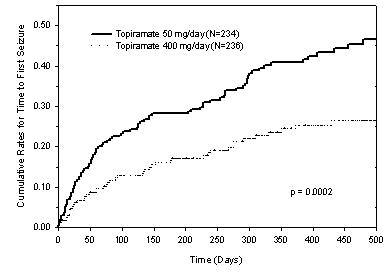
The trial was conducted in 487 patients diagnosed with epilepsy (6 to 83 years of age) who had 1 or 2 well-documented seizures during the 3-month retrospective baseline phase who then entered the study and received topiramate 25 mg/day for 7 days in an open-label fashion. Forty-nine percent of subjects had no prior AED treatment and 17% had a diagnosis of epilepsy for greater than 24 months. Any AED therapy used for temporary or emergency purposes was discontinued prior to randomization. In the double-blind phase, 470 patients were randomized to titrate up to 50 mg/day or 400 mg/day. If the target dose could not be achieved, patients were maintained on the maximum tolerated dose. Fifty-eight percent of patients achieved the maximal dose of 400 mg/day for >2 weeks, and patients who did not tolerate 150 mg/day were discontinued. The primary efficacy assessment was a between-group comparison of time to first seizure during the double-blind phase. Comparison of the Kaplan-Meier survival curves of time to first seizure favored the topiramate 400 mg/day group over the topiramate 50 mg/day group (p=0.0002, log rank test; Figure 1). The treatment effects with respect to time to first seizure were consistent across various patient subgroups defined by age, sex, geographic region, baseline body weight, baseline seizure type, time since diagnosis, and baseline AED use.
| Figure 1: Kaplan-Meier Estimates of Cumulative Rates for Time to First Seizure |
|
Children 2 to <10 Years of Age
The conclusion that topiramate is effective as initial monotherapy in children 2 to <10 years of age with partial onset or primary generalized tonic-clonic seizures was based on a pharmacometric bridging approach using data from the controlled epilepsy trials described in labeling. This approach consisted of first showing a similar exposure response relationship between pediatric patients down to 2 years of age and adults when topiramate was given as adjunctive therapy. Similarity of exposure-response was also demonstrated in pediatric patients ages 6 to <16 years and adults when topiramate was given as initial monotherapy. Specific dosing in children 2 to <10 years of age was derived from simulations utilizing plasma exposure ranges observed in pediatric and adult patients treated with topiramate initial monotherapy [see Dosage and Administration (2.1)].
Adult Patients With Partial Onset Seizures
The effectiveness of topiramate as an adjunctive treatment for adults with partial onset seizures was established in six multicenter, randomized, double-blind, placebo-controlled trials, two comparing several dosages of topiramate and placebo and four comparing a single dosage with placebo, in patients with a history of partial onset seizures, with or without secondarily generalized seizures.
Patients in these studies were permitted a maximum of two antiepileptic drugs (AEDs) in addition to TOPAMAX® tablets or placebo. In each study, patients were stabilized on optimum dosages of their concomitant AEDs during baseline phase lasting between 4 and 12 weeks. Patients who experienced a prespecified minimum number of partial onset seizures, with or without secondary generalization, during the baseline phase (12 seizures for 12-week baseline, 8 for 8-week baseline or 3 for 4-week baseline) were randomly assigned to placebo or a specified dose of TOPAMAX® tablets in addition to their other AEDs.
Following randomization, patients began the double-blind phase of treatment. In five of the six studies, patients received active drug beginning at 100 mg per day; the dose was then increased by 100 mg or 200 mg/day increments weekly or every other week until the assigned dose was reached, unless intolerance prevented increases. In the sixth study (119), the 25 or 50 mg/day initial doses of topiramate were followed by respective weekly increments of 25 or 50 mg/day until the target dose of 200 mg/day was reached. After titration, patients entered a 4, 8 or 12-week stabilization period. The numbers of patients randomized to each dose and the actual mean and median doses in the stabilization period are shown in Table 13.
Pediatric Patients Ages 2 to 16 Years with Partial Onset Seizures
The effectiveness of topiramate as an adjunctive treatment for pediatric patients ages 2 to 16 years with partial onset seizures was established in a multicenter, randomized, double-blind, placebo-controlled trial, comparing topiramate and placebo in patients with a history of partial onset seizures, with or without secondarily generalized seizures.
Patients in this study were permitted a maximum of two antiepileptic drugs (AEDs) in addition to TOPAMAX® tablets or placebo. In this study, patients were stabilized on optimum dosages of their concomitant AEDs during an 8-week baseline phase. Patients who experienced at least six partial onset seizures, with or without secondarily generalized seizures, during the baseline phase were randomly assigned to placebo or TOPAMAX® tablets in addition to their other AEDs.
Following randomization, patients began the double-blind phase of treatment. Patients received active drug beginning at 25 or 50 mg/day; the dose was then increased by 25 mg to 150 mg/day increments every other week until the assigned dosage of 125, 175, 225, or 400 mg/day based on patients' weight to approximate a dosage of 6 mg/kg/day was reached, unless intolerance prevented increases. After titration, patients entered an 8-week stabilization period.
Patients With Primary Generalized Tonic-Clonic Seizures
The effectiveness of topiramate as an adjunctive treatment for primary generalized tonic-clonic seizures in patients 2 years old and older was established in a multicenter, randomized, double-blind, placebo-controlled trial, comparing a single dosage of topiramate and placebo.
Patients in this study were permitted a maximum of two antiepileptic drugs (AEDs) in addition to TOPAMAX® or placebo. Patients were stabilized on optimum dosages of their concomitant AEDs during an 8-week baseline phase. Patients who experienced at least three primary generalized tonic-clonic seizures during the baseline phase were randomly assigned to placebo or TOPAMAX® in addition to their other AEDs.
Following randomization, patients began the double-blind phase of treatment. Patients received active drug beginning at 50 mg/day for four weeks; the dose was then increased by 50 mg to 150 mg/day increments every other week until the assigned dose of 175, 225, or 400 mg/day based on patients' body weight to approximate a dosage of 6 mg/kg/day was reached, unless intolerance prevented increases. After titration, patients entered a 12-week stabilization period.
Patients With Lennox-Gastaut Syndrome
The effectiveness of topiramate as an adjunctive treatment for seizures associated with Lennox-Gastaut syndrome was established in a multicenter, randomized, double-blind, placebo-controlled trial comparing a single dosage of topiramate with placebo in patients 2 years of age and older.
Patients in this study were permitted a maximum of two antiepileptic drugs (AEDs) in addition to TOPAMAX® or placebo. Patients who were experiencing at least 60 seizures per month before study entry were stabilized on optimum dosages of their concomitant AEDs during a 4-week baseline phase. Following baseline, patients were randomly assigned to placebo or TOPAMAX® in addition to their other AEDs. Active drug was titrated beginning at 1 mg/kg/day for a week; the dose was then increased to 3 mg/kg/day for one week, then to 6 mg/kg/day. After titration, patients entered an 8-week stabilization period. The primary measures of effectiveness were the percent reduction in drop attacks and a parental global rating of seizure severity.
Table 13: Topiramate Dose Summary During the Stabilization Periods of Each of Six Double-Blind, Placebo-Controlled, Add-On Trials in Adults with Partial Onset SeizuresDose-response studies were not conducted for other indications or pediatric partial onset seizures.
| | | Target Topiramate Dosage (mg/day) |
|---|
| Protocol | Stabilization Dose | Placebo Placebo dosages are given as the number of tablets. Placebo target dosages were as follows: Protocol Y1, 4 tablets/day; Protocols YD and Y2, 6 tablets/day; Protocols Y3 and 119, 8 tablets/day; Protocol YE, 10 tablets/day. | 200 | 400 | 600 | 800 | 1,000 |
|---|
| YD | N | 42 | 42 | 40 | 41 | -- | -- |
| Mean Dose | 5.9 | 200 | 390 | 556 | -- | -- |
| Median Dose | 6.0 | 200 | 400 | 600 | -- | -- |
| | | | | | | |
| YE | N | 44 | -- | -- | 40 | 45 | 40 |
| Mean Dose | 9.7 | -- | -- | 544 | 739 | 796 |
| Median Dose | 10.0 | -- | -- | 600 | 800 | 1,000 |
| | | | | | | |
| Y1 | N | 23 | -- | 19 | -- | -- | -- |
| Mean Dose | 3.8 | -- | 395 | -- | -- | -- |
| Median Dose | 4.0 | -- | 400 | -- | -- | -- |
| | | | | | | |
| Y2 | N | 30 | -- | -- | 28 | -- | -- |
| Mean Dose | 5.7 | -- | -- | 522 | -- | -- |
| Median Dose | 6.0 | -- | -- | 600 | -- | -- |
| | | | | | | |
| Y3 | N | 28 | -- | -- | -- | 25 | -- |
| Mean Dose | 7.9 | -- | -- | -- | 568 | -- |
| Median Dose | 8.0 | -- | -- | -- | 600 | -- |
| | | | | | | |
| 119 | N | 90 | 157 | -- | -- | -- | -- |
| Mean Dose | 8 | 200 | -- | -- | -- | -- |
| Median Dose | 8 | 200 | -- | -- | -- | -- |
In all add-on trials, the reduction in seizure rate from baseline during the entire double-blind phase was measured. The median percent reductions in seizure rates and the responder rates (fraction of patients with at least a 50% reduction) by treatment group for each study are shown below in Table 14. As described above, a global improvement in seizure severity was also assessed in the Lennox-Gastaut trial.
Table 14: Efficacy Results in Double-Blind, Placebo-Controlled, Add-On Epilepsy Trials | | Target Topiramate Dosage (mg/day) |
|---|
| Protocol Efficacy Results | Placebo | 200 | 400 | 600 | 800 | 1,000 | ≈6 mg/kg/day For Protocols YP and YTC, protocol-specified target dosages (<9.3 mg/kg/day) were assigned based on subject's weight to approximate a dosage of 6 mg/kg per day; these dosages corresponded to mg/day dosages of 125, 175, 225, and 400 mg/day. |
|---|
| Comparisons with placebo: |
| Partial Onset Seizures | | | | | | | |
| Studies in Adults | | | | | | | |
| YD | N | 45 | 45 | 45 | 46 | -- | -- | -- |
| Median % Reduction | 11.6 | 27.2
| 47.5
| 44.7 p≤0.001; | -- | -- | -- |
| % Responders | 18 | 24 | 44 p≤0.050; | 46 | -- | -- | -- |
| YE | N | 47 | -- | -- | 48 | 48 | 47 | -- |
| Median % Reduction | 1.7 | -- | -- | 40.8 | 41.0 | 36.0 | -- |
| % Responders | 9 | -- | -- | 40 | 41 | 36 | -- |
| Y1 | N | 24 | -- | 23 | -- | -- | -- | -- |
| Median % Reduction | 1.1 | -- | 40.7
| -- | -- | -- | -- |
| % Responders | 8 | -- | 35 | -- | -- | -- | -- |
| Y2 | N | 30 | -- | -- | 30 | -- | -- | -- |
| Median % Reduction | -12.2 | -- | -- | 46.4 p≤0.005; | -- | -- | -- |
| % Responders | 10 | -- | -- | 47 | -- | -- | -- |
| Y3 | N | 28 | -- | -- | -- | 28 | -- | -- |
| Median % Reduction | -20.6 | -- | -- | -- | 24.3 | -- | -- |
| % Responders | 0 | -- | -- | -- | 43 | -- | -- |
| 119 N | 91 | 168 | -- | -- | -- | -- | -- |
| Median % Reduction | 20.0 | 44.2 | -- | -- | -- | -- | -- |
| % Responders | 24 | 45 | -- | -- | -- | -- | -- |
| Studies in Pediatric Patients | | | | | | | |
| YP | N | 45 | -- | -- | -- | -- | -- | 41 |
| Median % Reduction | 10.5 | -- | -- | -- | -- | -- | 33.1 |
| % Responders | 20 | -- | -- | -- | -- | -- | 39 |
| Primary Generalized Tonic-Clonic Median % reduction and % responders are reported for PGTC Seizures; | | | | | | | |
| YTC | N | 40 | -- | -- | -- | -- | -- | 39 |
| Median % Reduction | 9.0 | -- | -- | -- | -- | -- | 56.7 |
| % Responders | 20 | -- | -- | -- | -- | -- | 56 |
| Lennox-Gastaut Syndrome Median % reduction and % responders for drop attacks, i.e., tonic or atonic seizures; | | | | | | | |
| YL | N | 49 | -- | -- | -- | -- | -- | 46 |
| Median % Reduction | -5.1 | -- | -- | -- | -- | -- | 14.8 |
| % Responders | 14 | -- | -- | -- | -- | -- | 28 p=0.071; |
| Improvement in Seizure Severity Percent of subjects who were minimally, much, or very much improved from baseline | 28 | -- | -- | -- | -- | -- | 52 |
Subset analyses of the antiepileptic efficacy of TOPAMAX® tablets in these studies showed no differences as a function of gender, race, age, baseline seizure rate, or concomitant AED.
In clinical trials for epilepsy, daily dosages were decreased in weekly intervals by 50 to 100 mg/day in adults and over a 2- to 8-week period in children; transition was permitted to a new antiepileptic regimen when clinically indicated.
TOPAMAX® Tablets
TOPAMAX® (topiramate) Tablets are available as debossed, coated, round tablets in the following strengths and colors:
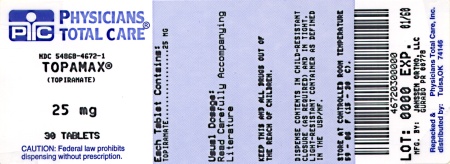
25 mg cream tablet (debossed "OMN" on one side; "25" on the other) and are available in
Bottles of 30
| NDC 54868-4672-1
|
Bottles of 60
| NDC 54868-4672-0
|
Bottles of 90
| NDC 54868-4672-3
|
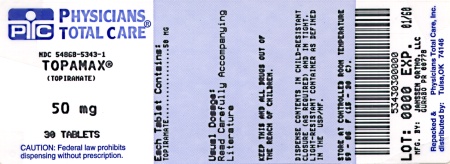
50 mg light yellow tablet (debossed "OMN" on one side; "50" on the other) and are available in
Bottles of 30
| NDC 54868-5343-1
|
Bottles of 60
| NDC 54868-5343-0
|
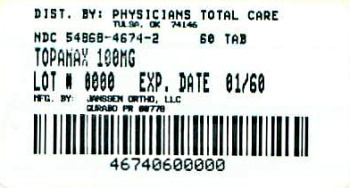
100 mg yellow tablet (debossed "OMN" on one side; "100" on the other) and are available in
Bottles of 10
| NDC 54868-4674-0
|
Bottles of 30
| NDC 54868-4674-1
|
Bottles of 60
| NDC 54868-4674-2
|
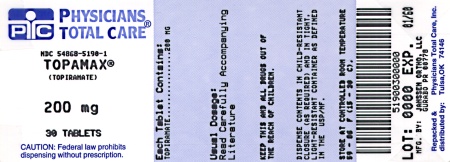
200 mg salmon tablet (debossed "OMN" on one side; "200" on the other) and are available in
Bottles of 30
| NDC 54868-5190-1
|
Manufactured by: Janssen Ortho, LLC, Gurabo, Puerto Rico 00778
Manufactured for: Janssen Pharmaceuticals, Inc. Titusville, NJ 08560
© Janssen Pharmaceuticals, Inc. 2009
Revised January 2012
Relabeling and Repackaging by:
Physicians Total Care, Inc.
Tulsa, Oklahoma 74146