General
As with other antibacterial preparations, use of this product may
result in overgrowth of nonsusceptible organisms, including yeast and fungi. If
the infection is not improved after one week of treatment, cultures should be
obtained to guide further treatment. If otorrhea persists after a full course of
therapy, or if two or more episodes of otorrhea occur within six months, further
evaluation is recommended to exclude an underlying condition such as
cholesteatoma, foreign body, or a tumor.
The systemic administration of quinolones, including ciprofloxacin at doses
much higher than given or absorbed by the otic route, has led to lesions or
erosions of the cartilage in weight-bearing joints and other signs of
arthropathy in immature animals of various species.
Guinea pigs dosed in the middle ear with CIPRODEX® Otic for one month
exhibited no drug-related structural or functional changes of the cochlear hair
cells and no lesions in the ossicles. CIPRODEX® Otic was also shown to lack
dermal sensitizing potential in the guinea pig when tested according to the
method of Buehler.
No signs of local irritation were found when CIPRODEX® Otic was applied
topically in the rabbit eye.
Information for Patients
For otic use only. (This product is not approved for use in the
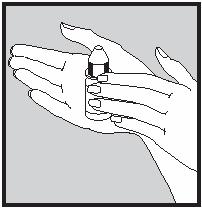
eye.) Warm the bottle in your hand for one to two minutes prior to use and shake
well immediately before using.
Avoid contaminating the tip with material from
the ear, fingers, or other sources.
Protect from light.
If rash or
allergic reaction occurs, discontinue use immediately and contact your
physician.
It is very important to use the ear drops for as long as the
doctor has instructed, even if the symptoms
improve.
Discard unused portion after therapy is completed.
Acute Otitis Media in pediatric patients with tympanostomy
tubes Prior to administration of CIPRODEX® Otic in patients (6 months and
older) with acute otitis media through tympanostomy tubes, the suspension should
be warmed by holding the bottle in the hand for one or two minutes to avoid
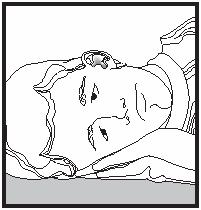
dizziness which may result from the instillation of a cold suspension. The
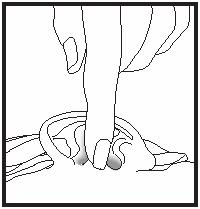
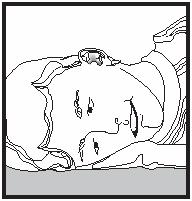
patient should lie with the affected ear upward, and then the drops should be
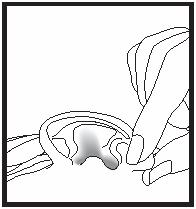
instilled. The tragus should then be pumped 5 times by pushing inward to
facilitate penetration of the drops into the middle ear. This position should be
maintained for 60 seconds. Repeat, if necessary, for the opposite ear (see DOSAGE AND ADMINISTRATION).
Acute Otitis Externa
Prior to administration of
CIPRODEX® Otic in patients with acute otitis externa, the suspension should be
warmed by holding the bottle in the hand for one or two minutes to avoid
dizziness which may result from the instillation of a cold suspension. The
patient should lie with the affected ear upward, and then the drops should be
instilled. This position should be maintained for 60 seconds to facilitate
penetration of the drops into the ear canal. Repeat, if necessary, for the
opposite ear (see DOSAGE AND
ADMINISTRATION).
Drug Interactions
Specific drug interaction studies have not been conducted with
CIPRODEX® Otic.
Carcinogenesis, Mutagenesis, Impairment of
Fertility
Long-term carcinogenicity studies in mice and rats have been
completed for ciprofloxacin. After daily oral doses of 750 mg/kg (mice) and 250
mg/kg (rats) were administered for up to 2 years, there was no evidence that
ciprofloxacin had any carcinogenic or tumorigenic effects in these species. No
long term studies of CIPRODEX® Otic have been performed to evaluate carcinogenic
potential.
Eight in vitro mutagenicity tests have been
conducted with ciprofloxacin, and the test results are listed below:
Salmonella/Microsome Test (Negative)
E. coli DNA Repair Assay (Negative)
Mouse Lymphoma Cell
Forward Mutation Assay (Positive)
Chinese Hamster V79
Cell HGPRT Test (Negative)
Syrian Hamster Embryo Cell Transformation Assay
(Negative)
Saccharomyces cerevisiae Point Mutation
Assay (Negative)
Saccharomyces cerevisiae Mitotic
Crossover and Gene Conversion Assay (Negative)
Rat Hepatocyte DNA Repair
Assay (Positive)
Thus, 2 of the 8 tests were positive, but results of the
following 3 in vivo test systems gave negative
results:
Rat Hepatocyte DNA Repair Assay
Micronucleus Test
(Mice)
Dominant Lethal Test (Mice)
Fertility studies performed in rats at oral doses of ciprofloxacin up to 100
mg/kg/day revealed no evidence of impairment. This would be over 100 times the
maximum recommended clinical dose of ototopical ciprofloxacin based upon body
surface area, assuming total absorption of ciprofloxacin from the ear of a
patient treated with CIPRODEX® Otic twice per day according to label
directions.
Long term studies have not been performed to evaluate the carcinogenic
potential of topical otic dexamethasone. Dexamethasone has been tested for in vitro and in vivo genotoxic
potential and shown to be positive in the following assays; chromosomal
aberrations, sister-chromatid exchange in human lymphocytes and micronuclei and
sister-chromatid exchanges in mouse bone marrow. However, the Ames/Salmonella
assay, both with and without S9 mix, did not show any increase in His+
revertants.
The effect of dexamethasone on fertility has not been investigated following
topical otic application. However, the lowest toxic dose of dexamethasone
identified following topical dermal application was 1.802 mg/kg in a 26-week
study in male rats and resulted in changes to the testes, epididymis, sperm
duct, prostate, seminal vessicle, Cowper’s gland and accessory glands. The
relevance of this study for short term topical otic use is unknown.
PregnancyTeratogenic Effects
Pregnancy Category C: Reproduction
studies have been performed in rats and mice using oral doses of up to 100 mg/kg
and IV doses up to 30 mg/kg and have revealed no evidence of harm to the fetus
as a result of ciprofloxacin. In rabbits, ciprofloxacin (30 and 100 mg/kg
orally) produced gastrointestinal disturbances resulting in maternal weight loss
and an increased incidence of abortion, but no teratogenicity was observed at
either dose. After intravenous administration of doses up to 20 mg/kg, no
maternal toxicity was produced in the rabbit, and no embryotoxicity or
teratogenicity was observed.
Corticosteroids are generally teratogenic in laboratory animals when
administered systemically at relatively low dosage levels. The more potent
corticosteroids have been shown to be teratogenic after dermal application in
laboratory animals.
Animal reproduction studies have not been conducted with CIPRODEX® Otic. No
adequate and well controlled studies have been performed in pregnant women.
Caution should be exercised when CIPRODEX® Otic is used by a pregnant
woman.
Nursing Mothers
Ciprofloxacin and corticosteroids, as a class, appear in milk
following oral administration. Dexamethasone in breast milk could suppress
growth, interfere with endogenous corticosteroid production, or cause other
untoward effects. It is not known whether topical otic administration of
ciprofloxacin or dexamethasone could result in sufficient systemic absorption to
produce detectable quantities in human milk. Because of the potential for
unwanted effects in nursing infants, a decision should be made whether to
discontinue nursing or to discontinue the drug, taking into account the
importance of the drug to the mother.
Pediatric Use
The safety and efficacy of CIPRODEX® Otic have been established
in pediatric patients 6 months and older (937 patients) in adequate and
well-controlled clinical trials. Although no data are available on patients less
than age 6 months, there are no known safety concerns or differences in the
disease process in this population that would preclude use of this product. (See
DOSAGE AND ADMINISTRATION.)
No clinically relevant changes in hearing function were observed in 69
pediatric patients (age 4 to 12 years) treated with CIPRODEX® Otic and tested
for audiometric parameters.