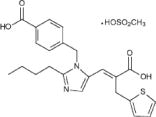
Other
Rx Only
Hydrochlorothiazide: Hydrochlorothiazide is a thiazide diuretic. Thiazides affect the renal tubular mechanisms of electrolyte reabsorption, directly increasing excretion of sodium and chloride in approximately equivalent amounts. Indirectly, the diuretic action of hydrochlorothiazide reduces plasma volume, with consequent increases in plasma renin activity, increases in aldosterone secretion, increases in urinary potassium loss, and decreases in serum potassium. The renin-aldosterone link is mediated by angiotensin II, so coadministration of an angiotensin II receptor antagonist tends to reverse the potassium loss associated with these diuretics. The mechanism of the antihypertensive effect of thiazides is unknown.
Hydrochlorothiazide: When hydrochlorothiazide plasma levels have been followed for at least 24 hours, the plasma half-life has been observed to vary between 5.6 and 14.8 hours.
Hydrochlorothiazide: Hydrochlorothiazide crosses the placental but not the blood-brain barrier and it is excreted in breast milk.
Hepatic Insufficiency: Eprosartan AUC (but not Cmax) values increased, on average, by approximately 40% in men with decreased hepatic function compared to healthy men after a single 100 mg oral dose of eprosartan. The extent of eprosartan plasma protein binding was not influenced by hepatic dysfunction. No dosage adjustment is necessary for patients with hepatic impairment.
Eprosartan-Hydrochlorothiazide: There is no pharmacokinetic interaction between 600 mg eprosartan and 12.5 mg hydrochlorothiazide.
Eprosartan Mesylate: The safety and efficacy of TEVETEN® has been evaluated in controlled clinical trials worldwide that enrolled predominantly hypertensive patients with sitting DBP ranging from 95 mmHg to ≤115 mmHg. There is also some experience with use of eprosartan together with other antihypertensive drugs in more severe hypertension. The antihypertensive effects of TEVETEN® were demonstrated principally in five placebo-controlled trials (4 to 13 weeks' duration) including dosages of 400 mg to 1200 mg given once daily (two studies), 25 mg to 400 mg twice daily (two studies), and one study comparing total daily doses of 400 mg to 800 mg given once daily or twice daily. The five studies included 1,111 patients randomized to eprosartan and 395 patients randomized to placebo. The studies showed dose-related antihypertensive responses. At study endpoint, patients treated with TEVETEN® at doses of 600 mg to 1200 mg given once daily experienced significant decreases in sitting systolic and diastolic blood pressure at trough, with differences from placebo of approximately 5-10/3-6 mmHg. Limited experience is available with the dose of 1200 mg administered once daily. In a direct comparison of 200 mg to 400 mg b.i.d. with 400 mg to 800 mg q.d. of TEVETEN®, effects at trough were similar. Patients treated with TEVETEN® at doses of 200 mg to 400 mg given twice daily experienced significant decreases in sitting systolic and diastolic blood pressure at trough, with differences from placebo of approximately 7-10/4-6 mmHg. Peak (1 to 3 hours) effects were uniformly, but moderately, larger than trough effects with b.i.d. dosing, with the trough-to-peak ratio for diastolic blood pressure 65% to 80%. In the once-daily dose-response study, trough-to-peak responses of ≤50% were observed at some doses (including 1200 mg), suggesting attenuation of effect at the end of the dosing interval. The antihypertensive effect of TEVETEN® was similar in men and women, but was somewhat smaller in patients over 65. There were too few black subjects to determine whether their response was similar to Caucasians. In general, blacks (usually a low renin population) have had smaller responses to ACE inhibitors and angiotensin II inhibitors than Caucasian populations. Angiotensin-converting enzyme (ACE) inhibitor-induced cough (a dry, persistent cough) can lead to discontinuation of ACE inhibitor therapy. In one study, patients who had previously coughed while taking an ACE inhibitor were treated with eprosartan, an ACE inhibitor (enalapril) or placebo for six weeks. The incidence of dry, persistent cough was 2.2% on eprosartan, 4.4% on placebo, and 20.5% on the ACE inhibitor; p=0.008 for the comparison of eprosartan with enalapril. In a second study comparing the incidence of cough in 259 patients treated with eprosartan to 261 patients treated with the ACE inhibitor enalapril, the incidence of dry, persistent cough in eprosartan-treated patients (1.5%) was significantly lower (p=0.018) than that observed in patients treated with the ACE inhibitor (5.4%). In addition, analysis of overall data from six double-blind clinical trials involving 1,554 patients showed an incidence of spontaneously reported cough in patients treated with eprosartan of 3.5%, similar to placebo (2.6%).
Eprosartan Mesylate – Hydrochlorothiazide: Four adequate and well-controlled studies were conducted to assess the antihypertensive effectiveness of TEVETEN HCT®/(Eprosartan Mesylate/ hydrochlorothiazide) in 1457 patients with mild-to-moderate essential hypertension. In a 2x2 factorial study with 112-119 hypertensive patients per arm, the mean baseline- and placebo-subtracted reductions in blood pressure at 8 weeks were 3.6/2.1 mmHg on eprosartan 600 mg, 5.6/1.9 mmHg on hydrochlorothiazide 12.5 mg, and 10.0/5.0 mmHg on the combination.
Hypersensitivity Reactions: Hypersensitivity reactions to hydrochlorothiazide may occur in patients with or without a history of allergy or bronchial asthma, but are more likely in patients with such a history.
Systemic Lupus Erythematosus: Thiazide diuretics have been reported to cause exacerbation or activation of systemic lupus erythematosus. Lithium Interaction: Lithium generally should not be given with thiazides (see PRECAUTIONS, Drug Interactions, Hydrochlorothiazide, Lithium).
Pregnancy: Female patients of childbearing age should be told about the consequences of second- and third-trimester exposure to drugs that act on the renin-angiotensin system, and they should also be told that these consequences do not appear to have resulted from intrauterine drug exposure that has been limited to the first trimester. These patients should be asked to report pregnancies to their physicians as soon as possible so that treatment may be discontinued under medical supervision.
Symptomatic Hypotension: A patient receiving TEVETEN® HCT should be cautioned that lightheadedness can occur, especially during the first days of therapy, and that it should be reported to the prescribing physician. The patient should be told that if syncope occurs, TEVETEN® HCT should be discontinued until the physician has been consulted. All patients should be cautioned that inadequate fluid intake, excessive perspiration, diarrhea, or vomiting can lead to an excessive fall in blood pressure, with the same consequences of lightheadedness and possible syncope.
Potassium Supplements: A patient receiving TEVETEN® HCT should be told not to use potassium supplements or salt substitutes containing potassium without consulting the prescribing physician (see PRECAUTIONS, Drug Interactions, Eprosartan Mesylate).
Eprosartan Mesylate: Eprosartan has been shown to have no effect on the pharmacokinetics of digoxin and the pharmacodynamics of warfarin and glyburide. Thus, no dosing adjustments are necessary during concomitant use with these agents. Because eprosartan is not metabolized by the cytochrome P450 system, inhibitors of CYP450 enzyme would not be expected to affect its metabolism, and ketoconazole and fluconazole, potent inhibitors of CYP3A and 2C9, respectively, have been shown to have no effect on eprosartan pharmacokinetics. Ranitidine also has no effect on eprosartan pharmacokinetics. Eprosartan (up to 400 mg b.i.d. or 800 mg q.d.) doses have been safely used concomitantly with a thiazide diuretic (hydrochlorothiazide). Eprosartan doses of up to 300 mg b.i.d. have been safely used concomitantly with sustained-release calcium channel blockers (sustained-release nifedipine) with no clinically significant adverse interactions. As with other drugs that block angiotensin II or its effects, concomitant use of potassium-sparing diuretics (e.g., spironolactone, triamterene, amiloride), potassium supplements or salt substitutes containing potassium may lead to increases in serum potassium (see PRECAUTIONS, Information for Patients, Potassium Supplements).
Hydrochlorothiazide: When administered concurrently the following drugs may interact with thiazide diuretics: Alcohol, barbiturates, or narcotics – potentiation of orthostatic hypotension may occur. Antidiabetic drug (oral agents and insulin) – dosage adjustment of the antidiabetic drug may be required. Other antihypertensive drugs – additive effect or potentiation. Cholestyramine and colestipol resins – Absorption of hydrochlorothiazide is impaired in the presence of anionic exchange resins. Single doses of either cholestyramine or colestipol resins bind the hydrochlorothiazide and reduce its absorption from the gastrointestinal tract by up to 85% and 43%, respectively. Corticosteroids, ACTH – intensified electrolyte depletion, particularly hypokalemia. Pressor amines (e.g., norepinephrine) – possible decreased response to pressor amines but not sufficient to preclude their use. Skeletal muscle relaxants, nondepolarizing (e.g., tubocurarine) – possible increased responsiveness to the muscle relaxant. Lithium – should not generally be given with diuretics. Diuretic agents reduce the renal clearance of lithium and add a high risk of lithium toxicity. Refer to the package insert for lithium preparations before use of such preparations with TEVETEN® HCT. Nonsteroidal Anti-Inflammatory Drugs – in some patients, the administration of a nonsteroidal anti-inflammatory agent can reduce the diuretic, natriuretic, and antihypertensive effects of loop, potassium-sparing and thiazide diuretics. Therefore, when TEVETEN® HCT and nonsteroidal anti-inflammatory agents are used concomitantly, the patient should be observed closely to determine if the desired effect of the diuretic is obtained.
Eprosartan Mesylate: In addition to the adverse events above, potentially important adverse events that are included in the current labeling for TEVETEN® monotherapy are listed below. Most of these adverse events occurred in <1% of patients, or were as frequent or more frequent in the placebo group. It is not known if these events were related to eprosartan usage: Body as a Whole: alcohol intolerance, asthenia, substernal chest pain, dependent edema, peripheral edema, facial edema, fatigue, fever, hot flushes, influenza-like symptoms, injury, malaise, pain, rigors, viral infection; Cardiovascular: angina pectoris, bradycardia, abnormal ECG, specific abnormal ECG, extrasystoles, atrial fibrillation, hypotension (including orthostatic hypotension), tachycardia, palpitations; Gastrointestinal: abdominal pain, anorexia, constipation, diarrhea, dry mouth, dyspepsia, esophagitis, flatulence, gastritis, gastroenteritis, gingivitis, nausea, periodontitis, toothache, vomiting; Hematologic: anemia, purpura; Liver and Biliary: increased SGOT, increased SGPT; Metabolic and Nutritional: increased creatine phosphokinase, diabetes mellitus, glycosuria, gout, hypercholesterolemia, hyperglycemia, hyperkalemia, hypokalemia, hyponatremia, hypertriglyceridemia; Musculoskeletal: arthralgia, arthritis, aggravated arthritis, arthrosis, skeletal pain, tendinitis; Nervous System/Psychiatric: anxiety, ataxia, depression, dizziness, insomnia, migraine, neuritis, nervousness, paresthesia, somnolence, tremor, vertigo; Resistance Mechanism: herpes simplex, otitis externa, otitis media, upper respiratory tract infection; Respiratory: asthma, bronchitis, coughing, epistaxis, pharyngitis, rhinitis; Skin and Appendages: eczema, furunculosis, pruritus, rash, maculopapular rash, increased sweating; Special Senses: conjunctivitis, abnormal vision, xerophthalmia, tinnitus; Urinary: albuminuria, cystitis, hematuria, micturition frequency, polyuria, renal calculus, urinary incontinence, urinary tract infection; Vascular: leg cramps, peripheral ischemia.
Eprosartan Mesylate: Limited data are available regarding overdosage. Appropriate symptomatic and supportive therapy should be given if overdosage should occur. There was no mortality in rats and mice receiving oral doses of up to 3000 mg eprosartan/kg and in dogs receiving oral doses of up to 1000 mg eprosartan/kg.
Hydrochlorothiazide: The most common signs and symptoms observed are those caused by electrolyte depletion (hypokalemia, hypochloremia, and hyponatremia) and dehydration resulting from excessive diuresis. If digitalis has also been administered, hypokalemia may accentuate cardiac arrhythmias. The degree to which hydrochlorothiazide is removed by hemodialysis has not been established. The oral LD50 of hydrochlorothiazide is greater than 10 g/kg in both mice and rats.
Elderly, Hepatically Impaired or Renally Impaired Patients: No initial dosing adjustment is generally necessary for elderly or hepatically impaired patients or those with renal impairment. No initial dosing adjustment is generally necessary in patients with moderate and severe renal impairment with maximum dose not exceeding 600 mg daily. TEVETEN® HCT may be taken with or without food.