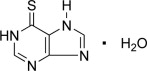
Metabolism and Genetic Polymorphism: Variability in mercaptopurine metabolism is one of the major causes of interindividual differences in systemic exposure to the drug and its active metabolites. Mercaptopurine activation occurs via hypoxanthine-guanine phosphoribosyl transferase (HGPRT) and several enzymes to form 6-thioguanine nucleotides (6-TGNs). The cytotoxicity of mercaptopurine is due, in part, to the incorporation of 6-TGN into DNA. Mercaptopurine is inactivated via two major pathways. One is thiol methylation, which is catalyzed by the polymorphic enzyme thiopurine S-methyltransferase (TPMT), to form the inactive metabolite methyl-6-MP. TPMT activity is highly variable in patients because of a genetic polymorphism in the TPMT gene. For Caucasians and African Americans, approximately 0.3% (1:300) of patients have two non-functional alleles (homozygous-deficient) of the TPMT gene and have little or no detectable enzyme activity. Approximately 10% of patients have one TPMT non-functional allele (heterozygous) leading to low or intermediate TPMT activity and 90% of individuals have normal TPMT activity with two functional alleles. Homozygous-deficient patients (two non-functional alleles), if given usual doses of mercaptopurine, accumulate excessive cellular concentrations of active thioguanine nucleotides predisposing them to mercaptopurine toxicity (see WARNINGS and PRECAUTIONS). Heterozygous patients with low or intermediate TPMT activity accumulate higher concentrations of active thioguanine nucleotides than people with normal TPMT activity and are more likely to experience mercaptopurine toxicity (see WARNINGS and PRECAUTIONS). TPMT genotyping or phenotyping (red blood cell TPMT activity) can identify patients who are homozygous deficient or have low or intermediate TPMT activity (see WARNINGS, PRECAUTIONS: Laboratory Tests, and DOSAGE AND ADMINISTRATION sections).
Another inactivation pathway is oxidation, which is catalyzed by xanthine oxidase (XO) and forms 6-thiouric acid. Xanthine oxidase is inhibited by ZYLOPRIM® (allopurinol). Concomitant use of allopurinol with mercaptopurine decreases the catabolism of mercaptopurine and its active metabolites leading to mercaptopurine toxicity. A reduction in mercaptopurine dosage is therefore required if patients are receiving both mercaptopurine and allopurinol (see PRECAUTIONS and DOSAGE AND ADMINISTRATION). After oral administration of 35 S-6-mercaptopurine, urine contains intact mercaptopurine, thiouric acid (formed by direct oxidation by xanthine oxidase, probably via 6-mercapto-8-hydroxypurine), and a number of 6-methylated thiopurines.
Bone Marrow Toxicity: The most consistent, dose-related toxicity is bone marrow suppression. This may be manifest by anemia, leukopenia, thrombocytopenia, or any combination of these. Any of these findings may also reflect progression of the underlying disease. In many patients with severe depression of the formed elements of the blood due to mercaptopurine, the bone marrow appears hypoplastic on aspiration or biopsy, whereas in other cases it may appear normocellular. The qualitative changes in the erythroid elements towards the megaloblastic series, characteristically seen with the folic acid antagonists and some other antimetabolites, are not seen with this drug. Life-threatening infections and bleeding have been observed as a consequence of mercaptopurine-induced granulocytopenia and thrombocytopenia. Since mercaptopurine may have a delayed effect, it is important to withdraw the medication temporarily at the first sign of an unexpected abnormally large fall in any of the formed elements of the blood, if not attributable to another drug or disease process.
Individuals who are homozygous for an inherited defect in the TPMT (thiopurine-S-methyltransferase) gene are unusually sensitive to the myelosuppressive effects of mercaptopurine and prone to developing rapid bone marrow suppression following the initiation of treatment. Laboratory tests are available, both genotypic and phenotypic, to determine the TPMT status. Substantial dose reductions are generally required for homozygous-TPMT deficient patients (two non-functional alleles) to avoid the development of life threatening bone marrow suppression. Although heterozygous patients with intermediate TPMT activity may have increased mercaptopurine toxicity, this is variable, and the majority of patients tolerate normal doses of mercaptopurine. If a patient has clinical or laboratory evidence of severe toxicity, particularly myelosuppression, TPMT testing should be considered. In patients who exhibit excessive myelosuppression due to 6-mercaptopurine, it may be possible to adjust the mercaptopurine dose and administer the usual dosage of other myelosuppressive chemotherapy as required for treatment (see DOSAGE AND ADMINISTRATION).
Bone marrow toxicity may be more profound in patients treated with concomitant allopurinol (see PRECAUTIONS: Drug Interactions and DOSAGE AND ADMINISTRATION). This problem could be exacerbated by coadministration with drugs that inhibit TPMT, such as olsalazine, mesalazine, or sulphasalazine.
Hepatotoxicity: Mercaptopurine is hepatotoxic in animals and humans. A small number of deaths have been reported that may have been attributed to hepatic necrosis due to administration of mercaptopurine. Hepatic injury can occur with any dosage, but seems to occur with more frequency when doses of 2.5 mg/kg/day are exceeded. The histologic pattern of mercaptopurine hepatotoxicity includes features of both intrahepatic cholestasis and parenchymal cell necrosis, either of which may predominate. It is not clear how much of the hepatic damage is due to direct toxicity from the drug and how much may be due to a hypersensitivity reaction. In some patients jaundice has cleared following withdrawal of mercaptopurine and reappeared with its reintroduction.
Published reports have cited widely varying incidences of overt hepatotoxicity. In a large series of patients with various neoplastic diseases, mercaptopurine was administered orally in doses ranging from 2.5 mg/kg to 5.0 mg/kg without evidence of hepatotoxicity. It was noted by the authors that no definite clinical evidence of liver damage could be ascribed to the drug, although an occasional case of serum hepatitis did occur in patients receiving 6-MP who previously had transfusions. In reports of smaller cohorts of adult and pediatric leukemic patients, the incidence of hepatotoxicity ranged from 0% to 6%. In an isolated report by Einhorn and Davidsohn, jaundice was observed more frequently (40%), especially when doses exceeded 2.5 mg/kg. Usually, clinically detectable jaundice appears early in the course of treatment (1 to 2 months). However, jaundice has been reported as early as 1 week and as late as 8 years after the start of treatment with mercaptopurine. The hepatotoxicity has been associated in some cases with anorexia, diarrhea, jaundice and ascites. Hepatic encephalopathy has occurred.
Monitoring of serum transaminase levels, alkaline phosphatase, and bilirubin levels may allow early detection of hepatotoxicity. It is advisable to monitor these liver function tests at weekly intervals when first beginning therapy and at monthly intervals thereafter. Liver function tests may be advisable more frequently in patients who are receiving mercaptopurine with other hepatotoxic drugs or with known pre-existing liver disease. The onset of clinical jaundice, hepatomegaly, or anorexia with tenderness in the right hypochondrium are immediate indications for withholding mercaptopurine until the exact etiology can be identified. Likewise, any evidence of deterioration in liver function studies, toxic hepatitis, or biliary stasis should prompt discontinuation of the drug and a search for an etiology of the hepatotoxicity.
The concomitant administration of mercaptopurine with other hepatotoxic agents requires especially careful clinical and biochemical monitoring of hepatic function. Combination therapy involving mercaptopurine with other drugs not felt to be hepatotoxic should nevertheless be approached with caution. The combination of mercaptopurine with doxorubicin was reported to be hepatotoxic in 19 of 20 patients undergoing remission-induction therapy for leukemia resistant to previous therapy.
Immunosuppression: Mercaptopurine recipients may manifest decreased cellular hypersensitivities and decreased allograft rejection. Induction of immunity to infectious agents or vaccines will be subnormal in these patients; the degree of immunosuppression will depend on antigen dose and temporal relationship to drug. This immunosuppressive effect should be carefully considered with regard to intercurrent infections and risk of subsequent neoplasia.
Pregnancy: Pregnancy Category D. Mercaptopurine can cause fetal harm when administered to a pregnant woman. Women receiving mercaptopurine in the first trimester of pregnancy have an increased incidence of abortion; the risk of malformation in offspring surviving first trimester exposure is not accurately known. In a series of 28 women receiving mercaptopurine after the first trimester of pregnancy, 3 mothers died undelivered, 1 delivered a stillborn child, and 1 aborted; there were no cases of macroscopically abnormal fetuses. Since such experience cannot exclude the possibility of fetal damage, mercaptopurine should be used during pregnancy only if the benefit clearly justifies the possible risk to the fetus, and particular caution should be given to the use of mercaptopurine in the first trimester of pregnancy.
There are no adequate and well-controlled studies in pregnant women. If this drug is used during pregnancy or if the patient becomes pregnant while taking the drug, the patient should be apprised of the potential hazard to the fetus. Women of childbearing potential should be advised to avoid becoming pregnant.
Hematologic: The most frequent adverse reaction to mercaptopurine is myelosuppression. The induction of complete remission of acute lymphatic leukemia frequently is associated with marrow hypoplasia. Patients without TPMT enzyme activity (homozygous-deficient) are particularly susceptible to hematologic toxicity, and some patients with low or intermediate TPMT enzyme activity are more susceptible to hematologic toxicity than patients with normal TPMT activity (see WARNINGS: Bone Marrrow Toxicity), although the latter can also experience severe toxicity. Maintenance of remission generally involves multiple-drug regimens whose component agents cause myelosuppression. Anemia, leukopenia, and thrombocytopenia are frequently observed. Dosages and also schedules are adjusted to prevent life-threatening cytopenias.
Renal: Hyperuricemia and/or hyperuricosuria may occur in patients receiving mercaptopurine as a consequence of rapid cell lysis accompanying the antineoplastic effect. Renal adverse effects can be minimized by increased hydration, urine alkalinization, and the prophylactic administration of a xanthine oxidase inhibitor such as allopurinol. The dosage of mercaptopurine should be reduced to one third to one quarter of the usual dose if allopurinol is given concurrently.
Gastrointestinal: Intestinal ulceration has been reported. Nausea, vomiting, and anorexia are uncommon during initial administration, but may increase with continued administration. Mild diarrhea and sprue-like symptoms have been noted occasionally, but it is difficult at present to attribute these to the medication. Oral lesions are rarely seen, and when they occur they resemble thrush rather than antifolic ulcerations.
Miscellaneous: The administration of mercaptopurine has been associated with skin rashes and hyperpigmentation. Alopecia has been reported.
Drug fever has been very rarely reported with mercaptopurine. Before attributing fever to mercaptopurine, every attempt should be made to exclude more common causes of pyrexia, such as sepsis, in patients with acute leukemia. Oligospermia has been reported.
Maintenance Therapy: Once a complete hematologic remission is obtained, maintenance therapy is considered essential. Maintenance doses will vary from patient to patient. The usual daily maintenance dose of mercaptopurine is 1.5 to 2.5 mg/kg/day as a single dose. It is to be emphasized that in pediatric patients with acute lymphatic leukemia in remission, superior results have been obtained when mercaptopurine has been combined with other agents (most frequently with methotrexate) for remission maintenance. Mercaptopurine should rarely be relied upon as a single agent for the maintenance of remissions induced in acute leukemia.
Procedures for proper handling and disposal of anticancer drugs should be considered. Several guidelines on this subject have been published. 1-8
There is no general agreement that all of the procedures recommended in the guidelines are necessary or appropriate.
Dosage with Concomitant Allopurinol: When allopurinol and mercaptopurine are administered concomitantly, the dose of mercaptopurine must be reduced to one third to one quarter of the usual dose to avoid severe toxicity.
Dosage in TPMT-deficient Patients: Patients with inherited little or no thiopurine-S-methyltransferase (TPMT) activity are at increased risk for severe mercaptopurine toxicity from conventional doses of mercaptopurine and generally require substantial dose reduction. The optimal starting dose for homozygous deficient patients has not been established (see CLINICAL PHARMACOLOGY, WARNINGS and PRECAUTIONS sections).
Most patients with heterozygous TPMT deficiency tolerated recommended mercaptopurine doses, but some require dose reduction. Genotypic and phenotypic testing of TPMT status are available. (See CLINICAL PHARMACOLOGY, WARNINGS, and PRECAUTIONS sections.)
Dosage in Renal and Hepatic Impairment: It is probably advisable to start with lower dosages in patients with impaired renal function, due to slower elimination of the drug and metabolites and a greater cumulative effect. Consideration should be given to reducing the dosage in patients with impaired hepatic function.
Distributed and Repackaged by:
Physicians Total Care, Inc.
Tulsa, Oklahoma 74146