GeneralMetoprolol
Metoprolol should be used with caution in patients with impaired
hepatic function.
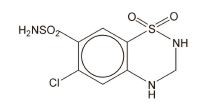
Hydrochlorothiazide
All patients receiving thiazide therapy should be observed for
clinical signs of fluid or electrolyte imbalance, namely hyponatremia,
hypochloremic alkalosis and hypokalemia (see Laboratory Tests and Drug/Drug Interactions). Warning signs are
dryness of mouth, thirst, weakness, lethargy, drowsiness, restlessness, muscle
pains or cramps, muscular fatigue, hypotension, oliguria, tachycardia and
gastrointestinal disturbance, such as nausea or vomiting.
Hypokalemia may develop, especially in cases of brisk diuresis or severe
cirrhosis.
Interference with adequate oral intake of electrolytes will also contribute
to hypokalemia. Hypokalemia may be avoided or treated by the use of potassium
supplements or foods with a high potassium content.
Any chloride deficit is generally mild and usually does not require specific
treatment, except under extraordinary circumstances (as in liver disease or
renal disease). Dilutional hyponatremia may occur in edematous patients in hot
weather; appropriate therapy is water restriction, rather than administration of
salt, except in rare instances when the hyponatremia is life threatening. In
cases of actual salt depletion, appropriate replacement is the therapy of
choice.
Hyperuricemia may occur or frank gout may be precipitated in certain patients
receiving thiazide therapy.
Latent diabetes may become manifest during thiazide administration (see Drug/Drug Interactions).
The antihypertensive effects of the drug may be enhanced in the
postsympathectomy patient.
If progressive renal impairment becomes evident, withholding or discontinuing
diuretic therapy should be considered.
Calcium excretion is decreased by thiazides. Pathological changes in the
parathyroid gland with hypercalcemia and hypophosphatemia have been observed in
a few patients on prolonged thiazide therapy. The common complications of
hyperparathyroidism, such as renal lithiasis, bone resorption, and peptic
ulceration, have not been seen.
Thiazide diuretics have been shown to increase the urinary excretion of
magnesium; this may result in hypomagnesemia.
Information for Patients
Patients should be advised to take metoprolol tartrate and
hydrochlorothiazide tablets regularly and continuously, as directed, with or
immediately following meals. If a dose should be missed, the patient should take
only the next scheduled dose (without doubling it). Patients should not
discontinue metoprolol tartrate and hydrochlorothiazide tablets without
consulting the physician.
Patients should be advised (1) to avoid operating automobiles and machinery
or engaging in other tasks requiring alertness until the patient's response to
therapy with metoprolol tartrate and hydrochlorothiazide has been determined;
(2) to contact the physician if any difficulty in breathing occurs; (3) to
inform the physician or dentist before any type of surgery that he or she is
taking metoprolol tartrate and hydrochlorothiazide tablets.
Laboratory TestsMetoprolol
Clinical laboratory findings may include elevated levels of serum
transaminase, alkaline phosphatase, and lactate dehydrogenase.
Hydrochlorothiazide
Initial and periodic determinations of serum electrolytes to
detect possible electrolyte imbalance should be performed at appropriate
intervals.
Serum and urine electrolyte determinations are particularly important when
the patient is vomiting excessively or receiving parenteral fluids.
Drug/Drug InteractionsMetoprolol
Catecholamine-depleting drugs (e.g., reserpine) may have an
additive effect when given with beta-blocking agents. Patients treated with
metoprolol plus a catecholamine depletor should therefore be closely observed
for evidence of hypotension or marked bradycardia, which may produce vertigo,
syncope, or postural hypotension.
Both digitalis glycosides and beta-blockers slow atrioventricular conduction
and decrease heart rate. Concomitant use can increase the risk of
bradycardia.
Risk of Anaphylactic Reaction
While taking beta-blockers, patients with a history of severe
anaphylactic reaction to a variety of allergens may be more reactive to repeated
challenge, either accidental, diagnostic, or therapeutic. Such patients may be
unresponsive to the usual doses of epinephrine used to treat allergic
reaction.
General Anesthetics
Some inhalation anesthetics may enhance the cardiodepressant
effect of beta-blockers (see WARNINGS:
Metoprolol: Major Surgery).
CYP2D6 Inhibitors
Potent inhibitors of the CYP2D6 enzyme may increase the plasma
concentration of metoprolol. Strong inhibition of CYP2D6 would mimic the
pharmacokinetics of CYP2D6 poor metabolizer. Caution should therefore be
exercised when administering potent CYP2D6 inhibitors with metoprolol. Known
clinically significant potent inhibitors of CYP2D6 are antidepressants such as
fluoxetine, paroxetine or bupropion, antipsychotics such as thioridazine,
antiarrhythmics such as quinidine or propafenone, antiretrovirals such as
ritonavir, antihistamines such as diphenhydramine, antimalarials such as
hydroxychloroquine or quinidine, antifungals such as terbinafine and medications
for stomach ulcers such as cimetidine.
Clonidine
If a patient is treated with clonidine and metoprolol
concurrently and clonidine treatment is to be discontinued, metoprolol should be
stopped several days before clonidine is withdrawn. Rebound hypertension that
can follow withdrawal of clonidine may be increased in patients receiving
concurrent beta-blocker treatment.
Hydrochlorothiazide
Hypokalemia can sensitize or exaggerate the response of the heart
to the toxic effects of digitalis (e.g., increased ventricular
irritability).
Hypokalemia may develop during concomitant use of steroids or ACTH.
Insulin requirements in diabetic patients may be increased, decreased, or
unchanged.
Thiazides may decrease arterial responsiveness to norepinephrine, but not
enough to preclude effectiveness of the pressor agent for therapeutic use.
Thiazides may increase the responsiveness to tubocurarine.
Lithium renal clearance is reduced by thiazides, increasing the risk of
lithium toxicity.
There have been rare reports in the literature of hemolytic anemia occurring
with the concomitant use of hydrochlorothiazide and methyldopa.
Concurrent administration of some nonsteroidal anti-inflammatory agents may
reduce the diuretic, natriuretic and antihypertensive effects of thiazide
diuretics.
Cholestyramine and Colestipol Resins
Absorption of hydrochlorothiazide is impaired in the presence of
anionic exchange resins. Single doses of either cholestyramine or colestipol
resins bind the hydrochlorothiazide and reduce its absorption from the
gastrointestinal tract by up to 85% and 43%, respectively.
Drug/Laboratory Test InteractionsHydrochlorothiazide
Thiazides may decrease serum levels of protein bound iodine
without signs of thyroid disturbance. Thiazides should be discontinued before
tests for parathyroid function are made. (See PRECAUTIONS: General: Hydrochlorothiazide:
Calcium excretion.)
Carcinogenesis, Mutagenesis, Impairment of
FertilityMetoprolol Tartrate and Hydrochlorothiazide
Carcinogenicity and mutagenicity studies have not been conducted
with metoprolol tartrate and hydrochlorothiazide tablets. Metoprolol tartrate
and hydrochlorothiazide tablets produced no evidence of impaired fertility in
male or female rats administered gavaged doses up to 200/50 mg/kg (100/50 times
the maximum recommended daily human dose) prior to mating and throughout
gestation and rearing of young.
Metoprolol
Long-term studies in animals have been conducted to evaluate
carcinogenic potential. In a 2-year study in rats at three oral dosage levels of
up to 800 mg/kg per day, there was no increase in the development of
spontaneously occurring benign or malignant neoplasms of any type. The only
histologic changes that appeared to be drug related were an increased incidence
of generally mild focal accumulation of foamy macrophages in pulmonary alveoli
and a slight increase in biliary hyperplasia. In a 21-month study in Swiss
albino mice at three oral dosage levels of up to 750 mg/kg per day, benign lung
tumors (small adenomas) occurred more frequently in female mice receiving the
highest dose than in untreated control animals. There was no increase in
malignant or total (benign plus malignant) lung tumors, or in the overall
incidence of tumors or malignant tumors. This 21-month study was repeated in
CD-1 mice, and no statistically or biologically significant differences were
observed between treated and control mice of either sex for any type of
tumor.
All mutagenicity tests performed (a dominant lethal study in mice, chromosome
studies in somatic cells, a Salmonella/mammalian-microsome mutagenicity test and a
nucleus anomaly test in somatic interphase nuclei) were negative.
No evidence of impaired fertility due to metoprolol was observed in a study
performed in rats at doses up to 55.5 times the maximum daily human dose of 450
mg.
Hydrochlorothiazide
Two-year feeding studies in mice and rats conducted under the
auspices of the National Toxicology Program (NTP) uncovered no evidence of a
carcinogenic potential of hydrochlorothiazide in female mice (at doses up to
approximately 600 mg/kg/day) or in male and female rats (at doses up to
approximately 100 mg/kg/day). The NTP, however, found equivocal evidence for
hepatocarcinogenicity in male mice.
Hydrochlorothiazide was not genotoxic in in vitro
assays using strains TA 98, TA 100, TA 1535, TA 1537, and TA 1538 of Salmonella typhimurium (Ames assay) and in the Chinese
Hamster Ovary (CHO) test for chromosomal aberrations, or in in vivo assays using mouse germinal cell chromosomes,
Chinese hamster bone marrow chromosomes, and the Drosophila sex-linked recessive lethal trait gene. Positive
test results were obtained only in the in vitro CHO
Sister Chromatid Exchange (clastogenicity) and in the Mouse Lymphoma Cell
(mutagenicity) assays, using concentrations of hydrochlorothiazide from 43 to
1300 mcg/mL, and in the Aspergillus nidulans
nondisjunction assay at an unspecified concentration.
Hydrochlorothiazide had no adverse effects on the fertility of mice and rats
of either sex in studies wherein these species were exposed, via their diet, to
doses of up to 100 and 4 mg/kg/day, respectively, prior to mating and throughout
gestation.
PregnancyTeratogenic Effects. Pregnancy Category CMetoprolol Tartrate and Hydrochlorothiazide
No evidence of adverse effects on pregnancy or the fetus were
observed in rats when dams were administered gavaged doses up to 200/50 mg/kg of
metoprolol tartrate and hydrochlorothiazide tablets (100/50 times the maximum
recommended daily human dose) during the period of organogenesis. Increased
postimplantation loss and decreased postnatal survival were observed with these
doses when administered later in pregnancy (gestation days 15 to 21). In
rabbits, increased fetal loss was observed with oral doses of 25/6.25 mg/kg of
metoprolol tartrate and hydrochlorothiazide tablets (12/6 times the maximum
recommended daily human dose), but not with lower doses. There are no adequate
and well controlled studies of metoprolol tartrate and hydrochlorothiazide
tablets in pregnant women. Metoprolol tartrate and hydrochlorothiazide tablets
should be used during pregnancy only if the potential benefit justifies the
potential risk to the fetus.
Metoprolol
Metoprolol has been shown to increase postimplantation loss and
decrease neonatal survival in rats at doses up to 55.5 times the maximum daily
human dose of 450 mg. Distribution studies in mice confirm exposure of the fetus
when metoprolol is administered to the pregnant animal. These studies have
revealed no evidence of teratogenicity.
Hydrochlorothiazide
Studies in which hydrochlorothiazide was orally administered to
pregnant mice and rats during their respective periods of major organogenesis at
doses up to 3000 and 1000 mg/kg/day, respectively, provided no evidence of harm
to the fetus.
Nonteratogenic EffectsHydrochlorothiazide
Thiazides cross the placental barrier and appear in cord blood,
and there is a risk of fetal or neonatal jaundice, thrombocytopenia and possibly
other adverse reactions that have occurred in adults.
Nursing Mothers
Metoprolol is excreted in breast milk in a very small quantity.
An infant consuming one liter of breast milk daily would receive a dose of
metoprolol of less than 1 mg. Thiazides are also excreted in breast milk. If the
use of metoprolol tartrate and hydrochlorothiazide tablets is deemed essential,
the patient should stop nursing.
Pediatric Use
Safety and effectiveness in pediatric patients have not been
established.
Geriatric Use
Clinical studies of metoprolol tartrate and hydrochlorothiazide
tablets did not include sufficient numbers of subjects aged 65 and over to
determine whether they respond differently from younger subjects. Other reported
clinical experience has not identified differences in responses between the
elderly and younger patients. Hydrochlorothiazide is known to be substantially
excreted by the kidney and the risk of toxic reactions to this drug may be
greater in patients with impaired renal function. Because elderly patients are
more likely to have decreased renal function, care should be taken in dose
selection, and it may be useful to monitor renal function (see WARNINGS). In general, dose selection for
an elderly patient should be cautious, usually starting at the low end of the
dosing range, reflecting the greater frequency of decreased hepatic, renal, or
cardiac function, and concomitant disease or other drug therapy.