Symptomatic GERD
ZEGERID is indicated for the treatment of heartburn and other symptoms associated with GERD. [See Clinical Studies (14.3)]
Erosive Esophagitis
ZEGERID is indicated for the short-term treatment (4-8 weeks) of erosive esophagitis which has been diagnosed by endoscopy.
The efficacy of ZEGERID used for longer than 8 weeks in these patients has not been established. If a patient does not respond to 8 weeks of treatment, it may be helpful to give up to an additional 4 weeks of treatment. If there is recurrence of erosive esophagitis or GERD symptoms (e.g., heartburn), additional 4-8 week courses of ZEGERID may be considered. [See Clinical Studies (14.3)]
Special Populations
Hepatic Insufficiency
Consider dose reduction, particularly for maintenance of healing of erosive esophagitis. [See Clinical Pharmacology (12.3)]
Administration of Capsules
ZEGERID Capsules should be swallowed intact with water. DO NOT USE OTHER LIQUIDS. DO NOT OPEN CAPSULE AND SPRINKLE CONTENTS INTO FOOD.
Preparation and Administration of Suspension
Directions for use: Empty packet contents into a small cup containing 1-2 tablespoons of water. DO NOT USE OTHER LIQUIDS OR FOODS. Stir well and drink immediately. Refill cup with water and drink.
If ZEGERID is to be administered through a nasogastric (NG) or orogastric (OG) tube, the suspension should be constituted with approximately 20 mL of water. DO NOT USE OTHER LIQUIDS OR FOODS. Stir well and administer immediately. An appropriately-sized syringe should be used to instill the suspension in the tube. The suspension should be washed through the tube with 20 mL of water.
Use with clopidogrel
Avoid concomitant use of clopidogrel and omeprazole. Coadministration of clopidogrel with 80 mg omeprazole, a proton pump inhibitor that is an inhibitor of CYP2C19, reduces the pharmacological activity of clopidogrel if given concomitantly or if given 12 hours apart [see Warnings and Precautions (5.6) and Drug Interactions (7)].
Pregnancy Category C
There are no adequate and well-controlled studies on the use of omeprazole in pregnant women. The vast majority of reported experience with omeprazole during human pregnancy is first trimester exposure and the duration of use is rarely specified, eg, intermittent versus chronic. An expert review of published data on experiences with omeprazole use during pregnancy by TERIS – the Teratogen Information System – concluded that therapeutic doses during pregnancy are unlikely to pose a substantial teratogenic risk (the quantity and quality of data were assessed as fair).1
Three epidemiological studies compared the frequency of congenital abnormalities among infants born to women who used omeprazole during pregnancy to the frequency of abnormalities among infants of women exposed to H2-receptor antagonists or other controls. A population-based prospective cohort epidemiological study from the Swedish Medical Birth Registry, covering approximately 99% of pregnancies, reported on 955 infants (824 exposed during the first trimester with 39 of these exposed beyond first trimester, and 131 exposed after the first trimester) whose mothers used omeprazole during pregnancy.2 In utero exposure to omeprazole was not associated with increased risk of any malformation (odds ratio 0.82, 95% CI 0.50-1.34), low birth weight or low Apgar score. The number of infants born with ventricular septal defects and the number of stillborn infants was slightly higher in the omeprazole exposed infants than the expected number in the normal population. The author concluded that both effects may be random.
A retrospective cohort study reported on 689 pregnant women exposed to either H2-blockers or omeprazole in the first trimester (134 exposed to omeprazole).3 The overall malformation rate was 4.4% (95% CI 3.6-5.3) and the malformation rate for first trimester exposure to omeprazole was 3.6% (95% CI 1.5-8.1). The relative risk of malformations associated with first trimester exposure to omeprazole compared with nonexposed women was 0.9 (95% CI 0.3-2.2). The study could effectively rule out a relative risk greater than 2.5 for all malformations. Rates of preterm delivery or growth retardation did not differ between the groups.
A controlled prospective observational study followed 113 women exposed to omeprazole during pregnancy (89% first trimester exposures).4 The reported rates of major congenital malformations was 4% for the omeprazole group, 2% for controls exposed to nonteratogens, and 2.8% in disease-paired controls (background incidence of major malformations 1-5%). Rates of spontaneous and elective abortions, preterm deliveries, gestational age at delivery, and mean birth weight did not differ between the groups. The sample size in this study has 80% power to detect a 5-fold increase in the rate of major malformation.
Several studies have reported no apparent adverse short term effects on the infant when single dose oral or intravenous omeprazole was administered to over 200 pregnant women as premedication for cesarean section under general anesthesia.
Reproduction studies conducted with omeprazole in rats at oral doses up to 28 times the human dose of 40 mg/day (based on body surface area) and in rabbits at doses up to 28 times the human dose (based on body surface area) did not show any evidence of teratogenicity. In pregnant rabbits, omeprazole at doses about 2.8 to 28 times the human dose of 40 mg/day, (based on body surface area) produced dose-related increases in embryo-lethality, fetal resorptions, and pregnancy loss. In rats treated with omeprazole at doses about 2.8 to 28 times the human dose (based on body surface area), dose-related embryo/fetal toxicity and postnatal developmental toxicity occurred in offspring. [See Animal Toxicology and/or Pharmacology (13.2)].
There are no adequate and well-controlled studies in pregnant women. Because animal studies and studies in humans cannot rule out the possibility of harm, ZEGERID should be used during pregnancy only if the potential benefit to pregnant women justifies the potential risk to the fetus.
Antisecretory Activity
Results from a PK/PD study of the antisecretory effect of repeated once-daily dosing of 40 mg and 20 mg of ZEGERID Oral Suspension in healthy subjects are shown in Table 6 below.
Table 6: Effect of ZEGERID Oral Suspension on Intragastric pH, Day 7
|
|
| Omeprazole/Sodium Bicarbonate |
| Parameter | 40 mg/1680 mg
(n = 24) | 20 mg/1680 mg
(n = 28) |
| % Decrease from Baseline for Integrated Gastric Acidity (mmol·hr/L)
| 84%
| 82%
|
| Coefficient of variation
| 20%
| 24%
|
% Time Gastric pH > 4*
(Hours) * | 77%
(18.6 h)
| 51%
(12.2 h)
|
| Coefficient of variation
| 27%
| 43%
|
| Median pH
| 5.2
| 4.2
|
| Coefficient of variation
| 17%
| 37%
|
Results from a separate PK/PD study of antisecretory effect on repeated once-daily dosing of 40 mg/1100 mg and 20 mg/1100 mg of ZEGERID Capsules in healthy subjects show similar effects in general on the above three PD parameters as those for ZEGERID 40 mg/1680 mg and 20 mg/1680 mg Oral Suspension, respectively.
The antisecretory effect lasts longer than would be expected from the very short (1 hour) plasma half-life, apparently due to irreversible binding to the parietal H+/K+ ATPase enzyme.
Enterochromaffin-like (ECL) Cell Effects
In 24-month carcinogenicity studies in rats, a dose-related significant increase in gastric carcinoid tumors and ECL cell hyperplasia was observed in both male and female animals [See Nonclinical Toxicology (13.1)]. Carcinoid tumors have also been observed in rats subjected to fundectomy or long-term treatment with other proton pump inhibitors or high doses of H2-receptor antagonists. Human gastric biopsy specimens have been obtained from more than 3000 patients treated with omeprazole in long-term clinical trials. The incidence of ECL cell hyperplasia in these studies increased with time; however, no case of ECL cell carcinoids, dysplasia, or neoplasia has been found in these patients. These studies are of insufficient duration and size to rule out the possible influence of long-term administration of omeprazole on the development of any premalignant or malignant conditions.
Serum Gastrin Effects
In studies involving more than 200 patients, serum gastrin levels increased during the first 1 to 2 weeks of once-daily administration of therapeutic doses of omeprazole in parallel with inhibition of acid secretion. No further increase in serum gastrin occurred with continued treatment. In comparison with histamine H2-receptor antagonists, the median increases produced by 20 mg doses of omeprazole were higher (1.3 to 3.6 fold vs. 1.1 to 1.8 fold increase). Gastrin values returned to pretreatment levels, usually within 1 to 2 weeks after discontinuation of therapy.
Other Effects
Systemic effects of omeprazole in the CNS, cardiovascular and respiratory systems have not been found to date. Omeprazole, given in oral doses of 30 or 40 mg for 2 to 4 weeks, had no effect on thyroid function, carbohydrate metabolism, or circulating levels of parathyroid hormone, cortisol, estradiol, testosterone, prolactin, cholecystokinin or secretin.
No effect on gastric emptying of the solid and liquid components of a test meal was demonstrated after a single dose of omeprazole 90 mg. In healthy subjects, a single I.V. dose of omeprazole (0.35 mg/kg) had no effect on intrinsic factor secretion. No systematic dose-dependent effect has been observed on basal or stimulated pepsin output in humans. However, when intragastric pH is maintained at 4.0 or above, basal pepsin output is low, and pepsin activity is decreased.
As do other agents that elevate intragastric pH, omeprazole administered for 14 days in healthy subjects produced a significant increase in the intragastric concentrations of viable bacteria. The pattern of the bacterial species was unchanged from that commonly found in saliva. All changes resolved within three days of stopping treatment.
The course of Barrett's esophagus in 106 patients was evaluated in a U.S. double-blind controlled study of omeprazole 40 mg b.i.d. for 12 months followed by 20 mg b.i.d. for 12 months or ranitidine 300 mg b.i.d. for 24 months. No clinically significant impact on Barrett's mucosa by antisecretory therapy was observed. Although neosquamous epithelium developed during antisecretory therapy, complete elimination of Barrett's mucosa was not achieved. No significant difference was observed between treatment groups in development of dysplasia in Barrett's mucosa and no patient developed esophageal carcinoma during treatment. No significant differences between treatment groups were observed in development of ECL cell hyperplasia, corpus atrophic gastritis, corpus intestinal metaplasia, or colon polyps exceeding 3 mm in diameter.
Absorption
In separate in vivo bioavailability studies, when ZEGERID Oral Suspension and Capsules are administered on an empty stomach 1 hour prior to a meal, the absorption of omeprazole is rapid, with mean peak plasma levels (% CV) of omeprazole being 1954 ng/mL (33%) and 1526 ng/mL (49%), respectively, and time to peak of approximately 30 minutes (range 10-90 min) after a single-dose or repeated-dose administration. Absolute bioavailability of ZEGERID Powder for Oral Suspension (compared to I.V. administration) is about 30-40% at doses of 20 – 40 mg, due in large part to presystemic metabolism.
When ZEGERID Oral Suspension 40 mg/1680 mg was administered in a two-dose loading regimen, the omeprazole AUC (0-inf) (ng·hr/mL) was 1665 after Dose 1 and 3356 after Dose 2, while Tmax was approximately 30 minutes for both Dose 1 and Dose 2.
Following single or repeated once daily dosing, peak plasma concentrations of omeprazole from ZEGERID are approximately proportional from 20 to 40 mg doses, but a greater than linear mean AUC (three-fold increase) is observed when doubling the dose to 40 mg. The bioavailability of omeprazole from ZEGERID increases upon repeated administration.
When ZEGERID is administered 1 hour after a meal, the omeprazole AUC is reduced by approximately 24% relative to administration 1 hour prior to a meal.
Distribution
Omeprazole is bound to plasma proteins. Protein binding is approximately 95%.
Metabolism
Following single-dose oral administration of omeprazole, the majority of the dose (about 77%) is eliminated in urine as at least six metabolites. Two metabolites have been identified as hydroxyomeprazole and the corresponding carboxylic acid. The remainder of the dose was recoverable in feces. This implies a significant biliary excretion of the metabolites of omeprazole. Three metabolites have been identified in plasma – the sulfide and sulfone derivatives of omeprazole, and hydroxyomeprazole. These metabolites have very little or no antisecretory activity.
Excretion
Following single-dose oral administration of omeprazole, little if any, unchanged drug is excreted in urine. The mean plasma omeprazole half-life in healthy subjects is approximately 1 hour (range 0.4 to 3.2 hours) and the total body clearance is 500-600 mL/min.
Special Populations
Geriatric
The elimination rate of omeprazole was somewhat decreased in the elderly, and bioavailability was increased. Omeprazole was 76% bioavailable when a single 40-mg oral dose of omeprazole (buffered solution) was administered to healthy elderly subjects, versus 58% in young subjects given the same dose. Nearly 70% of the dose was recovered in urine as metabolites of omeprazole and no unchanged drug was detected. The plasma clearance of omeprazole was 250 mL/min (about half that of young subjects) and its plasma half-life averaged one hour, similar to that of young healthy subjects.
Pediatric
The pharmacokinetics of ZEGERID has not been studied in patients < 18 years of age.
Gender
There are no known differences in the absorption or excretion of omeprazole between males and females.
Hepatic Insufficiency
In patients with chronic hepatic disease, the bioavailability of omeprazole from a buffered solution increased to approximately 100% compared to an I.V. dose, reflecting decreased first-pass effect, and the mean plasma half-life of the drug increased to nearly 3 hours compared to the mean half-life of 1 hour in normal subjects. Plasma clearance averaged 70 mL/min, compared to a value of 500-600 mL/min in normal subjects. Dose reduction, particularly where maintenance of healing of erosive esophagitis is indicated, for the hepatically impaired should be considered.
Renal Insufficiency
In patients with chronic renal impairment, whose creatinine clearance ranged between 10 and 62 mL/min/1.73 m2, the disposition of omeprazole from a buffered solution was very similar to that in healthy subjects, although there was a slight increase in bioavailability. Because urinary excretion is a primary route of excretion of omeprazole metabolites, their elimination slowed in proportion to the decreased creatinine clearance. No dose reduction is necessary in patients with renal impairment.
Asian Population
In pharmacokinetic studies of single 20-mg omeprazole doses, an increase in AUC of approximately four-fold was noted in Asian subjects compared to Caucasians. Dose adjustment, particularly where maintenance of healing of erosive esophagitis is indicated, for Asian subjects should be considered.
Reproductive Toxicology Studies
Reproduction studies conducted in pregnant rats at omeprazole doses up to 138 mg/kg/day (about 28 times the human dose of 40 mg/day, based on body surface area) and in pregnant rabbits at doses up to 69 mg/kg/day (about 28 times the human dose of 40 mg/day, based on body surface area) did not disclose any evidence for a teratogenic potential of omeprazole.
In rabbits, omeprazole in a dose range of 6.9 to 69 mg/kg/day (about 2.8 to 28 times the human dose of 40 mg/day, based on body surface area) produced dose-related increases in embryo-lethality, fetal resorptions and pregnancy disruptions. In rats, dose-related embryo/fetal toxicity and postnatal developmental toxicity were observed in offspring resulting from parents treated with omeprazole at 13.8 to 138.0 mg/kg/day (about 2.8 to 28 times the human dose of 40 mg/day, based on body surface area).
Symptomatic GERD - A placebo controlled study was conducted in Scandinavia to compare the efficacy of omeprazole 20 mg or 10 mg once daily for up to 4 weeks in the treatment of heartburn and other symptoms in GERD patients without erosive esophagitis. Results are shown in Table 12.
Table 12: % Successful Symptomatic Outcomea |
|
|
| Omeprazole
20 mg a.m. | Omeprazole
10 mg a.m. | Placebo
a.m. |
| All patients
| 46*,†
(n = 205)
| 31†
(n = 199)
| 13
(n = 105)
|
| Patients with confirmed GERD
| 56*,†
(n = 115)
| 36†
(n = 109)
| 14
(n = 59)
|
Erosive Esophagitis - In a U.S. multicenter double-blind placebo controlled study of 40 mg or 20 mg of omeprazole delayed release capsules in patients with symptoms of GERD and endoscopically diagnosed erosive esophagitis of grade 2 or above, the percentage healing rates (per protocol) were as shown in Table 13.
Table 13: % Patients Healed
|
| Omeprazole
40 mg
(n = 87) | Omeprazole
20 mg
(n = 83) | Placebo
(n = 43) |
| Week 4
| 45* | 39* | 7
|
| Week 8
| 75* | 74* | 14
|
In this study, the 40-mg dose was not superior to the 20-mg dose of omeprazole in the percentage healing rate. Other controlled clinical trials have also shown that omeprazole is effective in severe GERD. In comparisons with histamine H2-receptor antagonists in patients with erosive esophagitis, grade 2 or above, omeprazole in a dose of 20 mg was significantly more effective than the active controls. Complete daytime and nighttime heartburn relief occurred significantly faster (p < 0.01) in patients treated with omeprazole than in those taking placebo or histamine H2-receptor antagonists.
In this and five other controlled GERD studies, significantly more patients taking 20 mg omeprazole (84%) reported complete relief of GERD symptoms than patients receiving placebo (12%).
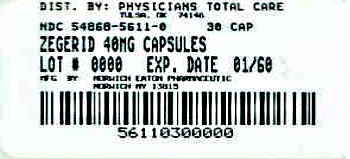
Additional barcode labeling by:
Physicians Total Care, Inc.
Tulsa, Oklahoma 74146