Lovastatin has been shown to reduce both normal and elevated LDL-C concentrations. Apo B also falls substantially during treatment with lovastatin. Since each LDL-C particle contains one molecule of Apo B, and since little Apo B is found in other lipoproteins, this strongly suggests that lovastatin does not merely cause cholesterol to be lost from LDL-C, but also reduces the concentration of circulating LDL particles. In addition, lovastatin can produce increases of variable magnitude in HDL-C, and modestly reduces VLDL-C and plasma TG. The effects of lovastatin on Lp(a), fibrinogen, and certain other independent biochemical risk markers for coronary heart disease are not well characterized.
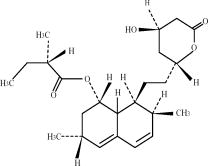
Lovastatin is a specific inhibitor of 3-hydroxy-3-methylglutaryl-coenzyme A (HMG-CoA) reductase, the enzyme that catalyzes the conversion of HMG-CoA to mevalonate. The conversion of HMG-CoA to mevalonate is an early step in the biosynthetic pathway for cholesterol. Lovastatin is a prodrug and has little, if any, activity until hydrolyzed to its active beta-hydroxyacid form, lovastatin acid. The mechanism of the LDL-lowering effect of lovastatin may involve both reduction of VLDL-C concentration and induction of the LDL receptor, leading to reduced production and/or increased catabolism of LDL-C.
Lovastatin appears to be incompletely absorbed after oral administration. Because of extensive hepatic extraction, the amount of lovastatin reaching the systemic circulation as active inhibitors after oral administration is low (<5%) and shows considerable inter-individual variation. Peak concentrations of active and total inhibitors occur within 2 to 4 hours after Mevacor® administration.
Lovastatin absorption appears to be increased by at least 30% by grapefruit juice; however, the effect is dependent on the amount of grapefruit juice consumed and the interval between grapefruit juice and lovastatin ingestion. With a once-a-day dosing regimen, plasma concentrations of total inhibitors over a dosing interval achieved a steady-state between the second and third days of therapy and were about 1.5 times those following a single dose of Mevacor®.
Although the mechanism is not fully understood, cyclosporine has been shown to increase the AUC of HMG-CoA reductase inhibitors. The increase in AUC for lovastatin and lovastatin acid is presumably due, in part, to inhibition of CYP3A4.
Both lovastatin and its beta-hydroxyacid metabolite are highly bound (>95%) to human plasma proteins. Distribution of lovastatin or its metabolites into human milk is unknown; however, lovastatin distributes into milk in rats. In animal studies, lovastatin concentrated in the liver, and crossed the blood-brain and placental barriers.
Lovastatin undergoes extensive first-pass extraction and metabolism by cytochrome P450 3A4 in the liver, its primary site of action. The major active metabolites present in human plasma are the beta-hydroxyacid of lovastatin (lovastatin acid), its 6'-hydroxy derivative, and two additional metabolites.
Lovastatin is excreted in urine and bile, based on studies of Mevacor®. Following an oral dose of radiolabeled lovastatin in man, 10% of the dose was excreted in urine and 83% in feces. The latter represents absorbed drug equivalents excreted in bile, as well as any unabsorbed drug.
Lovastatin may elevate creatine phosphokinase and transaminase levels (see WARNINGS and ADVERSE REACTIONS). This should be considered in the differential diagnosis of chest pain in a patient on therapy with lovastatin.
Lovastatin is metabolized by CYP3A4 but has no CYP3A4 inhibitory activity; therefore it is not expected to affect the plasma concentrations of other drugs metabolized by CYP3A4. Strong inhibitors of CYP3A4 (e.g., itraconazole, ketoconazole, posaconazole, clarithromycin, telithromycin, HIV protease inhibitors, boceprevir, telaprevir, nefazodone, and erythromycin), and large quantities of grapefruit juice (>1 quart daily) increase the risk of myopathy by reducing the elimination of lovastatin (see WARNINGS, Myopathy/Rhabdomyolysis).
In vitro studies have demonstrated that voriconazole inhibits the metabolism of lovastatin. Adjustment of the lovastatin dose may be needed to reduce the risk of myopathy, including rhabdomyolysis, if voriconazole must be used concomitantly with lovastatin.
Interactions With Lipid-Lowering Drugs That Can Cause Myopathy When Given Alone
The risk of myopathy is also increased by the following lipid-lowering drugs that are not strong CYP3A4 inhibitors, but which can cause myopathy when given alone (see WARNINGS, Myopathy/Rhabdomyolysis).
Gemfibrozil
Other fibrates
Other Drug Interactions
Cyclosporine: The risk of myopathy/rhabdomyolysis is increased by concomitant administration of cyclosporine (see WARNINGS, Myopathy/Rhabdomyolysis).
Danazol, Diltiazem, or Verapamil: The risk of myopathy/rhabdomyolysis is increased by concomitant administration of danazol, diltiazem, or verapamil particularly with higher doses of lovastatin (see WARNINGS, Myopathy/Rhabdomyolysis and CLINICAL PHARMACOLOGY, Pharmacokinetics).
Amiodarone: The risk of myopathy/rhabdomyolysis is increased when amiodarone is used concomitantly with a closely related member of the HMGCoA reductase inhibitor class (see WARNINGS, Myopathy/Rhabdomyolysis).
Coumarin Anticoagulants - In a small clinical study in which lovastatin was administered to warfarin-treated patients, no effect on PT was detected. However, another HMG-CoA reductase inhibitor has been found to produce a less than two seconds increase in PT in healthy volunteers receiving low doses of warfarin. Also, bleeding and/or increased PT have been reported in a few patients taking coumarin anticoagulants concomitantly with lovastatin. It is recommended that in patients taking anticoagulants, PT be determined before starting ADVICOR and frequently enough during early therapy to insure that no significant alteration of PT occurs. Once a stable PT has been documented, PT can be monitored at the intervals usually recommended for patients on coumarin anticoagulants. If the dose of ADVICOR is changed, the same procedure should be repeated.
Colchicine - Cases of myopathy, including rhabdomyolysis, have been reported with lovastatin coadministered with colchicine.
Ranolazine - The risk of myopathy, including rhabdomyolysis, may be increased by concomitant administration of ranolazine.
Propranolol - In normal volunteers, there was no clinically significant pharmacokinetic or pharmacodynamic interaction with concomitant administration of single doses of lovastatin and propranolol.
Digoxin - In patients with hypercholesterolemia, concomitant administration of lovastatin and digoxin resulted in no effect on digoxin plasma concentrations.
Oral Hypoglycemic Agents - In pharmacokinetic studies of lovastatin in hypercholesterolemic, non-insulin dependent diabetic patients, there was no drug interaction with glipizide or with chlorpropamide.
In a 21-month carcinogenic study in mice, there was a statistically significant increase in the incidence of hepatocellular carcinomas and adenomas in both males and females at 500 mg/kg/day. This dose produced a total plasma drug exposure 3 to 4 times that of humans given the highest recommended dose of lovastatin (drug exposure was measured as total HMG-CoA reductase inhibitory activity in extracted plasma). Tumor increases were not seen at 20 and 100 mg/kg/day, doses that produced drug exposures of 0.3 to 2 times that of humans at the 80 mg/day dose. A statistically significant increase in pulmonary adenomas was seen in female mice at approximately 4 times the human drug exposure. (Although mice were given 300 times the human dose on a mg/kg body weight basis, plasma levels of total inhibitory activity were only 4 times higher in mice than in humans given 80 mg of lovastatin.)
There was an increase in incidence of papilloma in the non-glandular mucosa of the stomach of mice beginning at exposures of 1 to 2 times that of humans. The glandular mucosa was not affected. The human stomach contains only glandular mucosa.
In a 24-month carcinogenicity study in rats, there was a positive dose-response relationship for hepatocellular carcinogenicity in males at drug exposures between 2 to 7 times that of human exposure at 80 mg/day (doses in rats were 5, 30, and 180 mg/kg/day).
An increased incidence of thyroid neoplasms in rats appears to be a response that has been seen with other HMG-CoA reductase inhibitors.
A drug in this class chemically similar to lovastatin was administered to mice for 72 weeks at 25, 100, and 400 mg/kg body weight, which resulted in mean serum drug levels approximately 3, 15, and 33 times higher than the mean human serum drug concentration (as total inhibitory activity) after a 40 mg oral dose. Liver carcinomas were significantly increased in high-dose females and mid- and high-dose males, with a maximum incidence of 90% in males. The incidence of adenomas of the liver was significantly increased in mid- and high-dose females. Drug treatment also significantly increased the incidence of lung adenomas in mid- and high-dose males and females. Adenomas of the Harderian gland (a gland of the eye of rodents) were significantly higher in high-dose mice than in controls.
No evidence of mutagenicity was observed in a microbial mutagen test using mutant strains of Salmonella typhimurium with or without rat or mouse liver metabolic activation. In addition, no evidence of damage to genetic material was noted in an in vitro alkaline elution assay using rat or mouse hepatocytes, a V-79 mammalian cell forward mutation study, an in vitro chromosome aberration study in CHO cells, or an in vivo chromosomal aberration assay in mouse bone marrow.
Drug-related testicular atrophy, decreased spermatogenesis, spermatocytic degeneration and giant cell formation were seen in dogs starting at 20 mg/kg/day. Similar findings were seen with another drug in this class. No drug-related effects on fertility were found in studies with lovastatin in rats. However, in studies with a similar drug in this class, there was decreased fertility in male rats treated for 34 weeks at 25 mg/kg body weight, although this effect was not observed in a subsequent fertility study when this same dose was administered for 11 weeks (the entire cycle of spermatogenesis, including epididymal maturation). In rats treated with this same reductase inhibitor at 180 mg/kg/day, seminiferous tubule degeneration (necrosis and loss of spermatogenic epithelium) was observed. No microscopic changes were observed in the testes from rats of either study. The clinical significance of these findings is unclear.
Rare reports of congenital anomalies have been received following intrauterine exposure to HMG-CoA reductase inhibitors. In a review5 of approximately 100 prospectively followed pregnancies in women exposed to lovastatin or another structurally related HMG-CoA reductase inhibitor, the incidences of congenital anomalies, spontaneous abortions and fetal deaths/stillbirths did not exceed what would be expected in the general population. The number of cases is adequate only to exclude a 3- to 4-fold increase in congenital anomalies over the background incidence. In 89% of the prospectively followed pregnancies, drug treatment was initiated prior to pregnancy and was discontinued at some point in the first trimester when pregnancy was identified.
Lovastatin has been shown to produce skeletal malformations at plasma levels 40 times the human exposure (for mouse fetus) and 80 times the human exposure (for rat fetus) based on mg/m2 surface area (doses were 800 mg/kg/day). No drug-induced changes were seen in either species at multiples of 8 times (rat) or 4 times (mouse) based on surface area. No evidence of malformations was noted in rabbits at exposures up to 3 times the human exposure (dose of 15 mg/kg/day, highest tolerated dose).
After oral administration of lovastatin to mice the median lethal dose observed was >15 g/m2.
Five healthy human volunteers have received up to 200 mg of lovastatin as a single dose without clinically significant adverse experiences. A few cases of accidental overdose have been reported; no patients had any specific symptoms, and all patients recovered without sequelae. The maximum dose taken was 5 to 6 g. The dialyzability of lovastatin and its metabolites in man is not known at present.
The usual recommended starting dose is 20 mg once a day given with the evening meal. The recommended dosing range is 10-80 mg/day in single or two divided doses; the maximum recommended dose is 80 mg/day. Doses should be individualized according to the recommended goal of therapy (see NCEP Guidelines and CLINICAL PHARMACOLOGY). Patients requiring reductions in LDL cholesterol of 20% or more to achieve their goal (see INDICATIONS AND USAGE) should be started on 20 mg/day of lovastatin. A starting dose of 10 mg may be considered for patients requiring smaller reductions. Adjustments should be made at intervals of 4 weeks or more.
Cholesterol levels should be monitored periodically and consideration should be given to reducing the dosage of lovastatin if cholesterol levels fall significantly below the targeted range.
Dosage in Patients taking Danazol, Diltiazem or Verapamil
In patients taking danazol, diltiazem, or verapamil concomitantly with lovastatin (see WARNINGS, Myopathy/Rhabdomyolysis), therapy should begin with 10 mg of lovastatin and should not exceed 20 mg/day.
Dosage in Patients taking Amiodarone
In patients taking amiodarone concomitantly with lovastatin, the dose should not exceed 40 mg/day (see WARNINGS, Myopathy/Rhabdomyolysis and PRECAUTIONS, Drug Interactions, Other drug interactions).
Concomitant Lipid-Lowering Therapy
Use of lovastatin with gemfibrozil should be avoided.
Caution should be used when prescribing other fibrates with lovastatin, as fibrates can cause myopathy when given alone.
Dosage in Patients with Renal Insufficiency
In patients with severe renal insufficiency (creatinine clearance <30 mL/min), dosage increases above 20 mg/day should be carefully considered and, if deemed necessary, implemented cautiously (see CLINICAL PHARMACOLOGY and WARNINGS, Myopathy/Rhabdomyolysis).