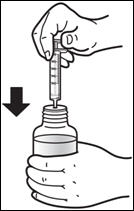
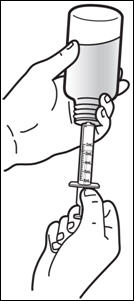
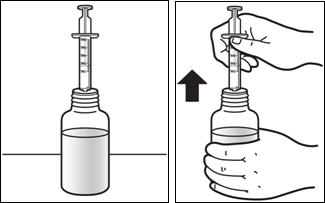
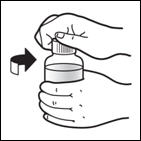
Treatment-Naïve Adult Patients
The recommended oral dose of PREZISTA is 800 mg (two 400 mg tablets or 8 mL of the oral suspension) taken with ritonavir 100 mg (one 100 mg tablet/capsule or 1.25 mL of a 80 mg/mL ritonavir oral solution) once daily and with food.
Treatment-Experienced Adult Patients
| Treatment-Experienced Adult Patients |
|---|
| With no darunavir resistance associated substitutions V11I, V32I, L33F, I47V, I50V, I54L, I54M, T74P, L76V, I84V and L89V | With at least one darunavir resistance associated substitution |
| PREZISTA 800 mg (two 400 mg tablets or 8 mL) once daily with ritonavir 100 mg (one 100 mg tablet/capsule or 1.25 mL) once daily and with food | PREZISTA 600 mg (e.g. one 600 mg tablet or 6 mL) twice daily with ritonavir 100 mg (one 100 mg tablet/capsule or 1.25 mL) twice daily and with food |
For antiretroviral treatment-experienced patients genotypic testing is recommended. However, when genotypic testing is not feasible, PREZISTA/ritonavir 600/100 mg twice daily dosing is recommended.
Dosing recommendations for pediatric patients weighing at least 10 kg but less than 15 kg
The weight-based dose in pediatric patients weighing less than 15 kg is PREZISTA 20 mg/kg with ritonavir 3 mg/kg which can be dosed using the following table:
Table 1: Recommended Dose for Pediatric Patients with PREZISTA Oral Suspension (100 mg/mL) and Ritonavir Oral Solution for Pediatric Patients Weighing 10 kg to Less Than 15 kgBody weight
(kg) | Dose
(twice daily with food) |
|---|
Greater than or equal to 10 kg to less than 11 kg
| PREZISTA 200 mg (2 mL) with ritonavir 32 mg (0.4 mL) |
Greater than or equal to 11 kg to less than 12 kg
| PREZISTA 220 mg (2.2 mL) with ritonavir 32 mg (0.4 mL) |
Greater than or equal to 12 kg to less than 13 kg
| PREZISTA 240 mg (2.4 mL) with ritonavir 40 mg (0.5 mL) |
Greater than or equal to 13 kg to less than 14 kg
| PREZISTA 260 mg (2.6 mL) with ritonavir 40 mg (0.5 mL) |
Greater than or equal to 14 kg to less than 15 kg
| PREZISTA 280 mg (2.8 mL) with ritonavir 48 mg (0.6 mL) |
Dosing recommendations for pediatric patients weighing at least 15 kg
Pediatric patients who weigh at least 15 kg and are able to swallow tablets can be dosed using the following table:
Table 2: Recommended Dose for Pediatric Patients with PREZISTA Tablets and Ritonavir Oral Solution or Tablets/Capsules for Pediatric Patients Weighing At Least 15 kgBody Weight
(kg) | Dose
(twice daily with food) |
|---|
| Greater than or equal to 15 kg to less than 30 kg | PREZISTA 375 mg with ritonavir with ritonavir oral solution: 80 mg/mL 50 mg (0.6 mL)
|
| Greater than or equal to 30 kg to less than 40 kg | PREZISTA 450 mg with ritonavir 60 mg (0.75 mL)
|
| Greater than or equal to 40 kg | PREZISTA 600 mg with ritonavir100 mg
|
Pediatric patients who weigh at least 15 kg but are unable to swallow tablets can be dosed using the following table:
Table 3: Recommended Dose for Pediatric Patients with PREZISTA Oral Suspension (100 mg/mL) and Ritonavir Oral Solution for Pediatric Patients Weighing At Least 15 kgBody Weight
(kg) | Dose
(twice daily with food) |
|---|
| Greater than or equal to 15 kg to less than 30 kg | PREZISTA 375 mg (3.8 mL) with ritonavir 50 mg (0.6 mL)
|
| Greater than or equal to 30 kg to less than 40 kg | PREZISTA 450 mg (4.6 mL) with ritonavir 60 mg (0.75 mL)
|
Greater than or equal to 40 kg
| PREZISTA 600 mg (6 mL) with ritonavir 100 mg (1.25 mL) |
Do not use PREZISTA/ritonavir in pediatric patients below 3 years of age [see Warnings and Precautions (5.11) and Nonclinical Toxicology (13.2)].
Study TMC114-C211
The safety assessment is based on all safety data from the Phase 3 trial TMC114-C211 comparing PREZISTA/ritonavir 800/100 mg once daily versus lopinavir/ritonavir 800/200 mg per day in 689 antiretroviral treatment-naïve HIV-1-infected adult subjects. The total mean exposure for subjects in the PREZISTA/ritonavir 800/100 mg once daily arm and in the lopinavir/ritonavir 800/200 mg per day arm was 162.5 and 153.5 weeks, respectively.
The majority of the adverse drug reactions (ADRs) reported during treatment with PREZISTA/ritonavir 800/100 mg once daily were mild in severity. The most common clinical ADRs to PREZISTA/ritonavir 800/100 mg once daily (greater than or equal to 5%) of at least moderate intensity (greater than or equal to Grade 2) were diarrhea, headache, abdominal pain and rash. 2.3% of subjects in the PREZISTA/ritonavir arm discontinued treatment due to ADRs.
ADRs to PREZISTA/ritonavir 800/100 mg once daily of at least moderate intensity (greater than or equal to Grade 2) in antiretroviral treatment-naïve HIV-1-infected adult subjects are presented in Table 5 and subsequent text below the table.
Table 5: Selected Clinical Adverse Drug Reactions to PREZISTA/ritonavir 800/100 mg Once Daily of at Least Moderate Intensity (≥ Grade 2) Occurring in ≥ 2% of Antiretroviral Treatment-Naïve HIV-1-Infected Adult Subjects | Randomized Study
TMC114-C211 |
|---|
System Organ Class,
Preferred Term,
% | PREZISTA/ritonavir
800/100 mg once daily
+ TDF/FTC
N = 343 | lopinavir/ritonavir
800/200 mg per day
+ TDF/FTC
N = 346 |
|---|
N=total number of subjects per treatment group
TDF = tenofovir disoproxil fumarate
FTC = emtricitabine |
| Gastrointestinal Disorders | | |
| Abdominal pain | 6% | 6% |
| Diarrhea | 9% | 16% |
| Nausea | 4% | 4% |
| Vomiting | 2% | 4% |
| General Disorders and Administration Site Conditions | | |
| Fatigue | < 1% | 3% |
| Metabolism and Nutrition Disorders | | |
| Anorexia | 2% | < 1% |
| Nervous System Disorders | | |
| Headache | 7% | 6% |
| Skin and Subcutaneous Tissue Disorders | | |
| Rash | 6% | 7% |
Less Common Adverse Reactions
Treatment-emergent ADRs of at least moderate intensity (greater than or equal to Grade 2) occurring in less than 2% of antiretroviral treatment-naïve subjects receiving PREZISTA/ritonavir 800/100 mg once daily are listed below by body system:
Gastrointestinal Disorders: acute pancreatitis, dyspepsia, flatulence
General Disorders and Administration Site Conditions: asthenia
Hepatobiliary Disorders: acute hepatitis (e.g., acute hepatitis, cytolytic hepatitis, hepatotoxicity)
Immune System Disorders: (drug) hypersensitivity, immune reconstitution syndrome
Metabolism and Nutrition Disorders: diabetes mellitus
Musculoskeletal and Connective Tissue Disorders: myalgia, osteonecrosis
Psychiatric Disorders: abnormal dreams
Skin and Subcutaneous Tissue Disorders: angioedema, pruritus, Stevens-Johnson Syndrome, urticaria
Laboratory abnormalities:
Selected Grade 2 to 4 laboratory abnormalities that represent a worsening from baseline observed in antiretroviral treatment-naïve adult subjects treated with PREZISTA/ritonavir 800/100 mg once daily are presented in Table 6.
Table 6: Grade 2 to 4 Laboratory Abnormalities Observed in Antiretroviral Treatment-Naïve HIV-1-Infected Adult Subjects
| Randomized Study
TMC114-C211 |
|---|
Laboratory Parameter
Preferred Term,
% | Limit | PREZISTA/ritonavir
800/100 mg once daily
+ TDF/FTC | lopinavir/ritonavir
800/200 mg per day
+ TDF/FTC |
|---|
N=total number of subjects per treatment group
TDF = tenofovir disoproxil fumarate
FTC = emtricitabine |
| Biochemistry | |
| Alanine Aminotransferase | | | |
| Grade 2 | > 2.5 to ≤ 5.0 × ULN | 9% | 9% |
| Grade 3 | > 5.0 to ≤ 10.0 × ULN | 3% | 3% |
| Grade 4 | > 10.0 × ULN | < 1% | 3% |
| Aspartate Aminotransferase | | | |
| Grade 2 | > 2.5 to ≤ 5.0 × ULN | 7% | 10% |
| Grade 3 | > 5.0 to ≤ 10.0 × ULN | 4% | 2% |
| Grade 4 | > 10.0 × ULN | 1% | 3% |
| Alkaline Phosphatase | | | |
| Grade 2 | > 2.5 to ≤ 5.0 × ULN | 1% | 1% |
| Grade 3 | > 5.0 to ≤ 10.0 × ULN | 0% | < 1% |
| Grade 4 | > 10.0 × ULN | 0% | 0% |
| Hyperbilirubinemia | | | |
| Grade 2 | > 1.5 to ≤ 2.5 × ULN | < 1% | 5% |
| Grade 3 | > 2.5 to ≤ 5.0 × ULN | < 1% | < 1% |
| Grade 4 | > 5.0 × ULN | 0% | 0% |
| Triglycerides | | | |
| Grade 2 | 5.65–8.48 mmol/L
500–750 mg/dL | 3% | 10% |
| Grade 3 | 8.49–13.56 mmol/L
751–1200 mg/dL | 2% | 5% |
| Grade 4 | > 13.56 mmol/L
> 1200 mg/dL | 1% | 1% |
| Total Cholesterol | | | |
| Grade 2 | 6.20–7.77 mmol/L
240–300 mg/dL | 23% | 27% |
| Grade 3 | > 7.77 mmol/L
> 300 mg/dL | 1% | 5% |
| Low-Density Lipoprotein Cholesterol | | | |
| Grade 2 | 4.13–4.90 mmol/L
160–190 mg/dL | 14% | 12% |
| Grade 3 | ≥ 4.91 mmol/L
≥ 191 mg/dL | 9% | 6% |
| Elevated Glucose Levels | | | |
| Grade 2 | 6.95–13.88 mmol/L
126–250 mg/dL | 11% | 10% |
| Grade 3 | 13.89–27.75 mmol/L
251–500 mg/dL | 1% | <1% |
| Grade 4 | > 27.75 mmol/L
> 500 mg/dL | 0% | 0% |
| Pancreatic Lipase | | | |
| Grade 2 | > 1.5 to ≤ 3.0 × ULN | 3% | 2% |
| Grade 3 | > 3.0 to ≤ 5.0 × ULN | < 1% | 1% |
| Grade 4 | > 5.0 × ULN | 0% | < 1% |
| Pancreatic Amylase | | | |
| Grade 2 | > 1.5 to ≤ 2.0 × ULN | 5% | 2% |
| Grade 3 | > 2.0 to ≤ 5.0 × ULN | 5% | 4% |
| Grade 4 | > 5.0 × ULN | 0% | < 1% |
Study TMC114-C214
The safety assessment is based on all safety data from the Phase 3 trial TMC114-C214 comparing PREZISTA/ritonavir 600/100 mg twice daily versus lopinavir/ritonavir 400/100 mg twice daily in 595 antiretroviral treatment-experienced HIV-1-infected adult subjects. The total mean exposure for subjects in the PREZISTA/ritonavir 600/100 mg twice daily arm and in the lopinavir/ritonavir 400/100 mg twice daily arm was 80.7 and 76.4 weeks, respectively.
The majority of the ADRs reported during treatment with PREZISTA/ritonavir 600/100 mg twice daily were mild in severity. The most common clinical ADRs to PREZISTA/ritonavir 600/100 mg twice daily (greater than or equal to 5%) of at least moderate intensity (greater than or equal to Grade 2) were diarrhea, nausea, rash, abdominal pain and vomiting. 4.7% of subjects in the PREZISTA/ritonavir arm discontinued treatment due to ADRs.
ADRs to PREZISTA/ritonavir 600/100 mg twice daily of at least moderate intensity (greater than or equal to Grade 2) in antiretroviral treatment-experienced HIV-1-infected adult subjects are presented in Table 7 and subsequent text below the table.
Table 7: Selected Clinical Adverse Drug Reactions to PREZISTA/ritonavir 600/100 mg Twice Daily of at Least Moderate Intensity (≥ Grade 2) Occurring in ≥ 2% of Antiretroviral Treatment-Experienced HIV-1-Infected Adult Subjects | Randomized Study
TMC114-C214 |
|---|
System Organ Class,
Preferred Term,
% | PREZISTA/ritonavir
600/100 mg twice daily
+ OBR
N = 298 | lopinavir/ritonavir
400/100 mg twice daily
+ OBR
N = 297 |
|---|
N=total number of subjects per treatment group
OBR = optimized background regimen |
| Gastrointestinal Disorders | | |
| Abdominal distension | 2% | < 1% |
| Abdominal pain | 6% | 3% |
| Diarrhea | 14% | 20% |
| Dyspepsia | 2% | 1% |
| Nausea | 7% | 6% |
| Vomiting | 5% | 3% |
| General Disorders and Administration Site Conditions | | |
| Asthenia | 3% | 1% |
| Fatigue | 2% | 1% |
| Metabolism and Nutrition Disorders | | |
| Anorexia | 2% | 2% |
| Diabetes mellitus | 2% | < 1% |
| Nervous System Disorders | | |
| Headache | 3% | 3% |
| Skin and Subcutaneous Tissue Disorders | | |
| Rash | 7% | 3% |
Less Common Adverse Reactions
Treatment-emergent ADRs of at least moderate intensity (greater than or equal to Grade 2) occurring in less than 2% of antiretroviral treatment-experienced subjects receiving PREZISTA/ritonavir 600/100 mg twice daily are listed below by body system:
Gastrointestinal Disorders: acute pancreatitis, flatulence
Musculoskeletal and Connective Tissue Disorders: myalgia
Psychiatric Disorders: abnormal dreams
Skin and Subcutaneous Tissue Disorders: pruritus, urticaria
Laboratory abnormalities:
Selected Grade 2 to 4 laboratory abnormalities that represent a worsening from baseline observed in antiretroviral treatment-experienced adult subjects treated with PREZISTA/ritonavir 600/100 mg twice daily are presented in Table 8.
Table 8: Grade 2 to 4 Laboratory Abnormalities Observed in Antiretroviral Treatment-Experienced HIV-1-Infected Adult SubjectsGrade 4 data not applicable in Division of AIDS grading scale
| | Randomized Study
TMC114-C214 |
|---|
Laboratory Parameter
Preferred Term,
% | Limit | PREZISTA/ritonavir
600/100 mg twice daily
+ OBR | lopinavir/ritonavir
400/100 mg twice daily
+ OBR |
|---|
N=total number of subjects per treatment group
OBR = optimized background regimen |
| Biochemistry | | |
| Alanine Aminotransferase | | | |
| Grade 2 | > 2.5 to ≤ 5.0 × ULN | 7% | 5% |
| Grade 3 | > 5.0 to ≤ 10.0 × ULN | 2% | 2% |
| Grade 4 | > 10.0 × ULN | 1% | 2% |
| Aspartate Aminotransferase | | | |
| Grade 2 | > 2.5 to ≤ 5.0 × ULN | 6% | 6% |
| Grade 3 | > 5.0 to ≤ 10.0 × ULN | 2% | 2% |
| Grade 4 | > 10.0 × ULN | < 1% | 2% |
| Alkaline Phosphatase | | | |
| Grade 2 | > 2.5 to ≤ 5.0 × ULN | < 1% | 0% |
| Grade 3 | > 5.0 to ≤ 10.0 × ULN | < 1% | < 1% |
| Grade 4 | > 10.0 × ULN | 0% | 0% |
| Hyperbilirubinemia | | | |
| Grade 2 | > 1.5 to ≤ 2.5 × ULN | < 1% | 2% |
| Grade 3 | > 2.5 to ≤ 5.0 × ULN | < 1% | < 1% |
| Grade 4 | > 5.0 × ULN | < 1% | 0% |
| Triglycerides | | | |
| Grade 2 | 5.65–8.48 mmol/L
500–750 mg/dL | 10% | 11% |
| Grade 3 | 8.49–13.56 mmol/L
751–1200 mg/dL | 7% | 10% |
| Grade 4 | > 13.56 mmol/L
> 1200 mg/dL | 3% | 6% |
| Total Cholesterol | | | |
| Grade 2 | 6.20–7.77 mmol/L
240–300 mg/dL | 25% | 23% |
| Grade 3 | > 7.77 mmol/L
> 300 mg/dL | 10% | 14% |
| Low-Density Lipoprotein Cholesterol | | | |
| Grade 2 | 4.13–4.90 mmol/L
160–190 mg/dL | 14% | 14% |
| Grade 3 | ≥ 4.91 mmol/L
≥ 191 mg/dL | 8% | 9% |
| Elevated Glucose Levels | | | |
| Grade 2 | 6.95–13.88 mmol/L
126–250 mg/dL | 10% | 11% |
| Grade 3 | 13.89–27.75 mmol/L
251–500 mg/dL | 1% | < 1% |
| Grade 4 | > 27.75 mmol/L
> 500 mg/dL | < 1% | 0% |
| Pancreatic Lipase | | | |
| Grade 2 | > 1.5 to ≤ 3.0 × ULN | 3% | 4% |
| Grade 3 | > 3.0 to ≤ 5.0 × ULN | 2% | < 1% |
| Grade 4 | > 5.0 × ULN | < 1% | 0% |
| Pancreatic Amylase | | | |
| Grade 2 | > 1.5 to ≤ 2.0 × ULN | 6% | 7% |
| Grade 3 | > 2.0 to ≤ 5.0 × ULN | 7% | 3% |
| Grade 4 | > 5.0 × ULN | 0% | 0% |
Study TMC114-C212
ADRs to PREZISTA/ritonavir (all grades, greater than or equal to 3%), excluding laboratory abnormalities reported as ADRs, were vomiting (13%), diarrhea (11%), abdominal pain (10%), headache (9%), rash (5%), nausea (4%) and fatigue (3%).
Grade 3 or 4 laboratory abnormalities were ALT increased (Grade 3: 3%; Grade 4: 1%), AST increased (Grade 3: 1%), pancreatic amylase increased (Grade 3: 4%, Grade 4: 1%), pancreatic lipase increased (Grade 3: 1%), total cholesterol increased (Grade 3: 1%), and LDL increased (Grade 3: 3%).
Study TMC114-C228
ADRs to PREZISTA/ritonavir (all grades, greater than or equal to 3%), excluding laboratory abnormalities, were diarrhea (19%), vomiting (14%) and rash (10%).
There were no Grade 3 or 4 laboratory abnormalities considered as ADRs in this study.
Other nucleoside reverse transcriptase inhibitors (NRTIs):
Based on the different elimination pathways of the other NRTIs (zidovudine, zalcitabine, emtricitabine, stavudine, lamivudine and abacavir) that are primarily renally excreted, no drug interactions are expected for these drugs and PREZISTA/ritonavir.
Other PIs:
The co-administration of PREZISTA/ritonavir and PIs other than lopinavir/ritonavir, saquinavir, atazanavir, and indinavir has not been studied. Therefore, such co-administration is not recommended.
Antiretroviral Pregnancy Registry: To monitor maternal-fetal outcomes of pregnant women exposed to PREZISTA, an Antiretroviral Pregnancy Registry has been established. Physicians are encouraged to register patients by calling 1-800-258-4263.
Pharmacokinetics in Adults
General
Darunavir is primarily metabolized by CYP3A. Ritonavir inhibits CYP3A, thereby increasing the plasma concentrations of darunavir. When a single dose of PREZISTA 600 mg was given orally in combination with 100 mg ritonavir twice daily, there was an approximate 14-fold increase in the systemic exposure of darunavir. Therefore, PREZISTA should only be used in combination with 100 mg of ritonavir to achieve sufficient exposures of darunavir.
The pharmacokinetics of darunavir, co-administered with low dose ritonavir (100 mg), has been evaluated in healthy adult volunteers and in HIV-1-infected subjects. Table 10 displays the population pharmacokinetic estimates of darunavir after oral administration of PREZISTA/ritonavir 600/100 mg twice daily [based on sparse sampling in 285 patients in study TMC114-C214, 278 patients in Study TMC114-C229 and 119 patients (integrated data) from Studies TMC114-C202 and TMC114-C213] and PREZISTA/ritonavir 800/100 mg once daily [based on sparse sampling in 335 patients in Study TMC114-C211 and 280 patients in Study TMC114-C229] to HIV-1-infected patients.
Table 10: Population Pharmacokinetic Estimates of Darunavir at PREZISTA/ritonavir 800/100 mg Once Daily (Study TMC114-C211, 48-Week Analysis and Study TMC114-C229, 48-Week Analysis) and PREZISTA/ritonavir 600/100 mg Twice Daily (Study TMC114-C214, 48-Week Analysis, Study TMC114-C229, 48-Week Analysis and Integrated data from Studies TMC114-C213 and TMC114-C202, Primary 24-Week Analysis)| Parameter | Study TMC114-C211
PREZISTA/
ritonavir 800/100 mg once daily
N = 335 | Study TMC114-C229
PREZISTA/
ritonavir 800/100 mg once daily
N = 280 | Study TMC114-C214
PREZISTA/
ritonavir 600/100 mg twice daily
N = 285 | Study TMC114-C229
PREZISTA/
ritonavir 600/100 mg twice daily
N = 278 | Studies TMC114-C213 and TMC114-C202 (integrated data)
PREZISTA/
ritonavir 600/100 mg twice daily
N =119 |
|---|
| N = number of subjects with data |
| AUC24h (ng∙h/mL) AUC24h is calculated as AUC12h*2 | | | | | |
| Mean ± Standard Deviation | 93026 ± 27050 | 93334 ± 28626 | 116796 ± 33594 | 114302 ± 32681 | 124698 ± 32286 |
| Median (Range) | 87854 (45000–219240) | 87788 (45456–236920) | 111632 (64874–355360) | 109401 (48934–323820) | 123336 (67714–212980) |
| C0h (ng/mL) | | | | | |
| Mean ± Standard Deviation | 2282 ± 1168 | 2160 ± 1201 | 3490 ± 1401 | 3386 ± 1372 | 3578 ± 1151 |
| Median (Range) | 2041 (368–7242) | 1896 (184–7881) | 3307 (1517–13198) | 3197 (250–11865) | 3539 (1255–7368) |
Absorption and Bioavailability
Darunavir, co-administered with 100 mg ritonavir twice daily, was absorbed following oral administration with a Tmax of approximately 2.5–4 hours. The absolute oral bioavailability of a single 600 mg dose of darunavir alone and after co-administration with 100 mg ritonavir twice daily was 37% and 82%, respectively. In vivo data suggest that darunavir/ritonavir is an inhibitor of the p-glycoprotein (p-gp) transporters.
Effects of Food on Oral Absorption
When PREZISTA tablets were administered with food, the Cmax and AUC of darunavir, co-administered with ritonavir, is approximately 40% higher relative to the fasting state. Therefore, PREZISTA tablets, co-administered with ritonavir, should always be taken with food. Within the range of meals studied, darunavir exposure is similar. The total caloric content of the various meals evaluated ranged from 240 Kcal (12 gms fat) to 928 Kcal (56 gms fat).
Distribution
Darunavir is approximately 95% bound to plasma proteins. Darunavir binds primarily to plasma alpha 1-acid glycoprotein (AAG).
Metabolism
In vitro experiments with human liver microsomes (HLMs) indicate that darunavir primarily undergoes oxidative metabolism. Darunavir is extensively metabolized by CYP enzymes, primarily by CYP3A. A mass balance study in healthy volunteers showed that after a single dose administration of 400 mg 14C-darunavir, co-administered with 100 mg ritonavir, the majority of the radioactivity in the plasma was due to darunavir. At least 3 oxidative metabolites of darunavir have been identified in humans; all showed activity that was at least 90% less than the activity of darunavir against wild-type HIV-1.
Elimination
A mass balance study in healthy volunteers showed that after single dose administration of 400 mg 14C-darunavir, co-administered with 100 mg ritonavir, approximately 79.5% and 13.9% of the administered dose of 14C-darunavir was recovered in the feces and urine, respectively. Unchanged darunavir accounted for approximately 41.2% and 7.7% of the administered dose in feces and urine, respectively. The terminal elimination half-life of darunavir was approximately 15 hours when co-administered with ritonavir. After intravenous administration, the clearance of darunavir, administered alone and co-administered with 100 mg twice daily ritonavir, was 32.8 L/h and 5.9 L/h, respectively.
Special Populations
Hepatic Impairment
Darunavir is primarily metabolized by the liver. The steady-state pharmacokinetic parameters of darunavir were similar after multiple dose co-administration of PREZISTA/ritonavir 600/100 mg twice daily to subjects with normal hepatic function (n=16), mild hepatic impairment (Child-Pugh Class A, n=8), and moderate hepatic impairment (Child-Pugh Class B, n=8). The effect of severe hepatic impairment on the pharmacokinetics of darunavir has not been evaluated [see Dosage and Administration (2.3) and Use in Specific Populations (8.6)].
Hepatitis B or Hepatitis C Virus Co-infection
The 48-week analysis of the data from Studies TMC114-C211 and TMC114-C214 in HIV-1-infected subjects indicated that hepatitis B and/or hepatitis C virus co-infection status had no apparent effect on the exposure of darunavir.
Renal Impairment
Results from a mass balance study with 14C-darunavir/ritonavir showed that approximately 7.7% of the administered dose of darunavir is excreted in the urine as unchanged drug. As darunavir and ritonavir are highly bound to plasma proteins, it is unlikely that they will be significantly removed by hemodialysis or peritoneal dialysis. Population pharmacokinetic analysis showed that the pharmacokinetics of darunavir were not significantly affected in HIV-1-infected subjects with moderate renal impairment (CrCL between 30–60 mL/min, n=20). There are no pharmacokinetic data available in HIV-1-infected patients with severe renal impairment or end stage renal disease [see Use in Specific Populations (8.7)].
Gender
Population pharmacokinetic analysis showed higher mean darunavir exposure in HIV-1-infected females compared to males. This difference is not clinically relevant.
Race
Population pharmacokinetic analysis of darunavir in HIV-1-infected subjects indicated that race had no apparent effect on the exposure to darunavir.
Geriatric Patients
Population pharmacokinetic analysis in HIV-1-infected subjects showed that darunavir pharmacokinetics are not considerably different in the age range (18 to 75 years) evaluated in HIV-1-infected subjects (n = 12, age greater than or equal to 65) [see Use in Specific Populations (8.5)].
Pediatric Patients
The pharmacokinetics of darunavir in combination with ritonavir in 92 antiretroviral treatment-experienced HIV-1-infected pediatric subjects 3 to less than 18 years of age and weighing at least 10 kg showed that the administered weight-based dosages resulted in darunavir exposure that was comparable to the exposures achieved in treatment-experienced adults receiving PREZISTA/ritonavir 600/100 mg twice daily [see Dosage and Administration (2.2)].
Table 11: Population Pharmacokinetic Estimates of Darunavir Exposure (Study TMC114-C212 and Study TMC114-C228) Following Administration of Doses in Tables 1 and 2| Parameter | Study TMC114-C212
PREZISTA/
ritonavir twice daily
N = 74 | Study TMC114-C228
PREZISTA/
ritonavir
twice daily
|
|---|
10 to less than 15 kg
N = 10 | 15 to less than 20 kg
N = 12 |
|---|
| N = number of subjects with data. |
| AUC24h (ng∙h/mL)
| | | |
| Mean ± Standard Deviation | 126377 (34356) | 137399 ± 51067 | 158773 ± 61932 |
| Median (Range) | 127340 (67054–230720) | 123229 (92098–262720) | 138578 (104974–317420) |
| C0h (ng/mL) | | | |
| Mean ± Standard Deviation | 3948 (1363) | 4429 ± 2064 | 4858 ± 2521 |
| Median (Range) | 3888 (1836–7821) | 4010 (2576–9488) | 4469 (2733–11300) |
Drug Interactions
[See also Contraindications (4), Warnings and Precautions (5.5), and Drug Interactions (7).]
Darunavir co-administered with ritonavir is an inhibitor of CYP3A and CYP2D6. Co-administration of darunavir and ritonavir with drugs primarily metabolized by CYP3A and CYP2D6 may result in increased plasma concentrations of such drugs, which could increase or prolong their therapeutic effect and adverse events.
Darunavir and ritonavir are metabolized by CYP3A. Drugs that induce CYP3A activity would be expected to increase the clearance of darunavir and ritonavir, resulting in lowered plasma concentrations of darunavir and ritonavir. Co-administration of darunavir and ritonavir and other drugs that inhibit CYP3A may decrease the clearance of darunavir and ritonavir and may result in increased plasma concentrations of darunavir and ritonavir.
Drug interaction studies were performed with darunavir and other drugs likely to be co-administered and some drugs commonly used as probes for pharmacokinetic interactions. The effects of co-administration of darunavir on the AUC, Cmax, and Cmin values are summarized in Table 12 (effect of other drugs on darunavir) and Table 13 (effect of darunavir on other drugs). For information regarding clinical recommendations, see Drug Interactions (7).
Several interaction studies have been performed with a dose other than the recommended dose of the co-administered drug or darunavir; however, the results are applicable to the recommended dose of the co-administered drug and/or darunavir.
Table 12: Drug Interactions: Pharmacokinetic Parameters for Darunavir in the Presence of Co-administered Drugs| Co-Administered Drug | Dose/Schedule | N | PK | LS Mean Ratio (90% CI) of Darunavir Pharmacokinetic Parameters With/Without Co-administered Drug
No Effect =1.00 |
|---|
| Co-Administered Drug | Darunavir/
ritonavir | Cmax | AUC | Cmin |
|---|
| N = number of subjects with data |
| Co-Administration With Other HIV Protease Inhibitors |
| Atazanavir | 300 mg q.d. q.d. = once daily | 400/100 mg b.i.d. b.i.d. = twice daily | 13 | ↔ | 1.02
(0.96–1.09) | 1.03
(0.94–1.12) | 1.01
(0.88–1.16) |
| Indinavir | 800 mg b.i.d. | 400/100 mg b.i.d. | 9 | ↑ | 1.11
(0.98–1.26) | 1.24
(1.09–1.42) | 1.44
(1.13–1.82) |
| Lopinavir/ Ritonavir | 400/100 mg b.i.d. | 1200/100 mg b.i.d. The pharmacokinetic parameters of darunavir in this study were compared with the pharmacokinetic parameters following administration of darunavir/ritonavir 600/100 mg b.i.d. | 14 | ↓ | 0.79
(0.67–0.92) | 0.62
(0.53–0.73) | 0.49
(0.39–0.63) |
| 533/133.3 mg b.i.d. | 1200 mg b.i.d. | 15 | ↓ | 0.79
(0.64–0.97) | 0.59
(0.50–0.70) | 0.45
(0.38–0.52) |
Saquinavir hard gel capsule
| 1000 mg b.i.d. | 400/100 mg b.i.d. | 14 | ↓ | 0.83
(0.75–0.92) | 0.74
(0.63–0.86) | 0.58
(0.47–0.72) |
| Co-Administration With Other HIV Antiretrovirals |
| Didanosine | 400 mg q.d. | 600/100 mg b.i.d. | 17 | ↔ | 0.93
(0.86–1.00) | 1.01
(0.95–1.07) | 1.07
(0.95–1.21) |
| Efavirenz | 600 mg q.d. | 300/100 mg b.i.d. | 12 | ↓ | 0.85
(0.72–1.00) | 0.87
(0.75–1.01) | 0.69
(0.54–0.87) |
| Etravirine | 200 mg b.i.d. | 600/100 mg b.i.d. | 15 | ↔ | 1.11
(1.01–1.22) | 1.15
(1.05–1.26) | 1.02
(0.90–1.17) |
| Nevirapine | 200 mg b.i.d. | 400/100 mg b.i.d. | 8 | ↑ | 1.40 Ratio based on between-study comparison.
(1.14–1.73) | 1.24
(0.97–1.57) | 1.02
(0.79–1.32) |
| Rilpivirine | 150 mg q.d. | 800/100 mg q.d. | 15 | ↔ | 0.90
(0.81–1.00) | 0.89
(0.81–0.99) | 0.89
(0.68–1.16) |
| Tenofovir Disoproxil Fumarate | 300 mg q.d. | 300/100 mg b.i.d. | 12 | ↑ | 1.16
(0.94–1.42) | 1.21
(0.95–1.54) | 1.24
(0.90–1.69) |
| Co-Administration With HCV NS3-4A Protease Inhibitors |
| Boceprevir AUC is AUC(0-last); N = 10 for Cmin in the reference arm | 800 mg three times daily | 600/100 mg b.i.d. | 11 | ↓ | 0.64
(0.58–0.71) | 0.56
(0.51–0.61) | 0.41
(0.38–0.45) |
| Telaprevir | 750 mg every 8 hours
1125 mg every 12 hours | 600/100 mg b.i.d.
600/100 mg b.i.d. | 11 N = 14 for Cmax
15 | ↓
↓ | 0.60
(0.56–0.64)
0.53
(0.47–0.59) | 0.60
(0.57–0.63)
0.49
(0.43–0.55) | 0.58
(0.52–0.64)
0.42
(0.35–0.51) |
| Co-Administration With Other Drugs |
| Carbamazepine | 200 mg b.i.d. | 600/100 mg b.i.d. | 16 | ↔ | 1.04
(0.93–1.16) | 0.99
(0.90–1.08) | 0.85
(0.73–1.00) |
| Clarithromycin | 500 mg b.i.d. | 400/100 mg b.i.d. | 17 | ↔ | 0.83
(0.72–0.96) | 0.87
(0.75–1.01) | 1.01
(0.81–1.26) |
| Ketoconazole | 200 mg b.i.d. | 400/100 mg b.i.d. | 14 | ↑ | 1.21
(1.04–1.40) | 1.42
(1.23–1.65) | 1.73
(1.39–2.14) |
| Omeprazole | 20 mg q.d. | 400/100 mg b.i.d. | 16 | ↔ | 1.02
(0.95–1.09) | 1.04
(0.96–1.13) | 1.08
(0.93–1.25) |
| Paroxetine | 20 mg q.d. | 400/100 mg b.i.d. | 16 | ↔ | 0.97
(0.92–1.02) | 1.02
(0.95–1.10) | 1.07
(0.96–1.19) |
| Ranitidine | 150 mg b.i.d. | 400/100 mg b.i.d. | 16 | ↔ | 0.96
(0.89–1.05) | 0.95
(0.90–1.01) | 0.94
(0.90–0.99) |
| Rifabutin | 150 mg q.o.d. q.o.d. = every other day | 600/100 mg b.i.d. | 11 | ↑ | 1.42
(1.21–1.67) | 1.57
(1.28–1.93) | 1.75
(1.28–2.37) |
| Sertraline | 50 mg q.d. | 400/100 mg b.i.d. | 13 | ↔ | 1.01
(0.89–1.14) | 0.98
(0.84–1.14) | 0.94
(0.76–1.16) |
Table 13: Drug Interactions: Pharmacokinetic Parameters for Co-administered Drugs in the Presence of Darunavir/Ritonavir| Co-Administered Drug | Dose/Schedule | N | PK | LS Mean Ratio (90% CI) of Co-Administered Drug Pharmacokinetic Parameters With/Without Darunavir
No effect =1.00 |
|---|
| Co-Administered Drug | Darunavir/
ritonavir | Cmax | AUC | Cmin |
|---|
| N = number of subjects with data;- = no information available |
| A cocktail study was conducted in 12 healthy volunteers to evaluate the effect of steady state pharmacokinetics of darunavir/ritonavir on the activity of CYP2D6 (using dextromethorphan as probe substrate), CYP2C9 (using warfarin as probe substrate), and CYP2C19 (using omeprazole as probe substrate). The pharmacokinetic results are shown in Table 13. |
| Co-Administration With Other HIV Protease Inhibitors |
| Atazanavir | 300 mg q.d. q.d. = once daily /100 mg ritonavir q.d. when administered alone | 400/100 mg b.i.d. b.i.d. = twice daily | 13 | ↔ | 0.89
(0.78–1.01) | 1.08
(0.94–1.24) | 1.52
(0.99–2.34) |
| 300 mg q.d. when administered with darunavir/ritonavir | | | | | | |
| Indinavir | 800 mg b.i.d. /100 mg ritonavir b.i.d. when administered alone | 400/100 mg b.i.d. | 9 | ↑ | 1.08
(0.95–1.22) | 1.23
(1.06–1.42) | 2.25
(1.63–3.10) |
| 800 mg b.i.d. when administered with darunavir/
ritonavir
| | | | | | |
| Lopinavir/Ritonavir | 400/100 mg b.i.d. The pharmacokinetic parameters of lopinavir in this study were compared with the pharmacokinetic parameters following administration of lopinavir/ritonavir 400/100 mg b.i.d. | 1200/100 mg b.i.d. | 14 | ↔ | 0.98
(0.78–1.22) | 1.09
(0.86–1.37) | 1.23
(0.90–1.69) |
| 533/133.3 mg b.i.d. | 1200 mg b.i.d. | 15 | ↔ | 1.11
(0.96–1.30) | 1.09
(0.96–1.24) | 1.13
(0.90–1.42) |
| Saquinavir hard gel capsule | 1000 mg b.i.d. /100 mg ritonavir b.i.d. when administered alone | 400/100 mg b.i.d. | 12 | ↔ | 0.94
(0.78–1.13) | 0.94
(0.76–1.17) | 0.82
(0.52–1.30) |
| 1000 mg b.i.d. when administered with darunavir/ritonavir | | | | | | |
| Co-Administration With Other HIV Antiretrovirals |
| Didanosine | 400 mg q.d. | 600/100 mg b.i.d. | 17 | ↔ | 0.84
(0.59–1.20) | 0.91
(0.75–1.10) | - |
| Efavirenz | 600 mg q.d. | 300/100 mg b.i.d. | 12 | ↑ | 1.15
(0.97–1.35) | 1.21
(1.08–1.36) | 1.17
(1.01–1.36) |
| Etravirine | 100 mg b.i.d. | 600/100 mg b.i.d. | 14 | ↓ | 0.68
(0.57–0.82) | 0.63
(0.54–0.73) | 0.51
(0.44–0.61) |
| Nevirapine | 200 mg b.i.d. | 400/100 mg b.i.d. | 8 | ↑ | 1.18
(1.02–1.37) | 1.27
(1.12–1.44) | 1.47
(1.20–1.82) |
| Rilpivirine | 150 mg q.d. | 800/100 mg q.d. | 14 | ↑ | 1.79
(1.56–2.06) | 2.30
(1.98–2.67) | 2.78
(2.39–3.24) |
| Tenofovir Disoproxil Fumarate | 300 mg q.d. | 300/100 mg b.i.d. | 12 | ↑ | 1.24
(1.08–1.42) | 1.22
(1.10–1.35) | 1.37
(1.19–1.57) |
| Maraviroc | 150 mg b.i.d. | 600/100 mg b.i.d. | 12 | ↑ | 2.29
(1.46–3.59) | 4.05
(2.94–5.59) | 8.00
(6.35–10.1) |
| Maraviroc | 150 mg b.i.d. | 600/100 mg b.i.d. with 200 mg b.i.d. etravirine | 10 | ↑ | 1.77
(1.20–2.60) | 3.10
(2.57–3.74) | 5.27
(4.51–6.15) |
| Co-Administration With HCV NS3-4A Protease Inhibitors |
| Boceprevir | 800 mg three times daily | 600/100 mg b.i.d. | 12 N = 11 for the test arm | ↓ | 0.75
(0.67–0.85) | 0.68
(0.65–0.72) | 0.65
(0.56–0.76) |
| Telaprevir | 750 mg every 8 hours | 600/100 mg b.i.d. | 11 N = 14 for Cmax | ↓ | 0.64
(0.61–0.67) | 0.65
(0.61–0.69) | 0.68
(0.63–0.74) |
| Co-Administration With Other Drugs |
| Atorvastatin | 40 mg q.d. when administered alone | 300/100 mg b.i.d. | 15 | ↑ | 0.56
(0.48–0.67) | 0.85
(0.76–0.97) | 1.81
(1.37–2.40) |
| 10 mg q.d. when administered with darunavir/ritonavir | | | | | | |
| Buprenorphine/ Naloxone | 8/2 mg to 16/4 mg q.d. | 600/100 mg b.i.d. | 17 | ↔ | 0.92 ratio is for buprenorphine; mean Cmax and AUC24 for naloxone were comparable when buprenorphine/naloxone was administered with or without PREZISTA/ritonavir
(0.79–1.08) | 0.89
(0.78–1.02) | 0.98
(0.82–1.16) |
| Norbuprenorphine | | | 17 | ↑ | 1.36
(1.06–1.74) | 1.46
(1.15–1.85) | 1.71
(1.29–2.27) |
| Carbamazepine | 200 mg b.i.d. | 600/100 mg b.i.d. | 16 | ↑ | 1.43
(1.34–1.53) | 1.45
(1.35–1.57) | 1.54
(1.41–1.68) |
| Carbamazepine epoxide | | | 16 | ↓ | 0.46
(0.43–0.49) | 0.46
(0.44–0.49) | 0.48
(0.45–0.51) |
| Clarithromycin | 500 mg b.i.d. | 400/100 mg b.i.d. | 17 | ↑ | 1.26
(1.03–1.54) | 1.57
(1.35–1.84) | 2.74
(2.30–3.26) |
| Dextromethorphan | 30 mg | 600/100 mg b.i.d. | 12 | ↑ | 2.27
(1.59–3.26) | 2.70
(1.80–4.05) | - |
| Dextrorphan | | | | ↓ | 0.87
(0.77–0.98) | 0.96
(0.90–1.03) | - |
| Digoxin | 0.4 mg | 600/100 mg b.i.d. | 8 | ↑ | 1.15
(0.89–1.48) | 1.36
(0.81–2.27) | - |
| Ethinyl estradiol (EE) | Ortho-Novum 1/35
(35 µg EE / 1 mg NE) | 600/100 mg b.i.d. | 11 | ↓ | 0.68
(0.61–0.74) | 0.56
(0.50–0.63) | 0.38
(0.27–0.54) |
| Norethindrone (NE) | | | 11 | ↓ | 0.90
(0.83–0.97) | 0.86
(0.75–0.98) | 0.70
(0.51–0.97) |
| Ketoconazole | 200 mg b.i.d. | 400/100 mg b.i.d. | 15 | ↑ | 2.11
(1.81–2.44) | 3.12
(2.65–3.68) | 9.68
(6.44–14.55) |
| R-Methadone | 55–150 mg q.d. | 600/100 mg b.i.d. | 16 | ↓ | 0.76
(0.71–0.81) | 0.84
(0.78–0.91) | 0.85
(0.77–0.94) |
| Omeprazole | 40 mg single dose | 600/100 mg b.i.d. | 12 | ↓ | 0.66
(0.48–0.90) | 0.58
(0.50–0.66) | - |
| 5-hydroxy omeprazole | | | | ↓ | 0.93
(0.71–1.21) | 0.84
(0.77–0.92) | - |
| Paroxetine | 20 mg q.d. | 400/100 mg b.i.d. | 16 | ↓ | 0.64
(0.59–0.71) | 0.61
(0.56–0.66) | 0.63
(0.55–0.73) |
| Pravastatin | 40 mg single dose | 600/100 mg b.i.d. | 14 | ↑ | 1.63
(0.95–2.82) | 1.81
(1.23–2.66) | - |
| Rifabutin | 150 mg q.o.d. q.o.d. = every other day when administered with PREZISTA/ritonavir | 600/100 mg b.i.d. In comparison to rifabutin 300 mg q.d. | 11 | ↑ | 0.72
(0.55–0.93) | 0.93
(0.80–1.09) | 1.64
(1.48–1.81) |
| 25-O-desacetyl-rifabutin | 300 mg q.d. when administered alone | | 11 | ↑ | 4.77
(4.04–5.63) | 9.81
(8.09–11.9) | 27.1
(22.2–33.2) |
| Sertraline | 50 mg q.d. | 400/100 mg b.i.d. | 13 | ↓ | 0.56
(0.49–0.63) | 0.51
(0.46–0.58) | 0.51
(0.45–0.57) |
| Sildenafil | 100 mg (single dose) administered alone | 400/100 mg b.i.d. | 16 | ↑ | 0.62
(0.55–0.70) | 0.97
(0.86–1.09) | - |
| 25 mg (single dose) when administered with darunavir/ritonavir | | | | | | |
| S-warfarin | 10 mg single dose | 600/100 mg b.i.d. | 12 | ↓ | 0.92
(0.86–0.97) | 0.79
(0.73–0.85) | - |
| 7-OH-S-warfarin | | | 12 | ↑ | 1.42
(1.24–1.63) | 1.23
(0.97–1.57) | - |
Mechanism of Action
Darunavir is an inhibitor of the HIV-1 protease. It selectively inhibits the cleavage of HIV-1 encoded Gag-Pol polyproteins in infected cells, thereby preventing the formation of mature virus particles.
Antiviral Activity
Darunavir exhibits activity against laboratory strains and clinical isolates of HIV-1 and laboratory strains of HIV-2 in acutely infected T-cell lines, human peripheral blood mononuclear cells and human monocytes/macrophages with median EC50 values ranging from 1.2 to 8.5 nM (0.7 to 5.0 ng/mL). Darunavir demonstrates antiviral activity in cell culture against a broad panel of HIV-1 group M (A, B, C, D, E, F, G), and group O primary isolates with EC50 values ranging from less than 0.1 to 4.3 nM. The EC50 value of darunavir increases by a median factor of 5.4 in the presence of human serum. Darunavir did not show antagonism when studied in combination with the PIs amprenavir, atazanavir, indinavir, lopinavir, nelfinavir, ritonavir, saquinavir, or tipranavir, the N(t)RTIs abacavir, didanosine, emtricitabine, lamivudine, stavudine, tenofovir, zalcitabine, or zidovudine, the NNRTIs delavirdine, efavirenz, etravirine, or nevirapine, and the fusion inhibitor enfuvirtide.
Resistance
Cell Culture: HIV-1 isolates with a decreased susceptibility to darunavir have been selected in cell culture and obtained from subjects treated with darunavir/ritonavir. Darunavir-resistant virus derived in cell culture from wild-type HIV-1 had 21- to 88-fold decreased susceptibility to darunavir and developed 2 to 4 of the following amino acid substitutions S37D, R41E/T, K55Q, H69Q, K70E, T74S, V77I, or I85V in the protease. Selection in cell culture of darunavir resistant HIV-1 from nine HIV-1 strains harboring multiple PI resistance-associated mutations resulted in the overall emergence of 22 mutations in the protease gene, coding for amino acid substitutions L10F, V11I, I13V, I15V, G16E, L23I, V32I, L33F, S37N, M46I, I47V, I50V, F53L, L63P, A71V, G73S, L76V, V82I, I84V, T91A/S, and Q92R, of which L10F, V32I, L33F, S37N, M46I, I47V, I50V, L63P, A71V, and I84V were the most prevalent. These darunavir-resistant viruses had at least eight protease substitutions and exhibited 50- to 641-fold decreases in darunavir susceptibility with final EC50 values ranging from 125 nM to 3461 nM.
Clinical studies of PREZISTA/ritonavir in treatment-experienced subjects: In a pooled analysis of the 600/100 mg PREZISTA/ritonavir twice daily arms of Studies TMC114-C213, TMC114-C202, TMC114-C215, and the control arms of etravirine studies TMC125-C206 and TMC125-C216, the amino acid substitutions V32I and I54L or M developed most frequently on PREZISTA/ritonavir in 41% and 25%, respectively, of the treatment-experienced subjects who experienced virologic failure, either by rebound or by never being suppressed (less than 50 copies/mL). Other substitutions that developed frequently in PREZISTA/ritonavir virologic failure isolates occurred at amino acid positions V11I, I15V, L33F, I47V, I50V, and L89V. These amino acid substitutions were associated with decreased susceptibility to darunavir; 90% of the virologic failure isolates had a greater than 7-fold decrease in susceptibility to darunavir at failure. The median darunavir phenotype (fold change from reference) of the virologic failure isolates was 4.3-fold at baseline and 85-fold at failure. Amino acid substitutions were also observed in the protease cleavage sites in the Gag polyprotein of some PREZISTA/ritonavir virologic failure isolates. In Study TMC114-C212 of treatment-experienced pediatric subjects, the amino acid substitutions V32I, I54L and L89M developed most frequently in virologic failures on PREZISTA/ritonavir.
In the 96-week as-treated analysis of the Phase 3 Study TMC114-C214, the percent of virologic failures (never suppressed, rebounders and discontinued before achieving suppression) was 21% (62/298) in the group of subjects receiving PREZISTA/ritonavir 600/100 mg twice daily compared to 32% (96/297) of subjects receiving lopinavir/ritonavir 400/100 mg twice daily. Examination of subjects who failed on PREZISTA/ritonavir 600/100 mg twice daily and had post-baseline genotypes and phenotypes showed that 7 subjects (7/43; 16%) developed PI substitutions on darunavir/ritonavir treatment resulting in decreased susceptibility to darunavir. Six of the 7 had baseline PI resistance-associated substitutions and baseline darunavir phenotypes greater than 7. The most common emerging PI substitutions in these virologic failures were V32I, L33F, M46I or L, I47V, I54L, T74P and L76V. These amino acid substitutions were associated with 59- to 839-fold decreased susceptibility to darunavir at failure. Examination of individual subjects who failed in the comparator arm on lopinavir/ritonavir and had post-baseline genotypes and phenotypes showed that 31 subjects (31/75; 41%) developed substitutions on lopinavir treatment resulting in decreased susceptibility to lopinavir (greater than 10-fold) and the most common substitutions emerging on treatment were L10I or F, M46I or L, I47V or A, I54V and L76V. Of the 31 lopinavir/ritonavir virologic failure subjects, 14 had reduced susceptibility (greater than 10-fold) to lopinavir at baseline.
In the 48-week analysis of the Phase 3 Study TMC114-C229, the number of virologic failures (including those who discontinued before suppression after Week 4) was 26% (75/294) in the group of subjects receiving PREZISTA/ritonavir 800/100 mg once daily compared to 19% (56/296) of subjects receiving PREZISTA/ritonavir 600/100 mg twice daily. Examination of isolates from subjects who failed on PREZISTA/ritonavir 800/100 mg once daily and had post-baseline genotypes showed that 8 subjects (8/60; 13%) had isolates that developed IAS-USA defined PI resistance-associated substitutions compared to 5 subjects (5/39; 13%) on PREZISTA/ritonavir 600/100 mg twice daily. Isolates from 2 subjects developed PI resistance associated substitutions associated with decreased susceptibility to darunavir; 1 subject isolate in the PREZISTA/ritonavir 800/100 mg once daily arm, developed substitutions V32I, M46I, L76V and I84V associated with a 24-fold decreased susceptibility to darunavir, and 1 subject isolate in the PREZISTA/ritonavir 600/100 mg twice daily arm developed substitutions L33F and I50V associated with a 40-fold decreased susceptibility to darunavir. In the PREZISTA/ritonavir 800/100 mg once daily and PREZISTA/ritonavir 600/100 mg twice daily groups, isolates from 7 (7/60, 12%) and 4 (4/42, 10%) virologic failures, respectively, developed decreased susceptibility to an NRTI included in the treatment regimen.
Clinical studies of PREZISTA/ritonavir in treatment-naive subjects: In the 192-week as-treated analysis censoring those who discontinued before Week 4 of the Phase 3 Study TMC114-C211, the percentage of virologic failures (never suppressed, rebounders and discontinued before achieving suppression) was 22% (64/288) in the group of subjects receiving PREZISTA/ritonavir 800/100 mg once daily compared to 29% (76/263) of subjects receiving lopinavir/ritonavir 800/200 mg per day. In the PREZISTA/ritonavir arm, emergent PI resistance-associated substitutions were identified in 11 of the virologic failures with post-baseline genotypic data (n=43). However, none of the darunavir virologic failures had a decrease in darunavir susceptibility (greater than 7-fold change) at failure. In the comparator lopinavir/ritonavir arm, emergent PI resistance-associated substitutions were identified in 17 of the virologic failures with post-baseline genotypic data (n=53), but none of the lopinavir/ritonavir virologic failures had decreased susceptibility to lopinavir (greater than 10-fold change) at failure. The reverse transcriptase M184V substitution and/or resistance to emtricitabine, which was included in the fixed background regimen, was identified in 4 virologic failures from the PREZISTA/ritonavir arm and 7 virologic failures in the lopinavir/ritonavir arm.
Cross-resistance
Cross-resistance among PIs has been observed. Darunavir has a less than 10-fold decreased susceptibility in cell culture against 90% of 3309 clinical isolates resistant to amprenavir, atazanavir, indinavir, lopinavir, nelfinavir, ritonavir, saquinavir and/or tipranavir showing that viruses resistant to these PIs remain susceptible to darunavir.
Darunavir-resistant viruses were not susceptible to amprenavir, atazanavir, indinavir, lopinavir, nelfinavir, ritonavir or saquinavir in cell culture. However, six of nine darunavir-resistant viruses selected in cell culture from PI-resistant viruses showed a fold change in EC50 values less than 3 for tipranavir, indicative of limited cross-resistance between darunavir and tipranavir. In Studies TMC114-C213, TMC114-C202, and TMC114-C215, 34% (64/187) of subjects in the darunavir/ritonavir arm whose baseline isolates had decreased susceptibility to tipranavir (tipranavir fold change greater than 3) achieved less than 50 copies/mL serum HIV-1 RNA levels at Week 96. Of the viruses isolated from subjects experiencing virologic failure on PREZISTA/ritonavir 600/100 mg twice daily (greater than 7 fold change), 41% were still susceptible to tipranavir and 10% were susceptible to saquinavir while less than 2% were susceptible to the other protease inhibitors (amprenavir, atazanavir, indinavir, lopinavir or nelfinavir).
In Study TMC114-C214, the 7 darunavir/ritonavir virologic failures with reduced susceptibility to darunavir at failure were also resistant to the approved PIs (fos)amprenavir, atazanavir, lopinavir, indinavir, and nelfinavir at failure. Six of these 7 were resistant to saquinavir and 5 were resistant to tipranavir. Four of these virologic failures were already PI-resistant at baseline.
Cross-resistance between darunavir and nucleoside/nucleotide reverse transcriptase inhibitors, non-nucleoside reverse transcriptase inhibitors, fusion inhibitors, CCR5 co-receptor antagonists, or integrase inhibitors is unlikely because the viral targets are different.
Baseline Genotype/Phenotype and Virologic Outcome Analyses
Genotypic and/or phenotypic analysis of baseline virus may aid in determining darunavir susceptibility before initiation of PREZISTA/ritonavir 600/100 mg twice daily therapy. The effect of baseline genotype and phenotype on virologic response at 96 weeks was analyzed in as-treated analyses using pooled data from the Phase 2b studies (Studies TMC114-C213, TMC114-C202, and TMC114-C215) (n=439). The findings were confirmed with additional genotypic and phenotypic data from the control arms of etravirine Studies TMC125-C206 and TMC125-C216 at Week 24 (n=591).
Diminished virologic responses were observed in subjects with 5 or more baseline IAS-defined primary protease inhibitor resistance-associated substitutions (D30N, V32I, L33F, M46I/L, I47A/V, G48V, I50L/V, I54L/M, L76V, V82A/F/L/S/T, I84V, N88S, L90M) (see Table 14).
Table 14: Response to PREZISTA/ritonavir 600/100 mg Twice Daily by Baseline Number of IAS-Defined Primary PI Resistance-Associated Substitutions: As-treated Analysis of Studies TMC114-C213, TMC114-C202, and TMC114-C215 | Studies TMC114-C213, TMC114-C202, TMC114-C215
< 50 copies/mL at Week 96
N=439 |
|---|
| # IAS-Defined Primary PI Substitutions | Overall | De Novo ENF | Re-Used/
No ENF |
|---|
| IAS Primary PI Substitutions (2008): D30N, V32I, L33F, M46I/L, I47A/V, G48V, I50L/V, I54L/M, L76V, V82A/F/L/S/T, I84V, N88S, L90M |
| All | 44% (192/439) | 54% (61/112) | 40% (131/327) |
| 0 – 4 | 50% (162/322) | 58% (49/85) | 48% (113/237) |
| 5 | 22% (16/74) | 47% (9/19) | 13% (7/55) |
| ≥ 6 | 9% (3/32) | 17% (1/6) | 8% (2/26) |
The presence at baseline of two or more of the substitutions V11I, V32I, L33F, I47V, I50V, I54L or M, T74P, L76V, I84V or L89V was associated with a decreased virologic response to PREZISTA/ritonavir. In subjects not taking enfuvirtide de novo, the proportion of subjects achieving viral load less than 50 plasma HIV-1 RNA copies/mL at 96 weeks was 59%, 29%, and 12% when the baseline genotype had 0–1, 2 and greater than or equal to 3 of these substitutions, respectively.
Baseline darunavir phenotype (shift in susceptibility relative to reference) was shown to be a predictive factor of virologic outcome. Response rates assessed by baseline darunavir phenotype are shown in Table 15. These baseline phenotype groups are based on the select patient populations in the Studies TMC114-C213, TMC114-C202, and TMC114-C215, and are not meant to represent definitive clinical susceptibility breakpoints for PREZISTA/ritonavir. The data are provided to give clinicians information on the likelihood of virologic success based on pre-treatment susceptibility to darunavir.
Table 15: Response (HIV-1 RNA < 50 copies/mL at Week 96) to PREZISTA/ritonavir 600/100 mg Twice Daily by Baseline Darunavir Phenotype and by Use of Enfuvirtide (ENF): As-treated Analysis of Studies TMC114-C213, TMC114-C202, and TMC114-C215 | Proportion of Subjects with < 50 copies/mL
at Week 96
N=417 |
|---|
| Baseline DRV Phenotype | All | De Novo ENF | Re-Used/
No ENF |
|---|
| Overall | 175/417 (42%) | 61/112 (54%) | 131/327 (40%) |
| 0 – 7 | 148/270 (55%) | 44/65 (68%) | 104/205 (51%) |
| > 7 – 20 | 16/53 (30%) | 7/17 (41%) | 9/36 (25%) |
| > 20 | 11/94 (12%) | 6/23 (26%) | 5/71 (7%) |
Study TMC114-C211
Study TMC114-C211 is a randomized, controlled, open-label Phase 3 trial comparing PREZISTA/ritonavir 800/100 mg once daily versus lopinavir/ritonavir 800/200 mg per day (given as a twice daily or as a once daily regimen) in antiretroviral treatment-naïve HIV-1-infected adult subjects. Both arms used a fixed background regimen consisting of tenofovir disoproxil fumarate 300 mg once daily (TDF) and emtricitabine 200 mg once daily (FTC).
HIV-1-infected subjects who were eligible for this trial had plasma HIV-1 RNA greater than or equal to 5000 copies/mL. Randomization was stratified by screening plasma viral load (HIV-1 RNA less than 100,000 copies/mL or greater than or equal to 100,000 copies/mL) and screening CD4+ cell count (less than 200 cells/mm3 or greater than or equal to 200 cells/mm3). Virologic response was defined as a confirmed plasma HIV-1 RNA viral load less than 50 copies/mL. Analyses included 689 subjects in Study TMC114-C211 who had completed 192 weeks of treatment or discontinued earlier.
Demographics and baseline characteristics were balanced between the PREZISTA/ritonavir arm and the lopinavir/ritonavir arm (see Table 16). Table 16 compares the demographic and baseline characteristics between subjects in the PREZISTA/ritonavir 800/100 mg once daily arm and subjects in the lopinavir/ritonavir 800/200 mg per day arm in Study TMC114-C211.
Table 16: Demographic and Baseline Characteristics of Subjects in Study TMC114-C211 | Randomized Study TMC114-C211 |
|---|
PREZISTA/ritonavir
800/100 mg once daily
+ TDF/FTC
N = 343 | lopinavir/ritonavir
800/200 mg per day
+ TDF/FTC
N = 346 |
|---|
| Demographic Characteristics | | |
Median Age (years)
(range, years) | 34
(18–70) | 33
(19–68) |
| Sex | | |
| Male | 70% | 70% |
| Female | 30% | 30% |
| Race | | |
| White | 40% | 45% |
| Black | 23% | 21% |
| Hispanic | 23% | 22% |
| Asian | 13% | 11% |
| Baseline Characteristics | | |
| Mean Baseline Plasma HIV-1 RNA (log10 copies/mL) | 4.86 | 4.84 |
Median Baseline CD4+ Cell Count (cells/mm3)
(range, cells/mm3) | 228
(4–750) | 218
(2–714) |
| Percentage of Patients with Baseline Viral Load ≥ 100,000 copies/mL | 34% | 35% |
| Percentage of Patients with Baseline CD4+ Cell Count < 200 cells/mm3 | 41% | 43% |
Week 192 outcomes for subjects on PREZISTA/ritonavir 800/100 mg once daily from Study TMC114-C211 are shown in Table 17.
Table 17: Virologic Outcome of Randomized Treatment of Study TMC114-C211 at 192 Weeks | PREZISTA/ritonavir
800/100 mg once daily
+ TDF/FTC
N = 343 | lopinavir/ritonavir
800/200 mg per day
+ TDF/FTC
N = 346 |
|---|
| N = total number of subjects with data |
| Virologic success HIV-1 RNA < 50 copies/mL | 70% 95% CI: 1.9; 16.1 | 61% |
| Virologic failure Includes patients who discontinued prior to Week 192 for lack or loss of efficacy and patients who are ≥ 50 copies in the 192-week window and patients who had a change in their background regimen that was not permitted by the protocol | 12% | 15% |
| No virologic data at Week 192 window Window 186–198 Weeks
Reasons | | |
| Discontinued study due to adverse event or death Includes patients who discontinued due to adverse event or death at any time point from Day 1 through the time window if this resulted in no virologic data on treatment during the specified window | 5% | 13% |
| Discontinued study for other reasons Other includes: withdrew consent, loss to follow-up, etc., if the viral load at the time of discontinuation was < 50 copies/mL | 13% | 12% |
| Missing data during window but on study | <1% | 0% |
In Study TMC114-C211 at 192 weeks of treatment, the median increase from baseline in CD4+ cell counts was 258 cells/mm3 in the PREZISTA/ritonavir 800/100 mg once daily arm and 263 cells/mm3 in the lopinavir/ritonavir 800/200 mg per day arm. Of the PREZISTA/ritonavir subjects with a confirmed virologic response of < 50 copies/mL at Week 48, 81% remained undetectable at Week 192 versus 68% with lopinavir/ritonavir. In the 192 week analysis, statistical superiority of the PREZISTA/ritonavir regimen over the lopinavir/ritonavir regimen was demonstrated for both ITT and OP populations.
Study TMC114-C229
Study TMC114-C229 is a randomized, open-label trial comparing PREZISTA/ritonavir 800/100 mg once daily to PREZISTA/ritonavir 600/100 mg twice daily in treatment-experienced HIV-1-infected patients with screening genotype resistance test showing no darunavir resistance associated substitutions (i.e. V11I, V32I, L33F, I47V, I50V, I54L, I54M, T74P, L76V, I84V, L89V) and a screening viral load of greater than 1,000 HIV-1 RNA copies/mL. Both arms used an optimized background regimen consisting of greater than or equal to 2 NRTIs selected by the investigator.
HIV-1-infected subjects who were eligible for this trial were on a highly active antiretroviral therapy regimen (HAART) for at least 12 weeks. Virologic response was defined as a confirmed plasma HIV-1 RNA viral load less than 50 copies/mL. Analyses included 590 subjects who had completed 48 weeks of treatment or discontinued earlier.
Table 18 compares the demographic and baseline characteristics between subjects in the PREZISTA/ritonavir 800/100 mg once daily arm and subjects in the PREZISTA/ritonavir 600/100 mg twice daily arm in Study TMC114-C229. No imbalances between the 2 arms were noted.
Table 18: Demographic and Baseline Characteristics of Subjects in Study TMC114-C229 | Randomized Study TMC114-C229 |
|---|
PREZISTA/ritonavir
800/100 mg once daily
+ OBR
N = 294 | PREZISTA/ritonavir
600/100 mg twice daily
+ OBR
N = 296 |
|---|
| Demographic Characteristics | | |
Median Age (years)
(range, years) | 40
(18–70) | 40
(18–77) |
| Sex | | |
| Male | 61% | 67% |
| Female | 39% | 33% |
| Race | | |
| White | 35% | 37% |
| Black | 28% | 24% |
| Hispanic | 16% | 20% |
| Asian | 16% | 14% |
| Baseline Characteristics | | |
| Mean Baseline Plasma HIV-1 RNA (log10 copies/mL) | 4.19 | 4.13 |
Median Baseline CD4+ Cell Count (cells/mm3)
(range, cells/mm3) | 219
(24–1306) | 236
(44–864) |
| Percentage of Patients with Baseline Viral Load ≥ 100,000 copies/mL | 13% | 11% |
| Percentage of Patients with Baseline CD4+ Cell Count < 200 cells/mm3 | 43% | 39% |
Median Darunavir Fold Change
(range)Based on phenotype (Antivirogram®) | 0.50
(0.1–1.8) | 0.50
(0.1–1.9) |
| Median Number of Resistance-Associated Johnson VA, Brun-Vézinet F, Clotet B, et al. Update of the drug resistance mutations in HIV-1: December 2008. Top HIV Med 2008; 16(5): 138–145 : | | |
| PI mutations | 3 | 4 |
| NNRTI mutations | 2 | 1 |
| NRTI mutations | 1 | 1 |
| Percentage of Subjects Susceptible to All Available PIs at Baseline | 88% | 86% |
| Percentage of Subjects with Number of Baseline Primary Protease Inhibitor Mutations : | | |
| 0 | 84% | 84% |
| 1 | 8% | 9% |
| 2 | 5% | 4% |
| ≥ 3 | 3% | 2% |
| Median Number of ARVs Previously Used Only counting ARVs, excluding low-dose ritonavir : | | |
| NRTIs | 3 | 3 |
| NNRTIs | 1 | 1 |
| PIs (excluding low-dose ritonavir) | 1 | 1 |
Week 48 outcomes for subjects on PREZISTA/ritonavir 800/100 mg once daily from Study TMC114-C229 are shown in Table 19.
Table 19: Virologic Outcome of Randomized Treatment of Study TMC114-C229 at 48 Weeks | Randomized Study TMC114-C229 |
|---|
PREZISTA/ritonavir
800/100 mg once daily
+ OBR
N = 294 | PREZISTA/ritonavir
600/100 mg twice daily
+ OBR
N = 296 |
|---|
| N = total number of subjects with data |
Virologic success
HIV-1 RNA < 50 copies/mL | 69% | 69% |
| Virologic failure Includes patients who discontinued prior to Week 48 for lack or loss of efficacy, patients who are ≥ 50 copies in the 48-week window, patients who had a change in their background regimen that was not permitted in the protocol (provided the switch occurred before the earliest onset of an AE leading to permanent stop of study medication) and patients who discontinued for reasons other than AEs/death and lack or loss of efficacy (provided their last available viral load was detectable (HIV RNA ≥ 50 copies/mL). | 26% | 23% |
| No virologic data at Week 48 window Window 42–54 Weeks
Reasons | | |
| Discontinued study due to adverse event or death Patients who discontinued due to adverse event or death at any time point from Day 1 through the time window if this resulted in no virologic data on treatment during the specified window. | 3% | 4% |
| Discontinued study for other reasons Other includes: withdrew consent, loss to follow-up, etc., if the viral load at the time of discontinuation was < 50 copies/mL. | 2% | 3% |
| Missing data during window but on study | 0% | < 1% |
The mean increase from baseline in CD4+ cell counts was comparable for both treatment arms (108 cells/mm3 and 112 cells/mm3 in the PREZISTA/ritonavir 800/100 mg once daily arm and the PREZISTA/ritonavir 600/100 mg twice daily arm, respectively).
Study TMC114-C214
Study TMC114-C214 is a randomized, controlled, open-label Phase 3 trial comparing PREZISTA/ritonavir 600/100 mg twice daily versus lopinavir/ritonavir 400/100 mg twice daily in antiretroviral treatment-experienced, lopinavir/ritonavir-naïve HIV-1-infected adult subjects. Both arms used an optimized background regimen (OBR) consisting of at least 2 antiretrovirals (NRTIs with or without NNRTIs).
HIV-1-infected subjects who were eligible for this trial had plasma HIV-1 RNA greater than 1000 copies/mL and were on a highly active antiretroviral therapy regimen (HAART) for at least 12 weeks. Virologic response was defined as a confirmed plasma HIV-1 RNA viral load less than 400 copies/mL. Analyses included 595 subjects in Study TMC114-C214 who had completed 96 weeks of treatment or discontinued earlier.
Demographics and baseline characteristics were balanced between the PREZISTA/ritonavir arm and the lopinavir/ritonavir arm (see Table 20). Table 20 compares the demographic and baseline characteristics between subjects in the PREZISTA/ritonavir 600/100 mg twice daily arm and subjects in the lopinavir/ritonavir 400/100 mg twice daily arm in Study TMC114-C214.
Table 20: Demographic and Baseline Characteristics of Subjects in Study TMC114-C214 | Randomized Study TMC114-C214 |
|---|
PREZISTA/ritonavir
600/100 mg twice daily
+ OBR
N = 298 | lopinavir/ritonavir
400/100 mg twice daily
+ OBR
N = 297 |
|---|
| Demographic Characteristics | | |
Median Age (years)
(range, years) | 40
(18–68) | 41
(22–76) |
| Sex | | |
| Male | 77% | 81% |
| Female | 23% | 19% |
| Race | | |
| White | 54% | 57% |
| Black | 18% | 17% |
| Hispanic | 15% | 15% |
| Asian | 9% | 9% |
| Baseline Characteristics | | |
| Mean Baseline Plasma HIV-1 RNA (log10 copies/mL) | 4.33 | 4.28 |
Median Baseline CD4+ Cell Count (cells/mm3)
(range, cells/mm3) | 235
(3–831) | 230
(2–1096) |
| Percentage of Patients with Baseline Viral Load ≥ 100,000 copies/mL | 19% | 17% |
| Percentage of Patients with Baseline CD4+ Cell Count < 200 cells/mm3 | 40% | 40% |
Median Darunavir Fold Change
(range) | 0.60
(0.10–37.40) | 0.60
(0.1–43.8) |
Median Lopinavir Fold Change
(range) | 0.70
(0.40–74.40) | 0.80
(0.30–74.50) |
| Median Number of Resistance-Associated Johnson VA, Brun-Vezinet F, Clotet B, et al. Update of the drug resistance mutations in HIV-1: Fall 2006. Top HIV Med 2006; 14(3): 125–130 : | | |
| PI mutations | 4 | 4 |
| NNRTI mutations | 1 | 1 |
| NRTI mutations | 2 | 2 |
| Percentage of Subjects with Number of Baseline Primary Protease Inhibitor Mutations: | | |
| ≤ 1 | 78% | 80% |
| 2 | 8% | 9% |
| ≥ 3 | 13% | 11% |
| Median Number of ARVs Previously Used Only counting ARVs, excluding low-dose ritonavir : | | |
| NRTIs | 4 | 4 |
| NNRTIs | 1 | 1 |
| PIs (excluding low-dose ritonavir) | 1 | 1 |
| Percentage of Subjects Resistant Based on phenotype (Antivirogram®) to All AvailableCommercially available PIs at the time of study enrollment PIs at Baseline, excluding Darunavir | 2% | 3% |
Week 96 outcomes for subjects on PREZISTA/ritonavir 600/100 mg twice daily from Study TMC114-C214 are shown in Table 21.
Table 21: Virologic Outcome of Randomized Treatment of Study TMC114-C214 at 96 Weeks | PREZISTA/ritonavir
600/100 mg twice daily
+ OBR
N = 298 | lopinavir/ritonavir
400/100 mg twice daily
+ OBR
N = 297 |
|---|
| N = total number of subjects with data |
| Virologic success HIV-1 RNA < 50 copies/mL | 58% | 52% |
| Virologic failure Includes patients who discontinued prior to Week 96 for lack or loss of efficacy and patients who are ≥ 50 copies in the 96-week window and patients who had a change in their OBR that was not permitted by the protocol. | 26% | 33% |
| No virologic data at Week 96 window Window 90–102 Weeks
Reasons | | |
| Discontinued study due to adverse event or death Includes patients who discontinued due to adverse event or death at any time point from Day 1 through the time window if this resulted in no virologic data on treatment during the specified window. | 7% | 8% |
| Discontinued study for other reasons Other includes: withdrew consent, loss to follow-up, etc., if the viral load at the time of discontinuation was < 50 copies/mL. | 8% | 7% |
| Missing data during window but on study | 1% | < 1% |
In Study TMC114-C214 at 96 weeks of treatment, the median increase from baseline in CD4+ cell counts was 81 cells/mm3 in the PREZISTA/ritonavir 600/100 mg twice daily arm and 93 cells/mm3 in the lopinavir/ritonavir 400/100 mg twice daily arm.
Studies TMC114-C213 and TMC114-C202
Studies TMC114-C213 and TMC114-C202 are randomized, controlled, Phase 2b trials in adult subjects with a high level of PI resistance consisting of 2 parts: an initial partially-blinded, dose-finding part and a second long-term part in which all subjects randomized to PREZISTA/ritonavir received the recommended dose of 600/100 mg twice daily.
HIV-1-infected subjects who were eligible for these trials had plasma HIV-1 RNA greater than 1000 copies/mL, had prior treatment with PI(s), NNRTI(s) and NRTI(s), had at least one primary PI mutation (D30N, M46I/L, G48V, I50L/V, V82A/F/S/T, I84V, L90M) at screening, and were on a stable PI-containing regimen at screening for at least 8 weeks. Randomization was stratified by the number of PI mutations, screening viral load, and the use of enfuvirtide.
The virologic response rate was evaluated in subjects receiving PREZISTA/ritonavir plus an OBR versus a control group receiving an investigator-selected PI(s) regimen plus an OBR. Prior to randomization, PI(s) and OBR were selected by the investigator based on genotypic resistance testing and prior ARV history. The OBR consisted of at least 2 NRTIs with or without enfuvirtide. Selected PI(s) in the control arm included: lopinavir in 36%, (fos)amprenavir in 34%, saquinavir in 35% and atazanavir in 17%; 98% of control subjects received a ritonavir boosted PI regimen out of which 23% of control subjects used dual-boosted PIs. Approximately 47% of all subjects used enfuvirtide, and 35% of the use was in subjects who were ENF-naïve. Virologic response was defined as a decrease in plasma HIV-1 RNA viral load of at least 1 log10 versus baseline.
In the pooled analysis for TMC114-C213 and TMC114-C202, demographics and baseline characteristics were balanced between the PREZISTA/ritonavir arm and the comparator PI arm (see Table 22). Table 22 compares the demographic and baseline characteristics between subjects in the PREZISTA/ritonavir 600/100 mg twice daily arm and subjects in the comparator PI arm in the pooled analysis of Studies TMC114-C213 and TMC114-C202.
Table 22: Demographic and Baseline Characteristics of Subjects in the Studies TMC114-C213 and TMC114-C202 (Pooled Analysis) | Randomized Studies
TMC114-C213 and TMC114-C202 |
|---|
PREZISTA/ritonavir
600/100 mg twice daily
+ OBR
N = 131 | Comparator PI(s)
+ OBR
N = 124 |
|---|
| Demographic Characteristics | | |
Median Age (years)
(range, years) | 43
(27–73) | 44
(25–65) |
| Sex | | |
| Male | 89% | 88% |
| Female | 11% | 12% |
| Race | | |
| White | 81% | 73% |
| Black | 10% | 15% |
| Hispanic | 7% | 8% |
| Baseline Characteristics | | |
Mean Baseline Plasma HIV-1 RNA (log10 copies/mL)
| 4.61 | 4.49 |
Median Baseline CD4+ Cell Count (cells/mm3)
(range, cells/mm3) | 153
(3–776) | 163
(3–1274) |
| Percentage of Patients with Baseline Viral Load > 100,000 copies/mL | 24% | 29% |
| Percentage of Patients with Baseline CD4+ Cell Count < 200 cells/mm3 | 67% | 58% |
| Median Darunavir Fold Change | 4.3 | 3.3 |
| Median Number of Resistance-Associated Johnson VA, Brun-Vezinet F, Clotet B, et al. Update of the drug resistance mutations in HIV-1: Fall 2006. Top HIV Med 2006; 14(3): 125–130 : | | |
| PI mutations | 12 | 12 |
| NNRTI mutations | 1 | 1 |
| NRTI mutations | 5 | 5 |
| Percentage of Subjects with Number of Baseline Primary Protease Inhibitor Mutations: | | |
| ≤ 1 | 8% | 9% |
| 2 | 22% | 21% |
| ≥ 3 | 70% | 70% |
| Median Number of ARVs Previously Used Based on phenotype (Antivirogram®) : | | |
| NRTIs | 6 | 6 |
| NNRTIs | 1 | 1 |
| PIs (excluding low-dose ritonavir) | 5 | 5 |
| Percentage of Subjects Resistant to All Available Commercially available PIs at the time of study enrollment PIs at Baseline, excluding Tipranavir and Darunavir | 63% | 61% |
Percentage of Subjects with Prior Use of Enfuvirtide
| 20% | 17% |
Week 96 outcomes for subjects on the recommended dose PREZISTA/ritonavir 600/100 mg twice daily from the pooled Studies TMC114-C213 and TMC114-C202 are shown in Table 23.
Table 23: Outcomes of Randomized Treatment Through Week 96 of the Studies TMC114-C213 and TMC114-C202 (Pooled Analysis) | Randomized Studies
TMC114-C213 and TMC114-C202 |
|---|
PREZISTA/ritonavir 600/100 mg twice daily + OBR
N=131 | Comparator PI(s) + OBR
N=124 |
|---|
Virologic Responders
confirmed at least 1 log10 HIV-1
RNA below baseline through Week 96
(< 50 copies/mL at Week 96) | 57%
(39%) | 10%
(9%) |
| Virologic failures | 29% | 80% |
| Lack of initial response Subjects who did not achieve at least a confirmed 0.5 log10 HIV-1 RNA drop from baseline at Week 12 | 8% | 53% |
| Rebounder Subjects with an initial response (confirmed 1 log10 drop in viral load), but without a confirmed 1 log10 drop in viral load at Week 96 | 17% | 19% |
| Never Suppressed Subjects who never reached a confirmed 1 log10 drop in viral load before Week 96 | 4% | 8% |
| Death or discontinuation due to adverse events | 9% | 3% |
| Discontinuation due to other reasons | 5% | 7% |
In the pooled Studies TMC114-C213 and TMC114-C202 through 48 weeks of treatment, the proportion of subjects with HIV-1 RNA less than 400 copies/mL in the arm receiving PREZISTA/ritonavir 600/100 mg twice daily compared to the comparator PI arm was 55.0% and 14.5%, respectively. In addition, the mean changes in plasma HIV-1 RNA from baseline were –1.69 log10 copies/mL in the arm receiving PREZISTA/ritonavir 600/100 mg twice daily and –0.37 log10 copies/mL for the comparator PI arm. The mean increase from baseline in CD4+ cell counts was higher in the arm receiving PREZISTA/ritonavir 600/100 mg twice daily (103 cells/mm3) than in the comparator PI arm (17 cells/mm3).
Study TMC114-C212
Treatment-experienced pediatric subjects between the ages of 6 and less than 18 years and weighing at least 20 kg were stratified according to their weight (greater than or equal to 20 kg to less than 30 kg, greater than or equal to 30 kg to less than 40 kg, greater than or equal to 40 kg) and received PREZISTA tablets with either ritonavir capsules or oral solution plus background therapy consisting of at least two non-protease inhibitor antiretroviral drugs. Eighty patients were randomized and received at least one dose of PREZISTA/ritonavir. Pediatric subjects who were at risk of discontinuing therapy due to intolerance of ritonavir oral solution (e.g., taste aversion) were allowed to switch to the capsule formulation. Of the 44 pediatric subjects taking ritonavir oral solution, 23 subjects switched to the 100 mg capsule formulation and exceeded the weight-based ritonavir dose without changes in observed safety.
The 80 randomized pediatric subjects had a median age of 14 (range 6 to less than 18 years), and were 71% male, 54% Caucasian, 30% Black, 9% Hispanic and 8% other. The mean baseline plasma HIV-1 RNA was 4.64 log10 copies/mL, and the median baseline CD4+ cell count was 330 cells/mm3 (range: 6 to 1505 cells/mm3). Overall, 38% of pediatric subjects had baseline plasma HIV-1 RNA ≥ 100,000 copies/mL. Most pediatric subjects (79%) had previous use of at least one NNRTI and 96% of pediatric subjects had previously used at least one PI.
Seventy-seven pediatric subjects (96%) completed the 24-week period. Of the patients who discontinued, one patient discontinued treatment due to an adverse event. An additional 2 patients discontinued for other reasons, one patient due to compliance and another patient due to relocation.
The proportion of pediatric subjects with HIV-1 RNA less than 400 copies/mL and less than 50 copies/mL was 64% and 50%, respectively. The mean CD4+ cell count increase from baseline was 117 cells/mm3.
Study TMC114-C228
Treatment-experienced pediatric subjects between the ages of 3 and less than 6 years and weighing greater than or equal to 10 kg to less than 20 kg received PREZISTA oral suspension with ritonavir oral solution plus background therapy consisting of at least two active non-protease inhibitor antiretroviral drugs. Twenty-one subjects received at least one dose of PREZISTA/ritonavir.
The 21 subjects had a median age of 4.4 years (range 3 to less than 6 years), and were 48% male, 57% Black, 29%, Caucasian and 14% other. The mean baseline plasma HIV-1 was 4.34 log10 copies/mL, the median baseline CD4+ cell count was 927 × 106 cells/l (range: 209 to 2,429 × 106 cells/l) and the median baseline CD4+ percentage was 27.7% (range: 15.6% to 51.1%). Overall, 24% of subjects had a baseline plasma HIV-1 RNA greater than or equal to 100,000 copies/mL. All subjects had used greater than or equal to 2 NRTIs, 62% of subjects had used greater than or equal to 1 NNRTI and 76% had previously used at least one HIV PI.
Twenty subjects (95%) completed the 24 week period. One subject prematurely discontinued treatment due to vomiting assessed as related to ritonavir.
The proportion of subjects with HIV-1 RNA less than 50 copies/mL and less than 400 copies/mL was 57% and 81%, respectively. The mean change in CD4+ percentage from baseline was 4%. The mean change in CD4+ cell count from baseline was 109 × 106 cells/L.
Dose recommendations from the two studies were based on the following:
- Similar darunavir plasma exposures in children compared to adults, and
- Similar virologic response rates and safety profile in children compared to adults
Patients Taking PREZISTA Once Daily
If a patient misses a dose of PREZISTA or ritonavir (NORVIR®) by more than 12 hours, the patient should be told to wait and then take the next dose of PREZISTA and ritonavir (NORVIR®) at the regularly scheduled time. If the patient misses a dose of PREZISTA or ritonavir (NORVIR®) by less than 12 hours, the patient should be told to take PREZISTA and ritonavir (NORVIR®) immediately, and then take the next dose of PREZISTA and ritonavir (NORVIR®) at the regularly scheduled time. If a dose of PREZISTA or ritonavir (NORVIR®) is skipped, the patient should not double the next dose. Inform the patient that he or she should not take more or less than the prescribed dose of PREZISTA or ritonavir (NORVIR®).
Patients Taking PREZISTA Twice Daily
If a patient misses a dose of PREZISTA or ritonavir (NORVIR®) by more than 6 hours, the patient should be told to wait and then take the next dose of PREZISTA and ritonavir (NORVIR®) at the regularly scheduled time. If the patient misses a dose of PREZISTA or ritonavir (NORVIR®) by less than 6 hours, the patient should be told to take PREZISTA and ritonavir (NORVIR®) immediately, and then take the next dose of PREZISTA and ritonavir (NORVIR®) at the regularly scheduled time. If a dose of PREZISTA or ritonavir (NORVIR®) is skipped, the patient should not double the next dose. Inform the patient that he or she should not take more or less than the prescribed dose of PREZISTA or ritonavir (NORVIR®).
Manufactured by:
PREZISTA oral suspension
Janssen Pharmaceutica, N.V.
Beerse, Belgium
PREZISTA tablets
Janssen Ortho LLC, Gurabo, PR 00778
Manufactured for:
Janssen Therapeutics, Division of Janssen Products, LP, Titusville NJ 08560
NORVIR® is a registered trademark of its respective owner.
PREZISTA® is a registered trademark of Janssen Pharmaceuticals.
© Janssen Pharmaceuticals, Inc. 2006
Distributed by:
Physicians Total Care, Inc.
Tulsa, Oklahoma 74146
INSTRUCTIONS FOR USE
PREZISTA® (pre-ZIS-ta)
(darunavir)
ORAL SUSPENSION
Be sure that you read, understand, and follow these Instructions for Use so that you measure and take PREZISTA Oral Suspension correctly. Ask your pharmacist or healthcare provider if you are not sure.
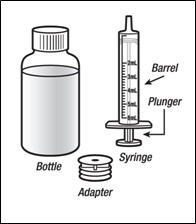
Each PREZISTA Oral Suspension carton contains:
- 1 bottle of PREZISTA Oral Suspension
- Oral dosing syringe
- 1 oral syringe adapter
| |
Important information for use:
- Shake PREZISTA Oral Suspension well before each use.
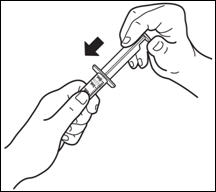
- PREZISTA Oral Suspension should be given with the oral dosing syringe provided to make sure you measure the right amount. The oral dosing syringe provided with your PREZISTA Oral Suspension should not be used for any other medicines.
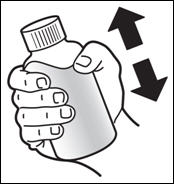
- 1.Shake the bottle.
- Shake the bottle well before each use (See Figure A).
| | Figure A: Shake the bottle
|
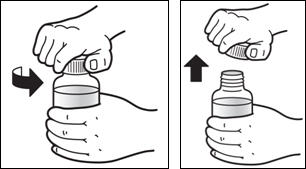
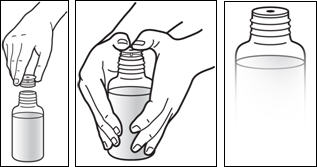
- 2.Open the bottle of PREZISTA Oral Suspension.
- Open the bottle by pushing downward on the cap and twisting it in the direction of the arrow (counter-clockwise) (See Figure B).
| | Figure B: Opening the bottle
|
- 3.The first time a bottle of PREZISTA Oral Suspension is used:
- Insert the oral syringe adapter into the bottle. Press on the adapter until it is even with the top of the bottle (See Figure C).
- Do not remove the oral syringe adapter from the bottle once inserted.
| | Figure C: Inserting the adapter
|
- 4.Insert the oral dosing syringe.
- Fully push down (depress) the plunger of the syringe.
- Insert the syringe into the opening in the oral syringe adapter until it is firmly in place (See Figure D).
| | Figure D: Inserting the syringe
|
- 5.Withdraw the prescribed amount of PREZISTA Oral Suspension.
- Turn the bottle upside down. Gently pull back the plunger of the syringe until the bottom of the plunger is even with markings on the syringe for the prescribed dose (See Figure E). If air bubbles form in the syringe, empty the oral suspension in the syringe back into the bottle. Then repeat steps 4 and 5.
| | Figure E: Withdrawing the Oral Suspension
|
- 6.Turn the bottle right-side up and remove the syringe from the bottle by pulling straight up on the oral dosing syringe (See Figure F).
| | Figure F: Removing the syringe
|
- 7.Take the dose of PREZISTA.
- Place the tip of the oral dosing syringe in the mouth.
- Press on the plunger of the syringe towards the mouth (See Figure G).
| | Figure G: Taking the dose of PREZISTA
|
- 8.Close the bottle with the cap after use (See Figure H).
| | Figure H: Closing the bottle
|
- 9.Remove the plunger from the barrel, rinse both with water and allow to air dry after each use (See Figure I).
| | Figure I: Rinsing the syringe
|
- 10.Put the oral dosing syringe back together after air drying and store with PREZISTA Oral Suspension (See Figure J).
| | Figure J: Putting the syringe back together
|
How should I store PREZISTA?
- Store PREZISTA Oral Suspension and the oral dosing syringe at room temperature 77°F (25°C).
- Do not refrigerate or freeze PREZISTA Oral Suspension.
- Keep PREZISTA Oral Suspension away from high heat.
- Store PREZISTA Oral Suspension in the original container.
Keep PREZISTA and all medicines out of the reach of children.
This Instruction for Use has been approved by the U.S. Food and Drug Administration.
Manufactured by:
Janssen Pharmaceutica, N.V.
Beerse, Belgium
Manufactured for:
Janssen Therapeutics, Division of Janssen Products, LP, Titusville NJ 08560
© Janssen Pharmaceuticals, Inc. 2006
Issued December 2011