Absorption
After oral administration of estradiol valerate, cleavage to
17β-estradiol and valeric acid takes place during absorption by the intestinal
mucosa or in the course of the first liver passage. This gives rise to estradiol
and its metabolites, estrone and other metabolites. Maximum serum estradiol
concentrations of 73.3 pg/mL are reached at a median of approximately 6 hours
(range: 1.5–12 hours) and the area under the estradiol concentration curve
[AUC(0–24hr)] was 1301 pg·hr/mL after single ingestion of a tablet containing 3
mg estradiol valerate under fasted condition on Day 1 of the 28-day sequential
regimen.
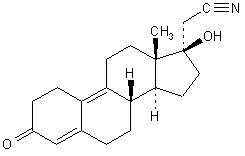
Bioavailability of dienogest is about 91%. Maximum serum dienogest
concentrations of 91.7 ng/mL are reached at a median of approximately 1 hour
(range: 0.5–1.5 hour) and the area under the dienogest concentration curve
[AUC(0–24hr)] was 964 ng/mL after single oral administration of Natazia tablet
containing 2 mg estradiol valerate/3 mg dienogest under fasted condition. The
pharmacokinetics of dienogest are dose-proportional within the dose range of 1–8
mg. Steady state is reached after 4 days of the same dosage of 2 mg dienogest.
The mean accumulation ratio for AUC (0–24hr) is approximately 1.24.
The mean plasma pharmacokinetic parameters at steady state following repeated
oral doses of a 2 mg estradiol valerate/3 mg dienogest combination tablet in
fertile women under fasted condition are reported in Table 1.
Table 1: Arithmetic Mean (SD) Serum Pharmacokinetic Parameters at
Steady-state (on Day 24) following Repeated Oral Doses of 2 mg EV/3 mg DNG on
Days 8-24 of the 28 day Regimen in Fertile Women under Fasted Condition
(N=15)| Parameter | Dienogest | Estradiol | Estrone |
| Cmax* | 85.2 (19.7) ng/ml | 70.5 (25.9) pg/ml | 483 (198) pg/ml |
| Tmax† (hr)‡ | 1.5 (1–2) | 3 (1.5–12) | 4 (3–12) |
| AUC§(0–24hr) | 828 (187) ng·hr/ml | 1323 (480) pg·hr/ml | 7562 (3403) pg·hr/ml |
| t½
(hr) | 12.3 (1.4) | NA¶ | NA |
*C
max = Maximum serum concentration
†Tmax = Time to reach maximum concentration
‡Median (range) for T
max§AUC(0-24hr) = Area under the concentration-time curve from 0 hr data point
up to 48 hr post-administration
¶NA: Data not available
Food Effect
Concomitant food intake in women resulted in a 28% decrease for
dienogest Cmax and 23% increase of estradiol Cmax while the exposure (AUC) of both dienogest and estradiol
did not change.
Distribution
In serum, 38% of estradiol is bound to sex hormone-binding
globulin (SHBG), 60% to albumin and 2–3% circulates in free form. An apparent
volume of distribution of approximately 1.2 L/kg was determined after
intravenous (IV) administration.
A relatively high fraction (10%) of circulating dienogest is present in the
free form, with approximately 90% being bound non-specifically to albumin.
Dienogest does not bind to SHBG and corticosteroid-binding globulin (CBG). The
volume of distribution at steady state (Vd,ss) of
dienogest is 46 L after the IV administration of 85 mcg 3H-dienogest.
Metabolism
After oral administration of estradiol valerate, approximately 3%
of the dose is directly bioavailable as estradiol. Estradiol undergoes an
extensive first-pass effect and a considerable part of the dose administered is
already metabolized in the gastrointestinal mucosa. The CYP 3A family is known
to play the most important role in human estradiol metabolism. Together with the
pre-systemic metabolism in the liver, about 95% of the orally administered dose
becomes metabolized before entering the systemic circulation. The main
metabolites are estrone and its sulfate or glucuronide conjugates.
Dienogest is extensively metabolized by the known pathways of steroid
metabolism (hydroxylation, conjugation), with the formation of
endocrinologically mostly inactive metabolites. CYP3A4 was identified as a
predominant enzyme catalyzing the metabolism of dienogest.
Excretion
Estradiol and its metabolites are mainly excreted in urine, with
about 10% being excreted in the feces. The terminal half-life of estradiol is
approximately 14 hours.
Dienogest is mainly excreted renally in the form of metabolites and unchanged
dienogest is the dominating fraction in plasma. The terminal half-life of
dienogest is approximately 11 hours.
Specific Populations
Pediatric Use:
Safety and efficacy of Natazia has been established in women of reproductive
age. Efficacy is expected to be the same for postpubertal adolescents under the
age of 18 as for users 18 years and older. Use of this product before menarche
is not indicated. [See Use in Specific Populations (8.4)]
Geriatric Use: Natazia has
not been studied in postmenopausal women and is not indicated in this
population. [See Use in Specific Populations (8.5).]
Renal Impairment: The
pharmacokinetics of Natazia has not been studied in subjects with renal
impairment. [See Use in Specific Populations (8.6).]
Hepatic Impairment: The
pharmacokinetics of Natazia has not been studied in subjects with hepatic
impairment. Steroid hormones may be poorly metabolized in patients with
impaired liver function. Acute or chronic disturbances of liver function may
necessitate the discontinuation of COC use until markers of liver function
return to normal. [See Contraindications (4),
Warnings and Precautions (5.3) and
Use in Specific Populations (8.7).]
Body Mass Index: The efficacy of Natazia in women with a BMI of > 30
kg/m2 has not been evaluated. [See
Use in Specific Populations (8.8).]
Drug Interactions
CYP3A4 Inducers:
Drugs or herbal products that induce certain enzymes, including CYP3A4,
may decrease the effectiveness of COCs or increase breakthrough bleeding. Some
drugs or herbal products that may decrease the effectiveness of hormonal
contraceptives include barbiturates, bosentan, felbamate, griseofulvin,
oxcarbazepine, and topiramate. Counsel women to use an alternative method of
contraception or a back-up method when moderate or weak enzyme inducers are used
with COCs, and to continue back-up contraception for 28 days after discontinuing
the enzyme inducer to ensure contraceptive reliability.
Dienogest is a substrate of CYP3A4. Women who take medications that are
strong CYP3A4 inducers (for example, carbamazepine, phenytoin, rifampicin, and
St. John’s wort) should not choose Natazia as their oral contraceptive while
using these inducers and for at least 28 days after discontinuation of these
inducers due to the possibility of decreased contraceptive efficacy.
The effect of the CYP3A4 inducer rifampicin was studied in an open-label,
non-randomized, single center study in 16 healthy postmenopausal women. All
volunteers received a treatment regimen of 2 mg estradiol valerate and 3 mg
dienogest combination tablets, dosed once daily over 17 days, and of rifampicin,
which was administered once daily in an oral dose of 600 mg on Days 12 to 16.
24–hr pharmacokinetics of estradiol and dienogest on Days 11 and 17 were
compared. Co-administration of rifampicin with estradiol valerate/dienogest
tablets led to a 52 % and 83% decrease in the mean Cmax
and AUC(0–24hr), respectively, for dienogest and a 25% and 44% decrease in
Cmax and AUC(0–24hr), respectively, for estradiol at
steady state. [See Drug Interactions (7.1).]
Strong CYP3A4 Inhibitors:
Strong CYP3A4 inhibitors such as ketoconazole increase hormone serum levels. The
effect of a strong CYP3A4 inhibitor, ketoconazole, on dienogest and estradiol
pharmacokinetics was studied in an open-label, two parallel-groups,
one-sequence, one-way crossover study in healthy postmenopausal Caucasian women.
One tablet of 2 mg estradiol valerate and 3 mg dienogest was administered orally
once a day for 14 days. Twelve volunteers received an oral dose of 400 mg
ketoconazole (that is, 2 tablets containing 200 mg ketoconazole) once daily for
7 days (Days 8–14). Twenty-four hour pharmacokinetics of estradiol and dienogest
on Days 7 and 14 were compared. Co-administration with the strong inhibitor
ketoconazole resulted in a 186% and 57% increase of AUC (0–24hr) at steady state
for dienogest and estradiol. There was also a 94% and 65% increase of Cmax at steady state for dienogest and estradiol when
co-administered with ketoconazole. [See Drug Interactions
(7.1).]
Moderate CYP3A4
Inhibitors: Moderate CYP3A4 inhibitors such as erythromycin
increase hormone serum levels. The effect of a moderate CYP3A4 inhibitor,
erythromycin on dienogest and estradiol pharmacokinetics was studied in an
open-label, two parallel-groups, one-sequence, one-way crossover study in
healthy postmenopausal Caucasian women. One tablet of 2 mg estradiol valerate
and 3 mg dienogest was administered orally once a day for 14 days. Twelve
volunteers received an oral dose of 500 mg erythromycin three times a day for 7
days (Days 8–14). Twenty-four hour pharmacokinetics of estradiol and dienogest
on Days 7 and 14 were compared. When co-administered with the moderate inhibitor
erythromycin, the AUC (0–24hr) of dienogest and estradiol at steady state were
increased by 62% and 33%, respectively. There was also a 33% and 51% increase of
Cmax at steady state for dienogest and estradiol when
co-administered with erythromycin. [See Drug Interactions
(7.1).]
Other known CYP3A4 inhibitors such as azole antifungals, cimetidine,
verapamil, macrolides, diltiazem, antidepressants, and grapefruit juice may
increase plasma levels of dienogest and estradiol. [See Drug
Interactions (7.1).]
HIV Protease Inhibitors:
Significant changes (increase or decrease) in the plasma levels of the estrogen
and progestin have been noted in some cases of co-administration of HIV protease
inhibitors.
Antibiotics: There have
been reports of pregnancy while taking hormonal contraceptives and antibiotics,
but clinical pharmacokinetic studies have not shown consistent effects of
antibiotics on plasma concentrations of synthetic steroids.
Consult the labeling of all concurrently-used drugs to obtain further
information about interactions with hormonal contraceptives or the potential for
enzyme alterations.
Effects of Combined Hormonal
Contraceptives on Other Drugs: COCs containing ethinyl estradiol
(or mestranol), may inhibit the metabolism of other compounds. COCs have been
shown to significantly decrease plasma concentrations of lamotrigine, likely due
to induction of lamotrigine glucuronidation. This may reduce seizure control;
therefore, dosage adjustments of lamotrigine may be necessary. Consult the
labeling of the concurrently-used drug to obtain further information about
interactions with COCs or the potential for enzyme alterations.
In vitro studies with human CYP enzymes did not
indicate an inhibitory potential of dienogest at clinically relevant
concentrations.