Information for Patients
Prescribers or other health professionals should inform patients,
their families, and their caregivers about the benefits and risks associated
with treatment with venlafaxine hydrochloride tablet and should counsel them in
its appropriate use. A patient Medication Guide about “Antidepressant Medicines,
Depression and other Serious Mental Illness, and Suicidal Thoughts or Actions”
is available for venlafaxine hydrochloride tablet. The prescriber or health
professional should instruct patients, their families, and their caregivers to
read the Medication Guide and should assist them in understanding its contents.
Patients should be given the opportunity to discuss the contents of the
Medication Guide and to obtain answers to any questions they may have. The
patient information is provided as a detachable strip and in a separate stand
alone medication guide in a pad for end users.
Patients should be advised of the following issues and asked to alert their
prescriber if these occur while taking venlafaxine hydrochloride tablet.
Clinical Worsening and Suicide Risk
Patients, their families, and their caregivers should be
encouraged to be alert to the emergence of anxiety, agitation, panic attacks,
insomnia, irritability, hostility, aggressiveness, impulsivity, akathisia
(psychomotor restlessness), hypomania, mania, other unusual changes in behavior,
worsening of depression, and suicidal ideation, especially early during
antidepressant treatment and when the dose is adjusted up or down. Families and
caregivers of patients should be advised to look for the emergence of such
symptoms on a day-to-day basis, since changes may be abrupt. Such symptoms
should be reported to the patient's prescriber or health professional,
especially if they are severe, abrupt in onset, or were not part of the
patient's presenting symptoms. Symptoms such as these may be associated with an
increased risk for suicidal thinking and behavior and indicate a need for very
close monitoring and possibly changes in the medication.
Interference with Cognitive and Motor Performance
Clinical studies were performed to examine the effects of
venlafaxine on behavioral performance of healthy individuals. The results
revealed no clinically significant impairment of psychomotor, cognitive, or
complex behavior performance. However, since any psychoactive drug may impair
judgment, thinking, or motor skills, patients should be cautioned about
operating hazardous machinery, including automobiles, until they are reasonably
certain that venlafaxine hydrochloride therapy does not adversely affect their
ability to engage in such activities.
Pregnancy
Patients should be advised to notify their physician if they
become pregnant or intend to become pregnant during therapy.
Nursing
Patients should be advised to notify their physician if they are
breast-feeding an infant.
Mydriasis
Mydriasis (prolonged dilation of the pupils of the eye) has been
reported with venlafaxine. Patients should be advised to notify their physician
if they have a history of glaucoma or a history of increased intraocular
pressure (see WARNINGS).
Concomitant Medication
Patients should be advised to inform their physicians if they are
taking, or plan to take, any prescription or over-the-counter drugs, including
herbal preparations and nutritional supplements, since there is a potential for
interactions.
Patients should be cautioned about the risk of serotonin syndrome with the
concomitant use of venlafaxine hydrochloride and triptans, tramadol, tryptophan
supplements or other serotonergic agents (see WARNINGS, Serotonin Syndrome and PRECAUTIONS, Drug Interactions, CNS-Active Drugs).
Patients should be cautioned about the concomitant use of venlafaxine and
NSAIDs, aspirin, warfarin, or other drugs that affect coagulation since combined
use of psychotropic drugs that interfere with serotonin reuptake and these
agents has been associated with an increased risk of bleeding (see PRECAUTIONS,Abnormal
Bleeding ).
Alcohol
Although venlafaxine hydrochloride has not been shown to increase
the impairment of mental and motor skills caused by alcohol, patients should be
advised to avoid alcohol while taking venlafaxine hydrochloride.
Allergic Reactions
Patients should be advised to notify their physician if they
develop a rash, hives, or a related allergic phenomenon.
Laboratory Tests
There are no specific laboratory tests recommended.
Drug Interactions
As with all drugs, the potential for interaction by a variety of
mechanisms is a possibility.
Alcohol
A single dose of ethanol (0.5 g/kg) had no effect on the
pharmacokinetics of venlafaxine or ODV when venlafaxine was administered at 150
mg/day in 15 healthy male subjects. Additionally, administration of venlafaxine
in a stable regimen did not exaggerate the psychomotor and psychometric effects
induced by ethanol in these same subjects when they were not receiving
venlafaxine.
Cimetidine
Concomitant administration of cimetidine and venlafaxine in a
steady-state study for both drugs resulted in inhibition of first-pass
metabolism of venlafaxine in 18 healthy subjects. The oral clearance of
venlafaxine was reduced by about 43%, and the exposure (AUC) and maximum
concentration (Cmax) of the drug were increased by about 60%. However,
co-administration of cimetidine had no apparent effect on the pharmacokinetics
of ODV, which is present in much greater quantity in the circulation than is
venlafaxine. The overall pharmacological activity of venlafaxine plus ODV is
expected to increase only slightly, and no dosage adjustment should be necessary
for most normal adults. However, for patients with pre-existing hypertension,
and for elderly patients or patients with hepatic dysfunction, the interaction
associated with the concomitant use of venlafaxine and cimetidine is not known
and potentially could be more pronounced. Therefore, caution is advised with
such patients.
Diazepam
Under steady-state conditions for venlafaxine administered at 150
mg/day, a single 10 mg dose of diazepam did not appear to affect the
pharmacokinetics of either venlafaxine or ODV in 18 healthy male subjects.
Venlafaxine also did not have any effect on the pharmacokinetics of diazepam or
its active metabolite, desmethyldiazepam, or affect the psychomotor and
psychometric effects induced by diazepam.
Haloperidol
Venlafaxine administered under steady-state conditions at 150
mg/day in 24 healthy subjects decreased total oral dose clearance (C1/F) of a
single 2 mg dose of haloperidol by 42%, which resulted in a 70% increase in
haloperidol AUC. In addition, the haloperidol Cmax
increased 88% when coadministered with venlafaxine, but the haloperidol
elimination half-life (t1/2) was unchanged. The mechanism
explaining this finding is unknown.
Lithium
The steady-state pharmacokinetics of venlafaxine administered at
150 mg/day were not affected when a single 600 mg oral dose of lithium was
administered to 12 healthy male subjects. O-desmethylvenlafaxine (ODV) also was
unaffected. Venlafaxine had no effect on the pharmacokinetics of lithium (see
also CNS-Active Drugs, below).
Drugs Highly Bound to Plasma Protein
Venlafaxine is not highly bound to plasma proteins; therefore,
administration of venlafaxine hydrochloride to a patient taking another drug
that is highly protein bound should not cause increased free concentrations of
the other drug.
Drugs that Interfere with Hemostasis (e.g., NSAIDs, Aspirin,
and Warfarin)
Serotonin release by platelets plays an important role in
hemostasis. Epidemiological studies of the case-control and cohort design that
have demonstrated an association between use of psychotropic drugs that
interfere with serotonin reuptake and the occurrence of upper gastrointestinal
bleeding have also shown that concurrent use of an NSAID or aspirin may
potentiate this risk of bleeding. Altered anticoagulant effects, including
increased bleeding, have been reported when SSRIs and SNRIs are coadministered
with warfarin. Patients receiving warfarin therapy should be carefully monitored
when venlafaxine is initiated or discontinued.
Drugs that Inhibit Cytochrome P450 Isoenzymes
CYP2D6 Inhibitors: In vitro and in vivo studies indicate that venlafaxine is metabolized to
its active metabolite, ODV, by CYP2D6, the isoenzyme that is responsible for the
genetic polymorphism seen in the metabolism of many antidepressants. Therefore,
the potential exists for a drug interaction between drugs that inhibit
CYP2D6-mediated metabolism and venlafaxine. However, although imipramine
partially inhibited the CYP2D6-mediated metabolism of venlafaxine, resulting in
higher plasma concentrations of venlafaxine and lower plasma concentrations of
ODV, the total concentration of active compounds (venlafaxine plus ODV) was not
affected. Additionally, in a clinical study involving CYP2D6-poor and -extensive
metabolizers, the total concentration of active compounds (venlafaxine plus
ODV), was similar in the two metabolizer groups. Therefore, no dosage adjustment
is required when venlafaxine is coadministered with a CYP2D6 inhibitor.
Ketoconazole: A pharmacokinetic study with ketoconazole 100 mg b.i.d. with a
single dose of venlafaxine 50 mg in extensive metabolizers (EM; n = 14) and 25
mg in poor metabolizers (PM; n = 6) of CYP2D6 resulted in higher plasma
concentrations of both venlafaxine and O-desvenlafaxine (ODV) in most subjects
following administration of ketoconazole. Venlafaxine Cmax increased by 26% in EM subjects and 48% in PM subjects.
Cmax values for ODV increased by 14% and 29% in EM and PM
subjects, respectively.
Venlafaxine AUC increased by 21% in EM subjects and 70% in PM subjects (range
in PMs - 2% to 206%), and AUC values for ODV increased by 23% and 141% in EM and
PM (range in PMs - 38% to 105%) subjects, respectively. Combined AUCs of
venlafaxine and ODV increased on average by approximately 23% in EMs and 53% in
PMs, (range in PMs 4% - 134%).
Concomitant use of CYP3A4 inhibitors and venlafaxine may increase levels of
venlafaxine and ODV. Therefore, caution is advised if a patient’s therapy
includes a CYP3A4 inhibitor and venlafaxine concomitantly.
CYP3A4 Inhibitors: In vitro studies indicate that
venlafaxine is likely metabolized to a minor, less active metabolite,
N-desmethylvenlafaxine, by CYP3A4. Because CYP3A4 is typically a minor pathway
relative to CYP2D6 in the metabolism of venlafaxine, the potential for a
clinically significant drug interaction between drugs that inhibit
CYP3A4-mediated metabolism and venlafaxine is small.
The concomitant use of venlafaxine with a drug treatment(s) that potently
inhibits both CYP2D6 and CYP3A4, the primary metabolizing enzymes for
venlafaxine, has not been studied. Therefore, caution is advised should a
patient's therapy include venlafaxine and any agent(s) that produce potent
simultaneous inhibition of these two enzyme systems.
Drugs Metabolized by Cytochrome P450 Isoenzymes
CYP2D6: In vitro studies indicate that
venlafaxine is a relatively weak inhibitor of CYP2D6. These findings have been
confirmed in a clinical drug interaction study comparing the effect of
venlafaxine to that of fluoxetine on the CYP2D6-mediated metabolism of
dextromethorphan to dextrorphan.
Imipramine—Venlafaxine did not affect the pharmacokinetics of imipramine and
2-OH-imipramine. However, desipramine AUC, Cmax, and
Cmin increased by about 35% in the presence of
venlafaxine. The 2-OH-desipramine AUCs increased by at least 2.5 fold (with
venlafaxine 37.5 mg q12h) and by 4.5 fold (with venlafaxine 75 mg q12h).
Imipramine did not affect the pharmacokinetics of venlafaxine and ODV. The
clinical significance of elevated 2-OH-desipramine levels is unknown.
Metoprolol—Concomitant administration of venlafaxine (50 mg every 8 hours for
5 days) and metoprolol (100 mg every 24 hours for 5 days) to 18 healthy male
subjects in a pharmacokinetic interaction study for both drugs resulted in an
increase of plasma concentrations of metoprolol by approximately 30 to 40%
without altering the plasma concentrations of its active metabolite, α
hydroxymetoprolol. Metoprolol did not alter the pharmacokinetic profile of
venlafaxine or its active metabolite, O-desmethylvenlafaxine.
Venlafaxine appeared to reduce the blood pressure lowering effect of
metoprolol in this study. The clinical relevance of this finding for
hypertensive patients is unknown. Caution should be exercised with
co-administration of venlafaxine and metoprolol.
Venlafaxine treatment has been associated with dose-related increases in
blood pressure in some patients. It is recommended that patients receiving
venlafaxine have regular monitoring of blood pressure (see WARNINGS).
Risperidone—Venlafaxine administered under steady-state conditions at 150
mg/day slightly inhibited the CYP2D6-mediated metabolism of risperidone
(administered as a single 1 mg oral dose) to its active metabolite,
9-hydroxyrisperidone, resulting in an approximate 32% increase in risperidone
AUC. However, venlafaxine coadministration did not significantly alter the
pharmacokinetic profile of the total active moiety (risperidone plus
9-hydroxyrisperidone).
CYP3A4: Venlafaxine did not inhibit CYP3A4 in
vitro. This finding was confirmed in vivo by
clinical drug interaction studies in which venlafaxine did not inhibit the
metabolism of several CYP3A4 substrates, including alprazolam, diazepam, and
terfenadine.
Indinavir—In a study of 9 healthy volunteers, venlafaxine administered under
steady-state conditions at 150 mg/day resulted in a 28% decrease in the AUC of a
single 800 mg oral dose of indinavir and a 36% decrease in indinavir Cmax. Indinavir did not affect the pharmacokinetics of
venlafaxine and ODV. The clinical significance of this finding is unknown.
CYP1A2: Venlafaxine did not inhibit CYP1A2 in
vitro. This finding was confirmed in vivo by a
clinical drug interaction study in which venlafaxine did not inhibit the
metabolism of caffeine, a CYP1A2 substrate.
CYP2C9: Venlafaxine did not inhibit CYP2C9 in
vitro. In vivo, venlafaxine 75 mg by mouth
every 12 hours did not alter the pharmacokinetics of a single 500 mg dose of
tolbutamide or the CYP2C9 mediated formation of 4-hydroxy-tolbutamide.
CYP2C19: Venlafaxine did not inhibit the metabolism of diazepam which is
partially metabolized by CYP2C19 (see Diazepam above).
Monoamine Oxidase Inhibitors
See CONTRAINDICATIONS and WARNINGS.
CNS-Active Drugs
The risk of using venlafaxine in combination with other
CNS-active drugs has not been systematically evaluated (except in the case of
those CNS-active drugs noted above). Consequently, caution is advised if the
concomitant administration of venlafaxine and such drugs is required.
Serotonergic Drugs: Based on the mechanism of action of venlafaxine
hydrochloride and the potential for serotonin syndrome, caution is advised when
venlafaxine hydrochloride is co-administered with other drugs that may affect
the serotonergic neurotransmitter systems, such as triptans, SSRIs, other SNRIs,
linezolid (an antibiotic which is a reversible non-selective MAOI), lithium,
tramadol, or St. John's Wort (see WARNINGS,
Serotonin Syndrome). If concomitant treatment of venlafaxine hydrochloride
with these drugs is clinically warranted, careful observation of the patient is
advised, particularly during treatment initiation and dose increases (see WARNINGS, Serotonin Syndrome). The concomitant use
of venlafaxine hydrochloride with tryptophan supplements is not recommended (see
WARNINGS, Serotonin Syndrome).
Triptans: There have been rare postmarketing reports of serotonin syndrome
with use of an SSRI and a triptan. If concomitant treatment of venlafaxine
hydrochloride with a triptan is clinically warranted, careful observation of the
patient is advised, particularly during treatment initiation and dose increases
(see WARNINGS, Serotonin Syndrome).
Electroconvulsive Therapy
There are no clinical data establishing the benefit of
electroconvulsive therapy combined with venlafaxine hydrochloride
treatment.
Postmarketing Spontaneous Drug Interaction Reports
See ADVERSE REACTIONS, Postmarketing
Reports.
Carcinogenesis, Mutagenesis, Impairment of
FertilityCarcinogenesis
Venlafaxine was given by oral gavage to mice for 18 months at
doses up to 120 mg/kg per day, which was 16 times, on a mg/kg basis, and 1.7
times on a mg/m2 basis, the maximum recommended human
dose. Venlafaxine was also given to rats by oral gavage for 24 months at doses
up to 120 mg/kg per day. In rats receiving the 120 mg/kg dose, plasma levels of
venlafaxine were 1 times (male rats) and 6 times (female rats) the plasma levels
of patients receiving the maximum recommended human dose. Plasma levels of the
O-desmethyl metabolite were lower in rats than in patients receiving the maximum
recommended dose. Tumors were not increased by venlafaxine treatment in mice or
rats.
Mutagenicity
Venlafaxine and the major human metabolite,
O-desmethylvenlafaxine (ODV), were not mutagenic in the Ames reverse mutation
assay in Salmonella bacteria or the CHO/HGPRT mammalian cell forward gene
mutation assay. Venlafaxine was also not mutagenic in the in
vitro BALB/c-3T3 mouse cell transformation assay, the sister chromatid
exchange assay in cultured CHO cells, or the in vivo
chromosomal aberration assay in rat bone marrow. ODV was not mutagenic in the
in vitro CHO cell chromosomal aberration assay. There
was a clastogenic response in the in vivo chromosomal
aberration assay in rat bone marrow in male rats receiving 200 times, on a mg/kg
basis, or 50 times, on a mg/m2 basis, the maximum human
daily dose. The no effect dose was 67 times (mg/kg) or 17 times (mg/m2) the human dose.
Impairment of Fertility
Reproduction and fertility studies in rats showed no effects on
male or female fertility at oral doses of up to 8 times the maximum recommended
human daily dose on a mg/kg basis, or up to 2 times on a mg/m2 basis.
PregnancyTeratogenic Effects—Pregnancy Category C
Venlafaxine did not cause malformations in offspring of rats or
rabbits given doses up to 11 times (rat) or 12 times (rabbit) the maximum
recommended human daily dose on a mg/kg basis, or 2.5 times (rat) and 4 times
(rabbit) the human daily dose on a mg/m2 basis. However,
in rats, there was a decrease in pup weight, an increase in stillborn pups, and
an increase in pup deaths during the first 5 days of lactation, when dosing
began during pregnancy and continued until weaning. The cause of these deaths is
not known. These effects occurred at 10 times (mg/kg) or 2.5 times (mg/m2) the maximum human daily dose. The no effect dose for rat pup
mortality was 1.4 times the human dose on a mg/kg basis or 0.25 times the human
dose on a mg/m2 basis. There are no adequate and
well-controlled studies in pregnant women. Because animal reproduction studies
are not always predictive of human response, this drug should be used during
pregnancy only if clearly needed.
Non-teratogenic Effects
Neonates exposed to venlafaxine hydrochloride, other SNRIs
(Serotonin and Norepinephrine Reuptake Inhibitors), or SSRIs (Selective
Serotonin Reuptake Inhibitors), late in the third trimester have developed
complications requiring prolonged hospitalization, respiratory support, and tube
feeding. Such complications can arise immediately upon delivery. Reported
clinical findings have included respiratory distress, cyanosis, apnea, seizures,
temperature instability, feeding difficulty, vomiting, hypoglycemia, hypotonia,
hypertonia, hyperreflexia, tremor, jitteriness, irritability, and constant
crying. These features are consistent with either a direct toxic effect of SSRIs
and SNRIs or, possibly, a drug discontinuation syndrome. It should be noted
that, in some cases, the clinical picture is consistent with serotonin syndrome
(see PRECAUTIONS-Drug Interactions-CNS-Active Drugs).
When treating a pregnant woman with venlafaxine hydrochloride during the third
trimester, the physician should carefully consider the potential risks and
benefits of treatment (see DOSAGE AND
ADMINISTRATION).
Labor and Delivery
The effect of venlafaxine hydrochloride on labor and delivery in
humans is unknown.
Nursing Mothers
Venlafaxine and ODV have been reported to be excreted in human
milk. Because of the potential for serious adverse reactions in nursing infants
from venlafaxine hydrochloride, a decision should be made whether to discontinue
nursing or to discontinue the drug, taking into account the importance of the
drug to the mother.
Pediatric Use
Safety and effectiveness in the pediatric population have not
been established (see BOX WARNING and WARNINGS, Clinical Worsening and Suicide Risk). Two
placebo-controlled trials in 766 pediatric patients with MDD and two
placebo-controlled trials in 793 pediatric patients with GAD have been conducted
with venlafaxine capsule (XR), and the data were not sufficient to support a
claim for use in pediatric patients.
Anyone considering the use of venlafaxine hydrochloride in a child or
adolescent must balance the potential risks with the clinical need.
Although no studies have been designed to primarily assess venlafaxine
capsule (XR) impact on the growth, development, and maturation of children and
adolescents, the studies that have been done suggest that venlafaxine capsule
(XR) may adversely affect weight and height (see PRECAUTIONS, General, Changes in Height and Changes in Weight). Should the decision be made to treat
a pediatric patient with venlafaxine hydrochloride, regular monitoring of weight
and height is recommended during treatment, particularly if it is to be
continued long term. The safety of venlafaxine capsule (XR) treatment for
pediatric patients has not been systematically assessed for chronic treatment
longer than six months in duration.
In the studies conducted in pediatric patients (ages 6-17), the occurrence of
blood pressure and cholesterol increases considered to be clinically relevant in
pediatric patients was similar to that observed in adult patients. Consequently,
the precautions for adults apply to pediatric patients (see WARNINGS, Sustained Hypertension, and PRECAUTIONS, General, Serum Cholesterol Elevation).
Geriatric Use
Of the 2,897 patients in Phase 2 and Phase 3 depression studies
with venlafaxine hydrochloride, 12% (357) were 65 years of age or over. No
overall differences in effectiveness or safety were observed between these
patients and younger patients, and other reported clinical experience generally
has not identified differences in response between the elderly and younger
patients. However, greater sensitivity of some older individuals cannot be ruled
out. SSRIs and SNRIs, including venlafaxine hydrochloride, have been associated
with cases of clinically significant hyponatremia in elderly patients, who may
be at greater risk for this adverse event (see PRECAUTIONS,
Hyponatremia).
The pharmacokinetics of venlafaxine and ODV are not substantially altered in
the elderly (see CLINICAL PHARMACOLOGY). No dose
adjustment is recommended for the elderly on the basis of age alone, although
other clinical circumstances, some of which may be more common in the elderly,
such as renal or hepatic impairment, may warrant a dose reduction (see DOSAGE AND ADMINISTRATION
Dose Dependency of Adverse Events
A comparison of adverse event rates in a fixed-dose study
comparing venlafaxine hydrochloride 75, 225, and 375 mg/day with placebo
revealed a dose dependency for some of the more common adverse events associated
with venlafaxine hydrochloride use, as shown in the table that follows. The rule
for including events was to enumerate those that occurred at an incidence of 5%
or more for at least one of the venlafaxine groups and for which the incidence
was at least twice the placebo incidence for at least one venlafaxine
hydrochloride group. Tests for potential dose relationships for these events
(Cochran-Armitage Test, with a criterion of exact 2-sided p-value ≤0.05)
suggested a dose-dependency for several adverse events in this list, including
chills, hypertension, anorexia, nausea, agitation, dizziness, somnolence,
tremor, yawning, sweating, and abnormal ejaculation.
TABLE 3 Treatment-Emergent Adverse Experience Incidence in a Dose
Comparison Trial
| Venlafaxine Hydrochloride
(mg/day) |
|---|
Body System/
Preferred Term | Placebo
(n=92) | 75
(n=89) | 225
(n=89) | 375
(n=88) |
|---|
| Body as a
Whole |
| Abdominal pain | 3.3% | 3.4% | 2.2% | 8.0% |
| Asthenia | 3.3% | 16.9% | 14.6% | 14.8% |
| Chills | 1.1% | 2.2% | 5.6% | 6.8% |
| Infection | 2.2% | 2.2% | 5.6% | 2.3% |
| Cardiovascular
System |
| Hypertension | 1.1% | 1.1% | 2.2% | 4.5% |
| Vasodilatation | 0.0% | 4.5% | 5.6% | 2.3% |
| Digestive
System |
| Anorexia | 2.2% | 14.6% | 13.5% | 17.0% |
| Dyspepsia | 2.2% | 6.7% | 6.7% | 4.5% |
| Nausea | 14.1% | 32.6% | 38.2% | 58.0% |
| Vomiting | 1.1% | 7.9% | 3.4% | 6.8% |
| Nervous
System |
| Agitation | 0.0% | 1.1% | 2.2% | 4.5% |
| Anxiety | 4.3% | 11.2% | 4.5% | 2.3% |
| Dizziness | 4.3% | 19.1% | 22.5% | 23.9% |
| Insomnia | 9.8% | 22.5% | 20.2% | 13.6% |
| Libido decreased | 1.1% | 2.2% | 1.1% | 5.7% |
| Nervousness | 4.3% | 21.3% | 13.5% | 12.5% |
| Somnolence | 4.3% | 16.9% | 18.0% | 26.1% |
| Tremor | 0.0% | 1.1% | 2.2% | 10.2% |
| Respiratory
system |
| Yawn | 0.0% | 4.5% | 5.6% | 8.0% |
| Skin and
Appendages |
| Sweating | 5.4% | 6.7% | 12.4% | 19.3% |
| Special
Senses |
| Abnormality of accommodation | 0.0% | 9.1% | 7.9% | 5.6% |
| Urogenital
System |
| Abnormal ejaculation/orgasm | 0.0% | 4.5% | 2.2% | 12.5% |
| Impotence | 0.0% | 5.8% | 2.1% | 3.6% |
| (Number of men) | (n=63) | (n=52) | (n=48) | (n=56) |
Adaptation to Certain Adverse Events
Over a 6-week period, there was evidence of adaptation to some
adverse events with continued therapy (eg, dizziness and nausea), but less to
other effects (eg, abnormal ejaculation and dry mouth).
Vital Sign Changes
Venlafaxine hydrochloride treatment (averaged over all dose
groups) in clinical trials was associated with a mean increase in pulse rate of
approximately 3 beats per minute, compared to no change for placebo. In a
flexible-dose study, with doses in the range of 200 to 375 mg/day and mean dose
greater than 300 mg/day, the mean pulse was increased by about 2 beats per
minute compared with a decrease of about 1 beat per minute for placebo.
In controlled clinical trials, venlafaxine hydrochloride was associated with
mean increases in diastolic blood pressure ranging from 0.7 to 2.5 mm Hg
averaged over all dose groups, compared to mean decreases ranging from 0.9 to
3.8 mm Hg for placebo. However, there is a dose dependency for blood pressure
increase (see WARNINGS).
Laboratory Changes
Of the serum chemistry and hematology parameters monitored during
clinical trials with venlafaxine hydrochloride, a statistically significant
difference with placebo was seen only for serum cholesterol. In premarketing
trials, treatment with venlafaxine hydrochloride tablets was associated with a
mean final on-therapy increase in total cholesterol of 3 mg/dL.
Patients treated with venlafaxine hydrochloride tablets for at least 3 months
in placebo-controlled 12-month extension trials had a mean final on-therapy
increase in total cholesterol of 9.1 mg/dL compared with a decrease of 7.1 mg/dL
among placebo-treated patients. This increase was duration dependent over the
study period and tended to be greater with higher doses. Clinically relevant
increases in serum cholesterol, defined as 1) a final on-therapy increase in
serum cholesterol ≥ 50 mg/dL from baseline and to a value ≥ 261 mg/dL or 2) an
average on-therapy increase in serum cholesterol ≥ 50 mg/dL from baseline and to
a value ≥ 261 mg/dL, were recorded in 5.3% of venlafaxine-treated patients and
0.0% of placebo-treated patients (see PRECAUTIONS-General-Serum Cholesterol Elevation).
ECG Changes
In an analysis of ECGs obtained in 769 patients treated with
venlafaxine hydrochloride and 450 patients treated with placebo in controlled
clinical trials, the only statistically significant difference observed was for
heart rate, ie, a mean increase from baseline of 4 beats per minute for
venlafaxine hydrochloride. In a flexible-dose study, with doses in the range of
200 to 375 mg/day and mean dose greater than 300 mg/day, the mean change in
heart rate was 8.5 beats per minute compared with 1.7 beats per minute for
placebo (see PRECAUTIONS, General, Use in Patients with
Concomitant Illness).
Other Events Observed During the Premarketing Evaluation of
Venlafaxine
During its premarketing assessment, multiple doses of venlafaxine
hydrochloride were administered to 2897 patients in Phase 2 and Phase 3 studies.
In addition, in premarketing assessment of venlafaxine capsule (XR) (the
extended release form of venlafaxine), multiple doses were administered to 705
patients in Phase 3 major depressive disorder studies and venlafaxine
hydrochloride was administered to 96 patients. During its premarketing
assessment, multiple doses of venlafaxine capsule (XR) were also administered to
1381 patients in Phase 3 GAD studies and 277 patients in Phase 3 Social Anxiety
Disorder studies. The conditions and duration of exposure to venlafaxine in both
development programs varied greatly, and included (in overlapping categories)
open and double-blind studies, uncontrolled and controlled studies, inpatient
(venlafaxine hydrochloride tablets only) and outpatient studies, fixed-dose and
titration studies. Untoward events associated with this exposure were recorded
by clinical investigators using terminology of their own choosing. Consequently,
it is not possible to provide a meaningful estimate of the proportion of
individuals experiencing adverse events without first grouping similar types of
untoward events into a smaller number of standardized event categories.
In the tabulations that follow, reported adverse events were classified using
a standard COSTART-based Dictionary terminology. The frequencies presented,
therefore, represent the proportion of the 5356 patients exposed to multiple
doses of either formulation of venlafaxine who experienced an event of the type
cited on at least one occasion while receiving venlafaxine. All reported events
are included except those already listed in Table 2 and those events for which a
drug cause was remote. If the COSTART term for an event was so general as to be
uninformative, it was replaced with a more informative term. It is important to
emphasize that, although the events reported occurred during treatment with
venlafaxine, they were not necessarily caused by it.
Events are further categorized by body system and listed in order of
decreasing frequency using the following definitions: frequent
adverse events are defined as those occurring on one or more occasions in
at least 1/100 patients; infrequent adverse events are
those occurring in 1/100 to 1/1000 patients; rare events
are those occurring in fewer than 1/1000 patients.
Body as a whole—Frequent: accidental injury, chest
pain substernal, neck pain; Infrequent: face edema,
intentional injury, malaise, moniliasis, neck rigidity, pelvic pain,
photosensitivity reaction, suicide attempt, withdrawal syndrome; Rare: appendicitis, bacteremia, carcinoma, cellulitis.
Cardiovascular system—Frequent: migraine; Infrequent: angina pectoris, arrhythmia, extrasystoles,
hypotension, peripheral vascular disorder (mainly cold feet and/or cold hands),
syncope, thrombophlebitis; Rare: aortic aneurysm,
arteritis, first-degree atrioventricular block, bigeminy, bradycardia, bundle
branch block, capillary fragility, cardiovascular disorder (mitral valve and
circulatory disturbance), cerebral ischemia, coronary artery disease, congestive
heart failure, heart arrest, mucocutaneous hemorrhage, myocardial infarct,
pallor.
Digestive system—Frequent: eructation; Infrequent: bruxism, colitis, dysphagia, tongue edema,
esophagitis, gastritis, gastroenteritis, gastrointestinal ulcer, gingivitis,
glossitis, rectal hemorrhage, hemorrhoids, melena, oral moniliasis, stomatitis,
mouth ulceration; Rare: cheilitis, cholecystitis,
cholelithiasis, duodenitis, esophageal spasm, hematemesis, gastrointestinal
hemorrhage, gum hemorrhage, hepatitis, ileitis, jaundice, intestinal
obstruction, parotitis, periodontitis, proctitis, increased salivation, soft
stools, tongue discoloration.
Endocrine system—Rare: goiter, hyperthyroidism,
hypothyroidism, thyroid nodule, thyroiditis.
Hemic and lymphatic system—Frequent: ecchymosis;
Infrequent: anemia, leukocytosis, leukopenia,
lymphadenopathy, thrombocythemia, thrombocytopenia; Rare:
basophilia, bleeding time increased, cyanosis, eosinophilia,
lymphocytosis, multiple myeloma, purpura.
Metabolic and nutritional—Frequent: edema, weight
gain; Infrequent: alkaline phosphatase increased,
dehydration, hypercholesteremia, hyperglycemia, hyperlipemia, hypokalemia, SGOT
(AST) increased, SGPT (ALT) increased, thirst; Rare:
alcohol intolerance, bilirubinemia, BUN increased, creatinine increased,
diabetes mellitus, glycosuria, gout, healing abnormal, hemochromatosis,
hypercalcinuria, hyperkalemia, hyperphosphatemia, hyperuricemia,
hypocholesteremia, hypoglycemia, hyponatremia, hypophosphatemia,
hypoproteinemia, uremia.
Musculoskeletal system—Infrequent: arthritis,
arthrosis, bone pain, bone spurs, bursitis, leg cramps, myasthenia,
tenosynovitis; Rare: pathological fracture, myopathy,
osteoporosis, osteosclerosis, plantar fasciitis, rheumatoid arthritis, tendon
rupture.
Nervous system—Frequent: trismus, vertigo; Infrequent: akathisia, apathy, ataxia, circumoral paresthesia,
CNS stimulation, emotional lability, euphoria, hallucinations, hostility,
hyperesthesia, hyperkinesia, hypotonia, incoordination, libido increased, manic
reaction, myoclonus, neuralgia, neuropathy, psychosis, seizure, abnormal speech,
stupor; Rare: akinesia, alcohol abuse, aphasia,
bradykinesia, buccoglossal syndrome, cerebrovascular accident, loss of
consciousness, delusions, dementia, dystonia, facial paralysis, feeling drunk,
abnormal gait, Guillain-Barre Syndrome, hyperchlorhydria, hypokinesia, impulse
control difficulties, neuritis, nystagmus, paranoid reaction, paresis, psychotic
depression, reflexes decreased, reflexes increased, suicidal ideation,
torticollis.
Respiratory system—Frequent: bronchitis, dyspnea;
Infrequent: asthma, chest congestion, epistaxis,
hyperventilation, laryngismus, laryngitis, pneumonia, voice alteration; Rare: atelectasis, hemoptysis, hypoventilation, hypoxia,
larynx edema, pleurisy, pulmonary embolus, sleep apnea.
Skin and appendages—Infrequent: acne, alopecia,
brittle nails, contact dermatitis, dry skin, eczema, skin hypertrophy,
maculopapular rash, psoriasis, urticaria; Rare: erythema
nodosum, exfoliative dermatitis, lichenoid dermatitis, hair discoloration, skin
discoloration, furunculosis, hirsutism, leukoderma, petechial rash, pustular
rash, vesiculobullous rash, seborrhea, skin atrophy, skin striae.
Special senses—Frequent: abnormality of
accommodation, abnormal vision; Infrequent: cataract,
conjunctivitis, corneal lesion, diplopia, dry eyes, eye pain, hyperacusis,
otitis media, parosmia, photophobia, taste loss, visual field defect; Rare: blepharitis, chromatopsia, conjunctival edema, deafness,
exophthalmos, glaucoma, retinal hemorrhage, subconjunctival hemorrhage,
keratitis, labyrinthitis, miosis, papilledema, decreased pupillary reflex,
otitis externa, scleritis, uveitis.
Urogenital system—Frequent: metrorrhagia*, prostatic disorder (prostatitis and enlarged prostate)*, vaginitis*; Infrequent: albuminuria, amenorrhea*,
cystitis, dysuria, hematuria, leukorrhea*,
menorrhagia*, nocturia, bladder pain, breast pain,
polyuria, pyuria, urinary incontinence, urinary urgency, vaginal hemorrhage*; Rare: abortion*, anuria, balanitis*, breast discharge,
breast engorgement, breast enlargement, endometriosis*,
fibrocystic breast, calcium crystalluria, cervicitis*,
ovarian cyst*, prolonged erection*, gynecomastia (male)*,
hypomenorrhea*, kidney calculus, kidney pain, kidney
function abnormal, female lactation*, mastitis,
menopause*, oliguria, orchitis*,
pyelonephritis, salpingitis*, urolithiasis, uterine
hemorrhage*, uterine spasm*,
vaginal dryness*.
* Based on the number of men and women as
appropriate.
Postmarketing Reports
Voluntary reports of other adverse events temporally associated
with the use of venlafaxine that have been received since market introduction
and that may have no causal relationship with the use of venlafaxine include the
following: agranulocytosis, anaphylaxis, aplastic anemia, catatonia, congenital
anomalies, impaired coordination and balance, CPK increased, deep vein
thrombophlebitis, delirium, EKG abnormalities such as QT prolongation; cardiac
arrhythmias including atrial fibrillation, supraventricular tachycardia,
ventricular extrasystole, and rare reports of ventricular fibrillation and
ventricular tachycardia, including torsade de pointes; toxic epidermal
necrolysis/Stevens-Johnson Syndrome, erythema multiforme, extrapyramidal
symptoms (including dyskinesia and tardive dyskinesia), angle-closure glaucoma,
hemorrhage (including eye and gastrointestinal bleeding), hepatic events
(including GGT elevation; abnormalities of unspecified liver function tests;
liver damage, necrosis, or failure; and fatty liver), interstitial lung disease,
involuntary movements, LDH increased, neutropenia, night sweats, pancreatitis,
pancytopenia, panic, prolactin increased, renal failure, rhabdomyolysis,
shock-like electrical sensations or tinnitus (in some cases, subsequent to the
discontinuation of venlafaxine or tapering of dose), and syndrome of
inappropriate antidiuretic hormone secretion (usually in the elderly).
There have been reports of elevated clozapine levels that were temporally
associated with adverse events, including seizures, following the addition of
venlafaxine. There have been reports of increases in prothrombin time, partial
thromboplastin time, or INR when venlafaxine was given to patients receiving
warfarin therapy.
100 mg

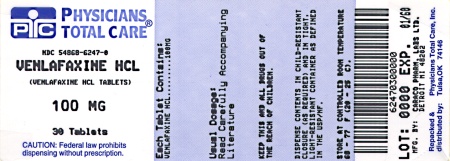
Image Of 100 mg Package Label (6247)