Sudden Death and Preexisting Structural Cardiac Abnormalities or Other Serious Heart Problems
Children and Adolescents
Sudden death has been reported in association with CNS stimulant treatment at usual doses in children and adolescents with structural cardiac abnormalities or other serious heart problems. Although some serious heart problems alone carry an increased risk of sudden death, stimulant products generally should not be used in children or adolescents with known serious structural cardiac abnormalities, cardiomyopathy, serious heart rhythm abnormalities, or other serious cardiac problems that may place them at increased vulnerability to the sympathomimetic effects of a stimulant drug.
Adults
Sudden deaths, stroke, and myocardial infarction have been reported in adults taking stimulant drugs at usual doses for ADHD. Although the role of stimulants in these adult cases is also unknown, adults have a greater likelihood than children of having serious structural cardiac abnormalities, cardiomyopathy, serious heart rhythm abnormalities, coronary artery disease, or other serious cardiac problems. Adults with such abnormalities should also generally not be treated with stimulant drugs.
Hypertension and Other Cardiovascular Conditions
Stimulant medications cause a modest increase in average blood pressure (about 2 to 4 mm Hg) and average heart rate (about 3 to 6 bpm) [see Adverse Reactions (6.5)], and individuals may have larger increases. While the mean changes alone would not be expected to have short-term consequences, all patients should be monitored for larger changes in heart rate and blood pressure. Caution is indicated in treating patients whose underlying medical conditions might be compromised by increases in blood pressure or heart rate, e.g., those with preexisting hypertension, heart failure, recent myocardial infarction, or ventricular arrhythmia.
Assessing Cardiovascular Status in Patients Being Treated with Stimulant Medications
Children, adolescents, or adults who are being considered for treatment with stimulant medications should have a careful history (including assessment for a family history of sudden death or ventricular arrhythmia) and physical exam to assess for the presence of cardiac disease, and should receive further cardiac evaluation if findings suggest such disease (e.g., electrocardiogram and echocardiogram). Patients who develop symptoms such as exertional chest pain, unexplained syncope, or other symptoms suggestive of cardiac disease during stimulant treatment should undergo a prompt cardiac evaluation.
Preexisting Psychosis
Administration of stimulants may exacerbate symptoms of behavior disturbance and thought disorder in patients with a preexisting psychotic disorder.
Bipolar Illness
Particular care should be taken in using stimulants to treat ADHD in patients with comorbid bipolar disorder because of concern for possible induction of a mixed/manic episode in such patients. Prior to initiating treatment with a stimulant, patients with comorbid depressive symptoms should be adequately screened to determine if they are at risk for bipolar disorder; such screening should include a detailed psychiatric history, including a family history of suicide, bipolar disorder, and depression.
Emergence of New Psychotic or Manic Symptoms
Treatment-emergent psychotic or manic symptoms, e.g., hallucinations, delusional thinking, or mania in patients without a prior history of psychotic illness or mania can be caused by stimulants at usual doses. If such symptoms occur, consideration should be given to a possible causal role of the stimulant, and discontinuation of treatment may be appropriate. In a pooled analysis of multiple short-term, placebo-controlled studies, such symptoms occurred in about 0.1% (4 patients with events out of 3482 exposed to methylphenidate or amphetamine for several weeks at usual doses) of stimulant-treated patients compared to 0 in placebo-treated patients.
Aggression
Aggressive behavior or hostility is often observed in patients with ADHD, and has been reported in clinical trials and the postmarketing experience of some medications indicated for the treatment of ADHD. Although there is no systematic evidence that stimulants cause aggressive behavior or hostility, patients beginning treatment for ADHD should be monitored for the appearance of or worsening of aggressive behavior or hostility.
Children and Adolescents
Table 4 lists the adverse reactions reported in 1% or more of Methylphenidate HCl Extended-Release Tablets-treated children and adolescent subjects in 4 placebo-controlled, double-blind clinical trials.
Table 4. Adverse Reactions Reported by ≥1% of Methylphenidate HCl Extended-Release Tablets-Treated Children and Adolescent Subjects in 4 Placebo-Controlled, Double-Blind Clinical Trials of Methylphenidate HCl Extended-Release TabletsSystem/Organ Class
Adverse Reaction | Methylphenidate HCl Extended-Release Tablets
(n=321)
% | Placebo
(n=318)
% |
|---|
| Gastrointestinal Disorders | | |
| Abdominal pain upper | 6.2 | 3.8 |
| Vomiting | 2.8 | 1.6 |
| General Disorders and Administration Site Conditions | | |
| Pyrexia | 2.2 | 0.9 |
| Infections and Infestations | | |
| Nasopharyngitis | 2.8 | 2.2 |
| Nervous System Disorders | | |
| Dizziness | 1.9 | 0 |
| Psychiatric Disorders | | |
| Insomnia Terms of Initial insomnia (Methylphenidate HCl Extended-Release Tablets=0.6%) and Insomnia (Methylphenidate HCl Extended-Release Tablets=2.2%) are combined into Insomnia. | 2.8 | 0.3 |
| Respiratory, Thoracic and Mediastinal Disorders | | |
| Cough | 1.9 | 0.9 |
| Oropharyngeal pain | 1.2 | 0.9 |
The majority of adverse reactions were mild to moderate in severity.
Adults
Table 5 lists the adverse reactions reported in 1% or more of Methylphenidate HCl Extended-Release Tablets-treated adults in 2 placebo-controlled, double-blind clinical trials.
Table 5. Adverse Reactions Reported by ≥1% of Methylphenidate HCl Extended-Release Tablets-Treated Adult Subjects in 2 Placebo-Controlled, Double-Blind Clinical Trials Included doses up to 108 mg.
System/Organ Class
Adverse Reaction | Methylphenidate HCl Extended-Release Tablets
(n=415)
% | Placebo
(n=212)
% |
|---|
| Cardiac Disorders | | |
| Tachycardia | 4.8 | 0 |
| Palpitations | 3.1 | 0.9 |
| Ear and Labyrinth Disorders | | |
| Vertigo | 1.7 | 0 |
| Eye Disorders | | |
| Vision blurred | 1.7 | 0.5 |
| Gastrointestinal Disorders | | |
| Dry mouth | 14.0 | 3.8 |
| Nausea | 12.8 | 3.3 |
| Dyspepsia | 2.2 | 0.9 |
| Vomiting | 1.7 | 0.5 |
| Constipation | 1.4 | 0.9 |
| General Disorders and Administration Site Conditions | | |
| Irritability | 5.8 | 1.4 |
| Infections and Infestations | | |
| Upper respiratory tract infection | 2.2 | 0.9 |
| Investigations | | |
| Weight decreased | 6.5 | 3.3 |
| Metabolism and Nutrition Disorders | | |
| Decreased appetite | 25.3 | 6.6 |
| Anorexia | 1.7 | 0 |
| Musculoskeletal and Connective Tissue Disorders | | |
| Muscle tightness | 1.9 | 0 |
| Nervous System Disorders | | |
| Headache | 22.2 | 15.6 |
| Dizziness | 6.7 | 5.2 |
| Tremor | 2.7 | 0.5 |
| Paresthesia | 1.2 | 0 |
| Sedation | 1.2 | 0 |
| Tension headache | 1.2 | 0.5 |
| Psychiatric Disorders | | |
| Insomnia | 12.3 | 6.1 |
| Anxiety | 8.2 | 2.4 |
| Initial insomnia | 4.3 | 2.8 |
| Depressed mood | 3.9 | 1.4 |
| Nervousness | 3.1 | 0.5 |
| Restlessness | 3.1 | 0 |
| Agitation | 2.2 | 0.5 |
| Aggression | 1.7 | 0.5 |
| Bruxism | 1.7 | 0.5 |
| Depression | 1.7 | 0.9 |
| Libido decreased | 1.7 | 0.5 |
| Affect lability | 1.4 | 0.9 |
| Confusional state | 1.2 | 0.5 |
| Tension | 1.2 | 0.5 |
| Respiratory, Thoracic and Mediastinal Disorders | | |
| Oropharyngeal pain | 1.7 | 1.4 |
| Skin and Subcutaneous Tissue Disorders | | |
| Hyperhidrosis | 5.1 | 0.9 |
The majority of ADRs were mild to moderate in severity.
Absorption
Methylphenidate is readily absorbed. Following oral administration of Methylphenidate HCl Extended-Release Tablets, plasma methylphenidate concentrations increase rapidly, reaching an initial maximum at about 1 hour, followed by gradual ascending concentrations over the next 5 to 9 hours, after which a gradual decrease begins. Mean times to reach peak plasma concentrations across all doses of Methylphenidate HCl Extended-Release Tablets occurred between 6 and 10 hours.
Methylphenidate HCl Extended-Release Tablets once daily minimize the fluctuations between peak and trough concentrations associated with immediate-release methylphenidate three times daily (see Figure 1). The relative bioavailability of Methylphenidate HCl Extended-Release Tablets once daily and methylphenidate three times daily in adults is comparable.

Figure 1 (Methylphenidate 02)
The mean single-dose pharmacokinetic parameters in 36 healthy adults following the administration of Methylphenidate HCl Extended-Release Tablets 18 mg once daily and methylphenidate 5 mg three times daily are summarized in Table 6.
TABLE 6. Pharmacokinetic Parameters (Mean ± SD) After Single Dose in Healthy Adults| Parameters | Methylphenidate HCl Extended-Release Tablets
(18 mg once daily)
(n=36) | Methylphenidate
(5 mg three times daily)
(n=35) |
|---|
| Cmax (ng/mL) | 3.7 ± 1.0 | 4.2 ± 1.0 |
| Tmax (h) | 6.8 ± 1.8 | 6.5 ± 1.8 |
| AUCinf (ng∙h/mL) | 41.8 ± 13.9 | 38.0 ± 11.0 |
| t½ (h) | 3.5 ± 0.4 | 3.0 ± 0.5 |
The pharmacokinetics of Methylphenidate HCl Extended-Release Tablets were evaluated in healthy adults following single- and multiple-dose administration (steady state) of doses up to 144 mg/day. The mean half-life was about 3.6 hours. No differences in the pharmacokinetics of Methylphenidate HCl Extended-Release Tablets were noted following single and repeated once-daily dosing, indicating no significant drug accumulation. The AUC and t1/2 following repeated once-daily dosing are similar to those following the first dose of Methylphenidate HCl Extended-Release Tablets in a dose range of 18 to 144 mg.
Dose Proportionality
Following administration of Methylphenidate HCl Extended-Release Tablets in single doses of 18, 36, and 54 mg/day to healthy adults, Cmax and AUC (0–inf) of d-methylphenidate were proportional to dose, whereas l-methylphenidate Cmax and AUC(0–inf) increased disproportionately with respect to dose. Following administration of Methylphenidate HCl Extended-Release Tablets, plasma concentrations of the l-isomer were approximately 1/40 the plasma concentrations of the d-isomer.
In healthy adults, single and multiple dosing of once-daily Methylphenidate HCl Extended-Release Tablet doses from 54 to 144 mg/day resulted in linear and dose-proportional increases in Cmax and AUCinf for total methylphenidate (MPH) and its major metabolite, α-phenyl-piperidine acetic acid (PPAA). There was no time dependency in the pharmacokinetics of methylphenidate. The ratio of metabolite (PPAA) to parent drug (MPH) was constant across doses from 54 to 144 mg/day, both after single dose and upon multiple dosing.
In a multiple-dose study in adolescent ADHD patients aged 13 to 16 administered their prescribed dose (18 to 72 mg/day) of Methylphenidate HCl Extended-Release Tablets, mean Cmax and AUCTAU of d- and total methylphenidate increased proportionally with respect to dose.
Distribution
Plasma methylphenidate concentrations in adults and adolescents decline biexponentially following oral administration. The half-life of methylphenidate in adults and adolescents following oral administration of Methylphenidate HCl Extended-Release Tablets was approximately 3.5 hours.
Metabolism and Excretion
In humans, methylphenidate is metabolized primarily by de-esterification to PPAA, which has little or no pharmacologic activity. In adults the metabolism of Methylphenidate HCl Extended-Release Tablets once daily as evaluated by metabolism to PPAA is similar to that of methylphenidate three times daily. The metabolism of single and repeated once-daily doses of Methylphenidate HCl Extended-Release Tablets is similar.
After oral dosing of radiolabeled methylphenidate in humans, about 90% of the radioactivity was recovered in urine. The main urinary metabolite was PPAA, accounting for approximately 80% of the dose.
Food Effects
In patients, there were no differences in either the pharmacokinetics or the pharmacodynamic performance of Methylphenidate HCl Extended-Release Tablets when administered after a high-fat breakfast. There is no evidence of dose dumping in the presence or absence of food.
Special Populations
Gender
In healthy adults, the mean dose-adjusted AUC (0–inf) values for Methylphenidate HCl Extended-Release Tablets were 36.7 ng∙h/mL in men and 37.1 ng∙h/mL in women, with no differences noted between the two groups.
Race
In adults receiving Methylphenidate HCl Extended-Release Tablets, dose-adjusted AUC(0–inf) was consistent across ethnic groups; however, the sample size may have been insufficient to detect ethnic variations in pharmacokinetics.
Age
Increase in age resulted in increased apparent oral clearance (CL/F) (58% increase in adolescents compared to children). Some of these differences could be explained by body-weight differences among these populations. This suggests that subjects with higher body weight may have lower exposures of total methylphenidate at similar doses.
The pharmacokinetics of Methylphenidate HCl Extended-Release Tablets have not been studied in children less than 6 years of age.
Renal Insufficiency
There is no experience with the use of Methylphenidate HCl Extended-Release Tablets in patients with renal insufficiency. After oral administration of radiolabeled methylphenidate in humans, methylphenidate was extensively metabolized and approximately 80% of the radioactivity was excreted in the urine in the form of PPAA. Since renal clearance is not an important route of methylphenidate clearance, renal insufficiency is expected to have little effect on the pharmacokinetics of Methylphenidate HCl Extended-Release Tablets.
Hepatic Insufficiency
There is no experience with the use of Methylphenidate HCl Extended-Release Tablets in patients with hepatic insufficiency.
Carcinogenesis
In a lifetime carcinogenicity study carried out in B6C3F1 mice, methylphenidate caused an increase in hepatocellular adenomas and, in males only, an increase in hepatoblastomas at a daily dose of approximately 60 mg/kg/day. This dose is approximately 30 times and 4 times the maximum recommended human dose of Methylphenidate HCl Extended-Release Tablets on a mg/kg and mg/m2 basis, respectively. Hepatoblastoma is a relatively rare rodent malignant tumor type. There was no increase in total malignant hepatic tumors. The mouse strain used is sensitive to the development of hepatic tumors, and the significance of these results to humans is unknown.
Methylphenidate did not cause any increases in tumors in a lifetime carcinogenicity study carried out in F344 rats; the highest dose used was approximately 45 mg/kg/day, which is approximately 22 times and 5 times the maximum recommended human dose of Methylphenidate HCl Extended-Release Tablets on a mg/kg and mg/m2 basis, respectively.
In a 24-week carcinogenicity study in the transgenic mouse strain p53+/-, which is sensitive to genotoxic carcinogens, there was no evidence of carcinogenicity. Male and female mice were fed diets containing the same concentration of methylphenidate as in the lifetime carcinogenicity study; the high-dose groups were exposed to 60 to 74 mg/kg/day of methylphenidate.
Mutagenesis
Methylphenidate was not mutagenic in the in vitro Ames reverse mutation assay or the in vitro mouse lymphoma cell forward mutation assay. Sister chromatid exchanges and chromosome aberrations were increased, indicative of a weak clastogenic response, in an in vitro assay in cultured Chinese Hamster Ovary cells. Methylphenidate was negative in vivo in males and females in the mouse bone marrow micronucleus assay.
Impairment of Fertility
Methylphenidate did not impair fertility in male or female mice that were fed diets containing the drug in an 18-week Continuous Breeding study. The study was conducted at doses up to 160 mg/kg/day, approximately 80-fold and 8-fold the highest recommended human dose of Methylphenidate HCl Extended-Release Tablets on a mg/kg and mg/m2 basis, respectively.
Manufactured by:
Janssen-Cilag Manufacturing, LLC
Gurabo, Puerto Rico 00778 or
Alza Corp.
Vacaville, CA 95688
Distributed by:
Watson Pharma, Inc.
Corona, CA 92880
[Insert new code]
Revised November 2010
Relabeling and Repackaging by:
Physicians Total Care, Inc.
Tulsa, OK 74146
What are Methylphenidate HCl Extended-Release Tablets?
Methylphenidate HCl Extended-Release Tablets are a central nervous system stimulant prescription medicine. They are used for the treatment of attention deficit and hyperactivity disorder (ADHD). Methylphenidate HCl Extended-Release Tablets may help increase attention and decrease impulsiveness and hyperactivity in patients with ADHD.
Methylphenidate HCl Extended-Release Tablets should be used as a part of a total treatment program for ADHD that may include counseling or other therapies.
Who should not take Methylphenidate HCl Extended-Release Tablets?
Methylphenidate HCl Extended-Release Tablets should not be taken if you or your child:
- is very anxious, tense, or agitated
- has an eye problem called glaucoma
- has tics or Tourette's syndrome, or a family history of Tourette's syndrome. Tics are hard-to-control repeated movements or sounds.
- is taking or has taken within the past 14 days an antidepression medicine called a monoamine oxidase inhibitor or MAOI.
- is allergic to anything in Methylphenidate HCl Extended-Release Tablets. See the end of this Medication Guide for a complete list of ingredients.
Methylphenidate HCl Extended-Release Tablets should not be used in children less than 6 years old because they have not been studied in this age group. Methylphenidate HCl Extended-Release Tablets may not be right for you or your child. Before starting Methylphenidate HCl Extended-Release Tablets, tell your or your child's doctor about all health conditions (or a family history of) including:
- heart problems, heart defects, or high blood pressure
- mental problems including psychosis, mania, bipolar illness, or depression
- tics or Tourette's syndrome
- seizures or have had an abnormal brain wave test (EEG)
- esophagus, stomach, or small or large intestine problems
Tell your doctor if you or your child is pregnant, planning to become pregnant, or breastfeeding.
Can Methylphenidate HCl Extended-Release Tablets be taken with other medicines?
Tell your doctor about all of the medicines that you or your child takes including prescription and nonprescription medicines, vitamins, and herbal supplements. Methylphenidate HCl Extended-Release Tablets and some medicines may interact with each other and cause serious side effects. Sometimes the doses of other medicines will need to be adjusted while taking Methylphenidate HCl Extended-Release Tablets.
Your doctor will decide whether Methylphenidate HCl Extended-Release Tablets can be taken with other medicines.
Especially tell your doctor if you or your child takes:
- antidepression medicines including MAOIs
- seizure medicines
- blood thinner medicines
- blood pressure medicines
- cold or allergy medicines that contain decongestants
Know the medicines that you or your child takes. Keep a list of your medicines with you to show your doctor and pharmacist.
Do not start any new medicine while taking Methylphenidate HCl Extended-Release Tablets without talking to your doctor first.
How should Methylphenidate HCl Extended-Release Tablets be taken?
- Take Methylphenidate HCl Extended-Release Tablets exactly as prescribed. Your doctor may adjust the dose until it is right for you or your child.
- Do not chew, crush, or divide the tablets. Swallow Methylphenidate HCl Extended-Release Tablets whole with water or other liquids. Tell your doctor if you or your child cannot swallow Methylphenidate HCl Extended-Release Tablets whole. A different medicine may need to be prescribed.
- Methylphenidate HCl Extended-Release Tablets can be taken with or without food.
- Take Methylphenidate HCl Extended-Release Tablets once each day in the morning. Methylphenidate HCl Extended-Release Tablets are extended-release tablets. They release medication into your or your child's body throughout the day.
- The Methylphenidate HCl Extended-Release Tablets do not dissolve completely in the body after all the medicine has been released. You or your child may sometimes notice the empty tablet in a bowel movement. This is normal.
- From time to time, your doctor may stop Methylphenidate HCl Extended-Release Tablets treatment for a while to check ADHD symptoms.
- Your doctor may do regular checks of the blood, heart, and blood pressure while taking Methylphenidate HCl Extended-Release Tablets. Children should have their height and weight checked often while taking Methylphenidate HCl Extended-Release Tablets. Methylphenidate HCl Extended-Release Tablet treatment may be stopped if a problem is found during these check-ups.
- If you or your child takes too much Methylphenidate HCl Extended-Release Tablets or overdoses, call your doctor or poison control center right away, or get emergency treatment.
What are possible side effects of Methylphenidate HCl Extended-Release Tablets?
See "What is the most important information I should know about Methylphenidate HCl Extended-Release Tablets?" for information on reported heart and mental problems.
Other serious side effects include:
- slowing of growth (height and weight) in children
- seizures, mainly in patients with a history of seizures
- eyesight changes or blurred vision
- blockage of the esophagus, stomach, small or large intestine in patients who already have a narrowing in any of these organs
Common side effects include:
- decreased appetite
- dry mouth
- trouble sleeping
- dizziness
- stomach ache
- increased sweating
| - headache
- nausea
- anxiety
- weight loss
- irritability
|
Stimulants may impair the ability of you or your child to operate potentially hazardous machinery or vehicles. You or your child should exercise caution until you or your child is reasonably certain that Methylphenidate HCl Extended-Release Tablets do not adversely affect your or your child's ability to engage in such activities.
Talk to your doctor if you or your child has side effects that are bothersome or do not go away.
This is not a complete list of possible side effects. Ask your doctor or pharmacist for more information.
Call your doctor for medical advice about side effects. You may report side effects to FDA at 1-800-FDA-1088.
You may also report side effects to Watson Laboratories, Inc. at 1-800-272-5525.
How should I store Methylphenidate HCl Extended-Release Tablets?
- Store Methylphenidate HCl Extended-Release Tablets in a safe place at room temperature, 59 to 86° F (15 to 30° C). Protect from moisture.
- Keep Methylphenidate HCl Extended-Release Tablets and all medicines out of the reach of children.
General information about Methylphenidate HCl Extended-Release Tablets
Medicines are sometimes prescribed for purposes other than those listed in a Medication Guide. Do not use Methylphenidate HCl Extended-Release Tablets for a condition for which they were not prescribed. Do not give Methylphenidate HCl Extended-Release Tablets to other people, even if they have the same condition. It may harm them and it is against the law.
This Medication Guide summarizes the most important information about Methylphenidate HCl Extended-Release Tablets. If you would like more information, talk with your doctor. You can ask your doctor or pharmacist for information about Methylphenidate HCl Extended-Release Tablets that was written for healthcare professionals. For more information about Methylphenidate HCl Extended-Release Tablets call 1-800-272-5525.
What are the ingredients in Methylphenidate HCl Extended-Release Tablets?
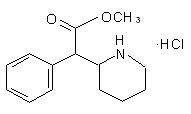
Active Ingredient: methylphenidate HCl
Inactive Ingredients: butylated hydroxytoluene, carnauba wax, cellulose acetate, hypromellose, lactose, phosphoric acid, poloxamer, polyethylene glycol, polyethylene oxides, povidone, propylene glycol, sodium chloride, stearic acid, succinic acid, synthetic iron oxides, titanium dioxide, and triacetin.
This Medication Guide has been approved by the U.S. Food and Drug Administration.
Manufactured by:
Janssen-Cilag Manufacturing, LLC
Gurabo, Puerto Rico 00778 or
Alza Corp.
Vacaville, CA 95688
Distributed by:
Watson Pharma, Inc.
Corona, CA 92880
Revised: November 2010