Clopidogrel Bisulfate Tablet, Film Coated
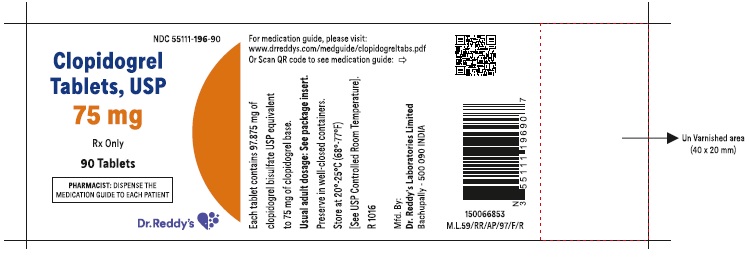
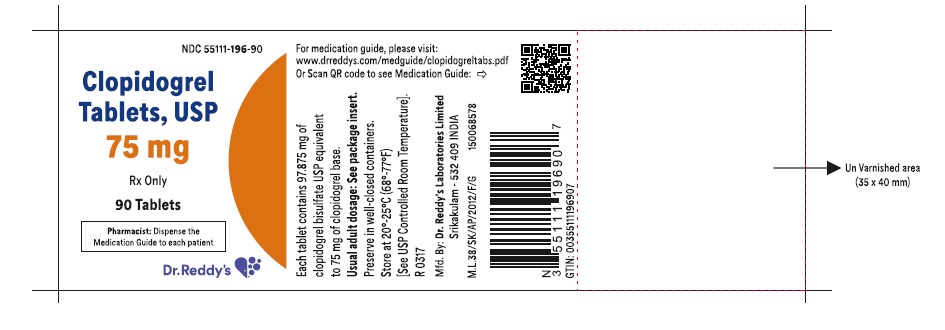
Product Images NDC 55111-196
View Photos of Packaging, Regulatory Labels, and Product Appearance
Product Visual Gallery
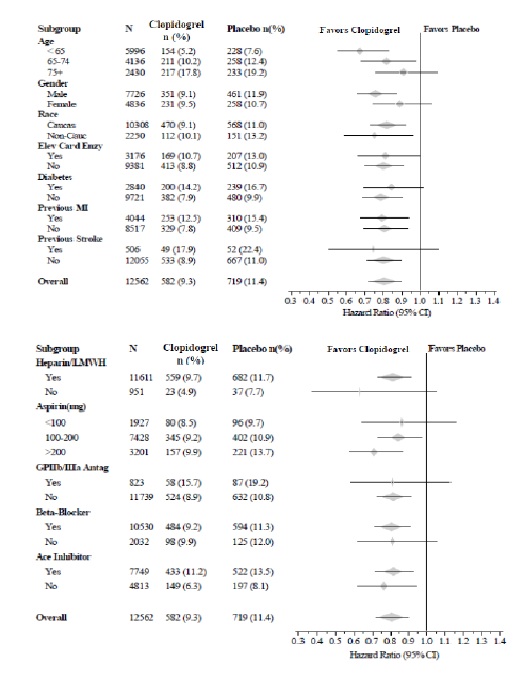
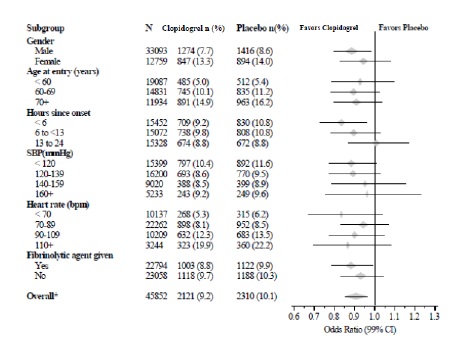
This gallery contains 11 technical images submitted to the FDA as part of the official labeling for Clopidogrel Bisulfate (NDC 55111-196). Unlike standard consumer photos, these assets often include clinical data figures, molecular chemical structures, and official manufacturer packaging layouts.
As provided by Dr.reddy's Laboratories Limited, these visuals offer a comprehensive scientific overview of the product's physical and chemical identity, aiding pharmacists and researchers in product verification and study.
Container1
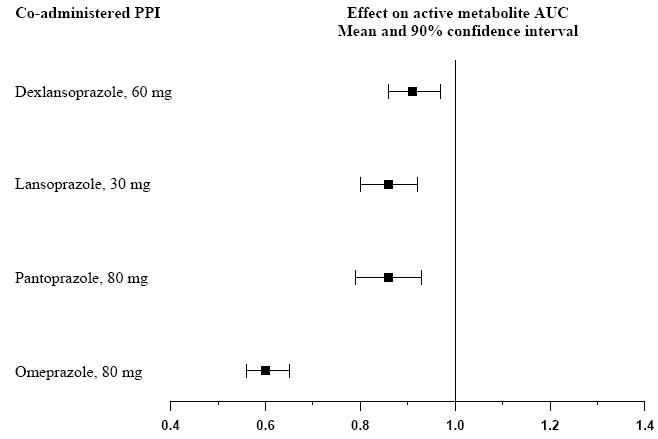
Figure1 (Figure1)
This table appears to show the mean and 90% confidence interval for the effect of four different co-administered proton pump inhibitors (PPIs) on the active metabolite AUC. The PPIs evaluated are dexlansoprazole (60 mg), lansoprazole (30 mg), pantoprazole (80 mg), and omeprazole (80 mg). The table also includes some numerical values, however, without additional context or labels it is difficult to determine what they represent.*
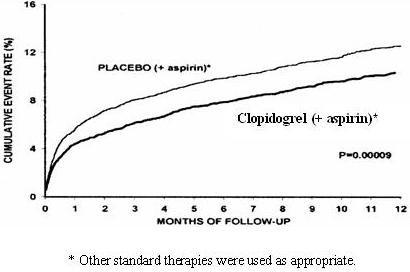
Figure2 (Figure2)
This appears to be a chart or graph displaying the cumulative event rate of Placebo (+ aspirin) and Clopidogrel (+ aspirin) over a certain period of time (represented by months of follow-up). The chart seems to show that Clopidogrel (+ aspirin) had a lower cumulative event rate (around 0.00009%) compared to Placebo (+ aspirin). It also notes that other standard therapies were used as appropriate.*
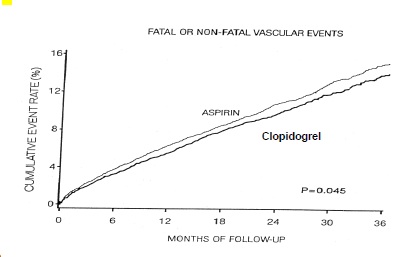
Figure3 (Figure3)
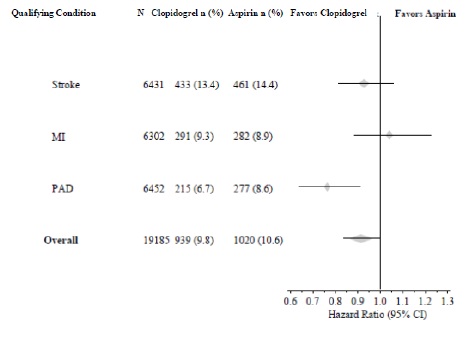
Figure4 (Figure4)
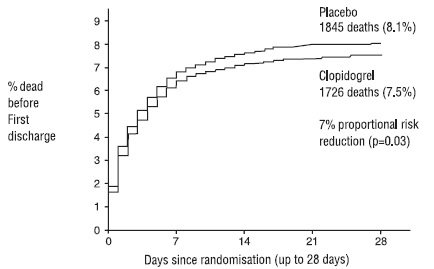
The text appears to be a statistical summary of a medical study comparing the mortality rates of a group of patients who were administered clopidogrel and another group who were administered a placebo. The study reports a 7% reduction in the risk of death among the patients who received clopidogrel. The study duration was up to 28 days and the data is presented in a table with columns that show the number of deaths and the percentage of deaths in each group. The first few lines of the text seem to be incomplete or fragmented and do not provide any meaningful information.*
Figure5 (Figure5)
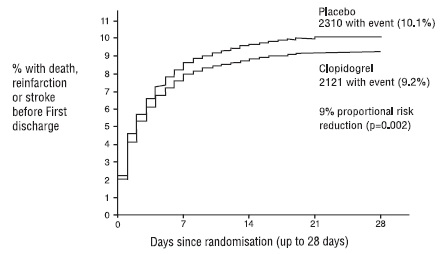
This appears to be a description of a study that evaluated the effectiveness of Clopidogrel in reducing the risk of death, reinfarction, or stroke before the first discharge. The study involved a group of individuals who were given Clopidogrel and another group that was given placebo. The data shows that 10.1% of those who received placebo had an adverse event, while only 9.2% of those who received Clopidogrel had an adverse event. The study suggests that Clopidogrel may be effective in reducing the risk of adverse events. The time frame of the study was up to 28 days after randomization.*
Figure6 (Figure6)
Figure7 (Figure7)
Figure8 (Figure8)
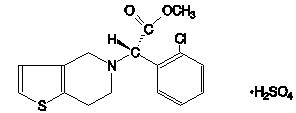
Structure (Structure)
* These product label images have been analyzed using experimental machine learning. Please verify findings with the primary label text.