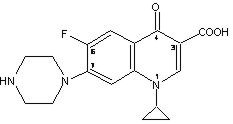
Clinical trials in patients with urinary tract infections enrolled 961 patients treated with 500 mg or 1000 mg ciprofloxacin extended-release tablets. Most adverse events reported were described as mild to moderate in severity and required no treatment. The overall incidence, type and distribution of adverse events were similar in patients receiving both 500 mg and 1000 mg of ciprofloxacin extended-release tablets. Because clinical trials are conducted under widely varying conditions, adverse reaction rates observed in clinical trials of a drug cannot be directly compared to rates observed in clinical trials of another drug and may not reflect the rates observed in practice. The adverse reaction information from clinical studies does, however, provide a basis for identifying the adverse events that appear to be related to drug use and for approximating rates.
In the clinical trial of uncomplicated urinary tract infection, ciprofloxacin extended-release tablets (500 mg once daily) in 444 patients was compared to ciprofloxacin immediate-release tablets (250 mg twice daily) in 447 patients for 3 days. Discontinuations due to adverse reactions thought to be drug-related occurred in 0.2% (1/444) of patients in the ciprofloxacin extended-release tablets arm and in 0% (0/447) of patients in the control arm.
In the clinical trial of complicated urinary tract infection and acute uncomplicated pyelonephritis, ciprofloxacin extended-release tablets (1000 mg once daily) in 517 patients was compared to ciprofloxacin immediate-release tablets (500 mg twice daily) in 518 patients for 7 to 14 days. Discontinuations due to adverse reactions thought to be drug-related occurred in 3.1% (16/517) of patients in the ciprofloxacin extended-release tablets arm and in 2.3% (12/518) of patients in the control arm. The most common reasons for discontinuation in the ciprofloxacin extended-release tablets arm were nausea/vomiting (4 patients) and dizziness (3 patients). In the control arm the most common reason for discontinuation was nausea/vomiting (3 patients).
In these clinical trials, the following events occurred in ≥ 2% of all ciprofloxacin extended-release tablets patients, regardless of drug relationship: nausea (4%), headache (3%), dizziness (2%), diarrhea (2%), vomiting (2%) and vaginal moniliasis (2%).
Adverse events, judged by investigators to be at least possibly drug-related, occurring in greater than or equal to 1% of all ciprofloxacin extended-release tablets treated patients were: nausea (3%), diarrhea (2%), headache (1%), dyspepsia (1%), dizziness (1%), and vaginal moniliasis (1%). Vomiting (1%) occurred in the 1000 mg group.
Additional uncommon events, judged by investigators to be at least possibly drug-related, that occurred in less than 1% of ciprofloxacin extended-release tablets treated patients were:
- Body As a Whole: abdominal pain, asthenia, malaise, photosensitivity reaction
- Cardiovascular: bradycardia, migraine, syncope
- Digestive: anorexia, constipation, dry mouth, flatulence, liver function tests abnormal, thirst
- Hemic/Lymphatic: prothrombin decrease
- Central Nervous System: abnormal dreams, depersonalization, depression, hypertonia, incoordination, insomnia, somnolence, tremor, vertigo
- Metabolic: hyperglycemia
- Skin/Hypersensivity: dry skin, maculopapular rash, photosensitivity/phototoxicity reactions, pruritus, rash, skin disorder, urticaria, vesiculobullous rash
- Special Senses: diplopia, taste perversion
- Urogenital: dysmenorrhea, hematuria, kidney function abnormal, vaginitis
Post-Marketing Adverse Event Reports: The following adverse events have been reported from worldwide marketing experience with fluoroquinolones, including ciprofloxacin. Because these reactions have been reported voluntarily from a population of uncertain size, it is not always possible to reliably estimate their frequency or a causal relationship to drug exposure. The events in alphabetical order are:
abnormal gait, achiness, acidosis, agitation, agranulocytosis, allergic reactions (ranging from urticaria to anaphylactic reactions and including life-threatening anaphylactic shock), amylase increase, anemia, angina pectoris, angioedema, anosmia, anxiety, arrhythmia, arthralgia, ataxia, atrial flutter, bleeding diathesis, blurred vision, bronchospasm, C. difficile associated diarrhea, candidiasis (cutaneous, oral), candiduria, cardiac murmur, cardiopulmonary arrest, cardiovascular collapse, cerebral thrombosis, chills, cholestatic jaundice, chromatopsia, confusion, convulsion, delirium, drowsiness, dysphagia, dysphasia, dyspnea, edema (conjunctivae, face, hands, laryngeal, lips, lower extremities, neck, pulmonary), epistaxis, erythema multiforme, erythema nodosum, exfoliative dermatitis, fever, fixed eruptions, flushing, gastrointestinal bleeding, gout (flare up), grand mal convulsion, gynecomastia, hallucinations, hearing loss, hemolytic anemia, hemoptysis, hemorrhagic cystitis, hepatic failure (including fatal cases), hepatic necrosis, hepatitis, hiccup, hyperesthesia, hyperpigmentation, hypertension, hypertonia, hypesthesia, hypotension, ileus, interstitial nephritis, intestinal perforation, jaundice, joint stiffness, lethargy, lightheadedness, lipase increase, lymphadenopathy, manic reaction, marrow depression, migraine, moniliasis (oral, gastrointestinal, vaginal), myalgia, myasthenia, exacerbation of myasthenia gravis, myocardial infarction, myoclonus, nephritis, nightmares, nystagmus, oral ulceration, pain (arm, back, breast, chest, epigastric, eye, extremities, foot, jaw, neck, oral mucosa), palpitation, pancreatitis, pancytopenia, paranoia, paresthesia, peripheral neuropathy, perspiration (increased), petechia, phlebitis, phobia, photosensitivity/phototoxicity reaction, pleural effusion, polyuria, postural hypotension, prothrombin time prolongation, pseudomembranous colitis (the onset of symptoms may occur during or after antimicrobial treatment), pulmonary embolism, purpura, renal calculi, renal failure, respiratory arrest, respiratory distress, restlessness, serum sickness-like reaction, Stevens-Johnson syndrome, sweating, tachycardia, taste loss, tendinitis, tendon rupture, tinnitus, torsade de pointes, toxic epidermal necrolysis (Lyell's syndrome), toxic psychosis, twitching, unresponsiveness, urethral bleeding, urinary retention, urination (frequent), vaginal pruritus, vasculitis, ventricular ectopy, vesicles, visual acuity (decreased), visual disturbances (flashing lights, change in color perception, overbrightness of lights).