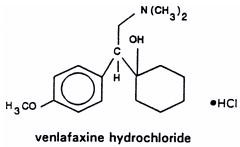
During its premarketing assessment, multiple doses of venlafaxine hydrochloride extended-release capsules were administered to 705 patients in Phase 3 major depressive disorder studies and venlafaxine hydrochloride tablet was administered to 96 patients. During its premarketing assessment, multiple doses of venlafaxine hydrochloride extended-release capsules were also administered to 819 patients in Phase 3 Social Anxiety Disorder studies. In addition, in premarketing assessment of venlafaxine hydrochloride tablet, multiple doses were administered to 2897 patients in Phase 2 to Phase 3 studies for major depressive disorder. The conditions and duration of exposure to venlafaxine in both development programs varied greatly, and included (in overlapping categories) open and double-blind studies, uncontrolled and controlled studies, inpatient (venlafaxine hydrochloride tablet only) and outpatient studies, fixed-dose, and titration studies. Untoward events associated with this exposure were recorded by clinical investigators using terminology of their own choosing. Consequently, it is not possible to provide a meaningful estimate of the proportion of individuals experiencing adverse events without first grouping similar types of untoward events into a smaller number of standardized event categories.
In the tabulations that follow, reported adverse events were classified using a standard COSTART-based Dictionary terminology. The frequencies presented, therefore, represent the proportion of the 7212 patients exposed to multiple doses of either formulation of venlafaxine who experienced an event of the type cited on at least one occasion while receiving venlafaxine. All reported events are included except those already listed in Tables 7, and 9 those events for which a drug cause was remote. If the COSTART term for an event was so general as to be uninformative, it was replaced with a more informative term. It is important to emphasize that, although the events reported occurred during treatment with venlafaxine, they were not necessarily caused by it.
Events are further categorized by body system and listed in order of decreasing frequency using the following definitions: frequent adverse events are defined as
those occurring on one or more occasions in at least 1/100 patients; infrequent adverse events are those occurring
in 1/100 to 1/1000 patients; rare events are those occurring in fewer than 1/1000 patients.
Body as a whole - Frequent: chest pain substernal, chills, fever, neck pain; Infrequent: face
edema, intentional injury, malaise, moniliasis, neck rigidity, pelvic
pain, photosensitivity reaction, suicide attempt, withdrawal syndrome; Rare: appendicitis, bacteremia, carcinoma,
cellulitis, granuloma.
Cardiovascular system - Frequent: migraine, tachycardia; Infrequent: angina pectoris, arrhythmia, bradycardia, extrasystoles, hypotension,
peripheral vascular disorder (mainly cold feet and/or cold hands),
postural hypotension, syncope; Rare: aortic aneurysm, arteritis, first-degree atrioventricular block, bigeminy, bundle branch block, capillary fragility, cerebral ischemia, coronary artery disease, congestive heart failure, heart arrest, hematoma, cardiovascular disorder (mitral valve and circulatory disturbance), mucocutaneous hemorrhage, myocardial infarct, pallor, sinus arrhythmia, thrombophlebitis.
Digestive system - Frequent: increased
appetite; Infrequent: bruxism, colitis, dysphagia, tongue edema, eructation, esophagitis, gastritis, gastroenteritis, gastrointestinal ulcer, gingivitis, glossitis, rectal hemorrhage, hemorrhoids, melena, oral moniliasis, stomatitis, mouth ulceration; Rare: abdominal distension,
biliary pain, cheilitis, cholecystitis, cholelithiasis, esophageal
spasms, duodenitis, hematemesis, gastroesophageal reflux disease,
gastrointestinal hemorrhage, gum hemorrhage, hepatitis, ileitis, jaundice,
intestinal obstruction, liver tenderness, parotitis, periodontitis,
proctitis, rectal disorder, salivary gland enlargement, increased
salivation, soft stools, tongue discoloration.
Endocrine system - Rare: galactorrhoea, goiter, hyperthyroidism, hypothyroidism, thyroid nodule, thyroiditis.
Hemic and lymphatic system
- Frequent: ecchymosis; Infrequent: anemia, leukocytosis, leukopenia, lymphadenopathy, thrombocythemia; Rare: basophilia, bleeding time increased, cyanosis, eosinophilia, lymphocytosis, multiple myeloma, purpura, thrombocytopenia.
Metabolic and nutritional - Frequent: edema, weight gain; Infrequent: alkaline phosphatase increased, dehydration, hypercholesteremia,
hyperglycemia, hyperlipidemia, hypokalemia, SGOT (AST) increased,
SGPT (ALT) increased, thirst; Rare: alcohol intolerance, bilirubinemia, BUN increased, creatinine increased, diabetes mellitus, glycosuria, gout, healing abnormal, hemochromatosis, hypercalcinuria, hyperkalemia, hyperphosphatemia, hyperuricemia, hypocholesteremia, hypoglycemia, hyponatremia, hypophosphatemia, hypoproteinemia, uremia.
Musculoskeletal system - Infrequent: arthritis, arthrosis, bone spurs, bursitis, leg cramps, myasthenia, tenosynovitis; Rare: bone pain, pathological fracture,
muscle cramp, muscle spasms, musculoskeletal stiffness, myopathy,
osteoporosis, osteosclerosis, plantar fasciitis, rheumatoid arthritis,
tendon rupture.
Nervous system - Frequent: amnesia,
confusion, depersonalization, hypesthesia, thinking abnormal, trismus,
vertigo; Infrequent: akathisia,
apathy, ataxia, circumoral paresthesia, CNS stimulation, emotional
lability, euphoria, hallucinations, hostility, hyperesthesia, hyperkinesia,
hypotonia, incoordination, libido increased, manic reaction, myoclonus,
neuralgia, neuropathy, psychosis, seizure, abnormal speech, stupor,
suicidal ideation; Rare: abnormal/changed
behavior, adjustment disorder, akinesia, alcohol abuse, aphasia, bradykinesia,
buccoglossal syndrome, cerebrovascular accident, feeling drunk, loss
of consciousness, delusions, dementia, dystonia, energy increased,
facial paralysis, abnormal gait, Guillain-Barre Syndrome, homicidal
ideation, hyperchlorhydria, hypokinesia, hysteria, impulse control
difficulties, motion sickness, neuritis, nystagmus, paranoid reaction,
paresis, psychotic depression, reflexes decreased, reflexes increased,
torticollis.
Respiratory system - Frequent: cough increased, dyspnea; Infrequent: asthma, chest congestion, epistaxis, hyperventilation, laryngismus,
laryngitis, pneumonia, voice alteration; Rare: atelectasis, hemoptysis, hypoventilation, hypoxia,
larynx edema, pleurisy, pulmonary embolus, sleep apnea.
Skin and appendages - Frequent: pruritus; Infrequent: acne, alopecia, contact dermatitis, dry skin,
eczema, maculopapular rash, psoriasis, urticaria; Rare: brittle nails, erythema nodosum,
exfoliative dermatitis, lichenoid dermatitis, hair discoloration,
skin discoloration, furunculosis, hirsutism, leukoderma, miliaria,
petechial rash, pruritic rash, pustular rash, vesiculobullous rash,
seborrhea, skin atrophy, skin hypertrophy, skin striae, sweating decreased.
Special senses - Frequent: abnormality of accommodation,
mydriasis, taste perversion; Infrequent: conjunctivitis, diplopia, dry eyes, eye pain, otitis media, parosmia,
photophobia, taste loss; Rare: blepharitis, cataract, chromatopsia, conjunctival edema, corneal
lesion, deafness, exophthalmos, eye hemorrhage, glaucoma, retinal
hemorrhage, subconjunctival hemorrhage, hyperacusis, keratitis, labyrinthitis,
miosis, papilledema, decreased pupillary reflex, otitis externa, scleritis,
uveitis, visual field defect.
Urogenital system - Frequent: albuminuria, urination impaired; Infrequent: amenorrhea,* cystitis, dysuria,
hematuria, kidney calculus, kidney pain, leukorrhea,* menorrhagia,* metrorrhagia,* nocturia,
breast pain, polyuria, pyuria, prostatic disorder (prostatitis, enlarged
prostate, and prostate irritability,* urinary incontinence, urinary retention, urinary urgency, vaginal
hemorrhage,* vaginitis*; Rare: abortion,* anuria, breast discharge,
breast engorgement, balanitis,* breast enlargement, endometriosis,* female lactation,* fibrocystic
breast, calcium crystalluria, cervicitis,* orchitis,* ovarian
cyst,* bladder pain, prolonged
erection,* gynecomastia (male),* hypomenorrhea,* kidney function abnormal, mastitis, menopause,* pyelonephritis, oliguria, salpingitis,* urolithiasis, uterine hemorrhage,* uterine spasm,* vaginal dryness.*
* Based on the number of men and women as appropriate.