Clopidogrel Bisulfate Tablet, Film Coated
Product Images NDC 55111-671

View Photos of Packaging, Regulatory Labels, and Product Appearance

Product Visual Gallery

This gallery contains 13 technical images submitted to the FDA as part of the official labeling for Clopidogrel Bisulfate (NDC 55111-671). Unlike standard consumer photos, these assets often include clinical data figures, molecular chemical structures, and official manufacturer packaging layouts.

As provided by Dr.reddy's Laboratories Limited, these visuals offer a comprehensive scientific overview of the product's physical and chemical identity, aiding pharmacists and researchers in product verification and study.

FDA Label Image

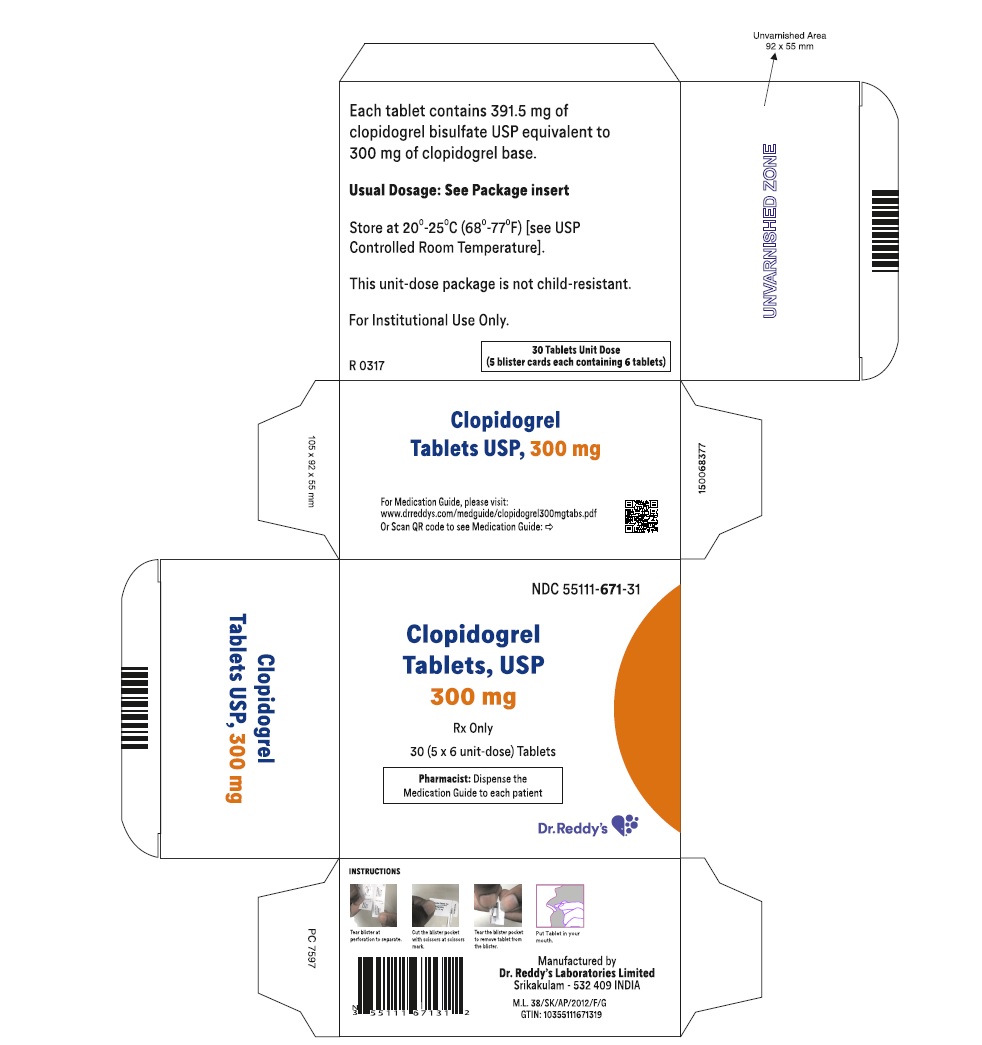
Carton1 (Carton1)

Carton1 (Carton1)
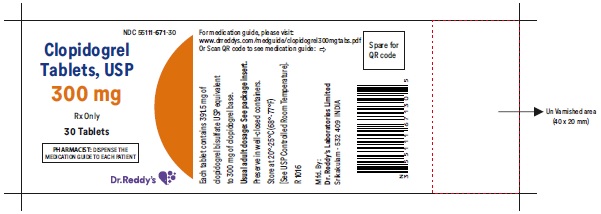
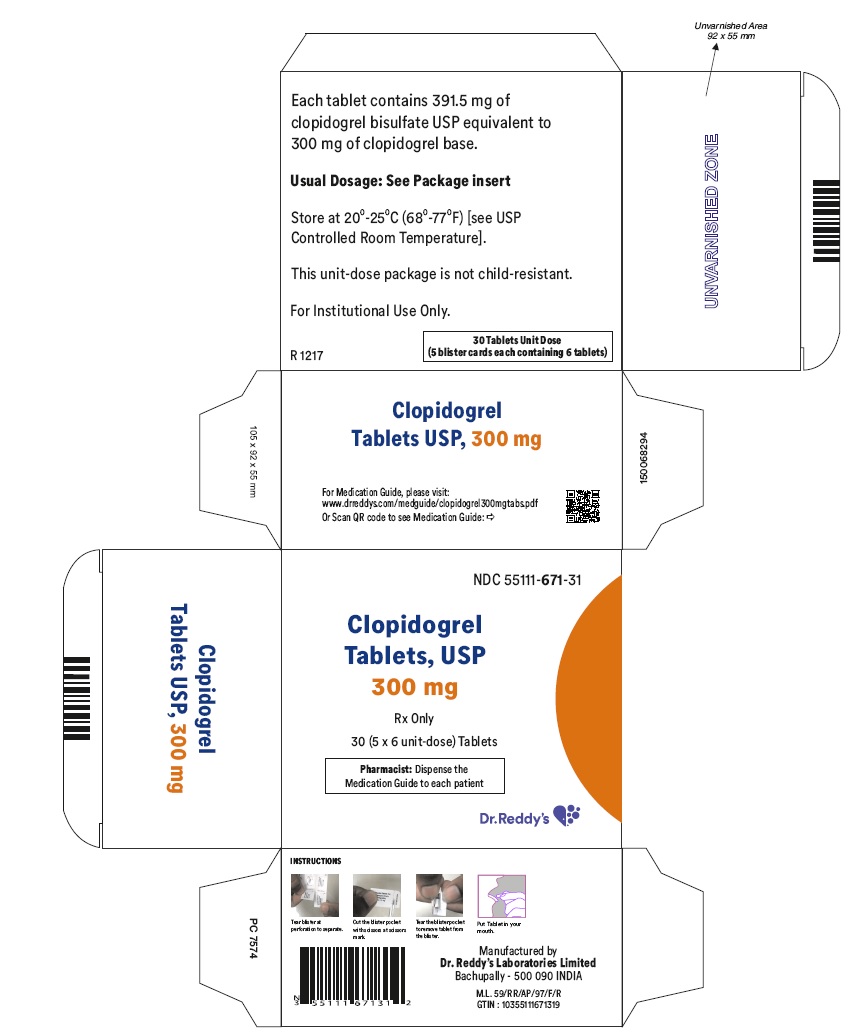
This is a description for Clopidogrel, a medication used to prevent blood clots. Each tablet contains 3915 mg of clopidogrel bisulfate USP equivalent to 300 mg of clopidogrel base. The usual dosage information is available on the package insert. This medication should be stored at 20°-25°C (68°-77°F) in a controlled room temperature. The pack consisting of six tablets is not child-resistant, and it is for institutional use only. The blister card packaging each contains 6 tablets. The medication is available in a pack of 30 (5 x 6 unit-dose) Tablets.*
FDA Label Image

Carton2 (Carton2)

Carton2 (Carton2)
This is an information leaflet for clopidogrel bisulfate tablets, with each tablet containing 391.5mg of the bisulfate and 300mg of clopidogrel base. The typical dosage instructions are provided in the package insert. The medication is to be stored at a controlled room temperature of 20-25°C. The unit-dose packaging is not child-resistant, and the tablets are for institutional use only. The label also shows the NDC number and the manufacturer's name, Dr. Reddy's Laboratories. The text on the label also includes the name of the medicine, the lot number, and some reference codes.*
FDA Label Image

Container1 (Container1)

FDA Label Image

Container2 (Container2)

FDA Label Image

Figure1 (Figure1)

Figure1 (Figure1)
This table shows the effect of administering PPI in combination with certain medications on the active metabolite AUC. The medications included are dexlansoprazole, lansoprazole, pantoprazole, and omeprazole. The values represent the mean and 90% confidence interval. It is unclear what the units of measurement are.*
FDA Label Image

Figure2 (Figure2)

Figure2 (Figure2)
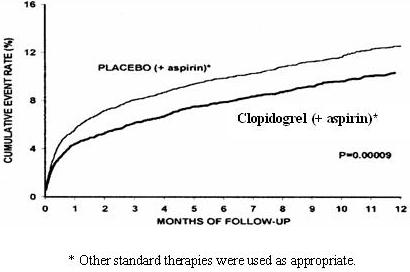
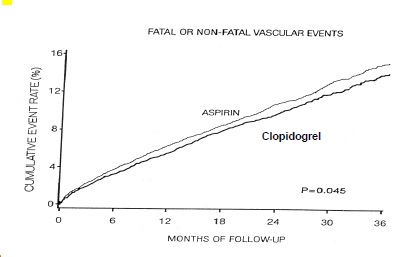
This is a chart displaying the cumulative event rate in percentage for a drug called Clopidogrel with aspirin, compared to another drug called Placebo with aspirin. The data was collected over a duration of several months. Other standard therapies were also used during the study.*
FDA Label Image

Figure3 (Figure3)

FDA Label Image

Figure4 (Figure4)

Figure4 (Figure4)
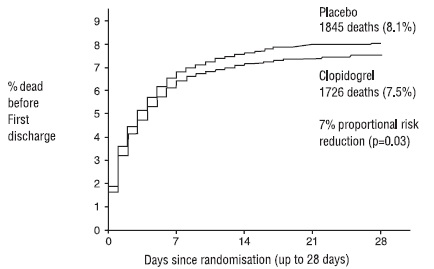
This appears to be the result of a study comparing the efficacy of a placebo and clopidogrel in reducing the proportion of deaths in a certain period of time since randomization. The study found that participants taking clopidogrel had a 7% proportional risk reduction in mortality compared to those taking a placebo (with a p-value of 0.03). The numbers indicate that 1845 out of the total participants taking the placebo died (8.1%) while only 1726 taking clopidogrel died (7.5%). The timeframe of the study was up to 28 days post-randomization.*
FDA Label Image

Figure5 (Figure5)

Figure5 (Figure5)
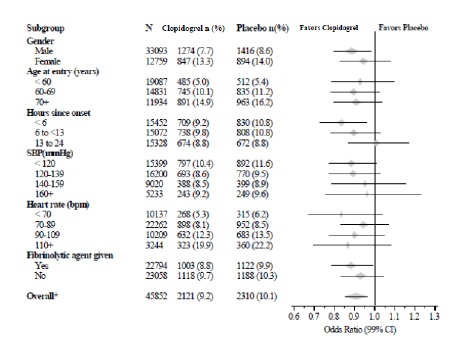
This is a clinical study evaluating the effect of Clopidogrel on patients with a risk of death, reinfarction, or stroke before the first discharge. The study involved a group of 2310 patients who were administered a placebo and 2121 patients who were administered Clopidogrel. The results showed a proportional risk reduction of 9% in patients administered with Clopidogrel compared to those who took the placebo. This reduction was significant with a p-value of 0.002. The study was conducted within a period of up to 28 days.*
FDA Label Image

Figure6 (Figure6)

FDA Label Image

Figure7 (Figure7)

FDA Label Image

Figure8 (Figure8)

FDA Label Image

Structure (Structure)

* These product label images have been analyzed using experimental machine learning. Please verify findings with the primary label text.