Mechanism of Action
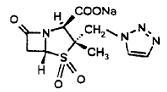
Piperacillin sodium exerts bactericidal activity by inhibiting septum formation and cell wall synthesis of susceptible bacteria. In vitro, piperacillin is active against a variety of Gram-positive and Gram-negative aerobic and anaerobic bacteria. Tazobactam sodium has little clinically relevant in vitro activity against bacteria due to its reduced affinity to penicillin-binding proteins. It is, however, a β-lactamase inhibitor of the Molecular class A enzymes, including Richmond-Sykes class III (Bush class 2b & 2b') penicillinases and cephalosporinases. It varies in its ability to inhibit class II and IV (2a & 4) penicillinases. Tazobactam does not induce chromosomally-mediated β-lactamases at tazobactam concentrations achieved with the recommended dosage regimen.
Spectrum of Activity
Piperacillin/tazobactam has been shown to be active against most isolates of the following microorganisms both in vitro and in clinical infections [see Indications and Usage (1)].
Gram-positive bacteria:
Staphylococcus aureus (methicillin susceptible isolates only)
Gram-negative bacteria:
Acinetobacter baumannii
Escherichia coli
Haemophilus influenzae (excluding β-lactamase negative, ampicillin-resistant isolates)
Klebsiella pneumoniae
Pseudomonas aeruginosa (given in combination with an aminoglycoside to which the isolate is susceptible)
Anaerobic bacteria:
Bacteroides fragilis group (B. fragilis, B. ovatus, B. thetaiotaomicron, and B. vulgatus)
The following in vitro data are available, but their clinical significance is unknown.
At least 90% of the following microorganisms exhibit an in vitro minimum inhibitory concentration (MIC) less than or equal to the susceptible breakpoint for piperacillin/tazobactam. However, the safety and effectiveness of piperacillin/tazobactam in treating clinical infections due to these bacteria have not been established in adequate and well-controlled clinical trials.
Gram-positive bacteria:
Enterococcus faecalis (ampicillin or penicillin-susceptible isolates only)
Staphylococcus epidermidis (methicillin susceptible isolates only)
Streptococcus agalactiae†
Streptococcus pneumoniae† (penicillin-susceptible isolates only)
Streptococcus pyogenes†
Viridans group streptococci†
Gram-negative bacteria:
Citrobacter koseri
Moraxella catarrhalis
Morganella morganii
Neisseria gonorrhoeae
Proteus mirabilis
Proteus vulgaris
Serratia marcescens
Providencia stuartii
Providencia rettgeri
Salmonella enterica
Anaerobic bacteria:
Clostridium perfringens
Bacteroides distasonis
Prevotella melaninogenica
† These are not β-lactamase producing bacteria and, therefore, are susceptible to piperacillin alone.
Susceptibility Testing Methods
As is recommended with all antimicrobials, the results of in vitro susceptibility tests, when available, should be provided to the physician as periodic reports, which describe the susceptibility profile of nosocomial and community-acquired pathogens. These reports should aid the physician in selecting the most effective antimicrobial.
Dilution Techniques:
Quantitative methods are used to determine antimicrobial minimum inhibitory concentrations (MICs). These MICs provide estimates of the susceptibility of bacteria to antimicrobial compounds. The MICs should be determined using a standardized procedure. Standardized procedures are based on a dilution method (broth or agar) or equivalent with standardized inoculum concentrations and standardized concentrations of piperacillin and tazobactam powders.2,3 MIC values should be determined using serial dilutions of piperacillin combined with a fixed concentration of 4 mcg/mL tazobactam. The MIC values obtained should be interpreted according to criteria provided in Table 8.
Diffusion Technique:
Quantitative methods that require measurement of zone diameters also provide reproducible estimates of the susceptibility of bacteria to antimicrobial compounds. The zone size provides an estimate of the susceptibility of bacteria to antimicrobial compounds. The zone size should be determined using a standardized test method2,4 and requires the use of standardized inoculum concentrations. This procedure uses paper disks impregnated with 100 mcg of piperacillin and 10 mcg of tazobactam to test the susceptibility of microorganisms to piperacillin/tazobactam. The disk diffusion interpreted criteria are provided in Table 8.
Anaerobic Techniques
For anaerobic bacteria, the susceptibility to piperacillin/tazobactam can be determined by the reference agar dilution method.5
Table 8: Susceptibility Interpretive Criteria for Piperacillin/Tazobactam
a: These interpretive criteria for Haemophilus influenzae are applicable only to tests performed using Haemophilus Test Medium inoculated with a direct colony suspension and incubated at 35°C in ambient air for 20 to 24 hours.
Note: Susceptibility of staphylococci to piperacillin/tazobactam may be deduced from testing only penicillin and either cefoxitin or oxacillin. |
| Susceptibility Test Result Interpretive Criteria
|
| Minimal Inhibitory Concentration (MIC in mcg/mL)
| Disk Diffusion
(Zone Diameter in mm)
|
Pathogen
| S
| I
| R
| S
| I
| R
|
Enterobacteriaceae
| ≤ 16
| 32 to 64
| ≥ 128
| ≥ 21
| 18 to 20
| ≤ 17
|
Acinetobacter baumannii
| ≤ 16
| 32 to 64
| ≥ 128
| ≥ 21
| 18 to 20
| ≤ 17
|
Haemophilus influenzaea
| ≤ 1
| -
| ≥ 2
| ≥ 21
| -
| -
|
Pseudomonas aeruginosa
| ≤ 16
| 32 to 64
| ≥ 128
| ≥ 21
| 15 to 20
| ≤ 14
|
Bacteroides fragilis group
| ≤ 32
| 64
| ≥ 128
| -
| -
| -
|
A report of S (“Susceptible”) indicates that the pathogen is likely to be inhibited if the antimicrobial compound in the blood reaches the concentration at the infection site necessary to inhibit growth of the pathogen. A report of I (“Intermediate”) indicates that the results should be considered equivocal, and if the microorganism is not fully susceptible to alternative, clinically feasible drugs, the test should be repeated. This category implies possible clinical applicability in body sites where the drug is physiologically concentrated or in situations where high dosage of drug can be used. This category also provides a buffer zone, which prevents small, uncontrolled technical factors from causing major discrepancies in interpretation. A report of R (“Resistant”) indicates that the pathogen is not likely to be inhibited even if the antimicrobial compound in the blood reaches the concentration usually achievable at the infection site; other therapy should be considered.
Quality Control
Standardized susceptibility test procedures require the use of quality controls to monitor and ensure the accuracy and precision of supplies and reagents used in the assay, and the techniques of the individuals performing the test procedures.2,3,4,5 Standard piperacillin/tazobactam powder should provide the following ranges of values noted in Table 9. Quality control bacteria are specific strains of bacteria with intrinsic biological properties relating to resistance mechanisms and their genetic expression within the microorganism; the specific strains used for microbiological quality control are not clinically significant.
Table 9: Acceptable Quality Control Ranges for Piperacillin/Tazobactam to Be Used in Validation of Susceptibility Test
a This quality control range for Haemophilus influenzae is applicable only to tests performed using Haemophilus Test Medium inoculated with a direct colony suspension and incubated at 35°C in ambient air for 20 to 24 hours.
b The quality control ranges for Bacteroides fragilis and Bacteroides thetaiotaomicron are applicable only to tests performed using the agar dilution method. |
| Acceptable Quality Control Ranges
|
Minimum Inhibitory Concentration
| Disk Diffusion
|
QC Strain
| Range (MIC in mcg/mL)
| Zone Diameter Ranges in mm
|
Escherichia coli ATCC 25922
| 1 to 4
| 24 to 30
|
Escherichia coli ATCC 35218
| 0.5 to 2
| 24 to 30
|
Pseudomonas aeruginosa ATCC 27853
| 1 to 8
| 25 to 33
|
Haemophilus influenzaea ATCC 49247
| 0.06 to 0.5
| 33 to 38
|
Staphylococcus aureus ATCC 29213
| 0.25 to 2
| -
|
Staphylococcus aureus ATCC 25923
| -
| 27 to 36
|
Bacteroides fragilisb ATCC 25285
| 0.12 to 0.5
| -
|
Bacteroides thetaiotaomicronb ATCC 29741
| 4 to 16
| -
|
Clostridium difficileb ATCC 700057
| 4 to 16
| -
|
Eubacterium lentumb ATCC 43055
| 4 to 16
| -
|