Levetiracetam Injection, Solution
Product Images NDC 55150-177

View Photos of Packaging, Regulatory Labels, and Product Appearance

Product Visual Gallery

This gallery contains 9 technical images submitted to the FDA as part of the official labeling for Levetiracetam (NDC 55150-177). Unlike standard consumer photos, these assets often include clinical data figures, molecular chemical structures, and official manufacturer packaging layouts.

As provided by Eugia Us Llc, these visuals offer a comprehensive scientific overview of the product's physical and chemical identity, aiding pharmacists and researchers in product verification and study.

FDA Label Image

Figure 1: Responder Rate (≥50% Reduction From Baseline) In Study 1 (Levetiracetam Fig1)
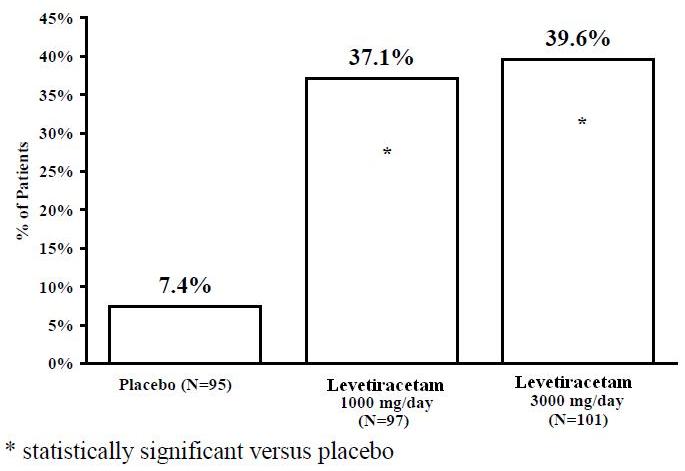
Figure 1: Responder Rate (≥50% Reduction From Baseline) In Study 1 (Levetiracetam Fig1)
The text shows the results of a study in which the drug Levetiracetam was tested at two different doses (1000 mg/day and 3000 mg/day) compared to a placebo group (N=95). The percentages indicate the proportion of participants who benefited from the treatment, with the highest percentage being 39.6% for one of the Levetiracetam groups. The asterisk denotes that the Levetiracetam groups had statistically significant results compared to the placebo group.*
FDA Label Image

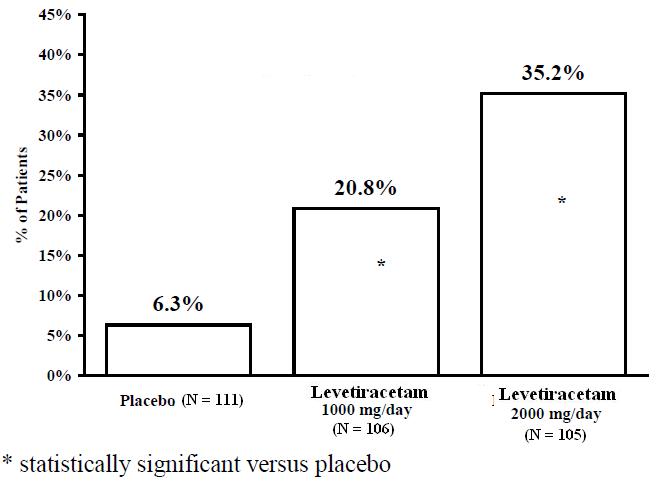
Figure 2: Responder Rate (≥50% Reduction From Baseline) In Study 2: Period A (Levetiracetam Fig2)

Figure 2: Responder Rate (≥50% Reduction From Baseline) In Study 2: Period A (Levetiracetam Fig2)
This is a statistical data table showing the percentage of effectiveness of Levetiracetam medication in treating an unknown condition. There were two doses of Levetiracetam given (1000 mg/day and 2000 mg/day) and a group of subjects were given a placebo for comparison. The data suggests that both doses of the medication were statistically significant in their effectiveness compared to the placebo group.*
FDA Label Image

Figure 3: Responder Rate (≥50% Reduction From Baseline) In Study 3 (Levetiracetam Fig3)

Figure 3: Responder Rate (≥50% Reduction From Baseline) In Study 3 (Levetiracetam Fig3)
This text represents the percentage results of a study comparing the effects of a placebo and a drug called Levetiracetam, which was taken at a dose of 3000 mg/day. The percentages, which are likely representing the proportion of patients who experienced a certain outcome, are 39.4%, 14.4%, 10%, and 0% respectively. The symbol "¥" likely represents the currency used in the study's country or currency conversion rate. The text also notes that the results for Levetiracetam were statistically significant when compared to the placebo group.*
FDA Label Image

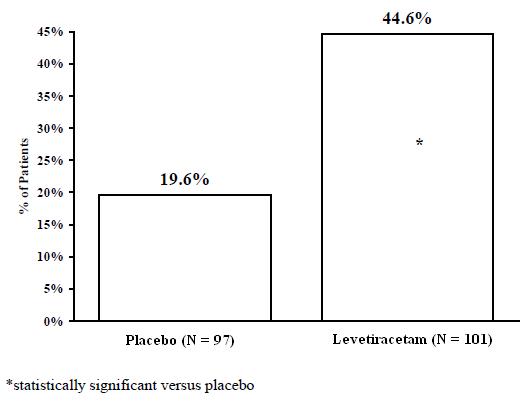
Figure 4: Responder Rate (≥ 50% Reduction From Baseline) In Study 4 (Levetiracetam Fig4)

Figure 4: Responder Rate (≥ 50% Reduction From Baseline) In Study 4 (Levetiracetam Fig4)
The given text provides statistical information for a medical study that involved a "Placebo" group and another group treated with "Levetiracetam". The percentage values represent some kind of quantitative data obtained from the study, but without further context, it's hard to determine what they represent. However, the asterisk symbol indicates that the Levetiracetam treatment showed a statistically significant difference compared to the Placebo group.*
FDA Label Image

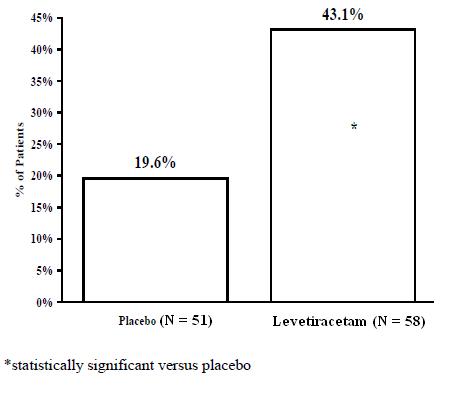
Figure 5: Responder Rate For All Patients Ages 1 Month To < 4 Years (≥ 50% Reduction From Baseline) In Study 5 (Levetiracetam Fig5)

Figure 5: Responder Rate For All Patients Ages 1 Month To < 4 Years (≥ 50% Reduction From Baseline) In Study 5 (Levetiracetam Fig5)
The text describes the results of a study comparing the effectiveness of a drug called Levetiracetam versus a placebo. The study involved 58 participants taking Levetiracetam and 51 participants taking a placebo. The numbers 19.6%, 10%, and 0% likely refer to the percentage of participants who experienced a certain outcome, but the specific outcome is not provided. The statement "*statistically significant versus placebo" indicates that the results for the Levetiracetam group were significantly different from those of the placebo group.*
FDA Label Image

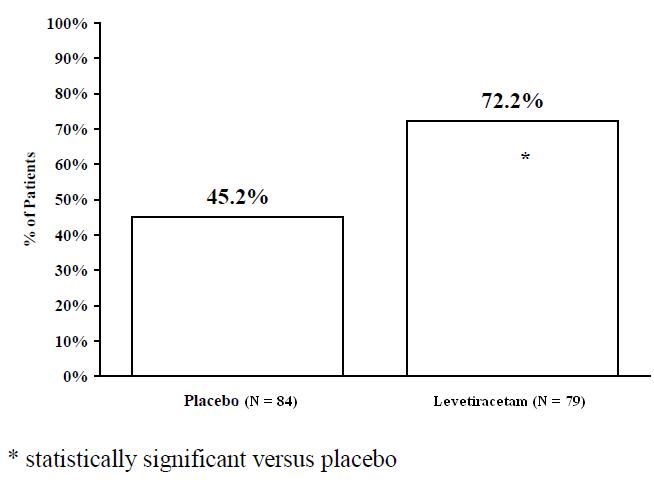
Figure 6: Responder Rate (≥50% Reduction From Baseline) In Pgtc Seizure Frequency Per Week In Study 7 (Levetiracetam Fig6)

Figure 6: Responder Rate (≥50% Reduction From Baseline) In Pgtc Seizure Frequency Per Week In Study 7 (Levetiracetam Fig6)
This appears to be a table showing the percentage effectiveness of a drug called Levetiracetam compared to a placebo. There are two groups - one with 84 patients on placebo and one with 79 patients on Levetiracetam. The effectiveness of the drug is statistically significant when compared to the placebo.*
FDA Label Image

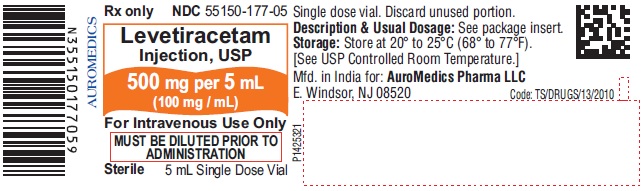
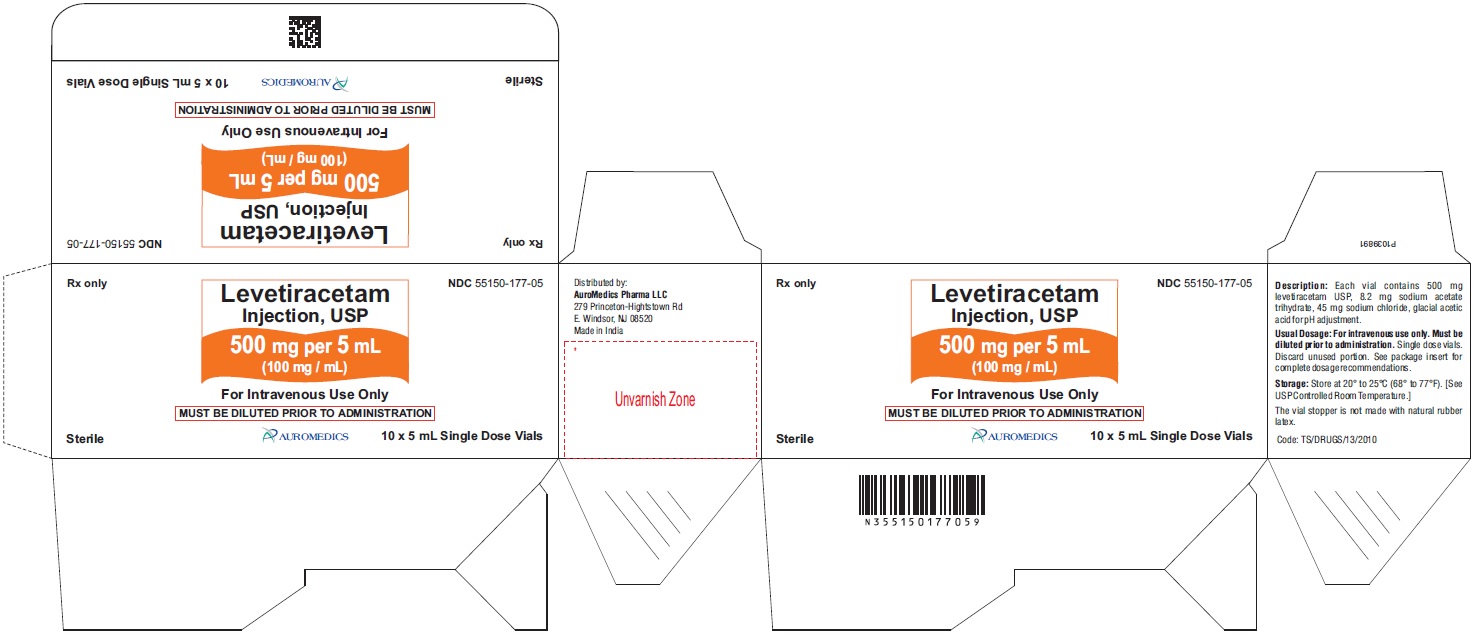
Package Label-principal Display Panel (500 mg per 5 mL)

Package Label-principal Display Panel (500 mg per 5 mL)
This is a description of a medication called "Ty Vi" from AuroMedis Pharma LLC, and is stored in a single dose vial. The medication is administered via injection and must be diluted prior to administration. The recommended dosage and storage information can be found in the package insert. The NDC (National Drug Code) is 55150-177-05 and it's only intended for intravenous use.*
FDA Label Image

Package Label-principal Display Panel (500 mg per 5 mL)

Package Label-principal Display Panel (500 mg per 5 mL)
Not available.*
FDA Label Image

Levetiracetam Chemical Structure (Levetiracetam Str)

* These product label images have been analyzed using experimental machine learning. Please verify findings with the primary label text.