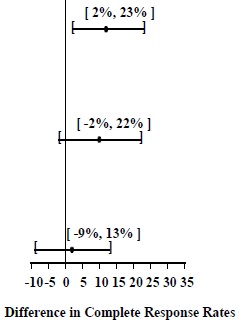
Efficacy of single-dose palonosetron injection in preventing acute and delayed nausea and vomiting induced by both moderately and highly emetogenic chemotherapy was studied in three Phase 3 trials and one Phase 2 trial. In these double-blind studies, complete response rates (no emetic episodes and no rescue medication) and other efficacy parameters were assessed through at least 120 hours after administration of chemotherapy. The safety and efficacy of palonosetron in repeated courses of chemotherapy was also assessed.
Moderately Emetogenic Chemotherapy
Two Phase 3, double-blind trials involving 1132 patients compared single-dose I.V. palonosetron with either single-dose I.V. ondansetron (study 1) or dolasetron (study 2) given 30 minutes prior to moderately emetogenic chemotherapy including carboplatin, cisplatin ≤ 50 mg/m2, cyclophosphamide < 1,500 mg/m2, doxorubicin > 25 mg/m2, epirubicin, irinotecan, and methotrexate > 250 mg/m2. Concomitant corticosteroids were not administered prophylactically in study 1 and were only used by 4 to 6% of patients in study 2. The majority of patients in these studies were women (77%), White (65%) and naïve to previous chemotherapy (54%). The mean age was 55 years.
Highly Emetogenic Chemotherapy
A Phase 2, double-blind, dose-ranging study evaluated the efficacy of single-dose I.V. palonosetron from 0.3 to 90 mcg/kg (equivalent to < 0.1 mg to 6 mg fixed dose) in 161 chemotherapy-naïve adult cancer patients receiving highly-emetogenic chemotherapy (either cisplatin ≥ 70 mg/m2 or cyclophosphamide > 1,100 mg/m2). Concomitant corticosteroids were not administered prophylactically. Analysis of data from this trial indicates that 0.25 mg is the lowest effective dose in preventing acute nausea and vomiting induced by highly emetogenic chemotherapy.
A Phase 3, double-blind trial involving 667 patients compared single-dose I.V. palonosetron with single-dose I.V. ondansetron (study 3) given 30 minutes prior to highly emetogenic chemotherapy including cisplatin ≥ 60 mg/m2, cyclophosphamide > 1,500 mg/m2, and dacarbazine. Corticosteroids were co-administered prophylactically before chemotherapy in 67% of patients. Of the 667 patients, 51% were women, 60% White, and 59% naïve to previous chemotherapy. The mean age was 52 years.
Efficacy Results
The antiemetic activity of palonosetron was evaluated during the acute phase (0 to 24 hours) [Table 4], delayed phase (24 to 120 hours) [Table 5], and overall phase (0 to 120 hours) [Table 6] post-chemotherapy in Phase 3 trials.
Table 4: Prevention of Acute Nausea and Vomiting (0 to 24 hours): Complete Response Rates
a Intent-to-treat cohort
b 2-sided Fisher's exact test. Significance level at α = 0.025.
c These studies were designed to show non-inferiority. A lower bound greater than -15% demonstrates non-inferiority between palonosetron and comparator. |
| Chemotherapy | Study | Treatment Group | Na | % with Complete Response | p-valueb |
97.5% Confidence Interval Palonosetron minus Comparatorc
|
| Moderately Emetogenic | 1 | Palonosetron 0.25 mg | 189 | 81 | 0.009 |
| Ondansetron 32 mg I.V. | 185 | 69 |
| 2 | Palonosetron 0.25 mg | 189 | 63 | NS |
| Dolasetron 100 mg I.V. | 191 | 53 |
| Highly Emetogenic | 3 | Palonosetron 0.25 mg | 223 | 59 | NS |
| Ondansetron 32 mg I.V. | 221 | 57 |
These studies show that palonosetron was effective in the prevention of acute nausea and vomiting associated with initial and repeat courses of moderately and highly emetogenic cancer chemotherapy. In study 3, efficacy was greater when prophylactic corticosteroids were administered concomitantly. Clinical superiority over other 5-HT3 receptor antagonists has not been adequately demonstrated in the acute phase.
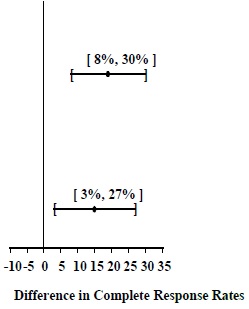
Table 5: Prevention of Delayed Nausea and Vomiting (24 to 120 hours): Complete Response Rates
a Intent-to-treat cohort
b 2-sided Fisher's exact test. Significance level at α = 0.025.
c These studies were designed to show non-inferiority. A lower bound greater than -15% demonstrates non-inferiority between palonosetron and comparator. |
| Chemotherapy | Study | Treatment Group | Na | % with Complete Response | p-valueb |
97.5% Confidence Interval Palonosetron minus Comparatorc
|
| Moderately Emetogenic | 1 | Palonosetron 0.25 mg | 189 | 74 | <0.001 |
| Ondansetron 32 mg I.V. | 185 | 55 |
| 2 | Palonosetron 0.25 mg | 189 | 54 | 0.004 |
| Dolasetron 100 mg I.V. | 191 | 39 |
These studies show that palonosetron was effective in the prevention of delayed nausea and vomiting associated with initial and repeat courses of moderately emetogenic chemotherapy.
Table 6: Prevention of Overall Nausea and Vomiting (0 to 120 hours): Complete Response Rates
a Intent-to-treat cohort
b 2-sided Fisher's exact test. Significance level at α = 0.025.
c These studies were designed to show non-inferiority. A lower bound greater than -15% demonstrates non-inferiority between palonosetron and comparator. |
| Chemotherapy | Study | Treatment Group | Na | % with Complete Response | p-valueb |
97.5% Confidence Interval Palonosetron minus Comparatorc
|
| Moderately Emetogenic | 1 | Palonosetron 0.25 mg | 189 | 69 | <0.001 |
| Ondansetron 32 mg I.V. | 185 | 50 |
| 2 | Palonosetron 0.25 mg | 189 | 46 | 0.021 |
| Dolasetron 100 mg I.V. | 191 | 34 |
These studies show that palonosetron was effective in the prevention of nausea and vomiting throughout the 120 hours (5 days) following initial and repeat courses of moderately emetogenic cancer chemotherapy.