Bivalirudin Injection, Powder, Lyophilized, For Solution
Product Images NDC 55150-210

View Photos of Packaging, Regulatory Labels, and Product Appearance

Product Visual Gallery

This gallery contains 3 technical images submitted to the FDA as part of the official labeling for Bivalirudin (NDC 55150-210). Unlike standard consumer photos, these assets often include clinical data figures, molecular chemical structures, and official manufacturer packaging layouts.

As provided by Eugia Us Llc, these visuals offer a comprehensive scientific overview of the product's physical and chemical identity, aiding pharmacists and researchers in product verification and study.

FDA Label Image

Package Label-principal Display Panel (250 mg per vial)
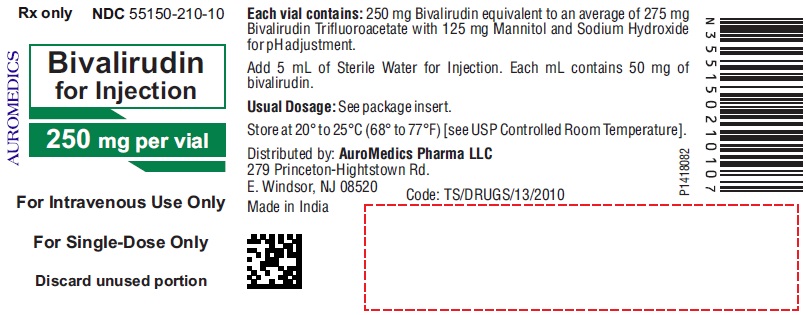
Package Label-principal Display Panel (250 mg per vial)
This is a description of a medication, identified by the NDC code 55150-210-10. Each vial of the medication contains 250mg Bivalirudin equivalent to an average of 275 mg Bivalirudin Trifluoroacetate along with 125mg Mannitol and Sodium Hydroxide for pH adjustment. The medication is supposed to be used intravenously only and usual dosage must be determined by referring to the package insert. The medication should be stored at a temperature between 20°C to 25°C. This medication has been distributed by AuroMedics Pharma LLC, located in Windsor, NJ.*
FDA Label Image

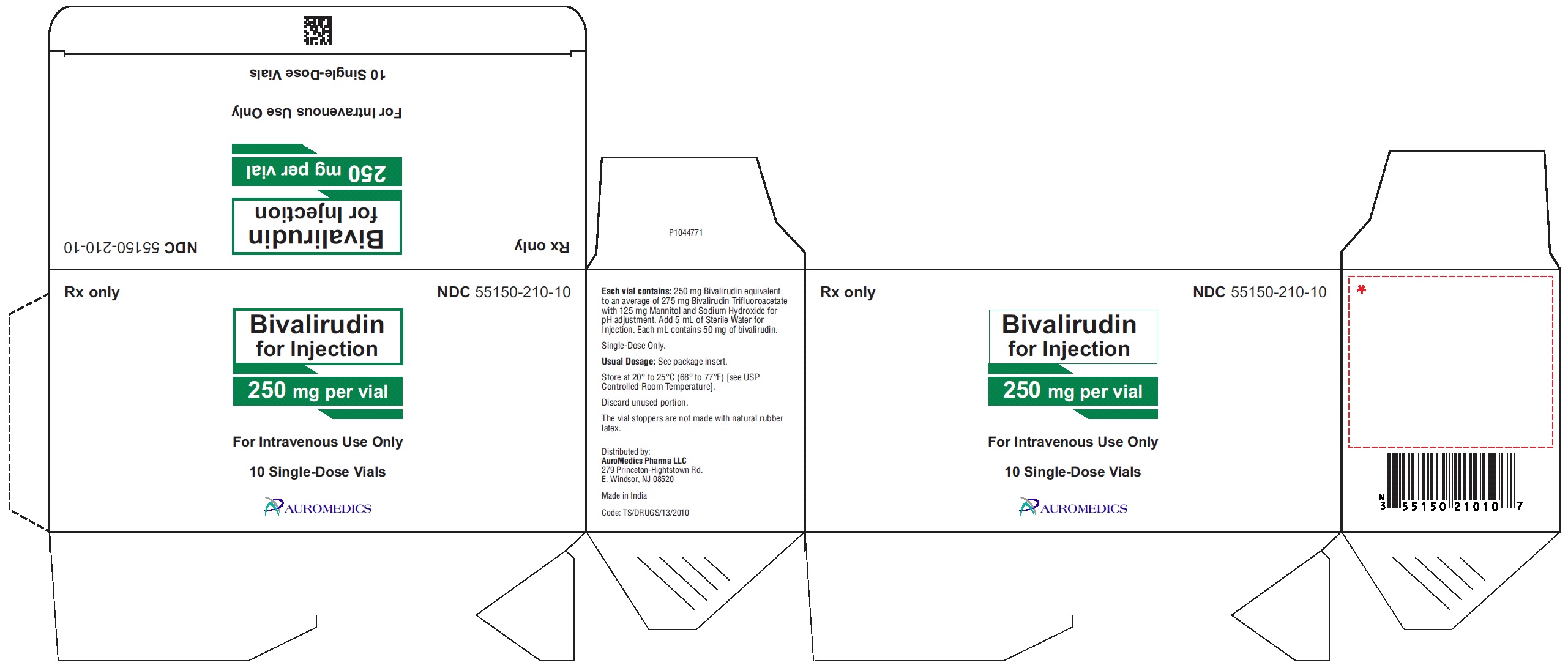
Package Label-principal Display Panel (250 mg per vial)

Package Label-principal Display Panel (250 mg per vial)
This is a package insert for Bivalirudin, a medication used for intravenous use. It comes in the form of 10 single-dose vials, each containing 250 mg of Bivalirudin with additives for pH adjustment. Usual dosages are outlined in the package insert. The product should be stored at room temperature and any unused portion should be discarded. The vial stoppers are not made with natural rubber latex. It is distributed by AuroMedics Pharma LLC and made in India.*
FDA Label Image

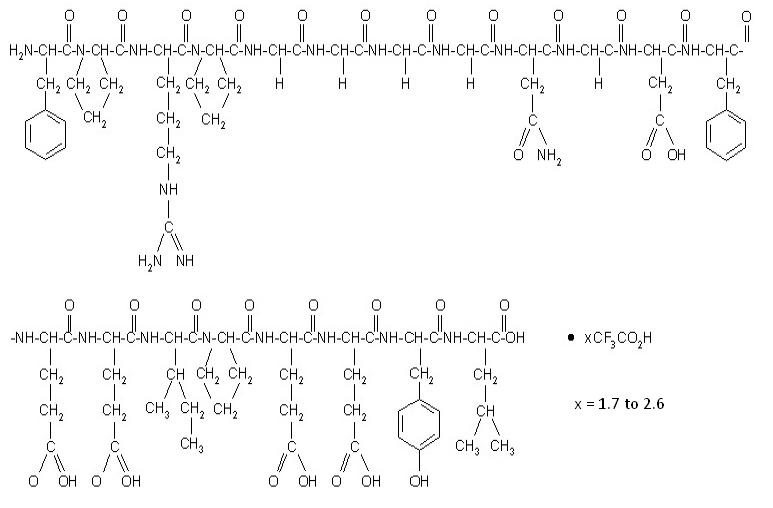
Bivalirudin Trifluoroactetate Chemical Structure (Bivalirudin Str)

* These product label images have been analyzed using experimental machine learning. Please verify findings with the primary label text.