Breast Cancer
Women who have or have had a history of breast cancer should not use hormonal contraceptives, including medroxyprogesterone acetate injectable suspension, because breast cancer may be hormonally sensitive [see Contraindications (4)]. Women with a strong family history of breast cancer should be monitored with particular care.
The results of five large case-control studies assessing the association between depo- medroxyprogesterone acetate (DMPA) use and the risk of breast cancer are summarized in Figure 1. Three of the studies suggest a slightly increased risk of breast cancer in the overall population of users; these increased risks were statistically significant in one study. One recent US study1 evaluated the recency and duration of use and found a statistically significantly increased risk of breast cancer in recent users (defined as last use within the past five years) who used DMPA for 12 months or longer; this is consistent with results of a previous study2.
Figure 1 Risk estimates for breast cancer in DMPA users
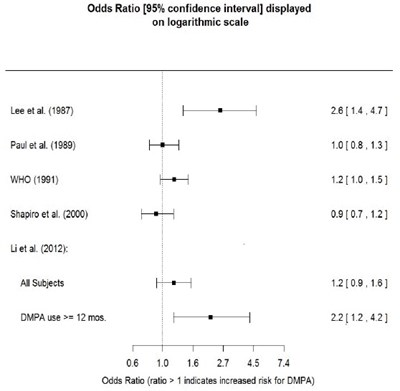
Figure 1 Risk Estimates For Breast Cancer In Dmpa Users (Medroxyprogesterone Fig1)
Odds ratio estimates were adjusted for the following covariates:
Lee et al. (1987): age, parity, and socioeconomic status.
Paul et al. (1989): age, parity, ethnic group, and year of interview.
WHO (1991): age, center, and age at first live birth.
Shapiro et al. (2000): age, ethnic group, socioeconomic status, and any combined estrogen/progestogen oral contraceptive use.
Li et al. (2012): age, year, BMI, duration of OC use, number of full-term pregnancies, family history of breast cancer, and history of screening mammography.
Based on the published SEER-18 2011 incidence rate (age-adjusted to the 2000 US Standard Population) of breast cancer for US women, all races, age 20 to 49 years, a doubling of risk would increase the incidence of breast cancer in women who use medroxyprogesterone acetate injectable suspension from about 72 to about 144 cases per 100,000 women.
Cervical Cancer
A statistically nonsignificant increase in RR estimates of invasive squamous-cell cervical cancer has been associated with the use of medroxyprogesterone acetate injectable suspension in women who were first exposed before the age of 35 years (RR 1.22 to 1.28 and 95% CI 0.93 to 1.70). The overall, nonsignificant relative rate of invasive squamous-cell cervical cancer in women who ever used medroxyprogesterone acetate injectable suspension was estimated to be 1.11 (95% CI 0.96 to 1.29). No trends in risk with duration of use or times since initial or most recent exposure were observed.
Other Cancers
Long-term case-controlled surveillance of users of medroxyprogesterone acetate injectable suspension found no overall increased risk of ovarian or liver cancer.


