FDA Label for Mesna

View Indications, Usage & Precautions

Mesna Product Label

The following document was submitted to the FDA by the labeler of this product Eugia Us Llc. The document includes published materials associated whith this product with the essential scientific information about this product as well as other prescribing information. Product labels may durg indications and usage, generic names, contraindications, active ingredients, strength dosage, routes of administration, appearance, warnings, inactive ingredients, etc.

1. Indications And Usage


Mesna injection is indicated as a prophylactic agent in reducing the incidence of ifosfamide-induced hemorrhagic cystitis.

Limitation of Use:

Mesna injection is not indicated to reduce the risk of hematuria due to other pathological conditions such as thrombocytopenia.


2.1 Intravenous Dosing


Mesna injection may be given on a fractionated dosing schedule of three bolus intravenous injections as outlined below.

Mesna injection is given as intravenous bolus injections in a dosage equal to 20% of the ifosfamide dosage weight by weight (w/w) at the time of ifosfamide administration and 4 and 8 hours after each dose of ifosfamide. The total daily dose of mesna injection is 60% of the ifosfamide dose. The recommended dosing schedule is outlined below in Table 1.

Table 1. Recommended Intravenous Dosing Schedule
 1The dosing schedule should be repeated on each day that ifosfamide is administered. When the dosage of ifosfamide is increased or decreased, the ratio of mesna to ifosfamide should be maintained.
 
0 Hours
4 Hours
8 Hours
Ifosfamide
1.2 g/m2
-
-
Mesna injection1
240 mg/m2
240 mg/m2
240 mg/m2


2.2 Intravenous And Oral Dosing


Mesna injection may be given on a fractionated dosing schedule of a single bolus injection followed by two oral administrations of MESNEX tablets as outlined below.

Mesna injection is given as intravenous bolus injections in a dosage equal to 20% of the ifosfamide dosage (w/w) at the time of ifosfamide administration. MESNEX tablets are given orally in a dosage equal to 40% of the ifosfamide dose 2 and 6 hours after each dose of ifosfamide. The total daily dose of mesna is 100% of the ifosfamide dose. The recommended dosing schedule is outlined in Table 2

Table 2. Recommended Intravenous and Oral Dosing Schedule
 1The dosing schedule should be repeated on each day that ifosfamide is administered. When the dosage of ifosfamide is increased or decreased, the ratio of mesna to ifosfamide should be maintained.
 
0 Hours
2 Hours
6 Hours
Ifosfamide
1.2 g/m2
-
-
Mesna injection1
240 mg/m2
-
-
MESNEX tablets
-
480 mg/m2
480 mg/m2

The efficacy and safety of this ratio of intravenous and oral MESNEX has not been established as being effective for daily doses of ifosfamide higher than 2 g/m2.

Patients who vomit within two hours of taking oral MESNEX should repeat the dose or receive intravenous mesna injection.


2.3 Monitoring For Hematuria


Maintain adequate hydration and sufficient urinary output, as required for ifosfamide treatment, and monitor urine for the presence of hematuria. If severe hematuria develops when mesna injection is given according to the recommended dosage schedule, dosage reductions or discontinuation of ifosfamide therapy may be required.


2.4 Preparation For Intravenous Administration And Stability


Preparation

Determine the volume of mesna injection for the intended dose.

Dilute the volume of mesna injection for the dose in any of the following fluids to obtain a final concentration of 20 mg/mL:

  • 5% Dextrose Injection, USP
  • 5% Dextrose and 0.2% Sodium Chloride Injection, USP
  • 5% Dextrose and 0.33% Sodium Chloride Injection, USP
  • 5% Dextrose and 0.45% Sodium Chloride Injection, USP
  • 0.9% Sodium Chloride Injection, USP
  • Lactated Ringer’s Injection, USP
  • Stability

    The mesna injection multidose vials may be stored and used for up to 8 days after initial puncture.

    Store diluted solutions at 25°C (77°F). Use diluted solutions within 24 hours.

    Do not mix mesna injection with epirubicin, cyclophosphamide, cisplatin, carboplatin, and nitrogen mustard.

    The benzyl alcohol contained in mesna injection vials can reduce the stability of ifosfamide. Ifosfamide and mesna injection may be mixed in the same bag provided the final concentration of ifosfamide does not exceed 50 mg/mL. Higher concentrations of ifosfamide may not be compatible with mesna injection and may reduce the stability of ifosfamide.

    Parenteral drug products should be inspected visually for particulate matter and discoloration prior to administration whenever solution and container permit. Any solutions which are discolored, hazy, or contain visible particulate matter should not be used.


3. Dosage Forms And Strengths


  • Mesna injection: 1 g/10 mL Multiple-Dose Vial, 100 mg/mL

4. Contraindications


Mesna injection is contraindicated in patients known to be hypersensitive to mesna or to any of the excipients [see Warnings and Precautions (5.1)].


5.1 Hypersensitivity Reactions


Mesna injection  may cause systemic hypersensitivity reactions, including anaphylaxis. These reactions may include fever, cardiovascular symptoms (hypotension, tachycardia), acute renal impairment, hypoxia, respiratory distress, urticaria, angioedema, laboratory signs of disseminated intravascular coagulation, hematological abnormalities, increased liver enzymes, nausea, vomiting, arthralgia, and myalgia. These reactions may occur with the first exposure or after several months of exposure. Monitor for signs or symptoms. Discontinue mesna injection and provide supportive care.


5.2 Dermatologic Toxicity


Drug rash with eosinophilia and systemic symptoms and bullous and ulcerative skin and mucosal reactions, consistent with Stevens-Johnson syndrome or toxic epidermal necrolysis have occurred. Mesna injection may cause skin and mucosal reactions characterized by urticaria, rash, erythema, pruritus, burning sensation, angioedema, periorbital edema, flushing and stomatitis. These reactions may occur with the first exposure or after several months of exposure. Discontinue mesna injection and provide supportive care.


5.3 Benzyl Alcohol Toxicity


Serious adverse reactions including fatal reactions and the “gasping syndrome” occurred in premature neonates and low-birth weight infants who received benzyl alcohol dosages of 99 to 234 mg/kg/day (blood levels of benzyl alcohol were 0.61 to 1.378 mmol/L). Symptoms associated with “gasping syndrome” and other potential adverse reactions include gradual neurological deterioration, seizures, intracranial hemorrhage, hematological abnormalities, skin breakdown, hepatic and renal failure, hypotension, bradycardia, and cardiovascular collapse. Premature neonates and low-birth weight infants may be more likely to develop these reactions because they may be less able to metabolize benzyl alcohol. The minimum amount of benzyl alcohol at which toxicity may occur is not known. Mesna injection contains 10.4 mg/mL of the preservative benzyl alcohol. Avoid use of mesna injection in premature neonates and low-birth weight infants. MESNEX tablets do not contain benzyl alcohol  [see Use in Specific Populations (8.4)].


5.4 Laboratory Test Interferences


False-Positive Urine Tests for Ketone Bodies

A false positive test for urinary ketones may arise in patients treated with mesna when using nitroprusside sodium-based urine tests (including dipstick tests). The addition of glacial acetic acid can be used to differentiate between a false positive result (cherry-red color that fades) and a true positive result (red-violet color that intensifies).

False-Negative Tests for Enzymatic CPK Activity

Mesna may interfere with enzymatic creatinine phosphokinase (CPK) activity tests that use a thiol compound (e.g., N-acetylcysteine) for CPK reactiviation. This may result in a falsely low CPK level.

False-Positive Tests for Ascorbic Acid

Mesna may cause false-positive reactions in Tillman’s reagent-based urine screening tests for ascorbic acid.


5.5 Use In Patients With A History Of Adverse Reactions To Thiol Compounds


Mesna is a thiol compound, i.e., a sulfhydryl (SH) group-containing organic compound. Hypersensitivity reactions to mesna and to amifostine, another thiol compound, have been reported. It is not clear whether patients who experienced an adverse reaction to a thiol compound are at increased risk for a hypersensitivity reaction to mesna.


6. Adverse Reactions


The following are discussed in more detail in other sections of the labeling.

6.1 Clinical Trials Experience


Because clinical trials are conducted under widely varying conditions, adverse reaction rates observed in the clinical trials of a drug cannot be directly compared to rates in the clinical trials of another drug and may not reflect the rates observed in practice.

Mesna injection adverse reaction data are available from four Phase 1 studies in which single intravenous doses of 600 to 1,200 mg mesna injection without concurrent chemotherapy were administered to a total of 53 healthy volunteers and single oral doses of 600 to 2,400 mg of MESNEX tablets were administered to a total of 82 healthy volunteers. The most frequently reported side effects (observed in two or more healthy volunteers) for healthy volunteers receiving single doses of mesna injection alone were headache, injection site reactions, flushing, dizziness, nausea, vomiting, somnolence, diarrhea, anorexia, fever, pharyngitis, hyperesthesia, influenza-like symptoms, and coughing. In two Phase 1 multiple-dose studies where healthy volunteers received MESNEX tablets alone or intravenous mesna followed by repeated doses of MESNEX tablets, flatulence and rhinitis were reported. In addition, constipation was reported by healthy volunteers who had received repeated doses of intravenous mesna injection.

Additional adverse reactions in healthy volunteers receiving mesna injection alone included injection site reactions, abdominal pain/colic, epigastric pain/burning, mucosal irritation, lightheadedness, back pain, arthralgia, myalgia, conjunctivitis, nasal congestion, rigors, paresthesia, photophobia, fatigue, lymphadenopathy, extremity pain, malaise, chest pain, dysuria, pleuritic pain, dry mouth, dyspnea, and hyperhidrosis. In healthy volunteers, mesna was commonly associated with a rapid (within 24 hours) decrease in lymphocyte count, which was generally reversible within one week of administration.

Because mesna is used in combination with ifosfamide or ifosfamide-containing chemotherapy regimens, it is difficult to distinguish the adverse reactions which may be due to mesna from those caused by the concomitantly administered cytotoxic agents.

Adverse reactions reasonably associated with mesna administered intravenously and orally in four controlled studies in which patients received ifosfamide or ifosfamide-containing regimens are presented in Table 3.

Table 3: Adverse Reactions in ≥5% of Patients Receiving Mesna in combination with Ifosfamide-containing Regimens
Mesna Regimen
Intravenous-Intravenous-Intravenous1
Intravenous-Oral-Oral1
 1Intravenous dosing of ifosfamide and mesna followed by either intravenous or oral doses of mesna according to the applicable dosage schedule [see Dosage and Administration (2)].
N exposed
119 (100.0%)
119 (100%)
Incidence of AEs
101 (84.9%)
106 (89.1%)
Nausea
65 (54.6)
64 (53.8)
Vomiting
35 (29.4)
45 (37.8)
Constipation
28 (23.5)
21 (17.6)
Leukopenia
25 (21.0)
21 (17.6)
Fatigue
24 (20.2)
24 (20.2)
Fever
24 (20.2)
18 (15.1)
Anorexia
21 (17.6)
19 (16.0)
Thrombocytopenia
21 (17.6)
16 (13.4)
Anemia
20 (16.8)
21 (17.6)
Granulocytopenia
16 (13.4)
15 (12.6)
Asthenia
15 (12.6)
21 (17.6)
Abdominal Pain
14 (11.8)
18 (15.1)
Alopecia
12 (10.1)
13 (10.9)
Dyspnea
11 (9.2)
11 (9.2)
Chest Pain
10 (8.4)
11 (9.2)
Hypokalemia
10 (8.4)
11 (9.2)
Diarrhea
9 (7.6)
17 (14.3)
Dizziness
9 (7.6)
5 (4.2)
Headache
9 (7.6)
13 (10.9)
Pain
9 (7.6)
10 (8.4)
Sweating Increased
9 (7.6)
2 (1.7)
Back Pain
8 (6.7)
6 (5.0)
Hematuria
8 (6.7)
7 (5.9)
Injection Site Reaction
8 (6.7)
10 (8.4)
Edema
8 (6.7)
9 (7.6)
Edema Peripheral
8 (6.7)
8 (6.7)
Somnolence
8 (6.7)
12 (10.1)
Anxiety
7 (5.9)
4 (3.4)
Confusion
7 (5.9)
6 (5.0)
Face Edema
6 (5.0)
5 (4.2)
Insomnia
6 (5.0)
11 (9.2)
Coughing
5 (4.2)
10 (8.4)
Dyspepsia
4 (3.4)
6 (5.0)
Hypotension
4 (3.4)
6 (5.0)
Pallor
4 (3.4)
6 (5.0)
Dehydration
3 (2.5)
7 (5.9)
Pneumonia
2 (1.7)
8 (6.7)
Tachycardia
1 (0.8)
7 (5.9)
Flushing
1 (0.8)
6 (5.0)


6.2 Postmarketing Experience


The following adverse reactions have been reported in the postmarketing experience of patients receiving mesna injection in combination with ifosfamide or similar drugs, making it difficult to distinguish the adverse reactions which may be due to mesna injection from those caused by the concomitantly administered cytotoxic agents. Because these reactions are reported from a population of unknown size, precise estimates of frequency cannot be made.


Cardiovascular: Hypertension

Gastrointestinal: Dysgeusia

Hepatobiliary: Hepatitis

Nervous System: Convulsion

Respiratory: Hemoptysis


7 Drug Interactions


No clinical drug interaction studies have been conducted with mesna.


8.1 Pregnancy


Risk Summary


Mesna injection is used in combination with ifosfamide or other cytotoxic agents. Ifosfamide can cause fetal harm when administered to a pregnant woman. Refer to the ifosfamide prescribing information for more information on use during pregnancy.


Mesna injection contains the preservative benzyl alcohol. Because benzyl alcohol is rapidly metabolized by a pregnant woman, benzyl alcohol exposure in the fetus is unlikely [see Warnings and Precautions (5.3) and Use in Specific Populations (8.4)].


The estimated background risk of major birth defects and miscarriage for the indicated populations are unknown. All pregnancies have a background risk of birth defect, loss, or other adverse outcomes. In the U.S. general population, the estimated background risk of major birth defects and miscarriage in clinically recognized pregnancies is 2 to 4% and 15 to 20%, respectively.


Data


Animal Data


Mesna injection is used in combination with ifosfamide or other cytotoxic agents. Ifosfamide can cause fetal harm including embryo-fetal lethality. Refer to the ifosfamide prescribing information for more information on use during pregnancy.


In embryo-fetal development studies, oral administration of mesna to pregnant rats (500, 1,000, 1,500, and 2,000 mg/kg) and rabbits (500 and 1,000 mg/kg) during the period of organogenesis revealed no adverse developmental outcomes at doses approximately 10 times the maximum recommended total daily human equivalent dose based on body surface area.


8.2 Lactation


Risk Summary  

Mesna injection is used in combination with ifosfamide or other cytotoxic agents. Ifosfamide is excreted in breast milk. Refer to the ifosfamide prescribing information for more information on use during lactation. There are no data on the presence of mesna in human or animal milk, the effect on the breastfed child, or the effect on milk production.  

Mesna injection contains the preservative benzyl alcohol. Because benzyl alcohol is rapidly metabolized by a lactating woman, benzyl alcohol exposure in the breastfed infant is unlikely. However, adverse reactions have occurred in premature neonates and low birth weight infants who received intravenously administered benzyl alcohol-containing drugs [see Warnings and Precautions (5.3) and Use in Specific Populations (8.4)].

Because of the potential for serious adverse reactions in a breastfed child, advise lactating women not to breastfeed during treatment and for 1 week after the last dose of mesna or ifosfamide.


8.3 Females And Males Of Reproductive Potential


Mesna injection is used in combination with ifosfamide or other cytotoxic agents. Ifosfamide can cause fetal harm when administered to a pregnant woman. Refer to the ifosfamide prescribing information for more information on contraception and effects on fertility.


Pregnancy Testing

Verify the pregnancy status of females of reproductive potential prior to initiation of mesna injection in combination with ifosfamide.


Contraception

Females

Advise females of reproductive potential to use effective contraception during treatment with mesna injection in combination with ifosfamide and for 6 months after the last dose.


Males

Advise males with female partners of reproductive potential to use effective contraception during treatment with mesna injection in combination with ifosfamide and for 3 months after the last dose.


8.4 Pediatric Use


Mesna injection contains the preservative benzyl alcohol which has been associated with serious adverse reactions and death when administered intravenously to premature neonates and low birth weight infants. Avoid use of mesna injection in premature neonates and low-birth weight infants [see Warnings and Precautions (5.3)].


8.5 Geriatric Use


Clinical studies of mesna injection did not include sufficient numbers of subjects aged 65 and over to determine whether they respond differently from younger subjects. In general, dose selection for an elderly patient should be cautious, reflecting the greater frequency of decreased hepatic, renal, or cardiac function, and of concomitant disease or other drug therapy. The ratio of ifosfamide to mesna should remain unchanged.


8.6 Use In Patients With Renal Impairment


No clinical studies were conducted to evaluate the effect of renal impairment on the pharmacokinetics of mesna injection.


8.7 Use In Patients With Hepatic Impairment


No clinical studies were conducted to evaluate the effect of hepatic impairment on the pharmacokinetics of mesna injection.


10. Overdosage


There is no known antidote for mesna injection.

In a clinical trial, 11 patients received intravenous mesna injection 10 mg/kg to 66 mg/kg per day for 3 to 5 days. Patients also received ifosfamide or cyclophosphamide. Adverse reactions included nausea, vomiting, diarrhea and fever. An increased rate of these adverse reactions has also been found in oxazaphosphorine-treated patients receiving ≥80 mg mesna injection per kg per day intravenously compared with patients receiving lower doses or hydration treatment only.

Postmarketing, administration of 4.5 g to 6.9 g of mesna resulted in hypersensitivity reactions including mild hypotension, shortness of breath, asthma exacerbation, rash, and flushing.


11. Description


Mesna injection is a detoxifying agent to inhibit the hemorrhagic cystitis induced by ifosfamide. The active ingredient, mesna, USP is a synthetic sulfhydryl compound designated as sodium-2- sulphanylethanesulphonate with a molecular formula of C2H5NaO3S2 and a molecular weight of 164.2. Its structural formula is as follows:

                                                                                             HS–CH2–CH2SO3–Na+ 

Mesna injection is a sterile, nonpyrogenic, aqueous solution of clear and colorless appearance in clear glass multiple-dose vials for intravenous administration. Mesna injection contains 100 mg/mL mesna, USP, 0.25 mg/mL edetate disodium and sodium hydroxide for pH adjustment. Mesna injection multiple-dose vials also contain 10.4 mg/mL of benzyl alcohol as a preservative. The solution has a pH range between 7.5 and 8.5.


12.1 Mechanism Of Action


Mesna reacts chemically with the urotoxic ifosfamide metabolites, acrolein and 4-hydroxy-ifosfamide, resulting in their detoxification. The first step in the detoxification process is the binding of mesna to 4-hydroxy-ifosfamide forming a non-urotoxic 4-sulfoethylthioifosfamide. Mesna also binds to the double bonds of acrolein and to other urotoxic metabolites and inhibits their effects on the bladder.


12.3 Pharmacokinetics


Absorption

Following oral administration, peak plasma concentrations were reached within 1.5 to 4 hours and 3 to 7 hours for free mesna and total mesna (mesna plus dimesna and mixed disulfides), respectively. Oral bioavailability averaged 58% (range 45 to 71%) for free mesna and 89% (range 74 to 104%) for total mesna based on plasma AUC data from 8 healthy volunteers who received 1,200 mg oral or intravenous doses.

Food does not affect the urinary availability of orally administered mesna.

Distribution

Mean apparent volume of distribution (Vd) for mesna is 0.652 ± 0.242 L/kg after intravenous administration which suggests distribution to total body water (plasma, extracellular fluid, and intracellular water).

Metabolism

Analogous to the physiological cysteine-cystine system, mesna is rapidly oxidized to its major metabolite, mesna disulfide (dimesna). Plasma concentrations of mesna exceed those of dimesna after oral or intravenous administration.

Excretion

Following intravenous administration of a single 800 mg dose, approximately 32% and 33% of the administered dose was eliminated in the urine in 24 hours as mesna and dimesna, respectively. Mean plasma elimination half-lives of mesna and dimesna are 0.36 hours and 1.17 hours, respectively. Mesna has a plasma clearance of 1.23 L/h/kg.


13.1 Carcinogenesis, Mutagenesis, Impairment Of Fertility


No long-term studies in animals have been performed to evaluate the carcinogenic potential of mesna.

Mesna was not genotoxic in the in vitro Ames bacterial mutagenicity assay, the in vitro mammalian lymphocyte chromosomal aberration assay or the in vivo mouse micronucleus assay.

No studies on male or female fertility were conducted. No signs of male or female reproductive organ toxicity were seen in 6-month oral rat studies (≤ 2,000 mg/kg/day) or 29-week oral dog studies (520 mg/kg/day) at doses approximately 10-fold higher than the maximum recommended human dose on a body surface area basis.


14.1 Intravenous Mesna Injection


Hemorrhagic cystitis produced by ifosfamide is dose dependent (Table 4). At a dose of 1.2 g/m2 ifosfamide administered daily for 5 days, 16 to 26% of the patients who received conventional uroprophylaxis (high fluid intake, alkalinization of the urine, and the administration of diuretics) developed hematuria (>50 RBC per hpf or macrohematuria) (Studies 1, 2, and 3). In contrast, none of the patients who received mesna injection together with this dose of ifosfamide developed hematuria (Studies 3 and 4). In two randomized studies, (Studies 5 and 6), higher doses of ifosfamide, from 2 g/m2 to 4 g/m2 administered for 3 to 5 days, produced hematuria in 31 to 100% of the patients. When mesna injection was administered together with these doses of ifosfamide, the incidence of hematuria was less than 7%.

Table 4. Percent of Mesna Injection Patients Developing Hematuria (≥50 RBC/hpf or macrohematuria)
*Ifosfamide dose 1.2 g/m2 d x 5
†Ifosfamide dose 2 g/m2 to 4 g/m2 d x 3 to 5
Study
Conventional Uroprophylaxis (number of patients)
Standard Mesna Intravenous Regimen (number of patients)
Uncontrolled Studies*
 
 
Study 1
16% (7/44)
-
Study 2
26% (11/43)
-
Study 3
18% (7/38)
0% (0/21)
Study 4
-
0% (0/32)
Controlled Studies
 
 
Study 5
31% (14/46)
6% (3/46)
Study 6
100% (7/7)
0% (0/8)


14.2 Oral Mesnex


Clinical studies comparing recommended intravenous and oral MESNEX dosing regimens demonstrated incidences of grade 3 to 4 hematuria of <5%. Study 7 was an open label, randomized, two-way crossover study comparing three intravenous doses with an initial intravenous dose followed by two oral doses of MESNEX in patients with cancer treated with ifosfamide at a dose of 1.2 g/m2 to 2.0 g/m2 for 3 to 5 days. Study 8 was a randomized, multicenter study in cancer patients receiving ifosfamide at 2.0 g/m2 for 5 days. In both studies, development of grade 3 or 4 hematuria was the primary efficacy endpoint. The percent of patients developing hematuria in each of these studies is presented in Table 5.

Table 5. Percent of MESNEX Patients Developing Grade 3 or 4 Hematuria
 
MESNEX Dosing Regimen
Study
Standard Intravenous Regimen
(number of patients)

Intravenous + Oral Regimen
(number of patients)

Study 7
0% (0/30)
3.6% (1/28)
Study 8
3.7% (1/27)
4.3% (1/23)


16. How Supplied/Storage And Handling


Mesna injection, 1 g/10 mL (100 mg/mL) is a clear, colorless solution available as:


NDC CONCENTRATION PACKAGE FACTOR                             

55150-520-01 1 g/10 mL Multi-Dose Vial 1 Vial per Carton


Store at 20° to 25°C (68° to 77°F), excursions permitted to 15° to 30°C (59° to 86°F) [see USP Controlled Room Temperature]

If mesna injection is co-administered with ifosfamide, refer to the ifosfamide prescribing information for safe handling instructions.

The vial stopper is not made with natural rubber latex.


17. Patient Counseling Information


See FDA-approved patient labeling (Patient Information).


Hypersensitivity

  • Advise the patient to discontinue mesna injection and seek immediate medical attention if any signs or symptoms of a hypersensitivity reaction, including systemic anaphylactic reactions occur [see Warnings and Precautions (5.1)].
  • Dosing Instructions

    • Advise the patient to take mesna injection at the exact time and in the exact amount as prescribed.  Advise the patient to contact their healthcare provider if they vomit within 2 hours of taking oral MESNEX, or if they miss a dose of oral MESNEX [see Dosage and Administration (2.2)].
    • Hemorrhagic Cystitis

      • Mesna injection does not prevent hemorrhagic cystitis in all patients nor does it prevent or alleviate any of the other adverse reactions or toxicities associated with ifosfamide. Advise the patient to report to their healthcare provider if his/her urine has turned a pink or red color [see Dosage and Administration (2.3)].
      • Advise the patient to drink 1 to 2 liters of fluid each day during mesna injection therapy [see Dosage and Administration (2.3)].
      • Dermatologic Toxicity

        • Advise the patient that Stevens-Johnson syndrome, toxic epidermal necrolysis, and drug rash with eosinophilia and systemic symptoms and bullous and ulcerative skin and mucosal reactions have occurred with mesna injection. Advise the patient to report to their healthcare provider if signs and symptoms of these syndromes occur [see Warnings and Precautions (5.2)].
        • Benzyl Alcohol Toxicity

          • Advise patients that serious adverse reactions are associated with the benzyl alcohol found in mesna injection and other medications in premature neonates and low-birth weight infants [see Warnings and Precautions (5.3) and Use in Specific Populations (8.4)].
          • Embryo-Fetal Toxicity

            • Mesna injection is used in combination with ifosfamide. Ifosfamide or other cytotoxic agents can cause fetal harm when administered to a pregnant woman. Inform female patients of the risk to a fetus and potential loss of the pregnancy. Advise females to inform their healthcare provider if they are pregnant or become pregnant [see Use in Specific Populations (8.1)].
            • Contraception

              • Advise females of reproductive potential to use effective contraception during treatment with mesna injection in combination with ifosamide and for 6 months after the last dose [see Use in Specific Populations (8.3)].
              • Advise male patients with female partners of reproductive potential to use effective contraception during treatment with mesna injection in combination with ifosamide and for 3 months after the last dose [see Use in Specific Populations (8.3)].
              • Lactation

                • Advise lactating women not to breastfeed during treatment with mesna injection or ifosfamide and for 1 week after the last dose [see Use in Specific Populations (8.2)].
                • All brands listed are the trademarks of their respective owners and are not trademarks of Eugia Pharma Specialities Limited.

                  Distributed by:
                  Eugia US LLC
                  279 Princeton-Hightstown Rd.
                  E. Windsor, NJ 08520

                  Manufactured by:
                  Eugia Pharma Specialities Limited
                  Hyderabad – 500032
                  India


Other


Patient Information
MESNA (mes' na)
injection
What is the most important information I should know about mesna injection?
Mesna injection can cause serious allergic reactions and skin reactions. These serious reactions can happen the first time you are treated with mesna injection or after several months of treatment with mesna injection. Stop treatment with mesna injection and go to the nearest hospital emergency room right away if you develop any of the symptoms listed below:
• fever                                                                            • skin blisters or peeling
• swelling of your face, lips, mouth, or tongue                 • feel lightheaded or faint
• trouble breathing or wheezing                                      • feel like your heart is racing
• itching                                                                         • nausea
• burning                                                                       • vomiting
• skin rash or hives                                                        • joint or muscle aches
• skin redness or swelling                                               • mouth sores
See “What are the possible side effects of mesna injection?” for more information about side effects.
What is mesna injection?
Mesna injection is a prescription medicine used to reduce the risk of inflammation and bleeding of the bladder (hemorrhagic cystitis) in people who receive ifosfamide (a medicine used to treat cancer).
Mesna injection is not for use to reduce the risk of blood in the urine (hematuria) due to other medical conditions.
Do not take MESNEX tablets or receive mesna injection by intravenous (IV) infusion if you are allergic to mesna or any of the ingredients in mesna injection. See the end of this leaflet for a complete list of ingredients in mesna injection.
Before you take or receive mesna injection, tell your healthcare provider about all of your medical conditions, including if you:
  • are allergic to any medicines
  • are pregnant or plan to become pregnant.
  • Females who are able to become pregnant:
    • Your healthcare provider will verify if you are pregnant or not before you start treatment with mesna injection and ifosfamide.
    • You should use effective birth control (contraception) during treatment with mesna injection and ifosfamide and for 6 months after the last dose.
    • Tell your healthcare provider if you become pregnant during treatment with mesna injection and ifosfamide.
    • Males with female partners who are able to become pregnant should use effective birth control during treatment with mesna injection and ifosfamide and for 3 months after the last dose.
      You should also read the ifosfamide Prescribing Information for important pregnancy, contraception, and infertility information.
      • are breastfeeding or plan to breastfeed. It is not known if mesna passes into your breast milk. Do not breastfeed during treatment and for 1 week after the last dose of mesna injection or ifosfamide.
      • Tell your healthcare provider about all the medicines you take, including prescription and over-the-counter medicines, vitamins, and herbal supplements.
How will I receive mesna injection?
  • Mesna injection is given on the same day that you receive ifosfamide.
  • Mesna injection can be given by an intravenous (IV) infusion into a vein or tablets taken by mouth.
  • You will receive mesna injection in one of two ways:
    • Mesna intravenous (IV) infusion into a vein at the time you receive ifosfamide and 4 and 8 hours after you receive ifosfamide, OR
    • Mesna intravenous (IV) infusion into a vein at the time you receive ifosfamide and MESNEX tablets taken by mouth 2 and 6 hours after you receive ifosfamide.
    • Take MESNEX tablets at the exact times and the exact dose your healthcare provider tells you to take it.
    • During treatment with mesna intravenous (IV) infusion or MESNEX tablets, you should drink 4 to 8 cups of liquid (1 to 2 liters) each day.
      • Tell your healthcare provider if you:
      •       ◦ have pink or red colored urine
              ◦ vomit within 2 hours of taking MESNEX tablets by mouth
              ◦ miss a dose of MESNEX tablets
What are the possible side effects of mesna injection?
 
Mesna injection may cause serious side effects, including:
See “What is the most important information I should know about mesna injection?”
 
  • Mesna injection that is given by intravenous (IV) infusion contains the preservative benzyl alcohol. Benzyl alcohol has been shown to cause serious side effects and death in premature newborns and low-birth weight babies. Avoid use of mesna injection in premature newborns and low birth weight infants. MESNEX tablets do not contain benzyl alcohol.
  • The most common side effects of mesna injection when given with ifosfamide include:
    • nausea                                                        •  decreased red blood cell count
    • vomiting                                                       •  diarrhea
    • constipation                                                 •  weakness
    • decreased white blood cell count                •  stomach (abdomen) pain
    • tiredness                                                      •  headache
    • fever                                                            •  hair loss
    • decreased appetite                                      •  sleepiness
    • decreased platelet count
    • These are not all the possible side effects of mesna injection.
      Call your doctor for medical advice about side effects. You may report side effects to FDA at 1-800-FDA-1088.
How should I store mesna injection?
  • Store mesna injection at room temperature between 68° to 77°F (20° to 25°C).
  • Keep mesna injection and all medicines out of the reach of children.
General information about the safe and effective use of mesna injection.
Medicines are sometimes prescribed for purposes other than those listed in a Patient Information leaflet. Do not use mesna injection for a condition for which it was not prescribed. Do not give mesna injection to other people, even if they have the same symptoms that you have. It may harm them. You can ask your pharmacist or healthcare provider for information about mesna injection that is written for health professionals.
What are the ingredients in mesna injection?
 
Active ingredient: mesna, USP
 
Inactive ingredients:
Mesna injection: edetate disodium, sodium hydroxide, and benzyl alcohol as a preservative.
Distributed by:
Eugia US LLC
279 Princeton-Hightstown Rd.
E. Windsor, NJ 08520
 
Manufactured by:
Eugia Pharma Specialities Limited
Hyderabad – 500032
India
 
All brands listed are the trademarks of their respective owners and are not trademarks of Eugia Pharma Specialities Limited.
 
For more information, call 1-888-238-7880.

This Patient Information has been approved by the U.S. Food and Drug Administration.


Revised: November 2025


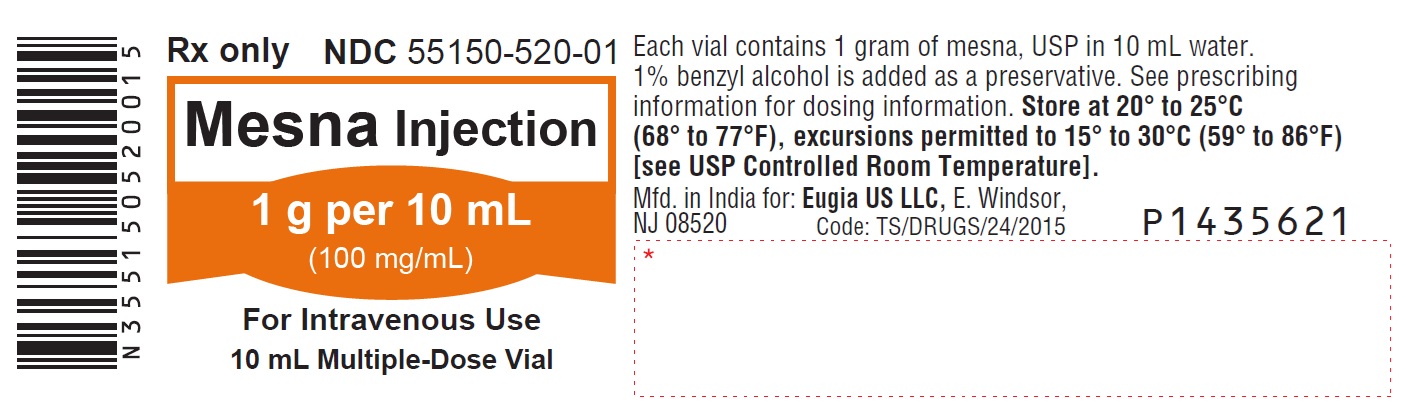
Package Label.Principal Display Panel - 10 Ml Multiple-Dose Vial - Container Label


Rx only              NDC 55150-520-01

Mesna Injection

 1 g per 10 mL

(100 mg/mL)

For Intravenous Use

10 mL Multiple-Dose Vial


Package Label.Principal Display Panel - 10 Ml Multiple-Dose Vial - Container Carton


Rx only              NDC 55150-520-01

Mesna Injection

 1 g per 10 mL

(100 mg/mL)

For Intravenous Use

1 x 10 mL Multiple-Dose Vial

Eugia


* Please review the disclaimer below.