Duloxetine
Product Images NDC 55154-2341

View Photos of Packaging, Regulatory Labels, and Product Appearance

Product Visual Gallery

This gallery contains 12 technical images submitted to the FDA as part of the official labeling for Duloxetine (NDC 55154-2341). Unlike standard consumer photos, these assets often include clinical data figures, molecular chemical structures, and official manufacturer packaging layouts.

As provided by Cardinal Health 107, Llc, these visuals offer a comprehensive scientific overview of the product's physical and chemical identity, aiding pharmacists and researchers in product verification and study.

FDA Label Image

Bag Label (26e7c5d9 F191 43d5 81c8 E6cf1fcb3986 00)

Bag Label (26e7c5d9 F191 43d5 81c8 E6cf1fcb3986 00)
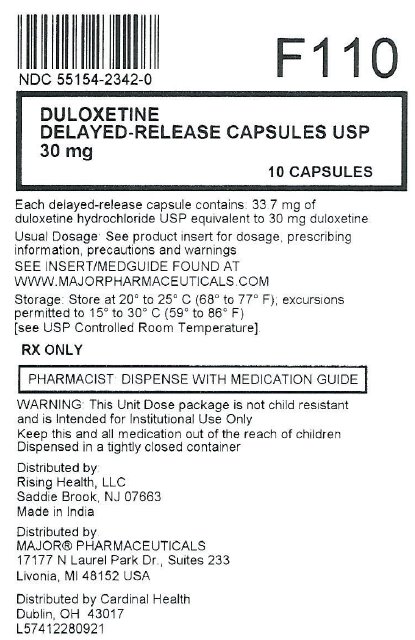
This is a medication package for Duloxetine Delayed-Release Capsules USP. Each capsule contains 60mg of duloxetine hydrochloride USP. The product insert provides dosage, prescribing information, and precautions. The medication should be stored at 20° to 25°C (68° to 77°F), with excursions permitted to 15° to 30°C (59° to 88°F). The package is not child-resistant and is intended for institutional use only. It should be kept away from the reach of children and dispensed in a tightly closed container. The medication is distributed by Rising Health, LLC from Saddle Brook, NJ, 07653, and made in India. It is also distributed by Major Pharmaceuticals and Cardinal Health in the USA.*
FDA Label Image

Bag Label (26e7c5d9 F191 43d5 81c8 E6cf1fcb3986 01)

FDA Label Image

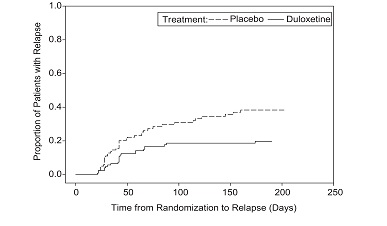
Figure 1: Kaplan-meier Estimation Of Cumulative Proportion Of Patients With Relapse (mdd Study 5) (Duloxetine Fig1)

FDA Label Image

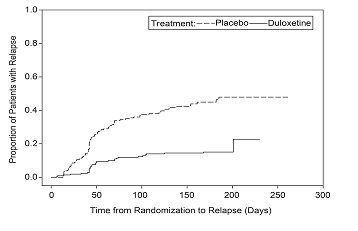
Figure-2 (Duloxetine Fig2)

FDA Label Image

Figure-3 (Duloxetine Fig3)

FDA Label Image

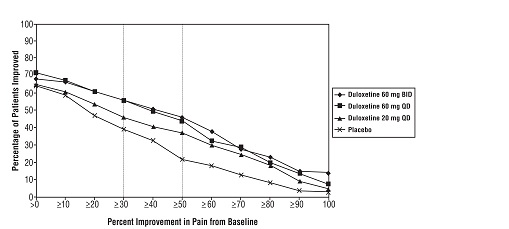
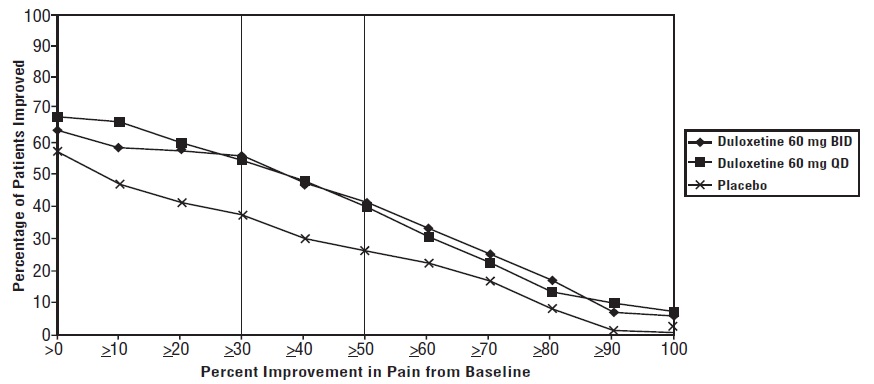
Figure 4: Percentage Of Dpnp Adult Patients Achieving Various Levels Of Pain Relief As Measured By 24-hour Average Pain Severity (study Dpnp-2) (Duloxetine Fig4)

Figure 4: Percentage Of Dpnp Adult Patients Achieving Various Levels Of Pain Relief As Measured By 24-hour Average Pain Severity (study Dpnp-2) (Duloxetine Fig4)
The text represents a graph showing the percentage of patients who improved in pain from baseline after being treated with either Duloxetine 60 mg BID (twice a day), Duloxetine 60 mg QD (once a day), or placebo. The horizontal axis shows the percent improvement in pain from baseline, and the vertical axis shows the percentage of patients improved. The data points on the graph show the percentage of patients who improved after treatment.*
FDA Label Image

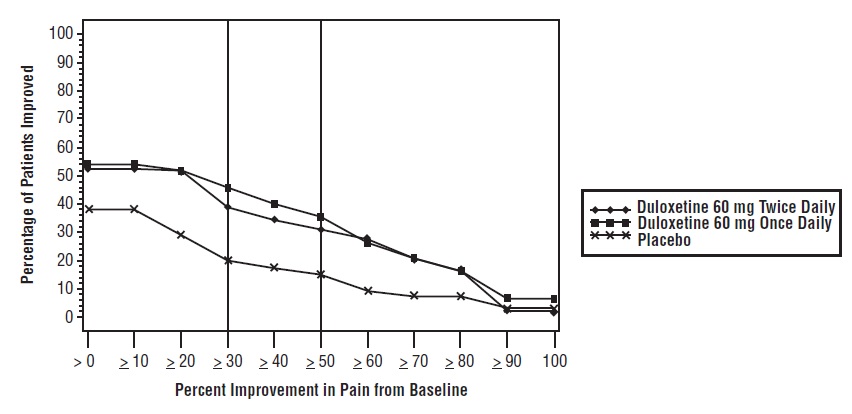
Figure 5 (Duloxetine Fig5)

Figure 5 (Duloxetine Fig5)
The text describes a chart showing the percentage of patient improvement in pain based on different levels of improvement (10%, 20%, 30%, etc.). The chart also includes data points for the percent improvement in pain from baseline at 290 points, and different treatment options including Duloxetine 60 mg taken once or twice a day, and a placebo.*
FDA Label Image

Figure 6 (Duloxetine Fig6)

Figure 6 (Duloxetine Fig6)
This is a graph showing the percent of patients who experienced pain improvement from baseline when taking duloxetine at different doses compared to placebo. The doses tested were 20mg, 60mg, and 120mg taken once daily. The X-axis represents the level of improvement (ranging from 0% to 100%), and the Y-axis shows the percentage of patients who experienced that level of improvement.*
FDA Label Image

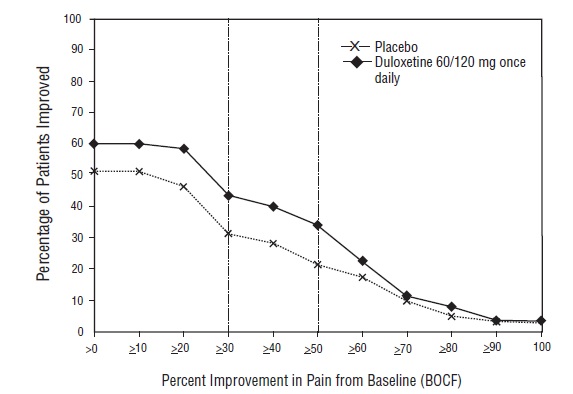
Figure 7 (Duloxetine Fig7)

Figure 7 (Duloxetine Fig7)
The text represents a chart showing the percentage of patients improved in a clinical trial of a drug called Duloxetine. The chart indicates that 100% of the patients who were given the drug experienced improvement, compared to 0% of the patients given a placebo. The X represents the placebo group, while the symbol # represents the Duloxetine group. The chart also provides data on the percentage of improvement in pain from baseline (BOCF) for the Duloxetine group. However, specific values for these percentages are not given.*
FDA Label Image

Figure 8 (Duloxetine Fig8)

FDA Label Image

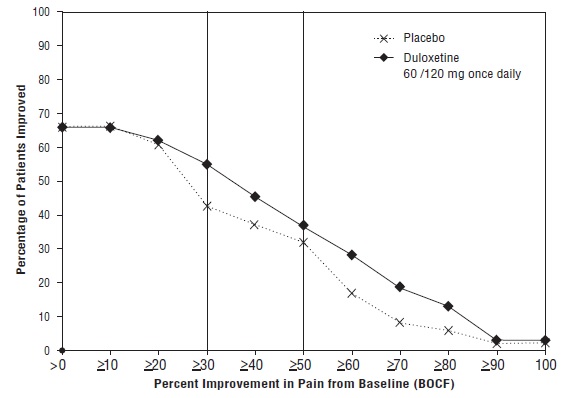
Figure 10: Percentage Of Adult Patients With Oa Achieving Various Levels Of Pain Relief As Measured By 24-hour Average Pain Severity (study Oa-1) (Duloxetine Fig9)

Figure 10: Percentage Of Adult Patients With Oa Achieving Various Levels Of Pain Relief As Measured By 24-hour Average Pain Severity (study Oa-1) (Duloxetine Fig9)
This is a graph displaying the percentage of improvement in pain from baseline (BOCF) on the x-axis and the number of patients on the y-axis. The graph shows the percentage of patients who received Placeto and Dulowetine 60/120 mg once daily and experienced pain relief. The numbers range from 0 to 100, with the highest number of patients experiencing a 60% improvement in pain.*
FDA Label Image

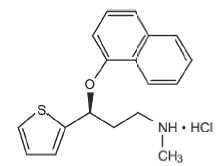
Chemical Structure (Duloxetine Str)

* These product label images have been analyzed using experimental machine learning. Please verify findings with the primary label text.