Lidocaine Patch
Product Images NDC 55154-2665

View Photos of Packaging, Regulatory Labels, and Product Appearance

Product Visual Gallery

This gallery contains 3 technical images submitted to the FDA as part of the official labeling for Lidocaine (NDC 55154-2665). Unlike standard consumer photos, these assets often include clinical data figures, molecular chemical structures, and official manufacturer packaging layouts.

As provided by Cardinal Health 107, Llc, these visuals offer a comprehensive scientific overview of the product's physical and chemical identity, aiding pharmacists and researchers in product verification and study.

FDA Label Image

8993acb3 Addb 457b Abff 65d12d373e3b 00

8993acb3 Addb 457b Abff 65d12d373e3b 00
This is a description of a product with NDC code 55154-2665-5, which is a Lidocaine Patch containing 5% Lidocaine. The package contains 5 envelopes, each containing one patch. Inactive components include non-vioven polyethylene terephthalate (PET) backing, glycerin, D-sorbito, propylene lycol, polyviny alcohol, urea, sodium polyacrylate, carboxymethyicellicse sodium, gelatin, polyaniosid, e, ataric ot dhyragaumm amivcacstate nelnyiparaben (preservative), propylparaben (preservative), edetate, and a PET release liner. Dosage information, prescription details, precautions, and warnings are provided in the product insert. The product needs to be stored at 20° to 25° Celsius. This is a prescription drug that should be kept out of reach of children and is intended for institutional use only. The product is manufactured by Actavis Laboratories UT, Inc., Salt Lake City, UT, and distributed by Actavis Pharma, Inc., Parsippany, NJ, and Cardinal Health, Dublin, OH.*
FDA Label Image

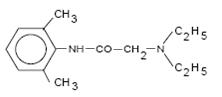
Chemical Structure For Lidocaine (Lidocaine Patch 1)

FDA Label Image

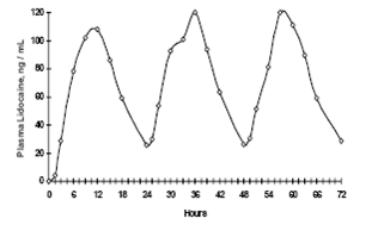
Figure 1 Mean Lidocaine Blood Concentrations After Three Consecutive Daily Applications Of Three Lidocaine Patches Simultaneously For 12 Hours Per Day In Healthy Volunteers (n = 15). (Lidocaine Patch 2)

* These product label images have been analyzed using experimental machine learning. Please verify findings with the primary label text.