Instant Hand Sanitizer
Product Images NDC 55422-012

View Photos of Packaging, Regulatory Labels, and Product Appearance

Product Visual Gallery

This gallery contains 2 technical images submitted to the FDA as part of the official labeling for Instant Hand Sanitizer (NDC 55422-012). Unlike standard consumer photos, these assets often include clinical data figures, molecular chemical structures, and official manufacturer packaging layouts.

As provided by Keruisi Cosmetics (jinhua) Co.,ltd., these visuals offer a comprehensive scientific overview of the product's physical and chemical identity, aiding pharmacists and researchers in product verification and study.

FDA Label Image

1000 mL Label (1000ml)
1000 mL Label (1000ml)
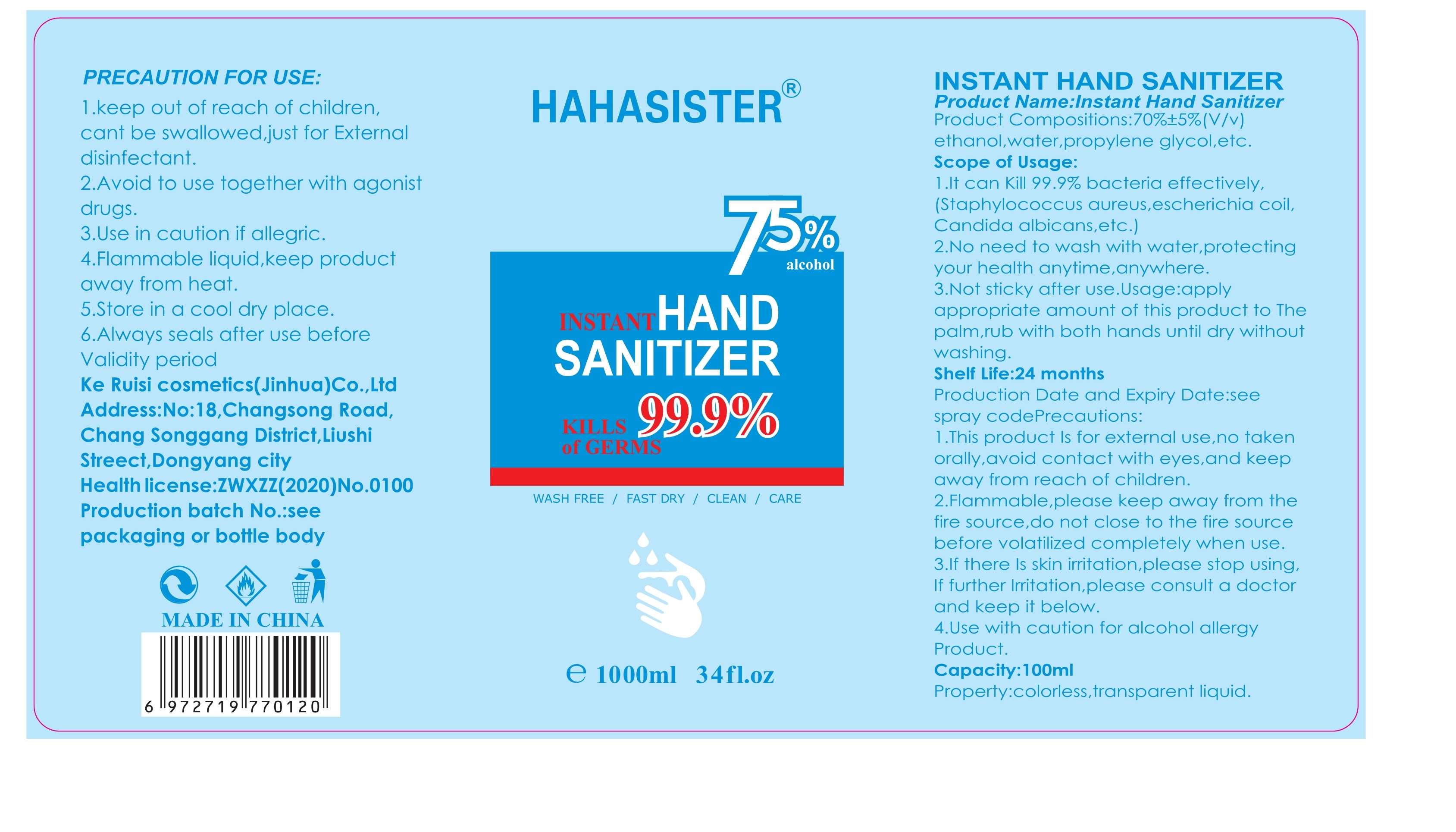
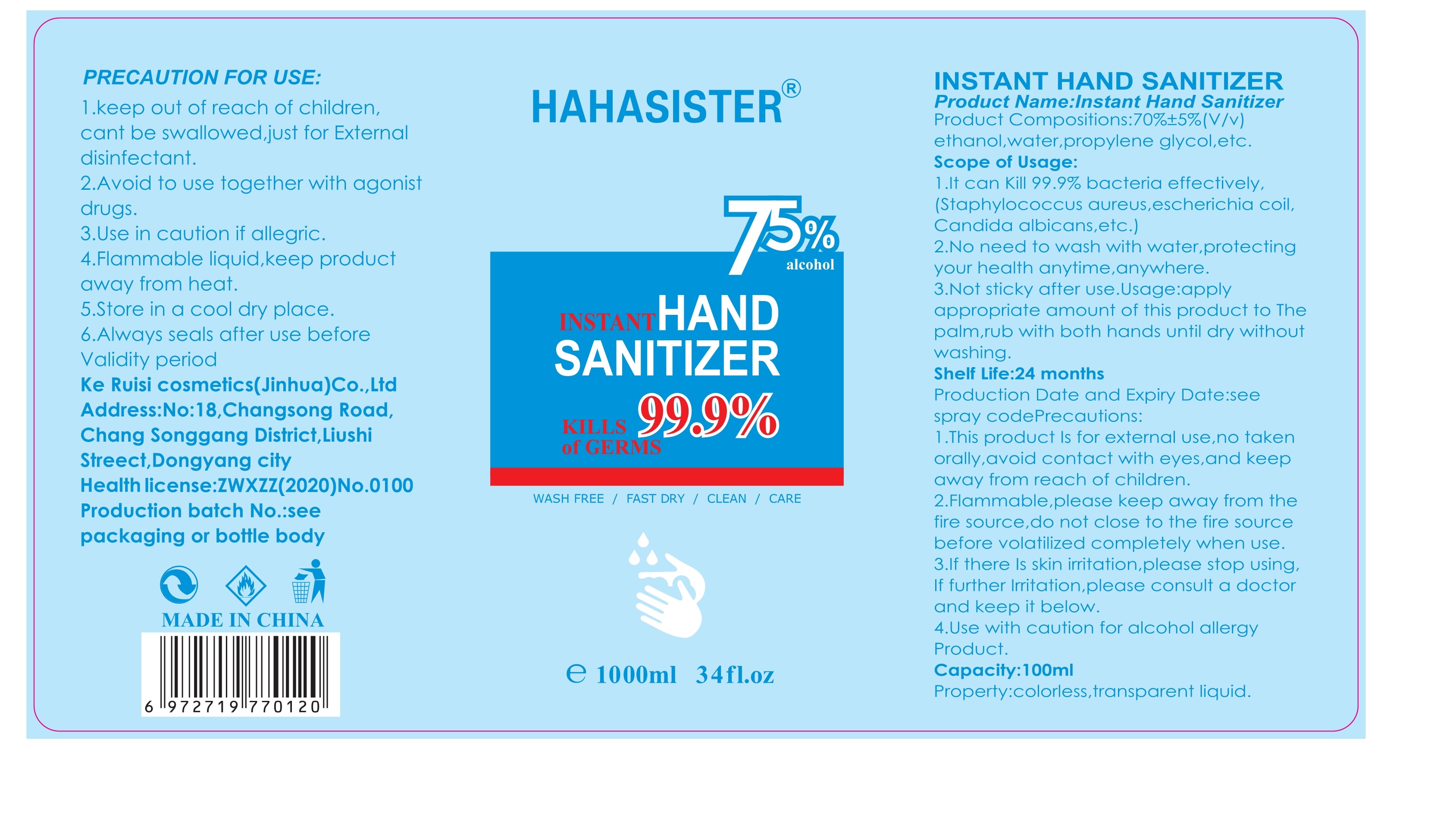
This is a 1000ml bottle of HAHASISTER Hand Sanitizer, a wash-free, fast-dry, and effective way to kill 99.9% of bacteria. The product is made of 70% ethanol, water, and propylene glycol, among other ingredients. It is not sticky and can be used anytime and anywhere. The shelf life is 24 months from the production date. The product should only be used externally, and should be kept away from children and flames. If there is skin irritation, it is recommended to stop using the product and consult a doctor. The bottle has a spray code that indicates its production and expiry dates.*
FDA Label Image

A61531b3 9b85 A8bb E053 2995a90ae3d8

A61531b3 9b85 A8bb E053 2995a90ae3d8
This is an alcohol-based hand sanitizer manufactured by Ke Ruisi Cosmetics. The product contains 70%+5% (V/v) ethanol, water, and propylene glycol, with a shelf life of 24 months. It effectively kills 99.9% of bacteria, and does not need water for use. It is a transparent liquid that is not sticky after use. It comes in a 1000ml (34fl.oz) container with precautions listed on the bottle. It should not be ingested, kept out of reach of children, and away from heat sources. It should also not be used with alcohol-based medications and with caution by individuals with skin allergies to alcohol.*

* These product label images have been analyzed using experimental machine learning. Please verify findings with the primary label text.