Ticagrelor Tablet
Product Images NDC 55488-0544

View Photos of Packaging, Regulatory Labels, and Product Appearance

Product Visual Gallery

This gallery contains 23 technical images submitted to the FDA as part of the official labeling for Ticagrelor (NDC 55488-0544). Unlike standard consumer photos, these assets often include clinical data figures, molecular chemical structures, and official manufacturer packaging layouts.

As provided by Changzhou Pharmaceutical Factory, these visuals offer a comprehensive scientific overview of the product's physical and chemical identity, aiding pharmacists and researchers in product verification and study.

FDA Label Image

60mg-500ct (60mg 500ct)
60mg-500ct (60mg 500ct)
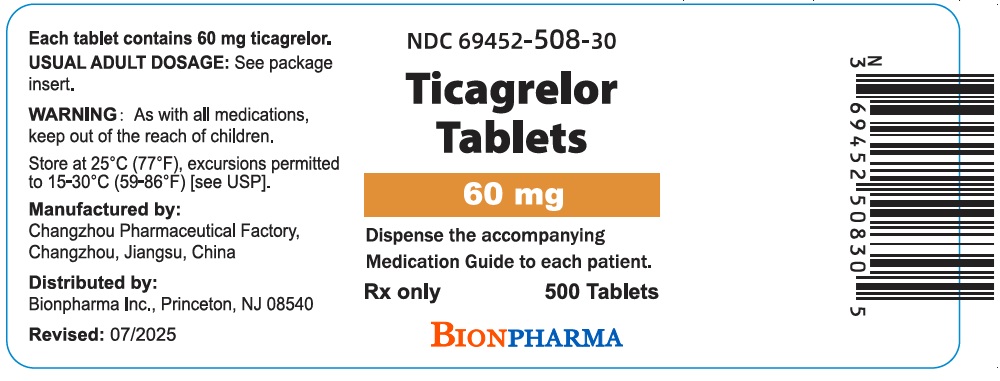
This text provides important information about ticagrelor tablets, stating that each tablet contains 60 mg of ticagrelor. It also includes details on the usual adult dosage, storage conditions, manufacturer (Changzhou Pharmaceutical Factory, China), distributor (Bionpharma Inc., Princeton, NJ), and the revision date. Additionally, it mentions the NDC number, and the instruction to dispense the medication guide to each patient.*
FDA Label Image

60mg-60ct (60mg 60ct)

60mg-60ct (60mg 60ct)
Each tablet contains 60 mg of ticagrelor. The usual adult dosage information can be found in the package insert. It is important to keep this medication out of reach of children. Store at 25°C (77°F), with excursions permitted between 15-30°C (59-86°F) as per USP guidelines. Manufactured by Changzhou Pharmaceutical Factory in Changzhou, Jiangsu, China, and distributed by Bionpharma Inc. in Princeton, NJ. It is recommended to dispense the accompanying Medication Guide to each patient. The product has a prescription symbol indicating it is for prescription use only, with a total of 60 tablets in the package. Make note of the NDC 69452-508-17. Last revised in July 2025.*
FDA Label Image

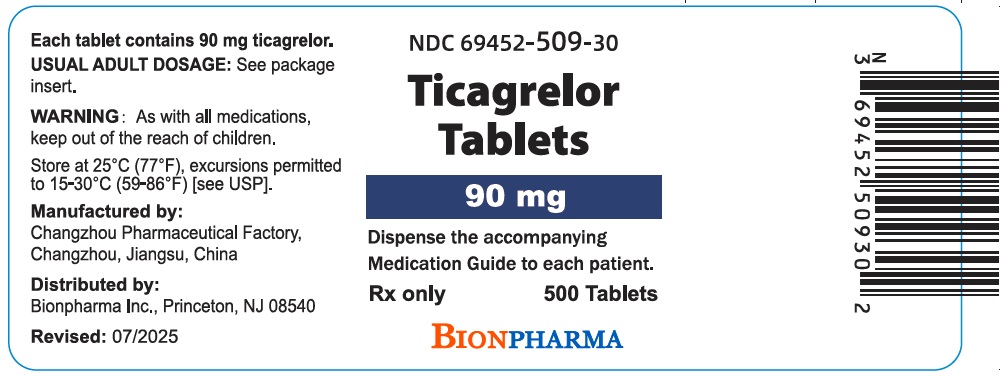
90mg-500ct (90mg 500ct)

90mg-500ct (90mg 500ct)
This text provides information about ticagrelor tablets with a dosage of 90 mg per tablet. It includes warnings to keep the medication out of children's reach and storage instructions. The tablets are manufactured in Changzhou, China, and distributed by Bionpharma Inc. in Princeton, New Jersey. The text also emphasizes the importance of dispensing the Medication Guide with each prescription.*
FDA Label Image

90mg-60ct (90mg 60ct)

90mg-60ct (90mg 60ct)
This text contains information about Ticagrelor tablets, each containing 90 mg of ticagrelor. The usual adult dosage information is stated to refer to the package insert. It emphasizes a warning to keep the medication out of the reach of children and provides storage instructions at 25°C with excursions permitted to 15-30°C. The manufacturing details point to Changzhou Pharmaceutical Factory in China, with distribution by Bionpharma Inc. in Princeton, NJ. The text includes a date revision of 07/2025 and an NDC number. It suggests dispensing the accompanying Medication Guide to each patient. This product is available in a box containing 60 tablets and is only available by prescription.*
FDA Label Image

Chemical-structure (Chemical Structure)

FDA Label Image

Figure-01 (Figure 01)

Figure-01 (Figure 01)
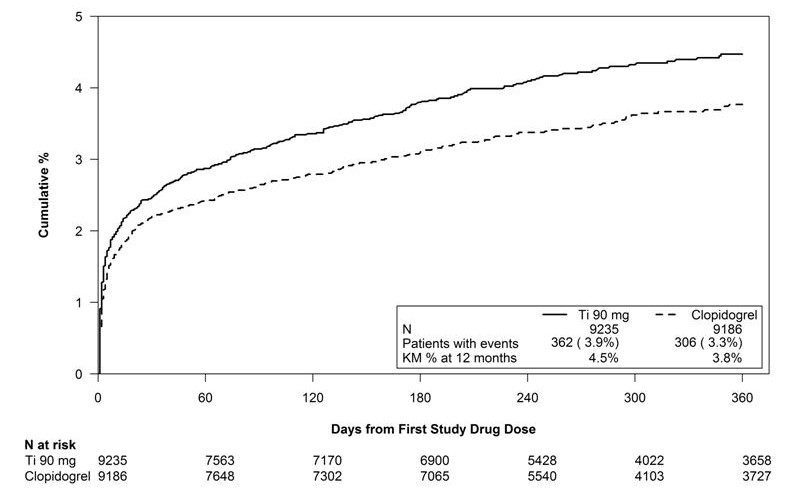
This is a statistical analysis comparing the efficacy of two drugs, Tisomg and Clopidogrel, in a study involving a total of 18,421 patients. The analysis includes the percentage of patients experiencing events over a time period and the Kaplan-Meier survival estimate at 12 months for both drugs. It also shows the number of patients at risk at different time points during the study period.*
FDA Label Image

Figure-02 (Figure 02)

FDA Label Image

Figure-03 (Figure 03)

Figure-03 (Figure 03)
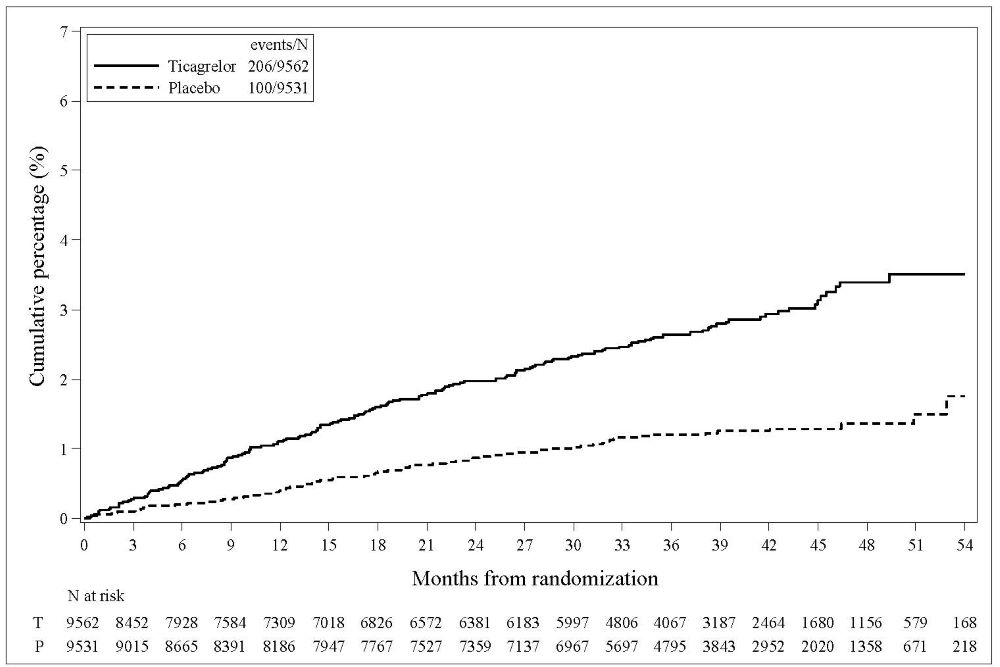
This text appears to show the results of a clinical trial comparing the effects of Ticagrelor and Placebo over a period of time. The data includes the number of participants at risk at various time points, as well as the cumulative percentages for both groups. The study was likely conducted over a period of 54 months, with regular assessments at 3-month intervals. This information can be used to evaluate the efficacy and safety of Ticagrelor compared to Placebo in the treatment of a specific condition.*
FDA Label Image

Figure-04 (Figure 04)

Figure-04 (Figure 04)
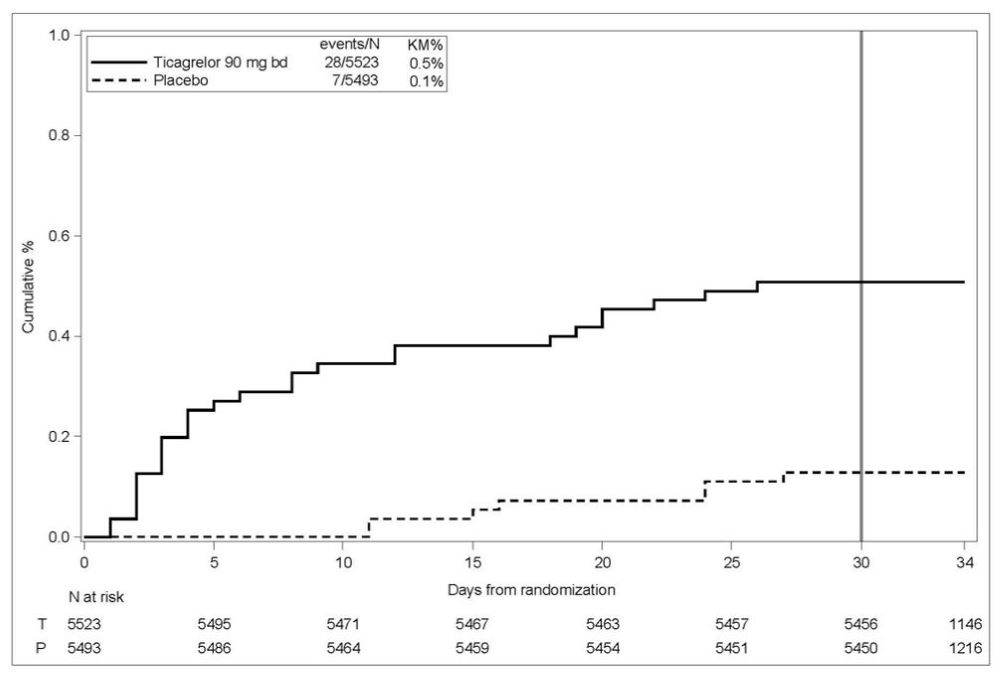
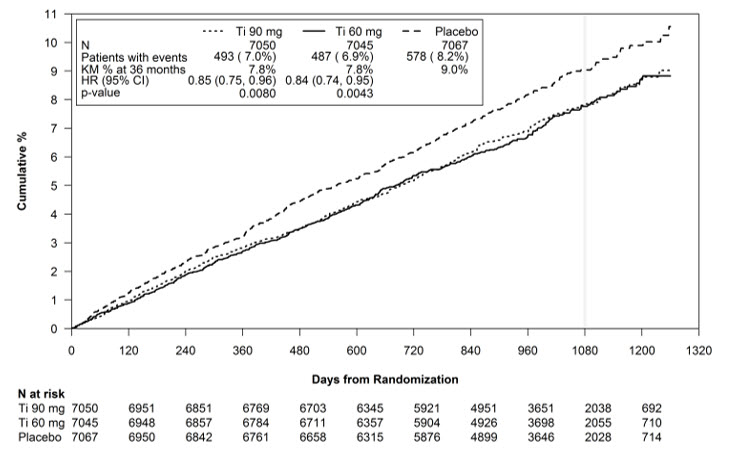
This text seems to contain information regarding a clinical study comparing the effects of Ticagrelor 90mg and Placebo on some events over a certain period. The cumulative percentages of events at specific timepoints are provided. The study also includes the number of participants, days from randomization, and other relevant data for analysis.*
FDA Label Image

Figure-05 (Figure 05)

Figure-05 (Figure 05)
This is not-availabe.*
FDA Label Image

Figure-06 (Figure 06)

FDA Label Image

Figure-07 (Figure 07)

FDA Label Image

Figure-08 (Figure 08)

Figure-08 (Figure 08)
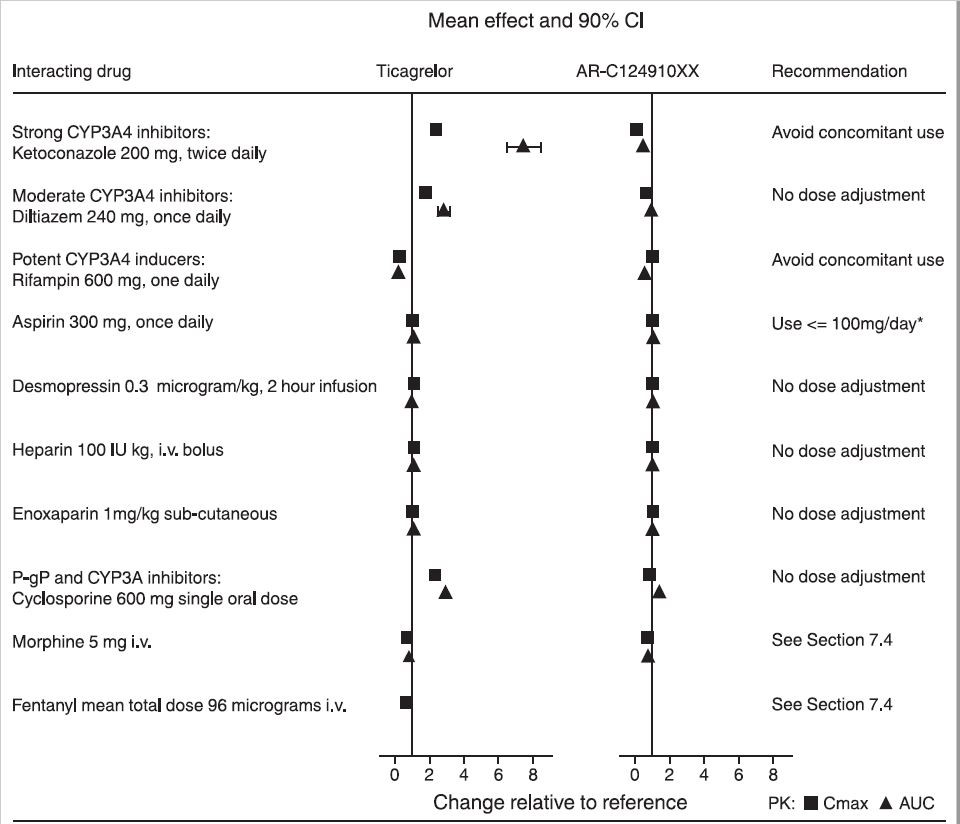
This text provides information on the drug Ticagrelor and its interactions with other drugs. It lists the effects and confidence intervals, as well as specific drug recommendations based on their inhibitory or inducing effects on CYP3A4 enzymes. The recommended drugs include inhibitors, inducers, and combinations to avoid. Dosage adjustments and specific instructions are also noted for each drug interaction.*
FDA Label Image

Figure-09 (Figure 09)

Figure-09 (Figure 09)
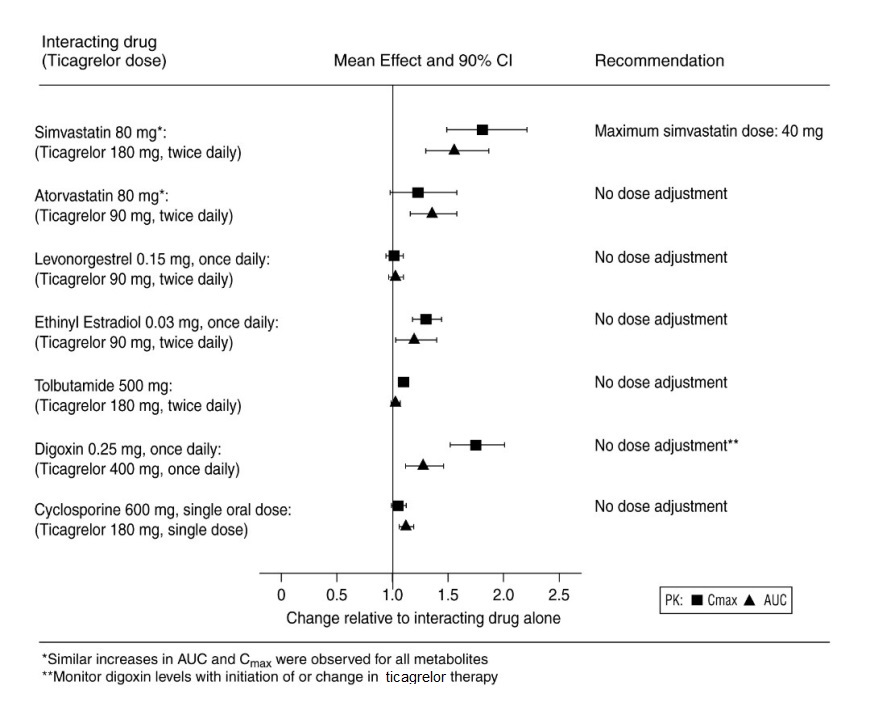
This information provides recommendations on interacting drugs with Ticagrelor, including Simvastatin, Atorvastatin, Levonorgestrel, Ethinyl Estradiol, Tolbutamide, Digoxin, and Cyclosporine. It specifies the mean effect and 90% CI for each combination, highlighting if dose adjustments are needed. The text also mentions PK parameters like Cmax and AUC and advises monitoring digoxin levels when initiating or changing Ticagrelor therapy.*
FDA Label Image

Figure-10 (Figure 10)

Figure-10 (Figure 10)
This is a statistical analysis comparing two treatments, Tisomg and Clopidogrel, for patients with events occurring over 12 months. The data shows the number of patients who had events in each group, along with the hazard ratio and p-value. The graph illustrates the number of patients at risk over different time points, from randomization up to 360 days.*
FDA Label Image

Figure-11 (Figure 11)

FDA Label Image

Figure-12 (Figure 12)

FDA Label Image

Figure-13 (Figure 13)

FDA Label Image

Figure-14 (Figure 14)

FDA Label Image

Figure-15 (Figure 15)

FDA Label Image

Figure-16 (Figure 16)

Figure-16 (Figure 16)
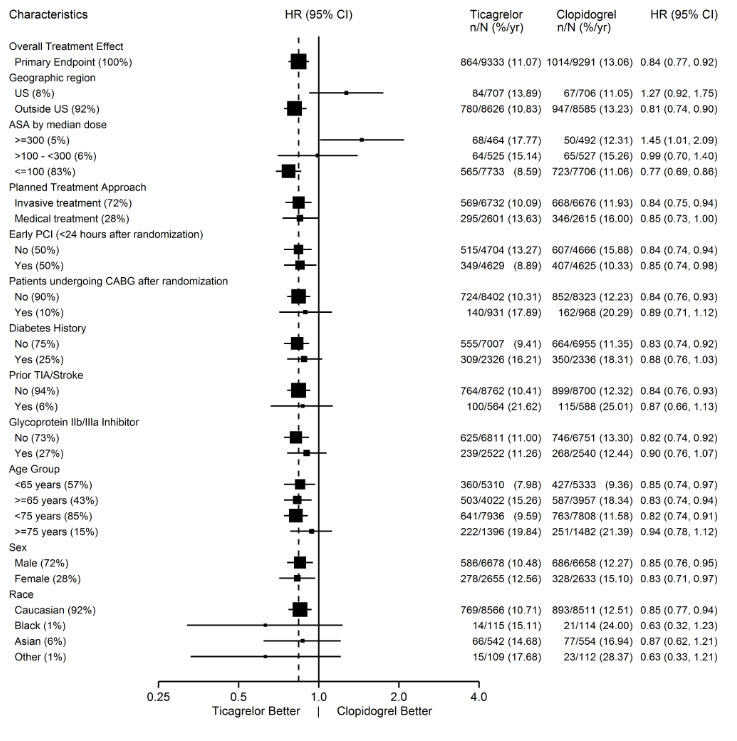
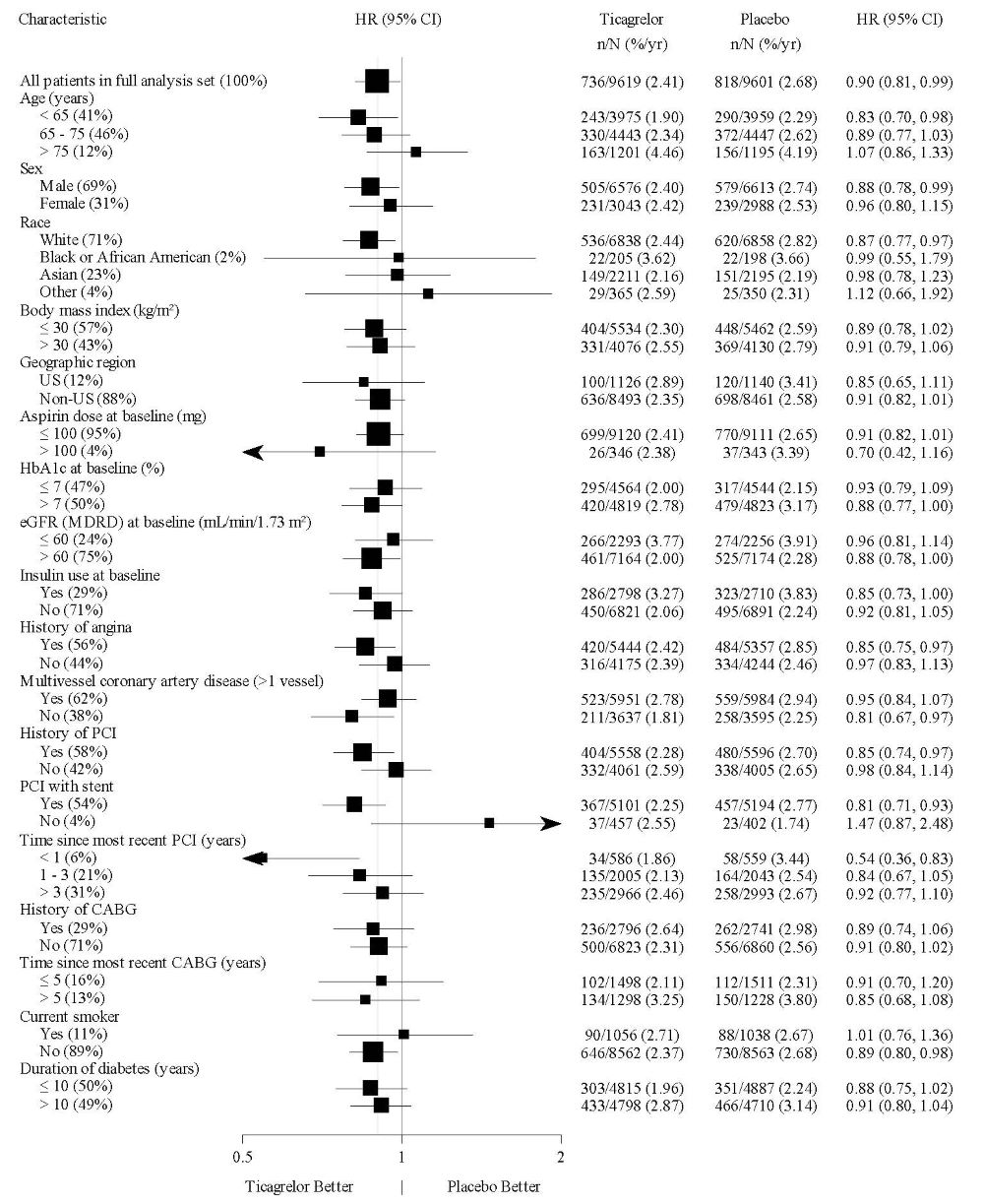
The extracted text provides detailed information on the patient characteristics and treatment outcomes for a clinical study evaluating the effects of ticagrelor. It includes data on various factors such as age, gender, race, body mass index, geographic region, aspirin dose, medical history, and lifestyle habits. The study compares outcomes between patients taking ticagrelor and those on placebo. The text shows the hazard ratios with 95% confidence intervals for different subgroups of patients, indicating whether ticagrelor was associated with better or worse outcomes compared to placebo. It can be used for further analysis and interpretation of the study results.*
FDA Label Image

Figure-17 (Figure 17)

Figure-17 (Figure 17)
This data shows the results of an evaluation comparing Ticagrelor 90 mg bd with Placebo in a study involving a total of 10,016 participants. The occurrence of events was 303/5523 (5.4%) for Ticagrelor and 362/5493 (6.5%) for Placebo. The graph illustrates the number of participants at risk over time from randomization.*
FDA Label Image

Figure-18 (Figure 18)

Figure-18 (Figure 18)
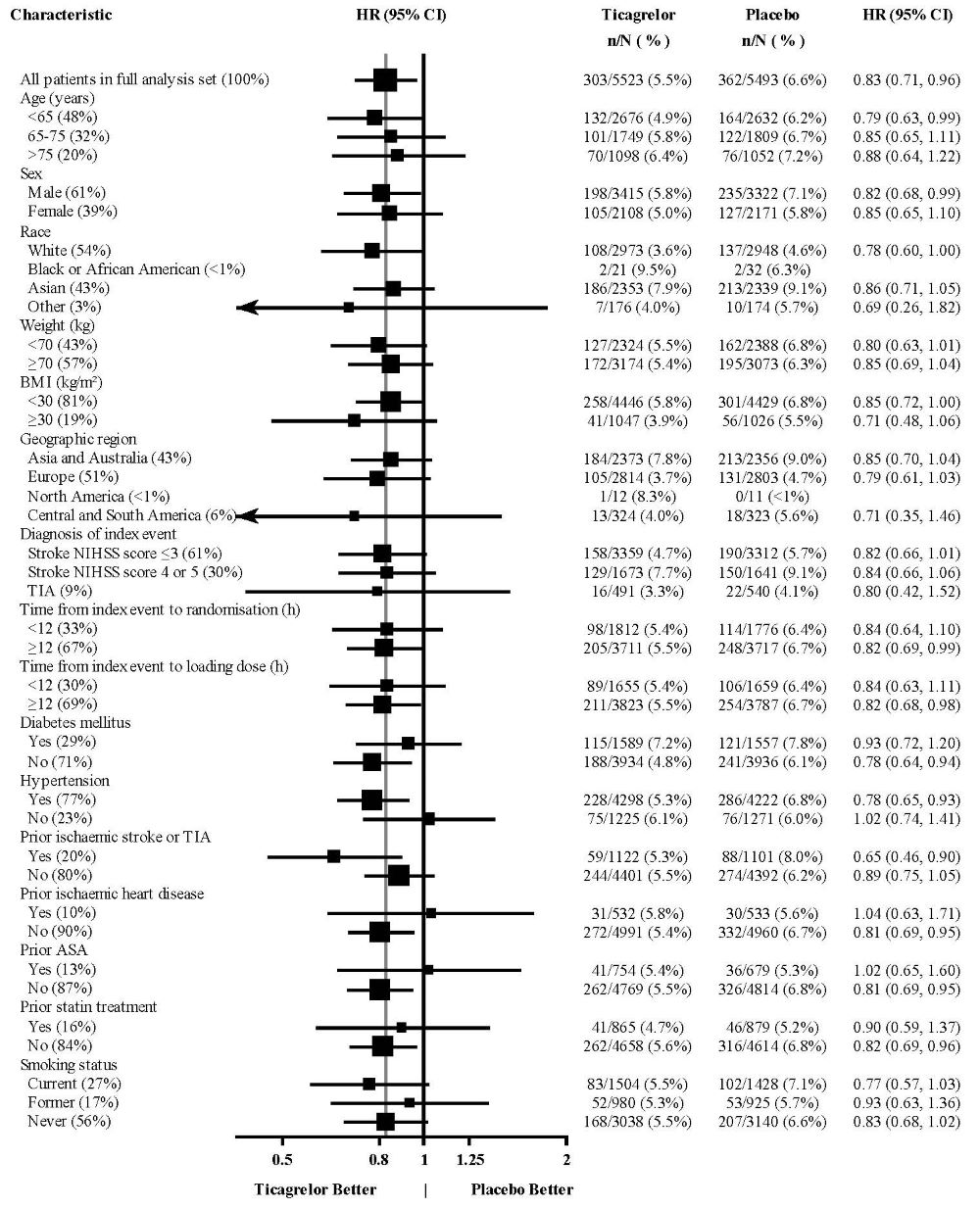
This document appears to be a statistical analysis report containing information on patient demographics, medical history, treatment outcomes, and efficacy data related to a clinical trial. The data includes details on patient characteristics such as age, sex, race, weight, geographic region, diagnosis of the index event, time intervals, comorbidities like diabetes and hypertension, and prior medical conditions like stroke and heart disease. Additionally, the report presents treatment outcomes comparing Ticagrelor and Placebo in terms of effectiveness with corresponding hazard ratios and confidence intervals. The document seems to provide valuable insights into the patient population and the efficacy of the treatment under evaluation.*

* These product label images have been analyzed using experimental machine learning. Please verify findings with the primary label text.