The efficacy of TEZSPIRE for add-on maintenance treatment of severe asthma was evaluated in two randomized, double-blind, parallel group, placebo-controlled clinical trials (PATHWAY [NCT02054130] and NAVIGATOR [NCT03347279]) of 52 weeks duration. The two trials enrolled a total of 1,609 patients 12 years of age and older with severe asthma.
PATHWAY was a 52-week dose-ranging exacerbation trial that enrolled 550 adult patients with severe asthma who received treatment with tezepelumab-ekko 70 mg subcutaneously every 4 weeks, TEZSPIRE 210 mg subcutaneously every 4 weeks, tezepelumab-ekko 280 mg subcutaneously every 2 weeks, or placebo subcutaneously. Patients were required to have a history of 2 or more asthma exacerbations requiring oral or injectable corticosteroid treatment or 1 asthma exacerbation resulting in hospitalization in the past 12 months.
NAVIGATOR was a 52-week exacerbation trial that enrolled 1,061 patients (adult and pediatric patients 12 years of age and older) with severe asthma who received treatment with TEZSPIRE 210 mg subcutaneously every 4 weeks or placebo subcutaneously every 4 weeks. Patients were required to have a history of 2 or more asthma exacerbations requiring oral or injectable corticosteroid treatment or resulting in hospitalization in the past 12 months.
In both PATHWAY and NAVIGATOR, patients were required to have an Asthma Control Questionnaire 6 (ACQ-6) score of 1.5 or more at screening and reduced lung function at baseline [pre-bronchodilator forced expiratory volume in 1 second (FEV1) below 80% predicted in adults, and below 90% predicted in adolescents]. Patients were required to have been on regular treatment with medium or high-dose inhaled corticosteroids (ICS) and at least one additional asthma controller, with or without oral corticosteroids (OCS). Patients continued background asthma therapy throughout the duration of the trials. In both trials, patients were enrolled without requiring a minimum baseline level of blood eosinophils or FeNO.
The demographics and baseline characteristics of PATHWAY and NAVIGATOR are provided in Table 3 below.
Table 3 Demographics and Baseline Characteristics of Patients in PATHWAY and NAVIGATOR
| PATHWAY
N=550 | NAVIGATOR
N=1,059 |
|---|
Mean age (year) (SD) | 52 (12) | 50 (16) |
Female (%) | 66 | 64 |
White (%) | 92 | 62 |
Black or African American (%) | 3 | 6 |
Asian (%) | 3 | 28 |
Hispanic or Latino (%) | 1 | 15 |
Never smoked (%) | 81 | 80 |
High-dose ICS use (%) | 49 | 75 |
OCS use (%) | 9 | 9 |
Mean number of exacerbations in previous year (SD) | 2.4 (1.2) | 2.8 (1.4) |
Mean duration of asthma (years) (SD) | 17 (12) | 22 (16) |
Mean baseline % predicted FEV1 (SD) | 60 (13) | 63 (18) |
Mean post-bronchodilator FEV1 reversibility (%) (SD) | 23 (20) | 15 (15) |
Mean baseline blood EOS count (cells/µL) (SD) | 371 (353) | 340 (403) |
Positive serum specific IgE to any perennial allergen (%) In the FEIA panel | 46 | 64 |
Mean FeNO (ppb) (SD) | 35 (39) | 44 (41) |
EOS, Eosinophils; FEIA, Fluorescent enzyme immunoassay; FeNO, Fractional exhaled nitric oxide; FEV1, Forced expiratory volume in one second; ICS, Inhaled corticosteroid, IgE, Immunoglobulin E; OCS, Oral corticosteroid; ppb, Parts per billion; SD, Standard deviation
The results summarized below are for the recommended TEZSPIRE 210 mg subcutaneously every 4 weeks dosing regimen.
Exacerbations
The primary endpoint for PATHWAY and NAVIGATOR was the rate of clinically significant asthma exacerbations measured over 52 weeks. Clinically significant asthma exacerbations were defined as worsening of asthma requiring the use of or increase in oral or injectable corticosteroids for at least 3 days, or a single depo-injection of corticosteroids, and/or emergency department visits requiring use of oral or injectable corticosteroids and/or hospitalization.
In both PATHWAY and NAVIGATOR, patients receiving TEZSPIRE had significant reductions in the annualized rate of asthma exacerbations compared to placebo. There were also fewer exacerbations requiring emergency room visits and/or hospitalization in patients treated with TEZSPIRE compared with placebo (Table 4).
Table 4 Rate of Clinically Significant Exacerbations Over 52 Weeks in PATHWAY and NAVIGATOR
| Trial | Treatment | Exacerbations per year |
|---|
| Rate | Rate Ratio (95% CI) |
|---|
Annualized Asthma Exacerbation Rate |
PATHWAY | TEZSPIRE (N=137) | 0.20 | 0.29 (0.16, 0.51) |
Placebo (N=138) | 0.72 |
NAVIGATOR | TEZSPIRE (N=528) | 0.93 | 0.44 (0.37, 0.53) |
Placebo (N=531) | 2.10 |
Exacerbations requiring emergency room visit/hospitalization |
PATHWAY | TEZSPIRE (N=137) | 0.03 | 0.15 (0.04, 0.58) |
Placebo (N=138) | 0.18 |
NAVIGATOR | TEZSPIRE (N=528) | 0.06 | 0.21 (0.12, 0.37) |
Placebo (N=531) | 0.28 |
Exacerbations requiring hospitalization |
PATHWAY | TEZSPIRE (N=137) | 0.02 | 0.14 (0.03, 0.71) |
Placebo (N=138) | 0.14 |
NAVIGATOR | TEZSPIRE (N=528) | 0.03 | 0.15 (0.07, 0.22) |
Placebo (N=531) | 0.19 |
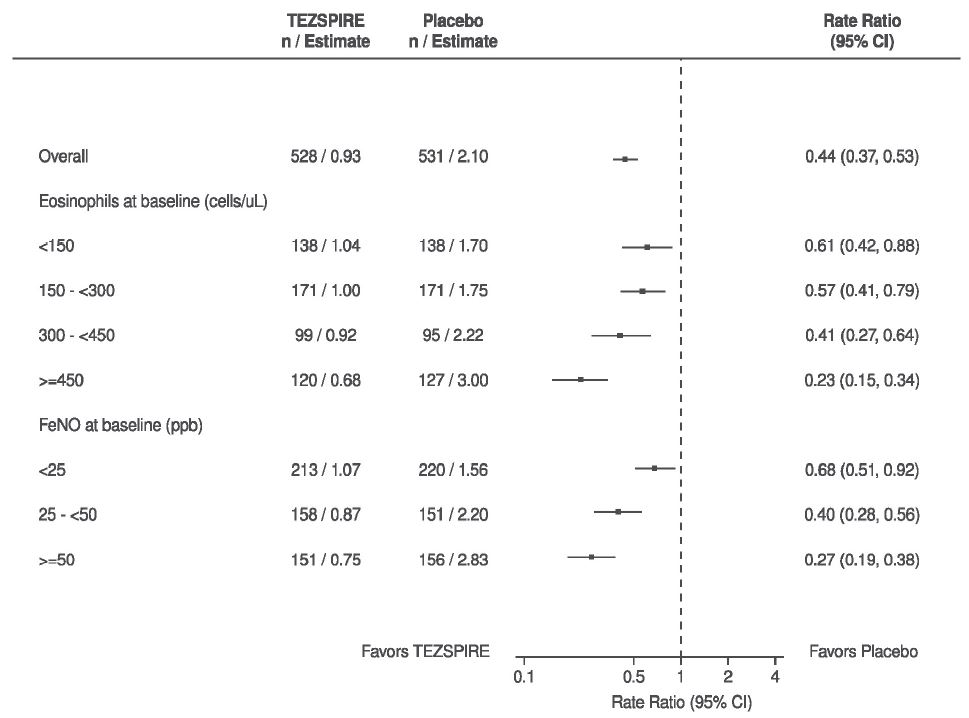
In NAVIGATOR, patients receiving TEZSPIRE experienced fewer exacerbations than those receiving placebo regardless of baseline levels of blood eosinophils or FeNO (Figure 3). Similar results were seen in PATHWAY.
Figure 3 Annualized Asthma Exacerbation Rate Ratio Over 52 Weeks Across Different Baseline Biomarkers in NAVIGATOR
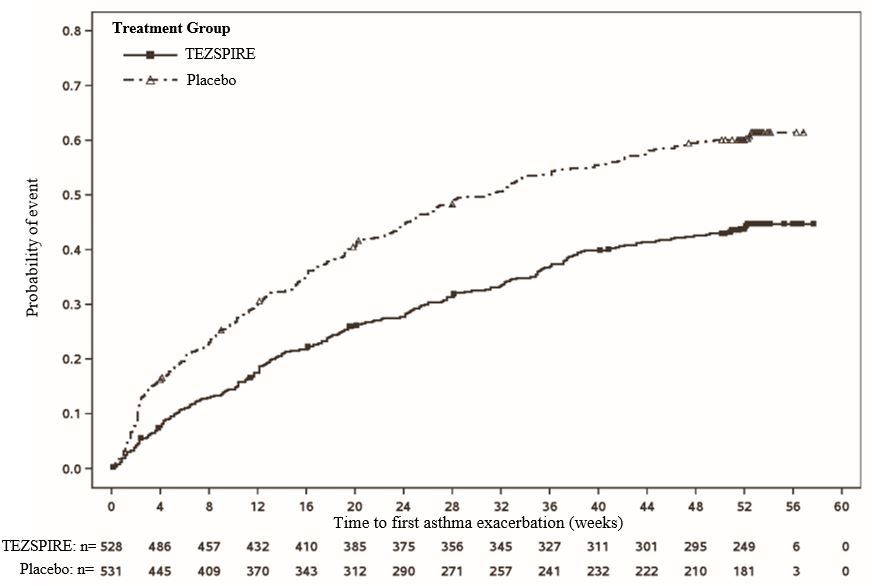
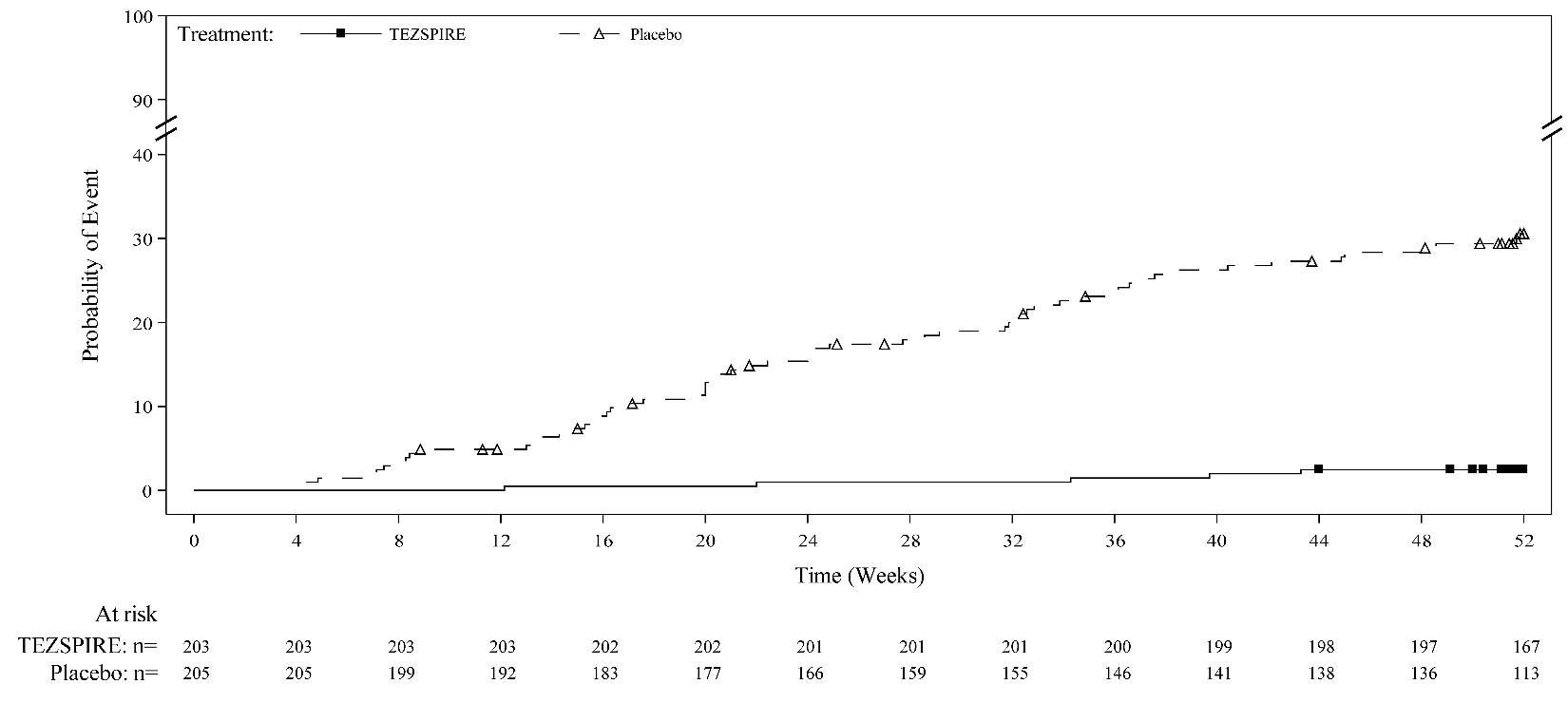
The time to first exacerbation was longer for the patients receiving TEZSPIRE compared with placebo in NAVIGATOR (Figure 4). Similar findings were seen in PATHWAY.
Figure 4 Kaplan-Meier Cumulative Incidence Curves for Time to First Exacerbation in NAVIGATOR
Lung Function
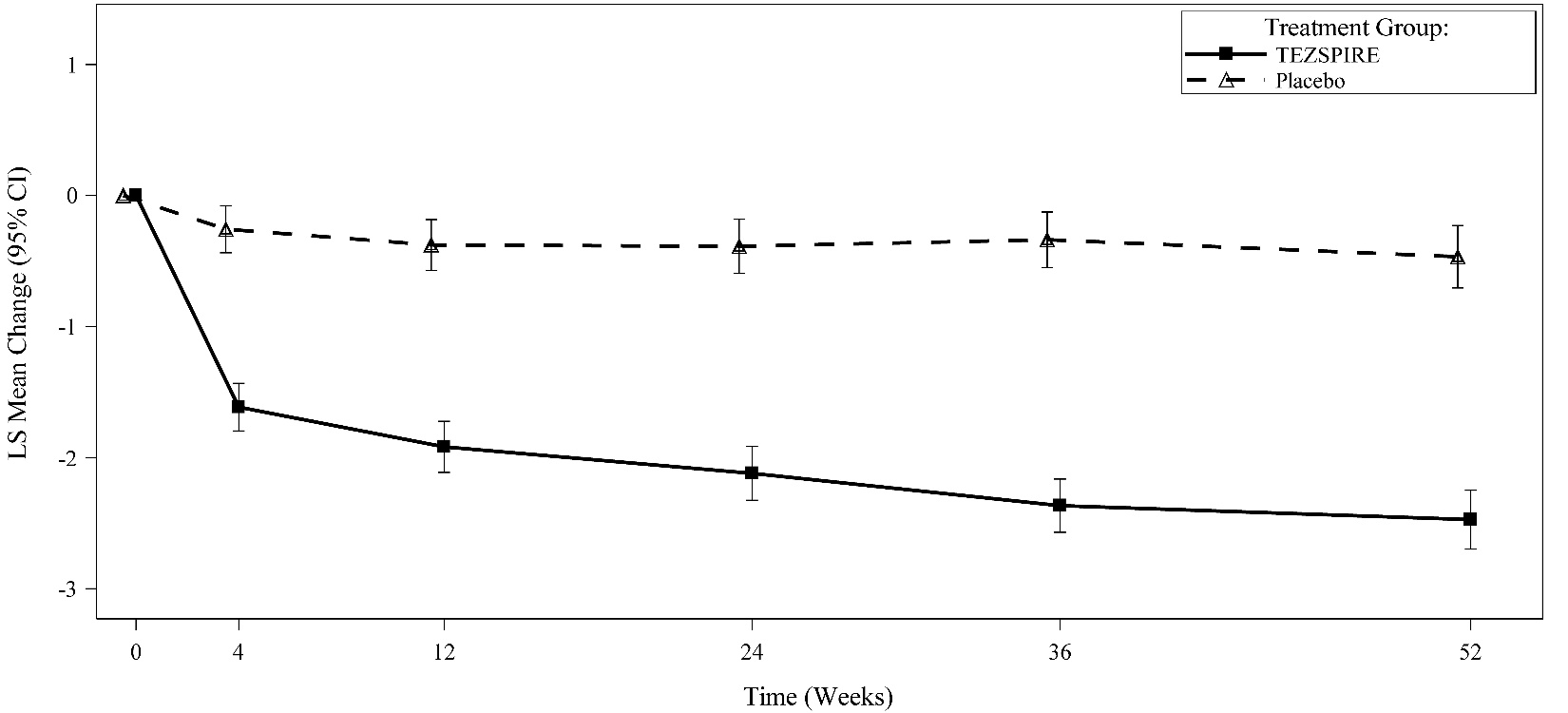
Change from baseline in FEV1 was assessed as a secondary endpoint in PATHWAY and NAVIGATOR. Compared with placebo, TEZSPIRE provided clinically meaningful improvements in the mean change from baseline in FEV1 in both trials (Table 5).
Table 5 Mean Change from Baseline in Pre-Bronchodilator FEV1 at End of Trial in PATHWAY and NAVIGATORWeek 52 in PATHWAY, Week 52 in NAVIGATOR
Trial | Treatment | LS Mean Change from Baseline (L) | Difference from Placebo (95% CI) |
PATHWAY | TEZSPIRE (N=133) Number of patients contributing to the full analysis (FA) with at least 1 change from baseline value | 0.08 | 0.13 (0.03, 0.23) |
Placebo (N=138) | -0.06 |
NAVIGATOR | TEZSPIRE (N=527) | 0.23 | 0.13 (0.08, 0.18) |
Placebo (N=531) | 0.10 |
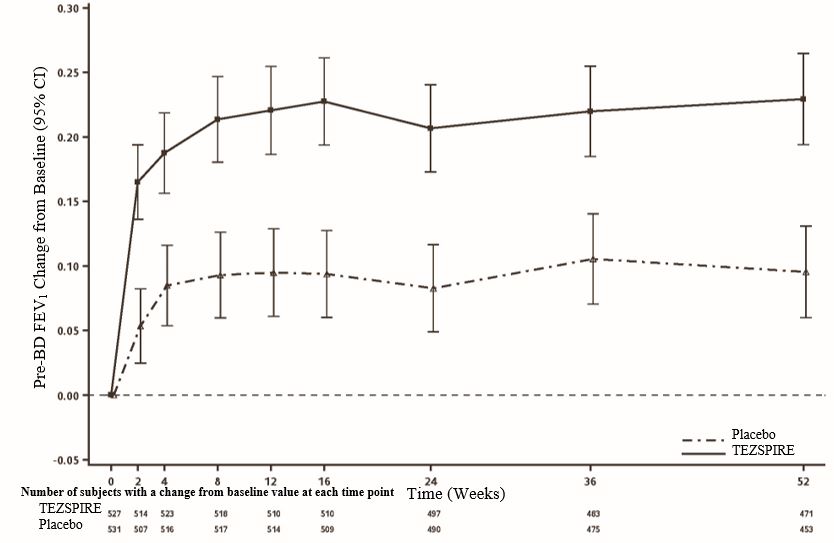
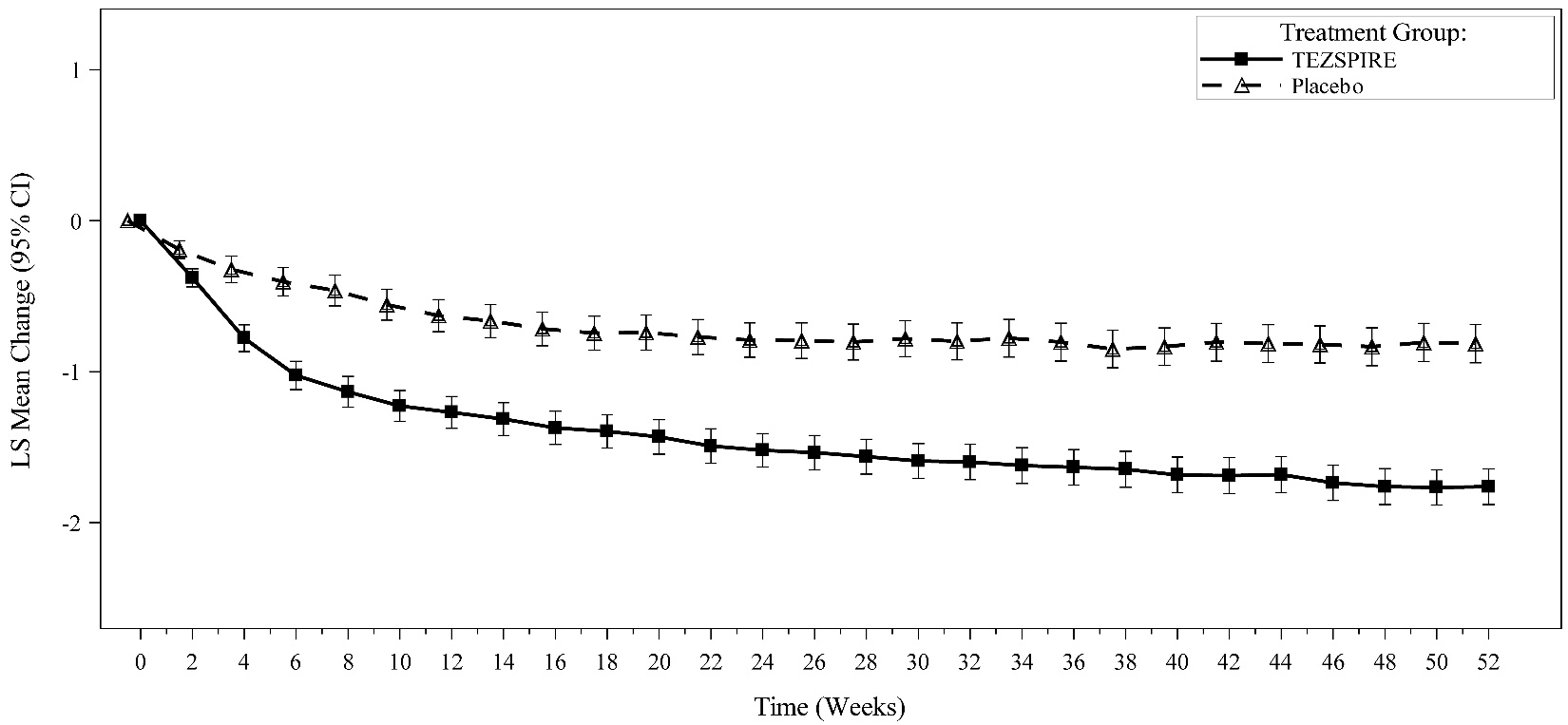
In NAVIGATOR, improvement in FEV1 was seen as early as 2 weeks after initiation of treatment and was sustained through week 52 (Figure 5).
Figure 5 Mean Change (95% CI) from Baseline in Pre-Bronchodilator FEV1 (L) in NAVIGATOR
Patient Reported Outcomes
Changes from baseline in Asthma Control Questionnaire 6 (ACQ-6) and Standardized Asthma Quality of Life Questionnaire for ages 12 and older [AQLQ(S)+12] were also assessed as secondary endpoints in PATHWAY and NAVIGATOR. In both trials, more patients treated with TEZSPIRE compared to placebo had a clinically meaningful improvement in ACQ-6 and AQLQ(S)+12. Clinically meaningful improvement (responder rate) for both measures was defined as improvement in score of 0.5 or more at end of trial. In NAVIGATOR, the ACQ-6 responder rate for TEZSPIRE was 86% compared with 77% for placebo (OR=1.99; 95% CI 1.43, 2.76) and the AQLQ(S)+12 responder rate for TEZSPIRE was 78% compared with 72% for placebo (OR=1.36; 95% CI 1.02, 1.82). Similar findings were seen in PATHWAY.
Additional Trial
In a randomized, double-blind, parallel group, placebo-controlled clinical trial, the effect of TEZSPIRE (210 mg subcutaneously every 4 weeks) on reducing the use of maintenance OCS was evaluated. The trial enrolled 150 adult patients with severe asthma who required treatment with daily OCS (7.5 mg to 30 mg per day) in addition to regular use of high-dose ICS and a long-acting beta-agonist with or without additional controller(s). The primary endpoint was categorized percent reduction from baseline of the final OCS dose at Week 48 (≥90% reduction, ≥75% to <90% reduction, ≥50% to <75% reduction, >0% to <50% reduction, and no change or any increase in OCS), while maintaining asthma control. TEZSPIRE did not demonstrate a statistically significant reduction in maintenance OCS dose compared with placebo (cumulative OR=1.28; 95% CI 0.69, 2.35).