During the 16-week placebo-controlled period of the clinical trial in adults with mild to moderate plaque psoriasis, the incidence of subjects reporting depression was similar to what was observed in the adult moderate to severe plaque psoriasis trials.
During the placebo-controlled period of the trials in psoriatic arthritis (PsA), weight decrease between 5%-10% of body weight was reported in 10% (49/497) of subjects treated with OTEZLA 30 mg twice daily compared to 3.3% (16/495) treated with placebo.
During the placebo-controlled period of the trials in adults with moderate to severe plaque psoriasis, weight decrease between 5%-10% of body weight occurred in 12% (96/784) of subjects treated with OTEZLA compared to 5% (19/382) treated with placebo. Weight decrease of ≥ 10% of body weight occurred in 2% (16/784) of subjects treated with OTEZLA 30 mg twice daily compared to 1% (3/382) subjects treated with placebo.
During the placebo-controlled period of the clinical trial in adults with mild to moderate plaque psoriasis, weight decrease was similar to what was observed in the trials of adults with moderate to severe plaque psoriasis.
During the placebo-controlled period of the phase 3 trial in Behçet's Disease, weight decrease > 5% of body weight was reported in 4.9% (5/103) of subjects treated with OTEZLA 30 mg twice daily compared to 3.9% (4/102) subjects treated with placebo.
During the placebo-controlled period of the clinical trial in pediatric subjects 6 years of age and older with moderate to severe plaque psoriasis, weight decrease between 5%-10% of body weight occurred in 12% (19/163) of pediatric subjects treated with OTEZLA compared to 2.5% (2/80) of pediatric subjects treated with placebo. Weight decrease of ≥ 10% of body weight occurred in 1% (1/163) of pediatric subjects treated with OTEZLA twice daily compared to 0% (0/80) of pediatric subjects treated with placebo.
Closely monitor growth (height and weight) in pediatric patients treated with OTEZLA/OTEZLA XR. Pediatric patients who are not growing or gaining weight as expected may need to have their treatment interrupted.
OTEZLA was evaluated in three multicenter, randomized, double-blind, placebo-controlled trials (PsA-1, PsA-2, and PsA-3) of similar design in adult subjects with active psoriatic arthritis [see Clinical Studies (14.1)]. Across the three trials, there were 1493 subjects randomized equally to placebo, OTEZLA 20 mg twice daily or OTEZLA 30 mg twice daily. Titration was used over the first 5 days [see Dosage and Administration (2.1)]. Placebo subjects whose tender and swollen joint counts had not improved by at least 20% were re-randomized 1:1 in a blinded fashion to either OTEZLA 20 mg twice daily or 30 mg twice daily at week 16 while OTEZLA subjects remained on their initial treatment. Subjects ranged in age from 18 to 83 years, with an overall median age of 51 years.
The majority of the most common adverse reactions presented in Table 3 occurred within the first 2 weeks of treatment and tended to resolve over time with continued dosing. Diarrhea, headache, and nausea were the most commonly reported adverse reactions. The most common adverse reactions leading to discontinuation for subjects taking OTEZLA were nausea (1.8%), diarrhea (1.8%), and headache (1.2%). The proportion of subjects with psoriatic arthritis who discontinued treatment due to any adverse reaction was 4.6% for subjects taking OTEZLA 30 mg twice daily and 1.2% for placebo-treated subjects.
The safety of OTEZLA was assessed in 1426 subjects in three randomized, double-blind, placebo-controlled trials in adult subjects with moderate to severe plaque psoriasis who were candidates for phototherapy or systemic therapy. Subjects were randomized to receive OTEZLA 30 mg twice daily or placebo twice daily. Titration was used over the first 5 days [see Dosage and Administration (2.1)]. Subjects ranged in age from 18 to 83 years, with an overall median age of 46 years.
Diarrhea, nausea, and upper respiratory tract infection were the most commonly reported adverse reactions (see Table 4). The most common adverse reactions leading to discontinuation for subjects taking OTEZLA were nausea (1.6%), diarrhea (1.0%), and headache (0.8%). The proportion of subjects with plaque psoriasis who discontinued treatment due to any adverse reaction was 6.1% for subjects treated with OTEZLA 30 mg twice daily and 4.1% for placebo-treated subjects.
Severe worsening of psoriasis (rebound) occurred in 0.3% (4/1184) subjects following discontinuation of treatment with OTEZLA.
OTEZLA was evaluated in a Phase 3, multicenter, randomized, placebo-controlled trial (PSOR-3) in adults with moderate to severe plaque psoriasis of the scalp [see Clinical Studies (14.2)]. A total of 302 subjects were randomized to receive OTEZLA 30 mg twice daily or placebo twice daily. The most commonly reported adverse reactions that occurred at a higher rate in the OTEZLA group than in the placebo group were: diarrhea (31% vs. 11%), nausea (22% vs. 6%), headache (12% vs. 5%), and vomiting (6% vs. 2%). The proportion of subjects who discontinued treatment because of any adverse reaction during the 16-week placebo-controlled period of the trial was 6% for subjects who received OTEZLA 30 mg twice daily and 3% for subjects who received placebo. Gastrointestinal adverse reactions that led to discontinuation of treatment were diarrhea (3% vs. 0%), nausea (1.5% vs. 1%), and vomiting (1.5% vs. 0%) in the OTEZLA group compared to placebo.
OTEZLA was evaluated in a Phase 3, multicenter, randomized, placebo-controlled trial (PSOR-5) in adults with moderate to severe plaque psoriasis of the genital area [see Clinical Studies (14.2)]. A total of 289 subjects were randomized to receive OTEZLA 30 mg twice daily or placebo twice daily. Overall, the safety profile observed in the OTEZLA group during the placebo-controlled phase was consistent with the safety profile previously established in adult subjects with moderate to severe plaque psoriasis.
OTEZLA was evaluated in a Phase 3, multicenter, randomized, placebo-controlled trial (PSOR-6) in pediatric subjects 6 to 17 years of age with moderate to severe plaque psoriasis [see Clinical Studies (14.3)]. A total of 245 subjects were randomized to receive OTEZLA (163 subjects, at a dosage of 20 mg twice daily or 30 mg twice daily, based on body weight) or placebo (82 subjects) twice daily during the 16-week placebo-controlled phase of the trial. The trial also included a 36-week extension phase during which all subjects received OTEZLA 20 mg or 30 mg twice daily. Overall, the safety profile observed in pediatric subjects treated with OTEZLA during the study was consistent with the safety profile established in adult subjects with moderate to severe plaque psoriasis.
OTEZLA was evaluated in a Phase 3, multicenter, randomized, placebo-controlled trial (PSOR-4) in adult subjects with mild to moderate plaque psoriasis [see Clinical Studies (14.4)]. A total of 595 subjects were randomized to receive OTEZLA 30 mg twice daily (297 subjects) or placebo twice daily (298 subjects) during the placebo-controlled phase of the trial. The trial also included an open label extension phase during which all subjects received OTEZLA 30 mg twice daily. Overall, the safety profile observed in the OTEZLA group during the placebo-controlled phase was consistent with the safety profile previously established in adult subjects with moderate to severe plaque psoriasis.
OTEZLA was evaluated in a Phase 3, multicenter, randomized, placebo-controlled trial (BCT-002) in adult subjects with Behçet's Disease (BD) with active oral ulcers [see Clinical Studies (14.5)]. A total of 207 subjects were randomized to receive OTEZLA 30 mg twice daily or placebo twice daily. Titration was used over the first 5 days [see Dosage and Administration (2.1)]. After Week 12, all subjects received treatment with OTEZLA 30 mg twice daily. Subjects ranged in age from 19 to 72, with a mean age of 40 years.
Diarrhea, nausea, headache, and upper respiratory tract infection were the most commonly reported adverse reactions (see Table 5). The proportion of subjects with BD who discontinued treatment due to any adverse reaction during the placebo-controlled period of the trial, was 2.9% for subjects treated with OTEZLA 30 mg twice daily and 4.9% for placebo-treated subjects.
- Gastrointestinal Disorders: Gastroesophageal reflux disease
- Immune System Disorders: Hypersensitivity
- Investigations: Weight decrease
- Metabolism and Nutrition Disorders: Decreased appetite
One subject treated with OTEZLA 30 mg twice daily experienced a serious adverse reaction.
- Nervous System Disorders: Migraine
- Respiratory, Thoracic, and Mediastinal Disorders: Cough
- Skin and Subcutaneous Tissue Disorders: Rash
Risk Summary
Available data with OTEZLA use in pregnant women have not identified a drug-associated risk of major birth defects or adverse maternal or fetal outcomes (see Data).
In animal embryo-fetal development studies, the administration of apremilast to pregnant cynomolgus monkeys during organogenesis resulted in dose-related increases in abortion/embryo-fetal death at dose exposures approximately 2-times the maximum recommended human therapeutic dose (MRHD) and no adverse effect at an exposure of 1.4-times the MRHD. When apremilast was administered to pregnant mice during organogenesis, there were no apremilast-induced malformations up to exposures 4-times the MRHD. Based on findings from animal reproduction studies, OTEZLA/OTEZLA XR may increase the risk for fetal loss (see Data). Advise pregnant women of the potential risk of fetal loss.
The background risk of major birth defects and miscarriage for the indicated populations is unknown. All pregnancies have a background risk of birth defect, loss, or other adverse outcomes. In the U.S. general population, the estimated background risk of major birth defects and miscarriage in clinically recognized pregnancies is 2% to 4% and 15% to 20%, respectively.
Data
Human Data
A pregnancy registry conducted by the Organization of Teratology Information Specialists (OTIS) in the United States and Canada assessed the risk of major birth defects in liveborn infants of women with psoriatic arthritis, psoriasis, or Behçet's Disease exposed to apremilast in the first trimester. The study compared pregnant women treated with apremilast (n = 15) with disease matched pregnant women who were not exposed to apremilast (n = 106). In the apremilast-exposed cohort, there were no reports of liveborn infants with major birth defects nor miscarriages. One stillbirth was reported in the apremilast exposed cohort. These data are limited by the small sample size of apremilast-exposed pregnancies.
Animal Data
In an embryo-fetal developmental study, pregnant cynomolgus monkeys were administered apremilast at doses of 20, 50, 200, or 1000 mg/kg/day during the period of organogenesis (gestation Days [GD] 20 through 50). There was a dose -related increase in spontaneous abortions, with most abortions occurring during Weeks 3 to 4 of dosing in the first trimester, at doses approximately 2-times the MRHD and greater (on an area under the curve [AUC] basis at doses ≥ 50 mg/kg/day). No abortifacient effects were observed at a dose approximately 1.4-times the MRHD (on an AUC basis at a dose of 20 mg/kg/day). Although there was no evidence for a teratogenic effect at doses of 20 mg/kg/day and greater when examined at Day 100, aborted fetuses were not examined.
In an embryo-fetal development study in mice, apremilast was administered at doses of 250, 500, or 750 mg/kg/day to dams during organogenesis (GD 6 through 15). In a combined fertility and embryo-fetal development study in mice, apremilast was administered at doses of 10, 20, 40, or 80 mg/kg/day starting 15 days before cohabitation and continuing through GD 15. No teratogenic findings attributed to apremilast were observed in either study; however, there was an increase in post-implantation loss at doses corresponding to a systemic exposure of approximately 2-times the MRHD and greater (≥ 20 mg/kg/day). At doses of ≥ 20 mg/kg/day skeletal variations included incomplete ossification sites of tarsals, skull, sternebra, and vertebrae. No effects were observed at a dose approximately 1.3-times the MRHD (10 mg/kg/day).
Apremilast distributed across the placenta into the fetal compartment in mice and monkeys.
In a pre and postnatal study in mice, apremilast was administered to pregnant female mice at doses of 10, 80, or 300 mg/kg/day from Day 6 of gestation through Day 20 of lactation, with weaning on Day 21. Dystocia, reduced viability, and reduced birth weights occurred at doses corresponding to ≥ 4-times the MRHD (on an AUC basis at doses ≥ 80 mg/kg/day). No adverse effects occurred at a dose 1.3-times the MRHD (10 mg/kg/day). There was no evidence for functional impairment of physical development, behavior, learning ability, immune competence, or fertility in the offspring at doses up to 7.5-times the MRHD (on an AUC basis at a dose of 300 mg/kg/day).
Risk Summary
There are no data on the presence of apremilast in human milk, its effects on the breastfed infant, or its effects on milk production. However, apremilast was detected in the milk of lactating mice (see Data). When a drug is present in animal milk, it is likely that the drug will be present in human milk. The developmental and health benefits of breastfeeding should be considered along with the mother's clinical need for OTEZLA/OTEZLA XR and any potential adverse effects on the breastfed infant from OTEZLA/OTEZLA XR or from the underlying maternal condition.
Data
In mice, following a single oral administration of 10 mg/kg to dams on postpartum Day 13, apremilast concentrations in milk were approximately 1.5-times that of simultaneously collected blood samples.
OTEZLA
Plaque Psoriasis
The safety and effectiveness of OTEZLA have been established in pediatric patients 6 years of age and older and weighing at least 20 kg with moderate to severe plaque psoriasis who are candidates for phototherapy or systemic therapy. Use of OTEZLA in these patients is supported by evidence from a 52-week adequate and well-controlled clinical trial (PSOR-6) in 245 pediatric subjects 6 years of age and older with moderate to severe plaque psoriasis. Weight loss in OTEZLA-treated pediatric subjects was comparable to weight loss observed in adults [see Warnings and Precautions (5.4), Adverse Reactions (6.1) and Clinical Studies (14.3)].
Closely monitor growth (height and weight) in pediatric patients treated with OTEZLA. Pediatric patients who are not growing or gaining weight as expected may need to have their treatment interrupted.
The safety and effectiveness of OTEZLA have not been established in pediatric patients below the age of 6 years or weighing less than 20 kg with moderate to severe plaque psoriasis.
Psoriatic Arthritis
The safety and effectiveness of OTEZLA have been established for pediatric patients 6 years of age and older and weighing at least 20 kg with psoriatic arthritis. Use of OTEZLA in these patients is supported by evidence from adequate and well controlled trials of OTEZLA in adults with psoriatic arthritis, pharmacokinetic data from adult patients with psoriatic arthritis, adult patients with psoriasis, and pediatric patients with psoriasis, and safety data from a clinical trial in 245 pediatric patients 6 years of age and older with psoriasis. Steady-state exposure of OTEZLA in pediatric patients with psoriatic arthritis is estimated to be comparable to adults with psoriatic arthritis and pediatric patients with psoriasis [see Clinical Pharmacology (12.3)].
Closely monitor growth (height and weight) in OTEZLA-treated pediatric patients. Pediatric patients who are not growing or gaining weight as expected may need to have their treatment interrupted [see Warnings and Precautions (5.4)].
The safety and effectiveness of OTEZLA have not been established in pediatric patients below the age of 6 years or weighing less than 20 kg with psoriatic arthritis.
Behçet's Disease
The safety and effectiveness of OTEZLA have not been established in pediatric patients with psoriatic arthritis or oral ulcers associated with Behçet's Disease.
OTEZLA XR
Plaque Psoriasis and Psoriatic Arthritis
The safety and effectiveness of OTEZLA XR have been established for the treatment of moderate to severe plaque psoriasis and psoriatic arthritis in pediatric patients 6 years of age and older and weighing at least 50 kg. Use of OTEZLA XR in these patients is supported by pharmacokinetic data from healthy adults demonstrating comparable PK exposure between OTEZLA XR 75 mg once daily and OTEZLA 30 mg twice daily, which is the recommended OTEZLA dosage for pediatric patients weighing at least 50 kg [see Dosage and Administration (2.1), Clinical Pharmacology (12.3)].
Closely monitor growth (height and weight) in pediatric patients treated with OTEZLA XR. Pediatric patients who are not growing or gaining weight as expected may need to have their treatment interrupted.
The safety and effectiveness of OTEZLA XR have not been established in pediatric patients below the age of 6 years or weighing less than 50 kg with moderate to severe plaque psoriasis or psoriatic arthritis.
Behçet's Disease
The safety and effectiveness of OTEZLA XR have not been established in pediatric patients with oral ulcers associated with Behçet's Disease.
Absorption
OTEZLA when taken orally is absorbed with an absolute bioavailability of ~73%, with peak plasma concentrations (Cmax) occurring at a median time (tmax) of ~2.5 hours. Co-administration with food does not alter the extent of absorption of OTEZLA.
OTEZLA XR when taken orally is absorbed with peak plasma concentrations (Cmax) occurring at a median time (tmax) of ~6 hours. OTEZLA XR 75 mg administered once daily demonstrates comparable PK exposure (steady-state AUC and Cmax) to OTEZLA 30 mg twice daily. When administered with a high-fat meal, OTEZLA XR tmax was delayed by 3 hours and Cmax and AUC were increased by ~28% compared to fasted conditions. Therefore, OTEZLA XR may be taken without regard to meals.
Distribution
Human plasma protein binding of apremilast is approximately 68%. Mean apparent volume of distribution (Vd) is 87 L.
Metabolism
Following oral administration in humans, apremilast is a major circulating component (45%) followed by inactive metabolite M12 (39%), a glucuronide conjugate of O-demethylated apremilast. It is extensively metabolized in humans with up to 23 metabolites identified in plasma, urine and feces. Apremilast is metabolized by both cytochrome (CYP) oxidative metabolism with subsequent glucuronidation and non-CYP mediated hydrolysis. In vitro, CYP metabolism of apremilast is primarily mediated by CYP3A4, with minor contributions from CYP1A2 and CYP2A6.
Elimination
The plasma clearance of apremilast is about 10 L/hr in healthy subjects, with a terminal elimination half-life of approximately 6-9 hours. Following oral administration of radiolabeled apremilast, about 58% and 39% of the radioactivity is recovered in urine and feces, respectively, with about 3% and 7% of the radioactive dose recovered as apremilast in urine and feces, respectively.
Specific Populations
Patients with Hepatic Impairment: The pharmacokinetics of apremilast is not affected by moderate or severe hepatic impairment.
Patients with Renal Impairment: The pharmacokinetics of apremilast is not affected by mild or moderate renal impairment. In 8 adult subjects with severe renal impairment administered a single dose of 30 mg OTEZLA, the AUC and Cmax of apremilast increased by approximately 88% and 42%, respectively [see Dosage and Administration (2.3) and Use in Specific Populations (8.6)].
The effects of renal impairment have not been studied for OTEZLA XR [see Dosage and Administration (2.3) and Use in Specific Populations (8.6)].
Geriatric Patients: A single oral dose of 30-mg apremilast was studied in young adults and elderly healthy subjects. The apremilast exposure in elderly subjects (65 to 85 years of age) was about 13% higher in AUC and about 6% higher in Cmax than in young subjects (18 to 55 years of age) [see Use in Specific Populations (8.5)].
Pediatric Patients: The pharmacokinetics of OTEZLA were evaluated in a clinical trial in pediatric subjects 6 to 17 years of age with moderate to severe plaque psoriasis at the recommended pediatric dosage regimen [see Dosage and Administration (2.1) and Clinical Studies (14.3)]. Population pharmacokinetic analysis indicated that steady-state exposure (AUC and Cmax) of OTEZLA in pediatric subjects receiving the pediatric maintenance dosage regimen (20 or 30 mg twice daily, based on body weight) was comparable to steady-state exposure in adult subjects at the 30 mg twice daily dosage.
Male and Female Patients: In pharmacokinetic trials in healthy volunteers, the extent of exposure in females was about 31% higher and Cmax was about 8% higher than that in male subjects.
Racial or Ethnic Groups: The pharmacokinetics of apremilast in Chinese and Japanese healthy male subjects is comparable to that in White healthy male subjects. In addition, apremilast exposure is similar among White subjects (including Hispanic or Latino and not Hispanic or Latino subjects) and Black or African American subjects.
Drug Interactions
In vitro data: Apremilast is not an inhibitor of CYP1A2, CYP2A6, CYP2B6, CYP2C8, CYP2C9, CYP2C19, CYP2D6, CYP2E1, or CYP3A4 and not an inducer of CYP1A2, CYP2B6, CYP2C9, CYP2C19, or CYP3A4. Apremilast is a substrate, but not an inhibitor of P-glycoprotein (P-gp) and is not a substrate or an inhibitor of organic anion transporter (OAT)1 and OAT3, organic cation transporter (OCT)2, organic anion transporting polypeptide (OATP)1B1 and OATP1B3, or breast cancer resistance protein (BCRP).
Drug interaction trials were performed with apremilast and CYP3A4 substrates (oral contraceptive containing ethinyl estradiol and norgestimate), CYP3A and P-gp inhibitor (ketoconazole), CYP450 inducer (rifampin) and frequently co-administered drug in this patient population (methotrexate).
No significant pharmacokinetic interactions were observed when 30-mg oral apremilast was administered with either oral contraceptive, ketoconazole, or methotrexate. Co-administration of the CYP450 inducer rifampin (600 mg once daily for 15 days) with a single oral dose of 30-mg apremilast resulted in reduction of apremilast AUC and Cmax by 72% and 43%, respectively [see Warnings and Precautions (5.5) and Drug Interactions (7.1)].
Clinical Response in Subjects with Psoriatic Arthritis
The percent of subjects achieving ACR 20, 50 and 70 responses in Trials PsA-1, PsA-2, and PsA-3 are presented in Table 6 below. OTEZLA ± DMARDs, compared with Placebo ± DMARDs resulted in a greater improvement in signs and symptoms of psoriatic arthritis as demonstrated by the proportion of subjects with an ACR 20 response at Week 16.
Table 6. Proportion of Adult Subjects With Active Psoriatic Arthritis With ACR Responses in Trials PsA-1, PsA-2 and PsA-3 | PsA-1 | PsA-2 | PsA-3 |
|---|
| N N is number of randomized and treated subjects. | Placebo ± DMARDs
N = 168 | OTEZLA 30 mg twice daily ± DMARDs
N = 168 | Placebo ± DMARDs
N = 159 | OTEZLA 30 mg twice daily ± DMARDs
N = 162 | Placebo ± DMARDs
N = 169 | OTEZLA 30 mg twice daily ± DMARDs
N = 167 |
|---|
ACR 20
Week 16 | 19% | 38% Statistically significantly different from placebo (p < 0.05). | 19% | 32% | 18% | 41% |
ACR 50
Week 16 | 6% | 16% | 5% | 11% | 8% | 15% |
ACR 70
Week 16 | 1% | 4% | 1% | 1% | 2% | 4% |
OTEZLA 30 mg twice daily resulted in improvement for each ACR component, compared to placebo at Week 16 in Trial PsA-1 (Table 7). Consistent results were observed in Trials PsA-2 and PsA-3.
Table 7. ACR Components Mean Change from Baseline at Week 16 in Trial PsA-1 | Placebo
(NN reflects randomized subjects; actual number of subjects evaluable for each endpoint may vary by timepoint. = 168) | OTEZLA 30 mg twice daily
(N = 168) |
|---|
| Mean changes from baseline are least square means from analyses of covariance. |
| Number of tender joints Scale 0-78. | | |
| Sample Size | 166 | 164 |
| Baseline | 23 | 23 |
| Mean Change at Week 16 | -2 | -7 |
| Number of swollen joints Scale 0-76. | | |
| Sample Size | 166 | 164 |
| Baseline | 13 | 13 |
| Mean Change at Week 16 | -2 | -5 |
| Patient's assessment of pain VAS = Visual Analog Scale; 0 = best, 100 = worst. | | |
| Sample Size | 165 | 159 |
| Baseline | 61 | 58 |
| Mean Change at Week 16 | -6 | -14 |
| Patient's global assessment of disease activity | | |
| Sample Size | 165 | 159 |
| Baseline | 59 | 56 |
| Mean Change at Week 16 | -3 | -10 |
| Physician's global assessment of disease activity | | |
| Sample Size | 158 | 159 |
| Baseline | 55 | 56 |
| Mean Change at Week 16 | -8 | -19 |
| HAQ-DI HAQ-DI = Health Assessment Questionnaire – Disability Index; 0 = best, 3 = worst; measures the subject's ability to perform the following: dress/groom, arise, eat, walk, reach, grip, maintain hygiene, and maintain daily activity. score | | |
| Sample Size | 165 | 159 |
| Baseline | 1.2 | 1.2 |
| Mean Change at Week 16 | -0.09 | -0.2 |
| CRP CRP = C-reactive protein; Reference range 00.5 mg/dL. | | |
| Sample Size | 166 | 167 |
| Baseline | 1.1 | 0.8 |
| Mean Change at Week 16 | 0.1 | -0.1 |
Treatment with OTEZLA resulted in improvement in dactylitis and enthesitis in subjects with pre-existing dactylitis or enthesitis.
Physical Function Response
OTEZLA 30 mg twice daily demonstrated a greater improvement compared to placebo in mean change from baseline for the Health Assessment Questionnaire Disability Index (HAQDI) score at Week 16 [0.244 vs. 0.086, respectively; 95% CI for the difference was (0.26, 0.06)] in Trial PsA1. The proportions of HAQDI responders (≥ 0.3 improvement from baseline) at Week 16 for the OTEZLA 30 mg twice daily group were 38%, compared to 27%, for the placebo group in Trial PsA1. Consistent results were observed in Trials PsA2 and PsA3.
Clinical Response in Adult Subjects with Moderate to Severe Plaque Psoriasis
The proportion of subjects who achieved PASI-75 responses, and an sPGA score of clear (0) or almost clear (1), are presented in Table 8.
Table 8. Clinical Response at Week 16 in Adults with Moderate to Severe Plaque Psoriasis in Trials PSOR-1 and PSOR-2 | Trial PSOR-1 | Trial PSOR-2 |
|---|
| Placebo | OTEZLA
30 mg BID | Placebo | OTEZLA
30 mg BIDBID = twice daily. |
|---|
| N N is number of randomized and treated subjects. | N = 282 | N = 562 | N = 137 | N = 274 |
|---|
| PASI PASI = Psoriasis Area and Severity Index. -75, n (%) | 15 (5.3) | 186 (33.1) | 8 (5.8) | 79 (28.8) |
| sPGA sPGA = Static Physician Global Assessment. of Clear or Almost Clear, n (%) | 11 (3.9) | 122 (21.7) | 6 (4.4) | 56 (20.4) |
The median time to loss of PASI-75 response among the subjects re-randomized to placebo at Week 32 during the Randomized Treatment Withdrawal Phase was 5.1 weeks.
Plaque Psoriasis Involving the Scalp Area
A randomized, double-blind, placebo-controlled trial (PSOR-3 [NCT03123471]) was conducted in 303 adult subjects with moderate to severe plaque psoriasis of the scalp. Enrolled subjects had a Scalp Physician Global Assessment (ScPGA) score of ≥ 3, Scalp Surface Area (SSA) involvement of ≥ 20%, an inadequate response or intolerance to at least one topical therapy for plaque psoriasis of the scalp, and moderate to severe plaque psoriasis (BSA involvement of ≥ 10%, sPGA of ≥ 3 [moderate or severe disease], and PASI score ≥ 12).
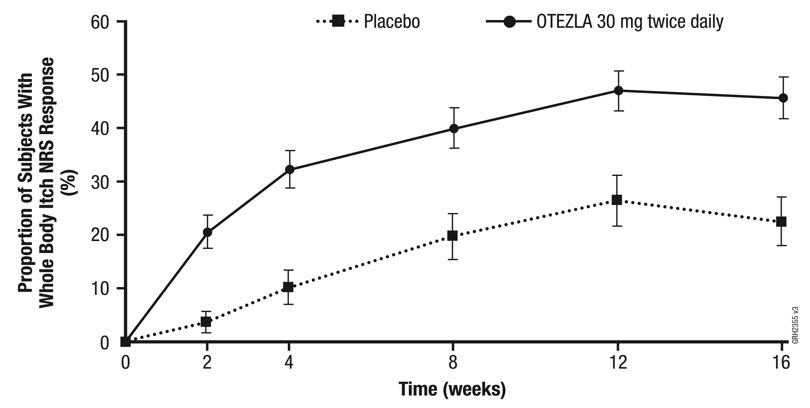
Subjects were randomized 2:1 to receive either OTEZLA 30 mg twice daily (n = 201) or placebo twice daily (n = 102) for 16 weeks. The primary endpoint was the proportion of subjects who achieved an ScPGA response at Week 16 (defined as ScPGA score of clear [0] or almost clear [1] with at least a 2-point reduction from baseline at Week 16). Secondary endpoints included the proportion of subjects with Whole Body Itch Numeric Rating Scale (NRS) response (defined as ≥ 4-point reduction from baseline) and the proportion of subjects with a Scalp Itch NRS response (defined as ≥ 4-point reduction from baseline).
Subjects had a mean age of 46.9 years, 61.7% were men and 75.6% were white. At baseline, 76.9% of subjects had moderate plaque psoriasis of the scalp (ScPGA of 3), 23.1% had severe plaque psoriasis of the scalp (ScPGA of 4), 71.6% of subjects were biologic-naïve, and 58.8% had failed 1 or 2 topical treatments. At baseline, the mean Whole Body Itch NRS score was 7.2 and the mean Scalp Itch NRS score was 6.7 with the scales ranging from 0 to 10. The mean baseline SSA involvement was 60.6% and the mean baseline BSA involvement was 19.8%.
The proportion of subjects who achieved an ScPGA response, Whole Body Itch NRS response, and Scalp Itch NRS response at Week 16 are presented in Table 9.
Figure 1 displays the proportion of subjects achieving Whole Body Itch NRS response at each visit, while Figure 2 displays the proportion of subjects achieving Scalp Itch NRS response at each visit.
Table 9. Efficacy Results at Week 16 in Adults with Plaque Psoriasis of the Scalp in Trial PSOR-3 | Trial PSOR-3 |
|---|
| Placebo | OTEZLA
30 mg twice daily | Treatment Difference OTEZLA – Placebo. ,Adjusted difference in proportions is the weighted average of the treatment differences across baseline ScPGA scores with the Cochran-Mantel-Haenszel weights.
(95% CICI = confidence interval. ) |
|---|
| Number of subjects randomized | N = 102 | N = 201 | |
| ScPGA response ScPGA score of clear [0] or almost clear [1] with at least a 2-point reduction from baseline. | 13.7% | 43.3% | 29.6%
(19.5%, 39.7%) |
| Number of subjects with baseline Whole Body Itch NRS Score ≥ 4 | N = 94 | N = 185 | |
| Whole Body Itch NRS response | 22.5% | 45.5% | 23.0%
(11.5%, 34.6%) |
| Number of subjects with baseline Scalp Itch NRS Score ≥ 4 | N = 90 | N = 175 | |
| Scalp Itch NRS response | 21.1% | 47.1% | 26.2%
(13.9%, 38.5%) |
Figure 1. Proportion (± SE) of Subjects Achieving Whole Body Itch NRS Response through Week 16| NRS = Numeric Rating Scale; SE = standard error |
|
Figure 2. Proportion (± SE) of Subjects Achieving Scalp Itch NRS Response through Week 16| NRS = Numeric Rating Scale; SE = standard error |
|
Plaque Psoriasis Involving the Genital Area
A randomized, double-blind, placebo-controlled trial (PSOR-5 [NCT03777436]) was conducted in 289 adult subjects with moderate to severe plaque psoriasis of the genital area. Subjects had a modified static Physician Global Assessment of Genitalia (sPGA-G) score of ≥ 3 (moderate or severe), sPGA score of ≥ 3 (moderate or severe), and had an inadequate response or were intolerant to topical therapy for the treatment of plaque psoriasis of the genital area.
Subjects were randomized 1:1 to receive either apremilast 30 mg twice daily (n = 143) or placebo twice daily (n = 146) for 16 weeks. At Week 16, the placebo group was switched to receive OTEZLA and the OTEZLA group remained on drug through Week 32. The primary endpoint was the proportion of subjects who achieved a modified sPGA-G response (defined as a score of clear [0] or almost clear [1] with at least a 2-point reduction from baseline) at Week 16. Secondary endpoints included the proportion of subjects who achieved an sPGA response (defined as a score of clear [0] or almost clear [1] with at least a 2-point reduction from baseline) at Week 16 and the proportion of subjects who achieved at least a 4-point improvement in the 11-point Genital Psoriasis Itch Numeric Rating Scale (GPI-NRS) item score within the Genital Psoriasis Symptoms Scale (GPSS) at Week 16, among subjects with a baseline GPI-NRS score of ≥ 4.
Subjects ranged in age from 18-81 years, with a median age of 44 years. The proportions of subjects with a modified sPGA-G score of 3 (moderate) and 4 (severe) at baseline were 86.9% and 13.1%, respectively. The proportions of subjects with a sPGA score of 3 (moderate) and 4 (severe) at baseline were 88.6% and 11.1%, respectively. Baseline BSA involvement was < 10% for 57.4% of the subjects and ≥ 10% for 42.6% of the subjects. The mean baseline GPI-NRS score was 6.5. Of the enrolled subjects, 78.9% did not receive prior conventional systemic therapy and 84.4% were biologic-naïve.
The proportions of subjects who achieved a modified sPGA-G response, sPGA response, and GPI-NRS response are presented in Table 10.
Table 10. Efficacy Results at Week 16 in Adults with Plaque Psoriasis of the Genital Area in Trial PSOR-5 | Trial PSOR-5 |
|---|
| Placebo | OTEZLA
30 mg twice daily | Treatment Difference OTEZLA – Placebo. ,Adjusted difference in proportions is the weighted average of the treatment differences across the baseline BSA strata (BSA < 10% or ≥ 10%) with the Cochran-Mantel-Haenszel weights.
(95% CI)CI = confidence interval. |
|---|
| Number of Subjects Randomized | N = 146 | N = 143 | |
| Modified sPGA-G Response Modified sPGA-G score of clear [0] or almost clear [1] with at least a 2-point reduction from baseline. The sPGA-G scale was modified from a 6-point to a 5-point scale, ranging from 0 (clear) to 4 (severe), to assess the severity of the 3 primary signs of genital psoriasis: erythema, scaling, and plaque elevation. | 19.5% | 39.6% | 20.1%
(9.2%, 30.9%) |
| sPGA Response sPGA score of clear [0] or almost clear [1] with at least a 2-point reduction from baseline. | 6.9% | 22.2% | 15.2%
(6.9%, 23.6%) |
| Number of Subjects with Baseline GPI-NRS Score ≥ 4 | N = 121 | N = 122 | |
| GPI-NRS Response GPI-NRS score reduction of ≥ 4-points from baseline. | 19.6% | 47.3% | 27.4%
(15.4%, 39.3%) |
Clinical Response in Pediatric Subjects 6 to 17 Years of Age and Weighing at Least 20 kg with Moderate to Severe Plaque Psoriasis
The proportions of subjects who achieved sPGA response and PASI-75 response at Week 16 are presented in Table 11.
Table 11. Efficacy Results at Week 16 in Pediatric Subjects 6 to 17 Years of Age and Weighing at Least 20 kg with Moderate to Severe Plaque Psoriasis in Trial PSOR-6 | Trial PSOR-6 |
|---|
| Placebo | OTEZLA Subjects weighing ≥ 50 kg received OTEZLA 30 mg twice daily and subjects weighing 20 kg to < 50 kg received OTEZLA 20 mg twice daily. | Treatment Difference OTEZLA – Placebo. ,Adjusted difference in proportions is the weighted average of the treatment differences across the baseline age strata (6 to 11 years of age or 12 to 17 years of age) with the Cochran-Mantel-Haenszel weights.
(95% CI)CI = confidence interval. |
|---|
| Number of Subjects Randomized | N = 82 | N = 163 | |
| sPGA Response sPGA score of clear [0] or almost clear [1] with at least a 2-point reduction from baseline. | 10.8% | 33.1% | 22.3%
(12.2%, 32.4%) |
| PASI-75 Response At least a 75% reduction in PASI score from baseline. | 16.0% | 45.7% | 29.7%
(17.9%, 41.6%) |
Clinical Response in Subjects with Mild to Moderate Plaque Psoriasis
The proportions of subjects who achieved an sPGA response, Whole Body Itch NRS response, and an ScPGA response at Week 16 are presented in Table 12.
Table 12. Efficacy Results at Week 16 in Adults with Mild to Moderate Plaque Psoriasis in Trial PSOR-4 | Trial PSOR-4 |
|---|
| Placebo | OTEZLA
30 mg twice daily | Treatment Difference OTEZLA – Placebo. ,Adjusted difference in proportions is the weighted average of the treatment differences across baseline sPGA scores with the Cochran-Mantel-Haenszel weights.
(95% CICI = confidence interval. ) |
|---|
| Number of Subjects Randomized | N = 298 | N = 297 | |
| sPGA Response sPGA score of clear [0] or almost clear [1] with at least a 2-point reduction from baseline. | 4.1% | 21.6% | 17.5%
(12.2%, 22.8%) |
| Number of Subjects with Baseline Whole Body Itch NRS Score ≥ 4 | N = 249 | N = 253 | |
| Whole Body Itch NRS Response Whole Body Itch NRS score reduction of ≥ 4-points from baseline. | 18.6% | 43.2% | 24.7%
(16.5%, 32.8%) |
| Number of Subjects with Baseline ScPGA Score ≥ 2 | N = 199 | N = 212 | |
| ScPGA Response ScPGA score of clear [0] or almost clear [1] with at least a 2-point reduction from baseline. | 16.6% | 44.0% | 27.4%
(18.6%, 36.3%) |
Measures of Oral Ulcers
Improvements in measures of oral ulcers at Week 12 are presented in Table 13.
Table 13. Clinical Response of Oral Ulcers at Week 12 in Adult Subjects with BD in the BCT-002 Trial (ITTITT = intent to treat.
Population)| Endpoint | Placebo
N = 103 | OTEZLA
30 mg twice daily
N = 104 | Treatment Difference OTEZLA – Placebo.
(95% CICI = confidence interval. ) |
|---|
| Change Mean changes from baseline are least square means from mixed effects-model for repeated measures, adjusting for sex, region, and baseline pain of oral ulcers as measured by the visual analog scale. from baseline in the pain of oral ulcers as measured by VASVAS = visual analog scale; 0 = no pain, 100 = worst possible pain. at Week 12 | −18.7 | −42.7 | −24.1
(−32.4, −15.7) |
| Proportion of subjects achieving oral ulcer complete response (oral ulcer-free) at Week 12 | 22.3% | 52.9% | 30.6% Adjusted difference in proportions is the weighted average of the treatment differences across the 4 strata of combined sex and region factors with the Cochran-Mantel-Haenszel weights.
(18.1%, 43.1%) |
| Proportion of subjects achieving oral ulcer complete response (oral ulcer-free) by Week 6, and who remained oral ulcer-free for at least 6 additional weeks during the 12-week Placebo-controlled Treatment Phase | 4.9% | 29.8% | 25.1%
(15.5%, 34.6%) |
| Daily average Mean daily averages are least squares means from analysis of covariance, after adjusting for sex, region, and baseline number of oral ulcers. ,Based on oral ulcer counts measured at baseline and at Weeks 1, 2, 4, 6, 8, 10, and 12. number of oral ulcers during the 12-week Placebo-controlled Treatment Phase | 2.6 | 1.5 | −1.1
(−1.6, −0.7) |
Figure 3 displays the mean number of oral ulcers for each treatment group at each visit, while Figure 4 displays the mean oral ulcer pain on a visual analog scale for each treatment group at each visit.
Figure 3. Mean (± SE) Number of Oral Ulcers by Time Point Through Week 12 (ITT Population) |
| Weeks | 0 | 1 | 2 | 4 | 6 | 8 | 10 | 12 |
|---|
| ITT = intent-to-treat; SE = standard error |
| Placebo, n | 103 | 98 | 97 | 93 | 91 | 86 | 83 | 82 |
| OTEZLA 30 mg twice daily, n | 104 | 101 | 101 | 101 | 98 | 94 | 94 | 97 |
Figure 4. Mean (± SE) Oral Ulcer Pain on a Visual Analog Scale by Time Point Through Week 12 (ITT Population) |
| Weeks | 0 | 1 | 2 | 4 | 6 | 8 | 10 | 12 |
|---|
ITT = intent to treat; SE = standard error.
Oral ulcer pain was assessed on a 100-mm Visual Analog Scale with 0 = no pain and 100 = worst possible pain. Mean baseline Visual Analog Scale pain scores were 61.2 and 60.8 in the OTEZLA 30 mg twice daily treatment group and placebo treatment group, respectively. |
| Placebo, n | 101 | 95 | 96 | 91 | 90 | 85 | 82 | 81 |
| OTEZLA 30 mg twice daily, n | 102 | 95 | 97 | 99 | 97 | 92 | 93 | 95 |
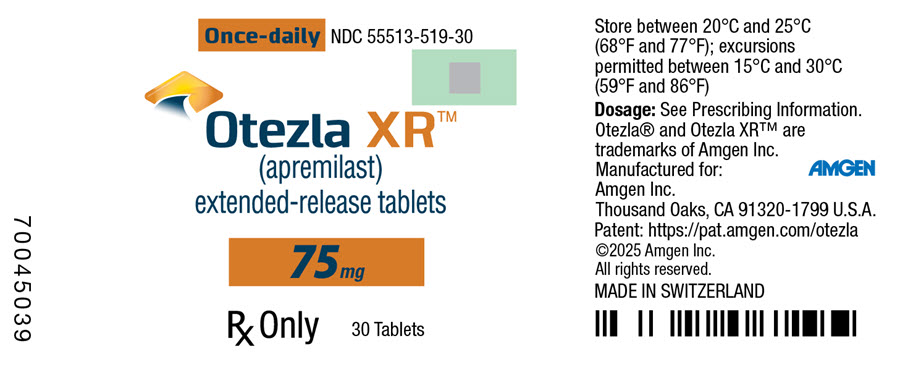
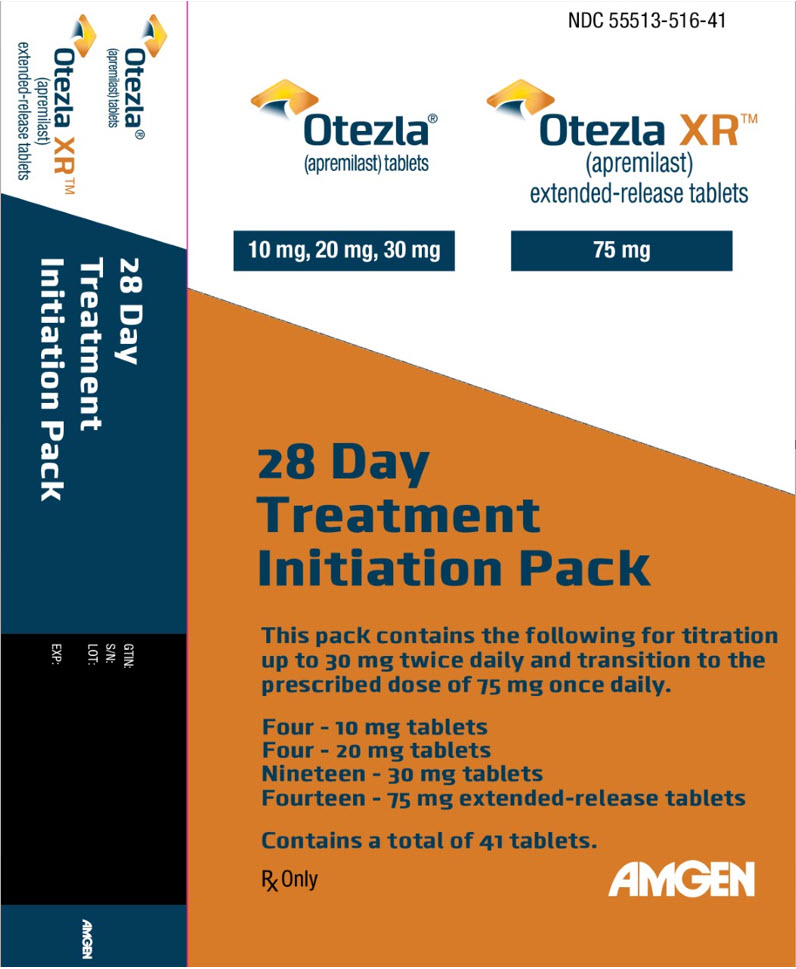
OTEZLA® (apremilast) tablets
OTEZLA XR® (apremilast) extended-release tablets
Manufactured for:
Amgen Inc.
Thousand Oaks, CA 91320-1799 U.S.A
OTEZLA® and OTEZLA XR® are trademarks of Amgen Inc.
https://pat.amgen.com/otezla
© 2014-2021, 2023-2026 Amgen Inc. All Rights Reserved.
<part number> v11