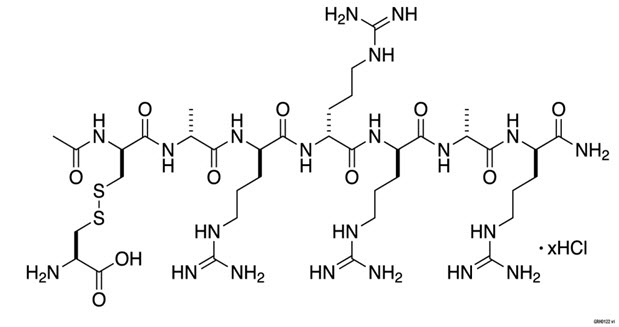
The efficacy and safety of PARSABIV for the treatment of secondary hyperparathyroidism in patients with chronic kidney disease receiving hemodialysis three times per week were evaluated in two 26-week, randomized, double-blind, placebo-controlled studies (Study 1 and Study 2).
The starting dose of PARSABIV was 5 mg three times per week administered at the end of hemodialysis. PARSABIV dose was titrated every 4 weeks until week 17 to a maximum dose of 15 mg three times per week to target a PTH level of less than or equal to 300 pg/mL. PARSABIV was suspended temporarily if two consecutive PTH levels were less than 100 pg/mL. The dose of PARSABIV was not increased if PTH levels were less than or equal to 300 pg/mL, corrected serum calcium was less than 8.3 mg/dL, symptomatic hypocalcemia occurred, or the investigator judged that no dose increase was needed.
The average dose of PARSABIV at the time of the efficacy assessment (weeks 20 through 27, inclusive) was 7.2 mg three times per week. Patients with lower screening PTH levels were on lower doses with a mean average dose of 5.7 mg, 7.4 mg, and 8.7 mg three times per week for patients with screening PTH levels less than 600 pg/mL, 600 to less than or equal to 1000 pg/mL, and greater than 1000 pg/mL, respectively. Throughout the study, patients were maintained on a dialysate calcium concentration of greater than or equal to 2.25 meq/L.
In each study, the primary outcome measure was the proportion of patients with a greater than 30% reduction in PTH levels from baseline to the efficacy assessment phase (mean PTH levels for weeks 20 through 27, inclusive). The other outcome measures were the proportion of patients with a mean PTH of less than or equal to 300 pg/mL, percent change from baseline in PTH, corrected serum calcium, and phosphate levels.
Study 1 enrolled 508 patients (254 PARSABIV, 254 placebo). Baseline demographic and disease characteristics were balanced between groups. The mean age of the patients was 58 years, and 57% were male. Of enrolled patients, 69% were White, 28% were Black, 2% were Asian, and 13% were Hispanic/Latino in ethnicity. The mean baseline PTH level was 834.2 pg/mL, the mean baseline corrected serum calcium was 9.6 mg/dL, and the average duration of hemodialysis prior to study entry (minimum to maximum) was 5.5 (0.1 to 32.2) years. Sixty-six percent of patients had a mean screening PTH level greater than or equal to 600 pg/mL, 74% patients were receiving vitamin D sterols, and 84% patients were receiving phosphate binders.
Study 2 enrolled 515 patients (255 PARSABIV, 260 placebo). Baseline demographic and disease characteristics were balanced between groups. The mean age of the patients was 59 years, and 64% were male. Of enrolled patients, 65% were White, 28% were Black, 4% were Asian, and 13% were Hispanic/Latino in ethnicity. The mean baseline PTH level was 848.4 pg/mL, the mean baseline corrected serum calcium was 9.7 mg/dL, and the average duration of hemodialysis prior to study entry (minimum to maximum) was 5.4 (0.3 to 32.1) years. Sixty-seven percent of patients had a mean screening PTH level greater than or equal to 600 pg/mL, 62% patients were receiving vitamin D sterols, and 81% patients were receiving phosphate binders.
In both studies, a significantly higher proportion of patients treated with PARSABIV achieved a greater than 30% reduction in PTH levels from baseline to the efficacy assessment phase (mean PTH levels for weeks 20 through 27, inclusive) than the proportion of patients treated with placebo. In both studies, reduction in mean PTH, corrected serum calcium, and serum phosphate levels from baseline to the end of study were observed in the PARSABIV arm, and differences between PARSABIV and placebo were statistically significant. Results for each individual study are shown in Table 3.
Table 3: Effects of PARSABIV on Parathyroid Hormone, Corrected Serum Calcium, and Serum Phosphate Measured at Weeks 20 to 27 in Two 6-Month, Placebo-Controlled Studies in Chronic Kidney Disease Patients with Secondary Hyperparathyroidism on Hemodialysis | Study 1 | Study 2 |
| PARSABIV
(N = 254) | Placebo
(N = 254) | PARSABIV
(N = 255) | Placebo
(N = 260) |
| Parathyroid Hormone |
| Baseline (pg/mL): | | | | |
|
Median | 706 | 706 | 740 | 726 |
|
Mean (SE) | 849 (33) | 820 (24) | 845 (29) | 852 (34) |
| Mean EAP (pg/mL) (SE)f | 424 (37) | 898 (34) | 416 (32) | 971 (46) |
| Mean Percent Change, % (SE)b,f | -49.4 (3.4)c | 14.9 (3.6) | -47.8 (3.7)c | 18.6 (3.5) |
| Patients with > 30% Reduction in PTH during the EAP, multiple imputation, n (%)a,f | 196 (77)c | 28 (11) | 201 (79)c | 29 (11) |
| Patients with ≤ 300 pg/mL in PTH during the EAP, n (%)b,f | 131 (52)c | 16 (6) | 142 (56)c | 14 (5) |
| Corrected Serum Calcium |
| Mean Baseline (mg/dL) (SE) | 9.7 (0.04) | 9.6 (0.04) | 9.6 (0.04) | 9.7 (0.04) |
| Mean EAP (mg/dL) (SE)f | 9.0 (0.1) | 9.7 (0.04) | 9.0 (0.1) | 9.7 (0.05) |
| Mean Percent Change, % (SE)b,f | -7.0 (0.6)c | 0.9 (0.6) | -7.0 (0.7)c | -0.8 (0.6) |
| Serum Phosphate |
| Mean Baseline (mg/dL) (SE) | 6.0 (0.1) | 5.8 (0.1) | 5.8 (0.1) | 5.8 (0.1) |
| Mean EAP (mg/dL) (SE)f | 5.4 (0.1) | 5.5 (0.1) | 5.2 (0.1) | 5.6 (0.1) |
| Mean Percent Change, % (SE)b,f | -8.8 (2.5)e | -3.6 (2.8) | -7.2 (2.5)d | -0.3 (2.2) |
a Main outcome measure for Studies 1 and 2.
b Other outcome measures for Studies 1 and 2.
c p < 0.001 vs. placebo
d p < 0.01 vs. placebo
e p = 0.08 vs. placebo
f Results from a multiple imputation method for missing data using information from patients who discontinued treatment but had final assessment during the EAP. For Study 1, the percentages of patients with no PTH assessment during the EAP were 10% and 14% for PARSABIV and placebo, respectively; for Study 2, they were 11% and 9%, respectively. The corresponding percentages were the same for corrected serum calcium and one to two percentage points higher for serum phosphate.
EAP = Efficacy Assessment Phase; weeks 20 through 27, inclusive |
PARSABIV decreased PTH levels regardless of baseline PTH, duration of dialysis, whether or not patients had been previously treated with cinacalcet, and whether or not patients were receiving vitamin D sterols. Reductions in PTH levels, corrected serum calcium, and serum phosphate were maintained for up to 78 weeks of treatment in those patients who elected to participate in the extension phase of both studies.