- Administer using a low-protein-binding 0.2 µm or 0.22 µm in-line filter.
- Vectibix must be administered via infusion pump.
- Flush line before and after Vectibix administration with 0.9% sodium chloride injection, USP, to avoid mixing with other drug products or intravenous solutions. Do not mix Vectibix with, or administer as an infusion with, other medicinal products. Do not add other medications to solutions containing panitumumab.
- Infuse doses of 1000 mg or lower over 60 minutes through a peripheral intravenous line or indwelling intravenous catheter. If the first infusion is tolerated, administer subsequent infusions over 30 to 60 minutes. Administer doses higher than 1000 mg over 90 minutes.
- Use the diluted infusion solution of Vectibix within 6 hours of preparation if stored at room temperature, or within 24 hours of dilution if stored at 2° to 8°C (36° to 46°F). DO NOT FREEZE.
Vectibix Monotherapy
In Study 20020408, the most common adverse reactions (≥ 20%) with Vectibix were skin rash with variable presentations, paronychia, fatigue, nausea, and diarrhea.
The most common (> 5%) serious adverse reactions in the Vectibix arm were general physical health deterioration and intestinal obstruction. The most frequently reported adverse reactions for Vectibix leading to withdrawal were general physical health deterioration (n = 2) and intestinal obstruction (n = 2).
For Study 20020408, the data described in Table 1 and in other sections below, except where noted, reflect exposure to Vectibix administered to patients with mCRC as a monotherapy at the recommended dose and schedule (6 mg/kg every 2 weeks).
Table 1. Adverse Reactions (≥ 5% Difference) Observed in Patients Treated with Vectibix Monotherapy and Best Supportive Care Compared to Best Supportive Care Alone (Study 20020408) | Study 20020408 |
|---|
System Organ Class
Preferred Term | Vectibix Plus
Best Supportive Care
(N = 229) | Best Supportive Care
(N = 234) |
|---|
| Any Grade
n (%) | Grade 3-4
n (%) | Any Grade
n (%) | Grade 3-4
n (%) |
|---|
| Eye Disorders | | | | |
| Growth of eyelashes | 13 (6) | | | |
| Gastrointestinal Disorders | | | | |
| Nausea | 52 (23) | 2 (< 1) | 37 (16) | 1 (< 1) |
| Diarrhea | 49 (21) | 4 (2) | 26 (11) | |
| Vomiting | 43 (19) | 6 (3) | 28 (12) | 2 (< 1) |
| Stomatitis | 15 (7) | | 2 (< 1) | |
| General Disorders and Administration Site Conditions | | | | |
| Fatigue | 60 (26) | 10 (4) | 34 (15) | 7 (3) |
| Mucosal inflammation | 15 (7) | 1 (< 1) | 2 (< 1) | |
| Infections and Infestations | | | | |
| Paronychia | 57 (25) | 4 (2) | | |
| Respiratory, Thoracic, and Mediastinal Disorders | | | | |
| Dyspnea | 41 (18) | 12 (5) | 30 (13) | 8 (3) |
| Cough | 34 (15) | 1 (< 1) | 17 (7) | |
| Skin and Subcutaneous Tissue Disorders | | | | |
| Erythema | 150 (66) | 13 (6) | 2 (< 1) | |
| Pruritus | 132 (58) | 6 (3) | 4 (2) | |
| Acneiform dermatitis | 131 (57) | 17 (7) | 2 (< 1) | |
| Rash | 51 (22) | 3 (1) | 2 (< 1) | |
| Skin fissures | 45 (20) | 3 (1) | 1 (< 1) | |
| Exfoliative rash | 41 (18) | 4 (2) | | |
| Acne | 31 (14) | 3 (1) | | |
| Dry skin | 23 (10) | | | |
| Nail disorder | 22 (10) | | | |
| Skin exfoliation | 21 (9) | 2 (< 1) | | |
| Skin ulcer | 13 (6) | 1 (< 1) | | |
Adverse reactions in Study 20020408 that did not meet the threshold criteria for inclusion in Table 1 were conjunctivitis (4.8% vs < 1%), dry mouth (4.8% vs 0%), pyrexia (16.6% vs 13.2%), chills (3.1% vs < 1%), pustular rash (4.4% vs 0%), papular rash (1.7% vs 0%), dehydration (2.6% vs 1.7%), epistaxis (3.9% vs 0%), and pulmonary embolism (1.3% vs 0%).
In Study 20020408, dermatologic toxicities occurred in 90% of patients receiving Vectibix. Skin toxicity was severe (NCI-CTC Grade 3 and higher) in 15% of patients. Ocular toxicities occurred in 16% of patients and included, but were not limited to, conjunctivitis (5%). One patient experienced an NCI-CTC Grade 3 event of mucosal inflammation. The incidence of paronychia was 25% and was severe in 2% of patients [see Warnings and Precautions (5.1)].
In Study 20020408 (N = 229), median time to the development of dermatologic, nail, or ocular toxicity was 12 days after the first dose of Vectibix; the median time to most severe skin/ocular toxicity was 15 days after the first dose of Vectibix; and the median time to resolution after the last dose of Vectibix was 98 days. Severe toxicity necessitated dose interruption in 11% of Vectibix-treated patients [see Dosage and Administration (2.3)].
Subsequent to the development of severe dermatologic toxicities, infectious complications, including sepsis, septic death, necrotizing fasciitis, and abscesses requiring incisions and drainage were reported.
Vectibix in Combination with FOLFOX Chemotherapy
The most commonly reported adverse reactions (≥ 20%) in patients with wild-type KRAS mCRC receiving Vectibix (6 mg/kg every 2 weeks) and FOLFOX therapy (N = 322) in Study 20050203 were diarrhea, stomatitis, mucosal inflammation, asthenia, paronychia, anorexia, hypomagnesemia, hypokalemia, rash, acneiform dermatitis, pruritus, and dry skin (Table 2). Serious adverse reactions (≥ 2% difference between treatment arms) in Vectibix-treated patients with wild-type KRAS mCRC were diarrhea and dehydration. The commonly reported adverse reactions (≥ 1%) leading to discontinuation in patients with wild-type KRAS mCRC receiving Vectibix were rash, paresthesia, fatigue, diarrhea, acneiform dermatitis, and hypersensitivity. One Grade 5 adverse reaction, hypokalemia, occurred in a patient who received Vectibix.
Table 2. Adverse Reactions (≥ 5% Difference) Observed in Patients with Wild-type KRAS Tumors Treated with Vectibix and FOLFOX Chemotherapy Compared to FOLFOX Chemotherapy Alone (Study 20050203)System Organ Class
Preferred Term | Vectibix Plus FOLFOX
(n = 322) | FOLFOX Alone
(n = 327) |
|---|
Any Grade
n (%) | Grade 3-4
n (%) | Any Grade
n (%) | Grade 3-4
n (%) |
|---|
| Eye Disorders | | | | |
| Conjunctivitis | 58 (18) | 5 (2) | 10 (3) | |
| Gastrointestinal Disorders | | | | |
| Diarrhea | 201 (62) | 59 (18) | 169 (52) | 29 (9) |
| Stomatitis | 87 (27) | 15 (5) | 42 (13) | 1 (< 1) |
| General Disorders and Administration Site Conditions | | | | |
| Mucosal inflammation | 82 (25) | 14 (4) | 53 (16) | 1 (< 1) |
| Asthenia | 79 (25) | 16 (5) | 62 (19) | 11 (3) |
| Infections and Infestations | | | | |
| Paronychia | 68 (21) | 11 (3) | | |
| Investigations | | | | |
| Weight decreased | 58 (18) | 3 (< 1) | 22 (7) | |
| Metabolism and Nutrition Disorders | | | | |
| Anorexia | 116 (36) | 14 (4) | 85 (26) | 6 (2) |
| Hypomagnesemia | 96 (30) | 21 (7) | 26 (8) | 1 (< 1) |
| Hypokalemia | 68 (21) | 32 (10) | 42 (13) | 15 (5) |
| Dehydration | 26 (8) | 8 (2) | 10 (3) | 5 (2) |
| Respiratory, Thoracic, and Mediastinal Disorders | | | | |
| Epistaxis | 46 (14) | | 30 (9) | |
| Skin and Subcutaneous Tissue Disorders | | | | |
| Rash | 179 (56) | 55 (17) | 24 (7) | 1 (< 1) |
| Acneiform dermatitis | 104 (32) | 33 (10) | | |
| Pruritus | 75 (23) | 3 (< 1) | 14 (4) | |
| Dry skin | 68 (21) | 5 (2) | 13 (4) | |
| Erythema | 50 (16) | 7 (2) | 14 (4) | |
| Skin fissures | 50 (16) | 1 (< 1) | 1 (< 1) | |
| Alopecia | 47 (15) | | 30 (9) | |
| Acne | 44 (14) | 10 (3) | 1 (< 1) | |
| Nail disorder | 32 (10) | 4 (1) | 4 (1) | |
| Palmar-plantar erythrodysesthesia syndrome | 30 (9) | 4 (1) | 9 (3) | 2 (< 1) |
Adverse reactions that did not meet the threshold criteria for inclusion in Table 2 were flushing (3% vs < 1%), abdominal pain (28% vs 23%), localized infection (3.7% vs < 1%), cellulitis (2.5% vs 0%), hypocalcemia (5.6% vs 2.1%), and deep vein thrombosis (5.3% vs 3.1%).
Infusion Reactions
Infusional toxicity manifesting as fever, chills, dyspnea, bronchospasm or hypotension was assessed within 24 hours of an infusion during the clinical study. Vital signs and temperature were measured within 30 minutes prior to initiation and upon completion of the Vectibix infusion. The use of premedication was not standardized in the clinical trials. Thus, the utility of premedication in preventing the first or subsequent episodes of infusional toxicity is unknown. Across clinical trials of Vectibix monotherapy, 3% (24/725) experienced infusion reactions of which < 1% (3/725) were severe (NCI-CTC Grade 3-4). In one patient, Vectibix was permanently discontinued for a serious infusion reaction [see Dosage and Administration (2.2, 2.3)].
Vectibix in Combination with Sotorasib
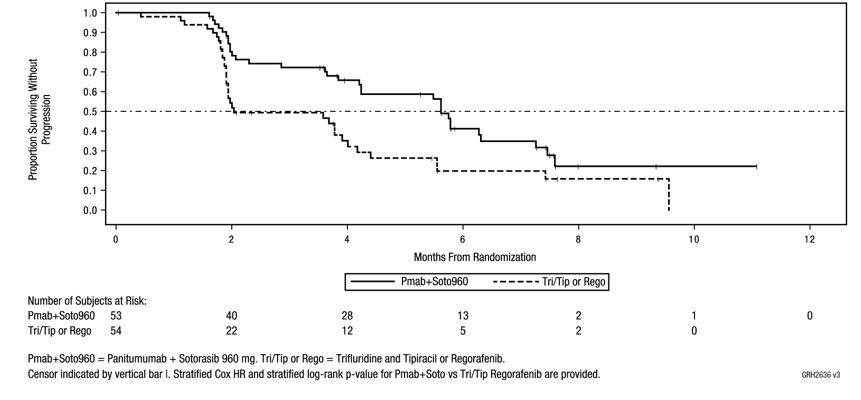
The safety of Vectibix in combination with sotorasib was evaluated in the CodeBreaK 300 study [see Clinical Studies (14.4)]. Patients with KRAS G12C-mutated mCRC received Vectibix 6 mg/kg intravenous every 2 weeks in combination with sotorasib 960 mg orally once daily (N = 47), Vectibix 6 mg/kg intravenous every 2 weeks in combination with sotorasib 240 mg orally once daily (N = 50), or the investigator's choice of standard of care (SOC) consisting of trifluridine/tipiracil or regorafenib (N = 50). Among the 47 patients who received Vectibix in combination with sotorasib 960 mg, 36% were exposed to Vectibix for 6 months or longer and 4.3% were exposed for greater than 12 months.
The median age of patients who received Vectibix in combination with sotorasib 960 mg was 63 years (range: 37-79 years); 38% were age 65 years or older; 49% were female; 79% were White, and 13% were Asian.
Serious adverse reactions occurred in 26% of patients receiving Vectibix in combination with sotorasib 960 mg. Serious adverse reactions in ≥ 2 patients receiving Vectibix in combination with sotorasib 960 mg were sepsis (6%) and intestinal obstruction (4.3%). Fatal adverse reactions occurred in 2 patients (4.3%) receiving Vectibix in combination with sotorasib 960 mg, consisting of cardiac arrest and sepsis (1 patient each).
Permanent discontinuation of Vectibix due to an adverse reaction occurred in 1 patient for decreased corrected calcium.
Dosage interruptions of Vectibix due to an adverse reaction occurred in 38% of patients. Adverse reactions which required dosage interruption in ≥ 2 patients were rash, hypomagnesemia, and keratitis.
Dosage reductions of Vectibix due to an adverse reaction occurred in 17% of patients. The adverse reaction which required dose reduction in ≥ 2 patients was rash.
The most common adverse reactions (≥ 20%) in patients receiving Vectibix in combination with sotorasib 960 mg were rash, dry skin, diarrhea, stomatitis, fatigue and musculoskeletal pain.
The most common Grade 3 or 4 laboratory abnormalities in ≥ 2 patients (4.3%) were decreased magnesium, decreased potassium, decreased corrected calcium, and increased potassium.
Table 3 and Table 4 summarize the adverse reactions and laboratory abnormalities, respectively, identified in CodeBreaK 300.
Table 3. Adverse Reactions (≥ 10%) in Patients with KRAS G12C-Mutated CRC who Received Vectibix in Combination with Sotorasib in CodeBreaK 300| Adverse Reaction | Vectibix 6 mg/kg in combination with sotorasib
960 mg
N = 47 | Trifluridine/tipiracil or regorafenib
N = 50 |
|---|
All Grades
(%) | Grade 3 or 4
(%) | All Grades
(%) | Grade 3 or 4
(%) |
|---|
| Skin and Subcutaneous Tissue Disorders |
| Rash Rash includes dermatitis acneiform, dermatosis, drug eruption, eczema, erythema, hand dermatitis, rash, rash erythematous, rash maculo-papular, rash papular, rash pruritic, rash pustular, and skin toxicity. | 87 | 26 | 8 | 2 |
| Dry skin Dry skin includes dry skin, xerosis, and xeroderma. | 28 | 0 | 2 | 0 |
| Pruritis | 17 | 0 | 4 | 0 |
| Nail Disorder Nail disorders include nail avulsion, nail cuticle fissure, nail disorder, nail toxicity, and paronychia. | 17 | 0 | 0 | 0 |
| Skin fissure | 13 | 0 | 0 | 0 |
| Palmar-plantar erythrodysesthesia syndrome | 13 | 0 | 10 | 4 |
| Gastrointestinal Disorders |
| Diarrhea Diarrhea includes diarrhea, gastroenteritis, and diarrhea hemorrhagic. | 28 | 6 | 26 | 0 |
| Stomatitis Stomatitis includes mucosal inflammation, stomatitis, mouth ulceration, angular cheilitis, and cheilitis. | 26 | 0 | 14 | 0 |
| Nausea | 17 | 2.1 | 36 | 4 |
| Constipation | 15 | 2.1 | 10 | 0 |
| Abdominal pain Abdominal pain includes abdominal pain, abdominal pain upper, abdominal pain lower, abdominal discomfort, and hepatic pain. | 15 | 0 | 18 | 2 |
| Vomiting | 13 | 2.1 | 10 | 2 |
| General disorders |
| Fatigue Fatigue includes asthenia and fatigue. | 21 | 0 | 34 | 2 |
| Musculoskeletal and Connective Tissue Disorders |
| Musculoskeletal pain Musculoskeletal pain includes arthralgia, back pain, myalgia, musculoskeletal chest pain, bone pain, and pain in extremity. | 21 | 2.1 | 14 | 2 |
| Hematological Disorders |
| Hemorrhage Hemorrhage includes epistaxis, gastrointestinal hemorrhage, vaginal hemorrhage, rectal hemorrhage, hematochezia, hemorrhage, hemorrhage urinary tract, hematospermia, and hematuria. | 13 | 2.1 | 2 | 0 |
| Eye Disorders |
| Conjunctivitis Conjunctivitis includes conjunctival hyperemia, conjunctivitis, and conjunctivitis allergic. | 11 | 0 | 2 | 0 |
Table 4. Select Laboratory Abnormalities (≥ 20%) that Worsened from Baseline in Patients with KRAS G12C-Mutated CRC who Received Vectibix in Combination with Sotorasib in CodeBreaK 300The denominator used to calculate the rate varied from 44 to 46 in the Vectibix + sotorasib arm and 18 to 50 in the trifluridine/tipiracil or regorafenib arm based on the number of patients with a baseline value and at least one post-treatment value.
| Laboratory Abnormalities | Vectibix 6 mg/kg + Sotorasib | Trifluridine/tipiracil or Regorafenib |
|---|
All Grades
(%) | Grade 3 or 4
(%) | All Grades
(%) | Grade 3 or 4
(%) |
|---|
| Chemistry |
| Magnesium decreased | 76 | 24 | 8 | 0 |
| Calcium (corrected) decreased | 74 | 4.3 | 46 | 0 |
| Aspartate aminotransferase increased | 39 | 0 | 22 | 2 |
| Alkaline phosphatase increased | 33 | 2.2 | 33 | 0 |
| Creatinine kinase increased | 30 | 2.3 | 7 | 0 |
| Alanine aminotransferase increased | 28 | 0 | 16 | 2 |
| Potassium decreased | 26 | 7 | 12 | 0 |
| Albumin decreased | 26 | 2.2 | 22 | 0 |
| Urine protein increased | 23 | 0 | 22 | 6 |
| Potassium increased | 22 | 4.3 | 6 | 0 |
| Glucose decreased | 22 | 0 | 2 | 0 |
| Hematology |
| Hemoglobin decreased | 30 | 0 | 58 | 6 |
| Lymphocytes decreased | 26 | 2.2 | 56 | 8 |
| White blood cells decreased | 24 | 0 | 48 | 14 |
Risk Summary
Based on data from animal studies and its mechanism of action, Vectibix can cause fetal harm when administered to pregnant women [see Clinical Pharmacology (12.1)]. Limited available data on the use of Vectibix in pregnant women are not sufficient to inform a risk of adverse pregnancy-related outcomes. Vectibix is a human IgG monoclonal antibody and may be transferred across the placenta during pregnancy. Reproduction studies in cynomolgus monkeys treated with 1.25 to 5 times the recommended human dose of panitumumab resulted in significant embryolethality and abortions; however, no other evidence of teratogenesis was noted in offspring [see Data]. Advise pregnant women of the potential risk to the fetus.
In the U.S. general population, the estimated background risk of major birth defects and miscarriage in clinically recognized pregnancies is 2-4% and 15-20%, respectively.
Data
Animal Data
Based on animal models, EGFR is involved in prenatal development and may be essential for normal organogenesis, proliferation, and differentiation in the developing embryo. Pregnant cynomolgus monkeys were treated weekly with panitumumab during the period of organogenesis (gestation day [GD] 20-50). While no panitumumab was detected in serum of neonates from panitumumab-treated dams, anti-panitumumab antibody titers were present in 14 of 27 offspring delivered at GD 100. There were no fetal malformations or other evidence of teratogenesis noted in the offspring; however, significant increases in embryolethality and abortions occurred at doses of approximately 1.25 to 5 times the recommended human dose (based on body weight).
Risk Summary
There are no data on the presence of panitumumab in human milk or the effects of panitumumab on the breastfed infant or on milk production. Human IgG is present in human milk, but published data suggest that breast milk antibodies do not enter the neonatal and infant circulation in substantial amounts. Because of the potential for serious adverse reactions in breastfed infants from Vectibix, advise women not to breastfeed during treatment with Vectibix and for 2 months after the last dose.
Contraception
Females
Vectibix can cause fetal harm when administered to a pregnant woman [see Use in Specific Populations (8.1)]. Advise females of reproductive potential to use effective contraception during treatment with Vectibix and for 2 months after the last dose of Vectibix.
Infertility
Females
Based on results from animal fertility studies conducted in female cynomolgus monkeys, Vectibix may reduce fertility in females of reproductive potential. The effects in animal studies were reversible [see Nonclinical Toxicology (13.1)].
Study 20020408 (NCT00113763)
Patients in Study 20020408 were required to have progressed on or following treatment with a regimen(s) containing a fluoropyrimidine, oxaliplatin, and irinotecan; progression was confirmed by an independent review committee (IRC) masked to treatment assignment for 76% of the patients. Patients were randomized (1:1) to receive panitumumab at a dose of 6 mg/kg given once every 2 weeks plus BSC (N = 231) or BSC alone (N = 232) until investigator-determined disease progression. Randomization was stratified based on Eastern Cooperative Oncology Group (ECOG) performance status (PS) (0 and 1 vs 2) and geographic region (Western Europe, Eastern/Central Europe, or other). Upon investigator-determined disease progression, patients in the BSC-alone arm were eligible to receive panitumumab and were followed until disease progression was confirmed by the IRC.
Based upon IRC determination of disease progression, a statistically significant prolongation in progression free survival (PFS) was observed in patients receiving panitumumab compared to those receiving BSC alone. The mean PFS was 96 days in the panitumumab arm and 60 days in the BSC-alone arm.
The study results were analyzed in the wild-type KRAS subgroup where KRAS status was retrospectively determined using archived paraffin-embedded tumor tissue. KRAS mutation status was determined in 427 patients (92%); of these, 243 (57%) had no detectable KRAS mutations in either codons 12 or 13. The hazard ratio for PFS in patients with wild-type KRAS mCRC was 0.45 (95% CI: 0.34-0.59) favoring the panitumumab arm. The response rate was 17% for the panitumumab arm and 0% for BSC. There were no differences in OS; 77% of patients in the BSC arm received panitumumab at the time of disease progression.
Study 20080763 (NCT01001377)
Study 20080763 was an open-label, multicenter, multinational, randomized (1:1) clinical trial, stratified by region (North America, Western Europe, and Australia versus rest of the world) and ECOG PS (0 and 1 vs 2) in patients with wild-type KRAS mCRC. A total of 1010 patients who received prior treatment with irinotecan, oxaliplatin, and a thymidylate synthase inhibitor were randomized to receive Vectibix 6 mg/kg intravenously over 60 minutes every 14 days or cetuximab 400 mg/m2 intravenously over 120 minutes on day 1 followed by 250 mg/m2 intravenously over 60 minutes every 7 days. The trial excluded patients with clinically significant cardiac disease and interstitial lung disease. The major efficacy analysis tested whether the OS of Vectibix was noninferior to cetuximab. Data for investigator-assessed PFS and objective response rate (ORR) were also collected. The criteria for noninferiority was for Vectibix to retain at least 50% of the OS benefit of cetuximab based on an OS hazard ratio of 0.55 from the NCIC CTG CO.17 study relative to BSC.
In Study 20080763, 37% of patients were women, 52% were white, 45% were Asian, and 1.3% were Hispanic or Latino. Thirty-one percent of patients were enrolled at sites in North America, Western Europe, or Australia. ECOG performance was 0 in 32% of patients, 1 in 60% of patients, and 2 in 8% of patients. Median age was 61 years. More patients (62%) had colon cancer than rectal cancer (38%). Most patients (74%) had not received prior bevacizumab.
The key efficacy analysis for Study 20080763 demonstrated that Vectibix was statistically significantly noninferior to cetuximab for OS.
The efficacy results for Study 20080763 are presented in Table 5 and Figure 1.
Table 5. Results in Previously Treated Wild-type KRAS mCRC (Study 20080763)| Wild-type KRAS Population | Vectibix
(n = 499)Modified intent-to-treat population that included all patients who received at least one dose of therapy | Cetuximab
(n = 500) |
|---|
| Overall Survival (OS) |
| Number of OS events (%) | 383 (76.8) | 392 (78.4) |
| Median (months) (95% CI) | 10.4 (9.4, 11.6) | 10.0 (9.3, 11.0) |
| Hazard ratio (95% CI) | 0.97 (0.84, 1.11) |
| Progression-Free Survival (PFS) |
| Median (months) (95% CI) | 4.1 (3.2, 4.8) | 4.4 (3.2, 4.8) |
| Hazard ratio (95% CI) | 1.00 (0.88, 1.14) |
| Objective Response Rate (ORR) | |
| % (95% CI) | 22% (18%, 26%) | 19% (16%, 23%) |
Figure 1. Kaplan-Meier Plot of Overall Survival in Patients with Wild-type KRAS mCRC (Study 20080763) |
Study 20100007 (NCT01412957)
Study 20100007 was an open-label, multicenter, randomized (1:1) clinical study stratified by ECOG performance status (0 or 1 vs 2) and region (sites in Europe versus Asia versus rest of world) in patients with wild-type KRAS mCRC. Eligible patients were required to have received prior therapy with irinotecan, oxaliplatin, and a thymidylate synthase inhibitor, and have wild-type KRAS exon 2 mCRC as determined by a clinical trial assay. An assessment for RAS status (defined as KRAS exons 2, 3, and 4 and NRAS exons 2, 3, and 4) using Sanger sequencing was conducted in patients for whom tumor tissue was available.
Patients were randomized to receive Vectibix (6 mg/kg intravenously every 14 days) plus BSC or BSC alone. Patients received Vectibix and BSC or BSC until disease progression, withdrawal of consent, unacceptable toxicity, or death. Patients randomized to BSC were not offered Vectibix at the time of disease progression. The major efficacy outcome measure was OS in patients with wild-type KRAS mCRC. Secondary efficacy outcome measures included OS in the subgroup of patients with wild-type RAS mCRC; PFS and ORR in patients with wild-type KRAS; and PFS and ORR in the subgroup of patients with wild-type RAS mCRC.
A total of 377 patients were randomized, 189 to the Vectibix plus BSC arm and 188 to the BSC alone arm. Baseline demographics and disease characteristics were: median age of 61 years (range: 19-82); 57% male; 55% White, 43% Asian; 36% ECOG PS-0, 55% ECOG PS-1; 57% had a primary colon tumor and 43% had a primary rectal tumor; and 32% had prior bevacizumab exposure.
KRAS tumor mutation status was available for all patients and RAS tumor mutation status was available for 86% of the 377 patients. Among the 377 patients, 270 (72%) patients had wild-type RAS tumors, 54 (14%) had mutant RAS tumors, and 54 (14%) had unknown RAS tumor status.
The results of the study demonstrated a statistically significant improvement in OS. The efficacy results for Study 20100007 are presented in Table 6 and Figure 2.
Table 6. Results in Previously Treated Wild-type KRAS and Wild-type RAS mCRC (Study 20100007) | Wild-type KRAS
Population
(n = 377) | Wild-type RAS
Population
(n = 270) |
|---|
| Vectibix Plus BSC
(n = 189) | BSC
(n = 188) | Vectibix Plus BSC
(n = 142) | BSC
(n = 128) |
|---|
| OS |
| Number of deaths (%) | 136 (72) | 135 (72) | 104 (73) | 95 (74) |
| Median (months) (95% CI) | 10 (8.7, 11.4) | 7.4 (5.8, 9.3) | 10 (8.7, 11.6) | 6.9 (5.2, 7.9) |
| HR (95% CI) | 0.73 (0.57, 0.93) | 0.7 (0.53, 0.93) |
| p-value | 0.0096 | 0.0135 |
| PFS |
| Number of events (%) | 182 (96) | 162 (86) | 137 (97) | 113 (88) |
| Median (months) (95% CI) | 3.6 (3.4, 5.3) | 1.7 (1.6, 1.9) | 5.2 (3.5, 5.3) | 1.7 (1.6, 2.2) |
| HR (95% CI) | 0.51 (0.41, 0.64) | 0.46 (0.35. 0.59) |
| p-value | < 0.0001 | < 0.0001 |
| ORR % (95% CI) | 27
(20.8, 33.9) | 1.6
(0.3, 4.6) | 31
(23.5, 39.3) | 2.3
(0.5, 6.7) |
Figure 2. Kaplan-Meier Plot of Overall Survival in Patients with Wild-type RAS mCRC (Study 20100007) |
Study 20050203 (NCT00364013)
Study 20050203 was a multicenter, open-label trial that randomized (1:1) patients with mCRC who were previously untreated in the metastatic setting and who had received no prior oxaliplatin to receive Vectibix every 14 days in combination with FOLFOX or to FOLFOX alone every 14 days. Vectibix was administered at 6 mg/kg over 60 minutes prior to administration of chemotherapy. The FOLFOX regimen consisted of oxaliplatin 85 mg per m2 IV infusion over 120 minutes and leucovorin (dl-racemic) 200 mg per m2 intravenous infusion over 120 minutes at the same time on day 1 using a Y-line, followed on day 1 by 5-FU 400 mg per m2 intravenous bolus. The 5-FU bolus was followed by a continuous infusion of 5-FU 600 mg per m2 over 22 hours. On day 2, patients received leucovorin 200 mg per m2 followed by the bolus dose (400 mg per m2) and continuous infusion of 5-FU (600 mg per m2) over 22 hours. Study 20050203 excluded patients with known central nervous system metastases, clinically significant cardiac disease, interstitial lung disease, or active inflammatory bowel disease. The prespecified major efficacy measure was PFS in the subgroup of patients with wild-type KRAS mCRC as assessed by a blinded independent central review of imaging. Other key efficacy measures included OS and ORR.
In Study 20050203, in the wild-type KRAS subgroup (n = 656), 64% of patients were men, 92% White, 2% Black, and 4% Hispanic or Latino. Sixty-six percent of patients had colon cancer and 34% had rectal cancer. ECOG performance was 0 in 56% of patients, 1 in 38% of patients, and 2 in 6% of patients. Median age was 61.5 years.
The efficacy results in Study 20050203 in patients with wild-type KRAS mCRC are presented in Table 7 below.
Table 7. Results in Patients with Wild-type KRAS mCRC (Study 20050203)| Wild-type KRAS population | Primary Analysis |
|---|
Vectibix
plus FOLFOX
(n = 325) | FOLFOX Alone
(n = 331) |
|---|
| PFS |
| Median (months) (95% CI) | 9.6 (9.2, 11.1) | 8 (7.5, 9.3) |
Hazard ratio (95% CI)
p-value | 0.8 (0.66, 0.97)
p = 0.02 |
| ORR |
| % (95% CI) | 54% (48%, 59%) | 47% (41%, 52%) |
Exploratory Analysis of OS
An exploratory analysis of OS with updated information based on events in 82% of patients with wild-type KRAS mCRC estimated the treatment effect of Vectibix plus FOLFOX compared with FOLFOX alone on OS (Figure 3). Median OS among 325 patients with wild-type KRAS mCRC who received Vectibix plus FOLFOX was 23.8 months (95% CI: 20.0, 27.7) vs 19.4 months (95% CI: 17.4, 22.6) among 331 patients who received FOLFOX alone (HR = 0.83, 95% CI: 0.70, 0.98).
Figure 3. Kaplan-Meier Plot of Overall Survival in Patients with Wild-type KRAS mCRC (Study 20050203) |
Retrospective exploratory analyses in the RAS wild-type subgroup
Among the 656 patients with wild-type KRAS exon 2 mCRC, RAS mutation status was assessed for 620 patients using Sanger bidirectional sequencing and Surveyor®/WAVE® analysis. Of these 620 patients, approximately 17% of patients (n = 104) tumors harbored mutations in KRAS exons 3 or 4 or in NRAS exons 2, 3, and 4.
Retrospective subset analyses were then conducted among the subset of patients without RAS mutations (n = 512) as described above.
In the wild-type RAS subgroup, 65% of patients were men and 91% were White, 2% Black, and 5% Hispanic or Latino. Sixty-five percent of patients had colon cancer and 35% had rectal cancer. ECOG performance was 0 in 57% of patients, 1 in 37% of patients, and 2 in 6% of patients. Median age was 61 years.
Table 8. Results in Patients with Wild-Type RAS mCRC (Study 20050203)| Wild-type RAS population | Primary Analysis |
|---|
Vectibix
plus FOLFOX
(n = 259) | FOLFOX Alone
(n = 253) |
|---|
| PFS |
| Median (months) (95% CI) | 10.1 (9.3, 12.0) | 7.9 (7.2, 9.3) |
| Hazard ratio (95% CI) | 0.72 (0.58, 0.90) |
| OS OS with updated information based on events in 82% of patients |
| Median (months) (95% CI) | 25.8 (21.7; 29.7) | 20.2 (17.5; 23.6) |
| Hazard ratio (95% CI) | 0.77 (0.64; 0.94) |
| ORR |
| % (95% CI) | 58% (51%, 64%) | 45% (39%, 51%) |
Figure 4. Kaplan-Meier Plot of Overall Survival in Patients with Wild-Type RAS-mCRC (Study 20050203) |
Skin and eye disorders:
Advise patients to contact a healthcare professional if they experience skin or ocular/visual changes [see Boxed Warning, Dosage and Administration (2.3), Warnings and Precautions (5.1, 5.8) and Adverse Reactions (6.1, 6.2)].
Electrolyte monitoring:
Inform patients of the need for periodic monitoring of electrolytes [see Warnings and Precautions (5.3)].
Dehydration:
Advise patients of the increased risk of diarrhea and dehydration which may lead to acute renal failure and electrolyte depletion when Vectibix is administered in combination with chemotherapy [see Warnings and Precautions (5.5)].
Infusion reactions:
Advise patients of the risk of infusion reactions [see Dosage and Administration (2.3), Warnings and Precautions (5.4) and Adverse Reactions (6.1, 6.2)].
Respiratory:
Advise patients to contact a healthcare professional if they experience persistent or recurrent coughing, wheezing, dyspnea, or new-onset facial swelling [see Warnings and Precautions (5.6) and Adverse Reactions (6.1)].
Embryo-fetal Toxicity:
Advise pregnant women and females of reproductive potential that Vectibix can result in fetal harm. Advise females of reproductive potential to use effective contraception during treatment with Vectibix, and for at least 2 months after the last dose and to inform their healthcare provider of a known or suspected pregnancy [see Warnings and Precautions (5.10) and Use in Specific Populations (8.1, 8.3)].
Lactation:
Advise women not to breastfeed during treatment with Vectibix and for 2 months after the last dose [see Use in Specific Populations (8.2)].
Infertility:
Advise females of reproductive potential of the potential for reduced fertility from Vectibix [see Use in Specific Populations (8.3)].
Sun exposure:
Advise patients to limit sun exposure (use sunscreen, wear hats) while receiving Vectibix and for 2 months after the last dose of Vectibix therapy [see Warnings and Precautions (5.7)].
Vectibix in Combination with Sotorasib:
Advise patients taking Vectibix in combination with sotorasib:
- to take the first dose of sotorasib prior to the first Vectibix infusion [see Dosage and Administration (2.2)].
- stop taking Vectibix whenever sotorasib is withheld or discontinued [see Dosage and Administration (2.3)].
Vectibix® (panitumumab)
Manufactured by:
Amgen Inc.
One Amgen Center Drive
Thousand Oaks, CA 91320-1799 U.S.A.
U.S. License No. 1080
Patent: http://pat.amgen.com/vectibix/
© 2006-2025 Amgen Inc. All rights reserved.
1xxxxxx – v27