Octreotide Acetate
Product Images NDC 55648-635
View Photos of Packaging, Regulatory Labels, and Product Appearance
Product Visual Gallery
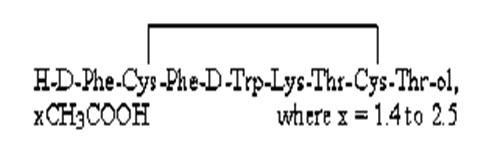
This gallery contains 5 technical images submitted to the FDA as part of the official labeling for Octreotide Acetate (NDC 55648-635). Unlike standard consumer photos, these assets often include clinical data figures, molecular chemical structures, and official manufacturer packaging layouts.
As provided by Wockhardt Limited, these visuals offer a comprehensive scientific overview of the product's physical and chemical identity, aiding pharmacists and researchers in product verification and study.
Label (Octreotideaceinj M Figure 02)
This is a description of a medication called Octreotide Acetate, which is available in a 50mg per ml dosage, contained in a 1ml single-dose vial. The medication should be kept in the carton until ready to use and protected from light. It is distributed by Wockhardt USA LLC and is for subcutaneous use only. The lot number and expiration date are also provided.*
Carton (Octreotideaceinj M Figure 03)
Label (Octreotideaceinj M Figure 04)
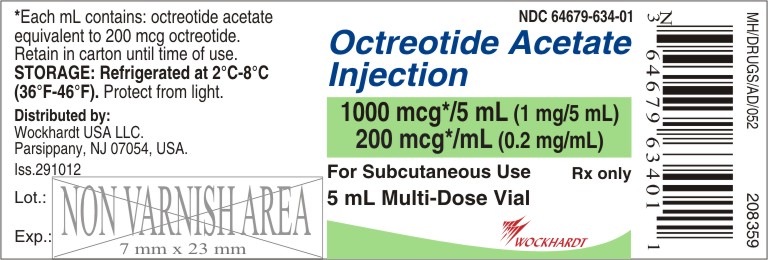
Each mL of this medication contains Octreotide Acetate, which is used to treat certain types of cancers and hormonal disorders. It is supplied in a 5 mL multi-dose vial, with each mL being equivalent to 200 micrograms of the active ingredient. It is stored under refrigeration and protected from light. This medication is for subcutaneous use only and is distributed by Wockhardt USA LLC in Parsippany, NJ. The NDC code for this medication is 64679-634-01.*
Carton (Octreotideaceinj M Figure 05)
This is a description of a drug called Octreotide Acetate, available in injection form in 200 mcg/mL and 1000 mcg/5 mL concentrations. It is administered subcutaneously, and each mL of the injection contains octreotide, acetic acid, sodium acetate trihydrate, and sodium chloride. The drug must be stored at refrigerated temperatures and protected from light. The text also includes NDC numbers for the drug.*
* These product label images have been analyzed using experimental machine learning. Please verify findings with the primary label text.