Tramadol Hydrochloride Tablet, Extended Release
Product Images NDC 55700-996

View Photos of Packaging, Regulatory Labels, and Product Appearance

Product Visual Gallery

This gallery contains 6 technical images submitted to the FDA as part of the official labeling for Tramadol Hydrochloride (NDC 55700-996). Unlike standard consumer photos, these assets often include clinical data figures, molecular chemical structures, and official manufacturer packaging layouts.

As provided by Quality Care Products, Llc, these visuals offer a comprehensive scientific overview of the product's physical and chemical identity, aiding pharmacists and researchers in product verification and study.

FDA Label Image

Image Description (1)
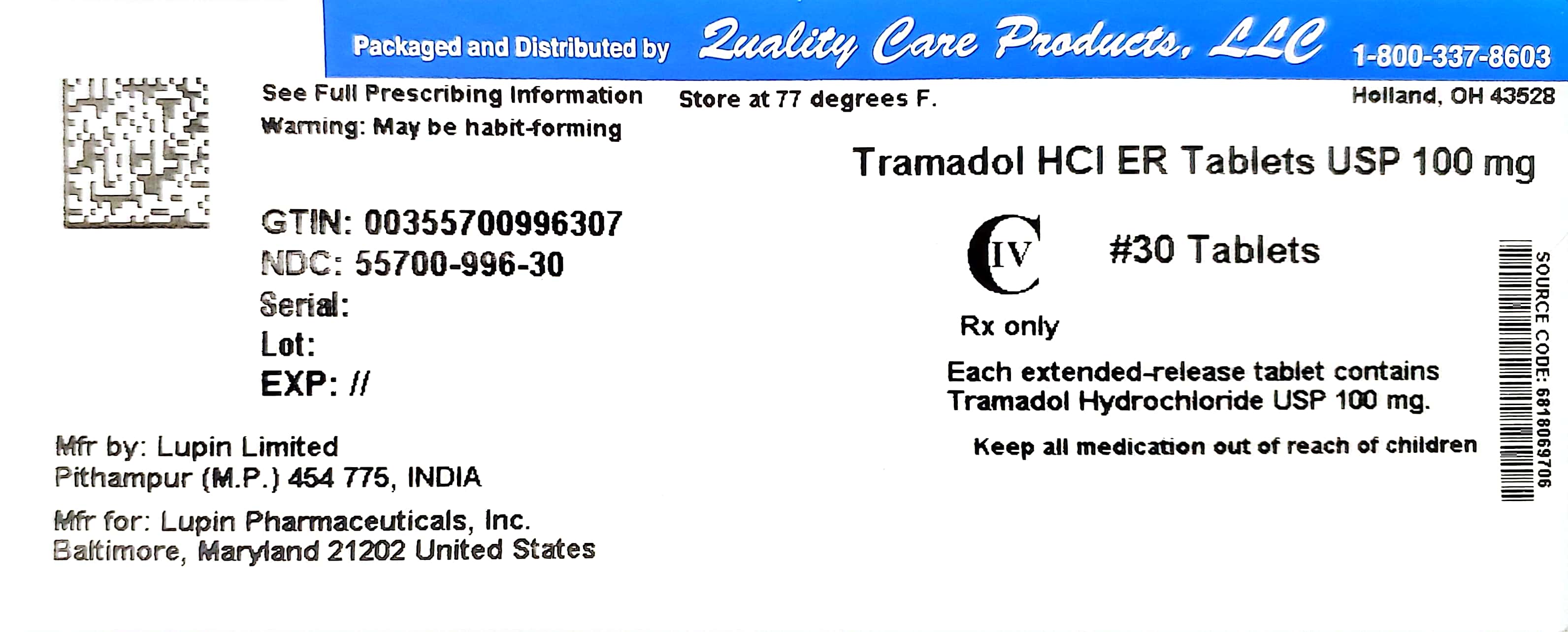
Image Description (1)
This is a description of a medication called Tramadol HCI ER Tablets USP 100 mg. The medication is packaged and distributed by 24@&'&/ édflfl p’ldm who can be contacted at 1-800-337-8603. It may be habit-forming, and the full prescribing information should be read before using. The tablets are made by Lupin Pharmaceuticals, Inc. in Baltimore, Maryland, and have a GTIN of 00355700996307. The medication must be stored at 77 degrees F, and the packaging includes a warning about its habit-forming potential. The medication is manufactured by Lupin Limited in India, and the packing also includes a lot and expiry date. Children should not have access to the medication.*
FDA Label Image

Image-1 (7848ebcb 7a13 48a8 Bbeb 7481d040c068 01)

FDA Label Image

Image-2 (7848ebcb 7a13 48a8 Bbeb 7481d040c068 02)

Image-2 (7848ebcb 7a13 48a8 Bbeb 7481d040c068 02)
This is a graph showing the concentration of Tramadol in ng/mL over time in hours for two types of medication - Tramadol Hydrochloride Extended-Release Tablets (at a dose of 200 mg once a day) and Tramadol Hydrochloride Tablets (at a dose of 50 mg every 6 hours). The y-axis represents the concentration in ng/mL and the x-axis represents the time in hours. The graph shows that the extended-release tablets maintain a higher concentration of Tramadol in the blood for a longer time than the regular tablets.*
FDA Label Image

Image-3 (7848ebcb 7a13 48a8 Bbeb 7481d040c068 03)

Image-3 (7848ebcb 7a13 48a8 Bbeb 7481d040c068 03)
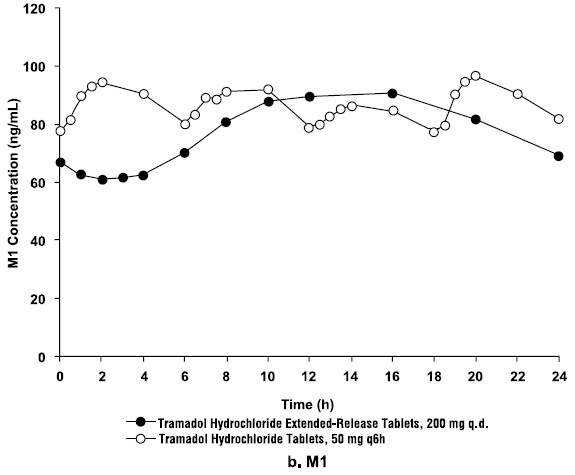
The text represents a graph of M1 concentration (ng/mL) over time (in hours) for two types of tramadol hydrochloride medication: extended-release tablets of 200 mg once a day and regular tablets of 50 mg taken six times a day. The graph shows a decreasing trend of M1 concentration over time for both medications.*
FDA Label Image

Image-4 (7848ebcb 7a13 48a8 Bbeb 7481d040c068 04)

Image-4 (7848ebcb 7a13 48a8 Bbeb 7481d040c068 04)
This appears to be a graph showing the percentage of patients who achieved various levels of response threshold for Tramadol Hydrochloride Extended-Release Tablets Study 023 WOMAC Pain Responder Analysis. The graph shows the percentages for different dosage levels of the tablet - 100 mg, 200 mg, 300 mg, and 400 mg over a range of response thresholds (percent improvements from baseline). There is also a placebo line for comparison.*
FDA Label Image

Image-5 (7848ebcb 7a13 48a8 Bbeb 7481d040c068 05)

Image-5 (7848ebcb 7a13 48a8 Bbeb 7481d040c068 05)
This is a chart that shows the percentage of patients achieving various levels of response threshold in a study of Tramadol Hydrochloride Extended-Release Tablets for arthritis pain intensity. The study is identified as Study 015. The chart compares the response rate of patients who took Tramadol Hydrochloride Extended-Release Tablets to those who took a placebo. The response threshold is measured by the percentage improvement in pain intensity from baseline.*

* These product label images have been analyzed using experimental machine learning. Please verify findings with the primary label text.