Emuaid Pain Relieving
Product Images NDC 55926-0026

View Photos of Packaging, Regulatory Labels, and Product Appearance

Product Visual Gallery

This gallery contains 1 technical images submitted to the FDA as part of the official labeling for Emuaid Pain Relieving (NDC 55926-0026). Unlike standard consumer photos, these assets often include clinical data figures, molecular chemical structures, and official manufacturer packaging layouts.

As provided by Speer Laboratories Llc, these visuals offer a comprehensive scientific overview of the product's physical and chemical identity, aiding pharmacists and researchers in product verification and study.

FDA Label Image

Principal Display Panel (120 G Tube Label)
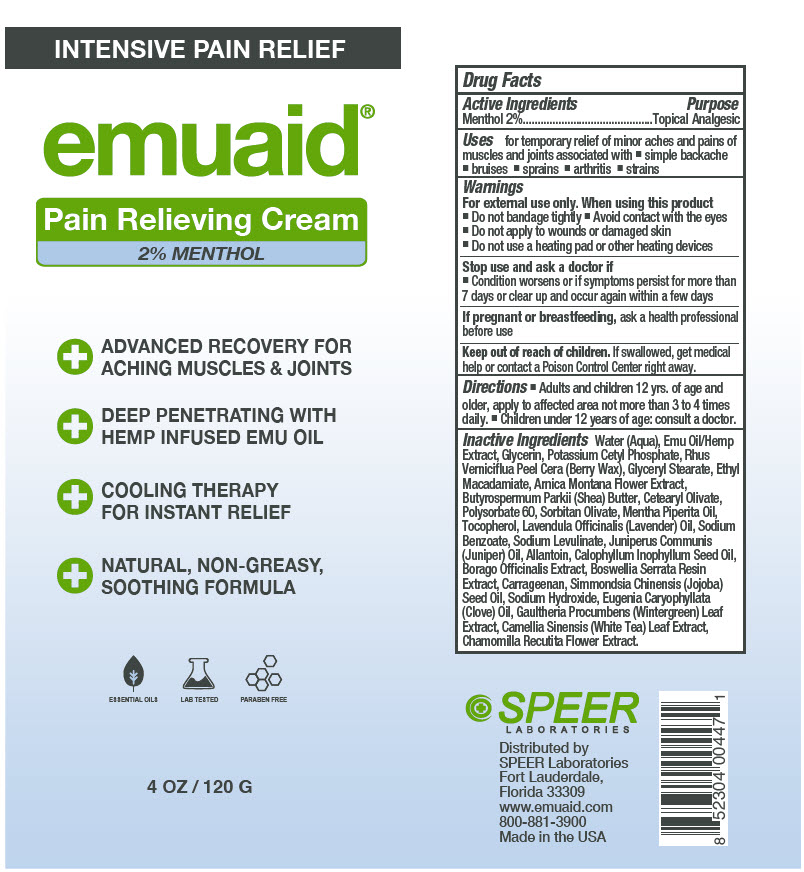
Principal Display Panel (120 G Tube Label)
Intensive Pain Relief is a pain relieving cream that provides advanced recovery for aching muscles and joints. It contains 2% menthol and is formulated with hemp-infused emu oil for deep penetration. The cream offers cooling therapy for instant relief and has a natural, non-greasy, soothing formula. It can be used to temporarily alleviate pain associated with simple backaches, bruises, sprains, arthritis, and strains. However, it is for external use only and should not be applied to wounds or damaged skin. The cream should not be used with heating pads or other heating devices. If the condition worsens or symptoms persist, it is advised to consult a doctor. Pregnant or breastfeeding individuals should seek advice from a healthcare professional before use. The cream should be kept out of reach of children and in case of ingestion, medical attention should be sought. For adults and children aged 12 years and older, the cream should be applied to the affected area no more than 3-4 times daily. Children under 12 years old should consult a doctor before use. The cream includes various natural ingredients such as emu oil, beeswax, lavender oil, and chamomile flower extract. It is distributed by SPEER Laboratories and is made in the USA.*

* These product label images have been analyzed using experimental machine learning. Please verify findings with the primary label text.