Tamsulosin Hydrochloride Capsule
Product Images NDC 57237-014

View Photos of Packaging, Regulatory Labels, and Product Appearance

Product Visual Gallery

This gallery contains 7 technical images submitted to the FDA as part of the official labeling for Tamsulosin Hydrochloride (NDC 57237-014). Unlike standard consumer photos, these assets often include clinical data figures, molecular chemical structures, and official manufacturer packaging layouts.

As provided by Rising Pharma Holdings, Inc., these visuals offer a comprehensive scientific overview of the product's physical and chemical identity, aiding pharmacists and researchers in product verification and study.

FDA Label Image

Figure 1 Mean Plasma Tamsulosin Hydrochloride Concentrations Following Single-dose Administration Of Tamsulosin Hydrochloride Capsules 0.4 mg Under Fasted And Fed Conditions (n=8) (Tamsulosin Fig1)

FDA Label Image

Figure 2a Mean Change From Baseline In Total Aua Symptom Score (0 To 35) Study 1 (Tamsulosin Fig2)

Figure 2a	Mean Change From Baseline In Total Aua Symptom Score (0 To 35) Study 1 (Tamsulosin Fig2)
The image shows a graph depicting the mean change from baseline in the total American Urological Association (AUA) symptom score ranging from 0 to 35, in which 0.08mg A and 0.4mg A doses and placebo treatments were administered over a duration of 1 to 12 weeks in study 1. The graph shows that the mean change in the symptom score decreased over time with both doses of A and placebo treatment. LOCF (Last Observation Carried Forward) method was used to account for missing data.*
FDA Label Image

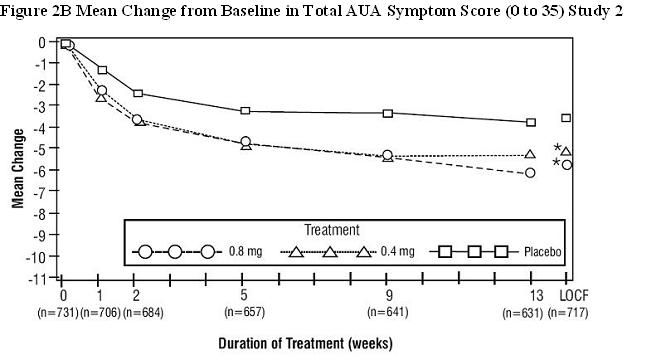
Figure 2b Mean Change From Baseline In Total Aua Symptom Score (0 To 35) Study 2 (Tamsulosin Fig3)

Figure 2b	Mean Change From Baseline In Total Aua Symptom Score (0 To 35) Study 2 (Tamsulosin Fig3)
Figure 2B shows the mean change from baseline in the total American Urological Association Symptom Score (AUA) from Study 2. The graph displays the durations of treatment (in weeks) on the x-axis and the mean change in the symptom score (ranging from 0 to 35) on the y-axis. The three treatments compared are O=0O—0-08mg LNt, 0.4mg, and placebo. The data is based on the LOCF method and includes the number of patients (n) for each treatment group at various time points.*
FDA Label Image

Figure 3a Mean Increase In Peak Urine Flow Rate (ml/sec) Study 1 (Tamsulosin Fig4)

Figure 3a Mean Increase In Peak Urine Flow Rate (ml/sec) Study 1 (Tamsulosin Fig4)
The figure shows the mean increase in peak urine flow rate (in L/sec) in Study 1. The treatment groups include 0.08 mg and 0.4 mg, as well as a placebo. The mean change in mL/sec is also depicted. The duration of treatment ranged from 7 to 13 weeks, and the sample sizes varied from 617 to 755.*
FDA Label Image

Figure 3b Mean Increase In Peak Urine Flow Rate (ml/sec) Study 2 (Tamsulosin Fig5)

FDA Label Image

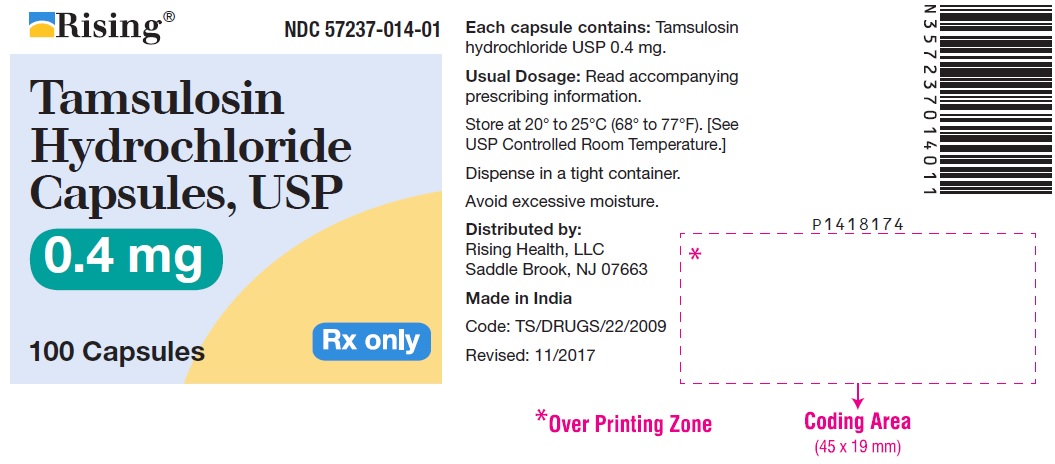
Package Label-principal Display Panel (0.4 mg (100 Capsule Bottle))

Package Label-principal Display Panel (0.4 mg (100 Capsule Bottle))
This is a description of a medication, specifically Tamsulosin hydrochloride USP 0.4 mg, which is contained in a capsule labeled under NDC 57237-014-01. The recommended dosage can be found in the prescribing information, and the medication should be stored between 20-25°C. The container should be tight and controlled room temperature should be maintained. The medication is distributed by a company called Rising Health, LLC in Saddle Brook, NJ, and it was manufactured in India. The code listed is TS/DRUGS/22/2009, and the package contains 100 capsules, the most recent revision being in November 2017.*
FDA Label Image

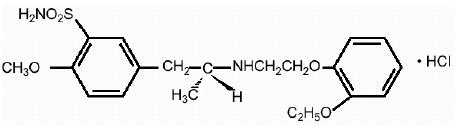
Chemical Structure (Tamsulosin Str)

* These product label images have been analyzed using experimental machine learning. Please verify findings with the primary label text.