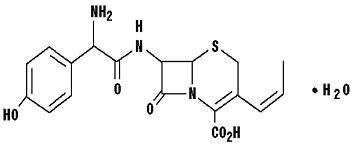
Cefprozil has in vitro activity against a broad range of gram-positive and gram-negative bacteria. The bactericidal action of cefprozil results from inhibition of cell-wall synthesis. Cefprozil has been shown to be active against most strains of the following microorganisms both in vitro and in clinical infections as described in the INDICATIONS AND USAGEsection.
Aerobic gram-positive microorganisms: Aerobic gram-negative microorganisms:
Staphylococcus aureus (including Haemophilus influenzae (including β-lactamase-
β-lactamase-producing strains) producing strains)
NOTE: Cefprozil is inactive against Moraxella (Branhamella) catarrhalis
methicillin-resistant staphylococci. (including β-lactamase-producing strains)
Streptococcus pneumoniae
Streptococcus pyogenes
The following in vitro data are available; however, their clinical significance is unknown. Cefprozil exhibits in vitro minimum inhibitory concentrations (MICs) of 8 mcg/mL or less against most (≥90%) strains of the following microorganisms; however, the safety and effectiveness of cefprozil in treating clinical infections due to these microorganisms have not been established in adequate and well-controlled clinical trials.
Aerobic gram-positive microorganisms:
Enterococcus durans Staphylococcus warneri
Enterococcus faecalis Streptococcus agalactiae
Listeria monocytogenes Streptococci (Groups C,D,F, and G)
Staphylococcus epidermidis viridans group Streptococci
Staphylococcus saprophyticus
NOTE: Cefprozil is inactive against Enterococcus faecium.
Aerobic gram-negative microorganisms:
Citrobacter diversus Proteus mirabilis
Escherichia coli Salmonella spp.
Klebsiella pneumoniae Shigella spp.
Neisseria gonorrhoeae Vibrio spp.
(including β-lactamase-producing strains)
NOTE: Cefprozil is inactive against most strains of Acinetobacter, Enterobacter, Morganella morganii, Proteus vulgaris, Providencia, Pseudomonas, and Serratia.
Anaerobic microorganisms:
Prevotella (Bacteroides) melaninogenicus Fusobacterium spp.
Clostridium difficile Peptostreptococcus spp.
Clostridium perfringens Propionibacterium acnes
NOTE: Most strains of the Bacteroides fragilis group are resistant to cefprozil.
Susceptibility Tests
Dilution Techniques: Quantitative methods are used to determine antimicrobial minimal inhibitory concentrations (MICs). These MICs provide estimates of the susceptibility of bacteria to antimicrobial compounds. The MICs should be determined using a standardized procedure. Standardized procedures are based on a dilution method1,2 (broth or agar) or equivalent with standardized inoculum concentrations and standardized concentrations of cefprozil powder. The MIC values should be interpreted according to the following criteria:
MIC (mcg/mL) Interpretation
≤8 Susceptible (S)
16 Intermediate (I)
≥32 Resistant (R)
A report of “Susceptible” indicates that the pathogen is likely to be inhibited if the antimicrobial compound in the blood reaches the concentrations usually achievable. A report of “Intermediate” indicates that the result should be considered equivocal, and, if the microorganism is not fully susceptible to alternative, clinically feasible drugs, the test should be repeated. This category implies possible clinical applicability in body sites where the drug is physiologically concentrated or in situations where high dosage of drug can be used. This category also provides a buffer zone which prevents small uncontrolled technical factors from causing major discrepancies in interpretation. A report of “Resistant” indicates that the pathogen is not likely to be inhibited if the antimicrobial compound in the blood reaches the concentrations usually achievable; other therapy should be selected.
Standardized susceptibility test procedures require the use of laboratory control microorganisms to control the technical aspects of the laboratory procedures. Standard cefprozil powder should provide the following MIC values:
Microorganism MIC (mcg/mL)
Enterococcus faecalis ATCC 29212 4 to 16
Escherichia coli ATCC 25922 1 to 4
Haemophilus influenzae ATCC 49766 1 to 4
Staphylococcus aureus ATCC 29213 0.25 to 1
Streptococcus pneumoniae ATCC 49619 0.25 to 1
Diffusion Techniques: Quantitative methods that require measurement of zone diameters also provide reproducible estimates of the susceptibility of bacteria to antimicrobial compounds. One such standardized procedure3 requires the use of standardized inoculum concentrations. This procedure uses paper disks impregnated with 30 mcg cefprozil to test the susceptibility of microorganisms to cefprozil.
Reports from the laboratory providing results of the standard single-disk susceptibility test with a 30 mcg cefprozil disk should be interpreted according to the following criteria:
Zone diameter (mm) Interpretation
≥18 Susceptible (S)
15 to 17 Intermediate (I)
≤14 Resistant (R)
Interpretation should be as stated above for results using dilution techniques. Interpretation involves correlation of the diameter obtained in the disk test with the MIC for cefprozil.
As with standardized dilution techniques, diffusion methods require the use of laboratory control microorganisms that are used to control the technical aspects of the laboratory procedures. For the diffusion technique, the 30 mcg cefprozil disk should provide the following zone diameters in these laboratory test quality control strains.
Microorganism Zone diameter (mm)
Escherichia coli ATCC 25922 21 to 27
Haemophilus influenzae ATCC 49766 20 to 27
Staphylococcus aureus ATCC 25923 27 to 33
Streptococcus pneumoniae ATCC 49619 25 to 32