Prophylaxis for Herpes Zoster Reactivation
Prior to starting treatment with TECVAYLI, consider initiation of antiviral prophylaxis to prevent herpes zoster reactivation per guidelines.
Management of CRS, Neurologic Toxicity and ICANS
Cytokine Release Syndrome (CRS)
Management recommendations for CRS are summarized in Table 3.
Identify CRS based on clinical presentation
[see
Warnings and Precautions (5.1)].
Evaluate and treat other causes of fever, hypoxia, and hypotension.
If CRS is suspected, withhold TECVAYLI until CRS resolves. Manage according to the recommendations in Table 3 and consider further management per current practice guidelines. Administer supportive therapy for CRS, which may include intensive care for severe or life-threatening CRS. Consider laboratory testing to monitor for disseminated intravascular coagulation (DIC), hematology parameters, as well as pulmonary, cardiac, renal, and hepatic function.
Table 3: Recommendations for Management of Cytokine Release Syndrome| Grade
| Presenting Symptoms | Actions |
|---|
| Grade 1 | Temperature ≥100.4°F (38°C)
| - Withhold TECVAYLI until CRS resolves.
- Administer pretreatment medications prior to next dose of TECVAYLI.
|
| Grade 2 | Temperature ≥100.4°F (38°C)
with:
Hypotension responsive to fluids and not requiring vasopressors,
and/or,
Oxygen requirement of low-flow nasal cannula
or blow-by.
| - Withhold TECVAYLI until CRS resolves.
- Administer pretreatment medications prior to next dose of TECVAYLI.
- Patients should be hospitalized for 48 hours following the next dose of TECVAYLI
[see
Dosage and Administration (2.1)].
|
| Grade 3 | Temperature ≥100.4°F (38°C)
with:
Hypotension requiring one vasopressor with or without vasopressin,
and/or,
Oxygen requirement of high-flow nasal cannula
, facemask, non-rebreather mask, or Venturi mask.
| First Occurrence of Grade 3 CRS with Duration Less than 48 Hours:
- Withhold TECVAYLI until CRS resolves.
- Provide supportive therapy, which may include intensive care.
- Administer pretreatment medications prior to next dose of TECVAYLI.
- Patients should be hospitalized for 48 hours following the next dose of TECVAYLI
[see
Dosage and Administration (2.1)].
|
Recurrent Grade 3 CRS or Grade 3 CRS with Duration 48 Hours or Longer:
- Permanently discontinue TECVAYLI.
- Provide supportive therapy, which may include intensive care.
|
| Grade 4 | Temperature ≥100.4°F (38°C)
with:
Hypotension requiring multiple vasopressors (excluding vasopressin),
and/or,
Oxygen requirement of positive pressure (e.g., continuous positive airway pressure (CPAP), bilevel positive airway pressure (BiPAP), intubation, and mechanical ventilation).
| - Permanently discontinue TECVAYLI.
- Provide supportive therapy, which may include intensive care.
|
Neurologic Toxicity and ICANS
Management recommendations for neurologic toxicity and ICANS are summarized in Tables 4 and 5.
At the first sign of neurologic toxicity, including ICANS, withhold TECVAYLI and consider neurology evaluation. Rule out other causes of neurologic symptoms. Provide supportive therapy, which may include intensive care, for severe or life-threatening neurologic toxicities, including ICANS
[see
Warnings and Precautions (5.2)]
. Manage ICANS according to the recommendations in Table 5 and consider further management per current practice guidelines.
Table 4: Recommendations for Management of Neurologic Toxicity (excluding ICANS)| Adverse Reaction | Severity
| Actions |
|---|
| Neurologic Toxicity
(excluding ICANS)
| Grade 1 | - Withhold TECVAYLI until neurologic toxicity symptoms resolve or stabilize.
|
Grade 2
Grade 3 (First occurrence)
| - Withhold TECVAYLI until neurologic toxicity symptoms improve to Grade 1 or less.
- Provide supportive therapy.
|
Grade 3 (Recurrent)
Grade 4
| - Permanently discontinue TECVAYLI.
- Provide supportive therapy, which may include intensive care.
|
Table 5: Recommendations for Management of Immune Effector Cell-Associated Neurotoxicity Syndrome| Grade
| Presenting Symptoms
| Actions |
|---|
| Grade 1 | ICE score 7–9
,
or depressed level of consciousness
: awakens spontaneously.
| - Withhold TECVAYLI until ICANS resolves.
- Monitor neurologic symptoms and consider consultation with neurologist and other specialists for further evaluation and management, including consideration for starting non-sedating, anti-seizure medicines for seizure prophylaxis.
|
| Grade 2 | ICE score 3–6
,
or depressed level of consciousness
: awakens to voice.
| - Withhold TECVAYLI until ICANS resolves.
- Administer dexamethasone
10 mg intravenously every 6 hours. Continue dexamethasone use until resolution to Grade 1 or less then taper.
- Monitor neurologic symptoms and consider consultation with neurologist and other specialists for further evaluation and management, including consideration for starting non-sedating, anti-seizure medicines for seizure prophylaxis.
- Patients should be hospitalized for 48 hours following the next dose of TECVAYLI
[see
Dosage and Administration (2.1)]
.
|
| Grade 3 | ICE score 0–2
,
or depressed level of consciousness
: awakens only to tactile stimulus,
or seizures
, either:
- any clinical seizure, focal or generalized, that resolves rapidly, or
- non-convulsive seizures on electroencephalogram (EEG) that resolve with intervention,
or raised intracranial pressure: focal/local edema on neuroimaging
.
| First Occurrence of Grade 3 ICANS:
- Withhold TECVAYLI until ICANS resolves.
- Administer dexamethasone
10 mg intravenously every 6 hours. Continue dexamethasone use until resolution to Grade 1 or less, then taper.
- Monitor neurologic symptoms and consider consultation with neurologist and other specialists for further evaluation and management, including consideration for starting non-sedating, anti-seizure medicines for seizure prophylaxis.
- Provide supportive therapy, which may include intensive care.
- Patients should be hospitalized for 48 hours following the next dose of TECVAYLI
[see
Dosage and Administration (2.1)]
.
|
Recurrent Grade 3 ICANS:
- Permanently discontinue TECVAYLI
- Administer dexamethasone
10 mg intravenously and repeat dose every 6 hours. Continue dexamethasone use until resolution to Grade 1 or less, then taper.
- Monitor neurologic symptoms and consider consultation with neurologist and other specialists for further evaluation and management, including consideration for starting non-sedating, anti-seizure medicines for seizure prophylaxis.
- Provide supportive therapy, which may include intensive care.
|
| Grade 4 | ICE score 0
,
or depressed level of consciousness
: either:
- patient is unarousable or requires vigorous or repetitive tactile stimuli to arouse, or
- stupor or coma,
or seizures
, either:
- life-threatening prolonged seizure (>5 minutes), or
- repetitive clinical or electrical seizures without return to baseline in between,
or motor findings
:
- deep focal motor weakness such as hemiparesis or paraparesis,
or raised intracranial pressure/cerebral edema
, with signs/symptoms such as:
- diffuse cerebral edema on neuroimaging, or
- decerebrate or decorticate posturing, or
- cranial nerve VI palsy, or
- papilledema, or
- Cushing's triad.
| - Permanently discontinue TECVAYLI.
- Administer dexamethasone
10 mg intravenously and repeat dose every 6 hours. Continue dexamethasone use until resolution to Grade 1 or less, then taper.
- Alternatively, consider administration of methylprednisolone 1,000 mg per day intravenously and continue methylprednisolone 1,000 mg per day intravenously for 2 or more days.
- Monitor neurologic symptoms and consider consultation with neurologist and other specialists for further evaluation and management, including consideration for starting non-sedating, anti-seizure medicines for seizure prophylaxis.
- Provide supportive therapy, which may include intensive care.
|
Table 6: Recommended Dosage Modifications for Other Adverse Reactions| Adverse Reactions | Severity | Actions |
|---|
| Infections
[see
Warnings and Precautions (5.5)]
| All Grades | - Withhold TECVAYLI in patients with active infection during the step-up dosing schedule.
|
| Grade 3 | - Withhold subsequent treatment doses of TECVAYLI (i.e., doses administered after TECVAYLI step-up dosing schedule) until infection improves to Grade 1 or less.
|
| Grade 4 | - Consider permanent discontinuation of TECVAYLI.
- If TECVAYLI is not permanently discontinued, withhold subsequent treatment doses of TECVAYLI (i.e., doses administered after TECVAYLI step-up dosing schedule) until infection improves to Grade 1 or less.
|
| Hematologic Toxicities
[see
Warnings and Precautions (5.6) and
Adverse Reactions (6.1)]
| Absolute neutrophil count less than 0.5 × 10
9/L
| - Withhold TECVAYLI until absolute neutrophil count is 0.5 × 10
9/L or higher.
|
| Febrile neutropenia | - Withhold TECVAYLI until absolute neutrophil count is 1 × 10
9/L or higher and fever resolves.
|
| Hemoglobin less than 8 g/dL | - Withhold TECVAYLI until hemoglobin is 8 g/dL or higher.
|
Platelet count less than 25,000/mcL
Platelet count between 25,000/mcL and 50,000/mcL with bleeding
| - Withhold TECVAYLI until platelet count is 25,000/mcL or higher and no evidence of bleeding.
|
Other Non-Hematologic Adverse Reactions
[see
Warnings and Precautions (5.4) and
Adverse Reactions (6.1)]
| Grade 3 | - Withhold TECVAYLI until adverse reaction improves to Grade 1 or less.
|
| Grade 4 | - Consider permanent discontinuation of TECVAYLI.
- If TECVAYLI is not permanently discontinued, withhold subsequent treatment doses of TECVAYLI (i.e., doses administered after TECVAYLI step-up dosing schedule) until adverse reaction improves to Grade 1 or less.
|
Preparation of TECVAYLI
Refer to the following reference tables for the preparation of TECVAYLI.
Use Table 7 to determine total dose, injection volume and number of vials required based on patient's actual body weight for step-up dose 1 using TECVAYLI 30 mg/3 mL (10 mg/mL) vial.
Table 7: Step-up Dose 1 (0.06 mg/kg) Injection Volumes using TECVAYLI 30 mg/3 mL (10 mg/mL) VialPatient Body Weight
(kg)
| Total Dose
(mg)
| Volume of Injection
(mL)
| Number of Vials
(1 vial=3 mL)
|
|---|
| 35 to 39 | 2.2 | 0.22 | 1 |
| 40 to 44 | 2.5 | 0.25 | 1 |
| 45 to 49 | 2.8 | 0.28 | 1 |
| 50 to 59 | 3.3 | 0.33 | 1 |
| 60 to 69 | 3.9 | 0.39 | 1 |
| 70 to 79 | 4.5 | 0.45 | 1 |
| 80 to 89 | 5.1 | 0.51 | 1 |
| 90 to 99 | 5.7 | 0.57 | 1 |
| 100 to 109 | 6.3 | 0.63 | 1 |
| 110 to 119 | 6.9 | 0.69 | 1 |
| 120 to 129 | 7.5 | 0.75 | 1 |
| 130 to 139 | 8.1 | 0.81 | 1 |
| 140 to 149 | 8.7 | 0.87 | 1 |
| 150 to 160 | 9.3 | 0.93 | 1 |
Use Table 8 to determine total dose, injection volume and number of vials required based on patient's actual body weight for step-up dose 2 using TECVAYLI 30 mg/3 mL (10 mg/mL) vial.
Table 8: Step-up Dose 2 (0.3 mg/kg) Injection Volumes using TECVAYLI 30 mg/3 mL (10 mg/mL) VialPatient Body Weight
(kg)
| Total Dose
(mg)
| Volume of Injection
(mL)
| Number of Vials
(1 vial=3 mL)
|
|---|
| 35 to 39 | 11 | 1.1 | 1 |
| 40 to 44 | 13 | 1.3 | 1 |
| 45 to 49 | 14 | 1.4 | 1 |
| 50 to 59 | 16 | 1.6 | 1 |
| 60 to 69 | 19 | 1.9 | 1 |
| 70 to 79 | 22 | 2.2 | 1 |
| 80 to 89 | 25 | 2.5 | 1 |
| 90 to 99 | 28 | 2.8 | 1 |
| 100 to 109 | 31 | 3.1 | 2 |
| 110 to 119 | 34 | 3.4 | 2 |
| 120 to 129 | 37 | 3.7 | 2 |
| 130 to 139 | 40 | 4 | 2 |
| 140 to 149 | 43 | 4.3 | 2 |
| 150 to 160 | 47 | 4.7 | 2 |
Use Table 9 to determine total dose, injection volume and number of vials required based on patient's actual body weight for the treatment dose using TECVAYLI 153 mg/1.7 mL (90 mg/mL) vial.
Table 9: Treatment Dose (1.5 mg/kg) Injection Volumes using TECVAYLI 153 mg/1.7 mL (90 mg/mL) VialPatient Body Weight
(kg)
| Total Dose
(mg)
| Volume of Injection
(mL)
| Number of Vials
(1 vial=1.7 mL)
|
|---|
| 35 to 39 | 56 | 0.62 | 1 |
| 40 to 44 | 63 | 0.7 | 1 |
| 45 to 49 | 70 | 0.78 | 1 |
| 50 to 59 | 82 | 0.91 | 1 |
| 60 to 69 | 99 | 1.1 | 1 |
| 70 to 79 | 108 | 1.2 | 1 |
| 80 to 89 | 126 | 1.4 | 1 |
| 90 to 99 | 144 | 1.6 | 1 |
| 100 to 109 | 153 | 1.7 | 1 |
| 110 to 119 | 171 | 1.9 | 2 |
| 120 to 129 | 189 | 2.1 | 2 |
| 130 to 139 | 198 | 2.2 | 2 |
| 140 to 149 | 216 | 2.4 | 2 |
| 150 to 160 | 234 | 2.6 | 2 |
Remove the appropriate strength TECVAYLI vial from refrigerated storage [2°C to 8°C (36°F to 46°F)].
Once removed from refrigerated storage, equilibrate TECVAYLI to ambient temperature [15°C to 30°C (59°Fto 86°F)] for at least 15 minutes. Do not warm TECVAYLI in any other way.
Once equilibrated, gently swirl the vial for approximately 10 seconds to mix. Do not shake.
Withdraw the required injection volume of TECVAYLI from the vial(s) into an appropriately sized syringe using a transfer needle.
Each injection volume should not exceed 2 mL. Divide doses requiring greater than 2 mL equally into multiple syringes.
TECVAYLI is compatible with stainless steel injection needles and polypropylene or polycarbonate syringe material.
Replace the transfer needle with an appropriately sized needle for injection.
Administration of TECVAYLI
Inject the required volume of TECVAYLI into the subcutaneous tissue of the abdomen (preferred injection site). Alternatively, TECVAYLI may be injected into the subcutaneous tissue at other sites (e.g., thigh). If multiple injections are required, TECVAYLI injections should be at least 2 cm apart.
Do not inject into tattoos or scars or areas where the skin is red, bruised, tender, hard or not intact.
Any unused product or waste material should be disposed in accordance with local requirements.
Storage
If the prepared dosing syringe(s) of TECVAYLI is not used immediately, store syringe(s) at 2°C to 8°C (36°F to 46°F) or at ambient temperature 15°C to 30°C (59°F to 86°F) for a maximum of 20 hours. Discard syringe(s) after 20 hours, if not used.
Monitoring
Due to the risk of CRS and neurologic toxicity, including ICANS, patients should be hospitalized for 48 hours after administration of all doses within the TECVAYLI step-up dosing schedule
[see
Dosage and Administration (2.1) and
Warnings and Precautions (5.1,
5.2)]
.
Injection
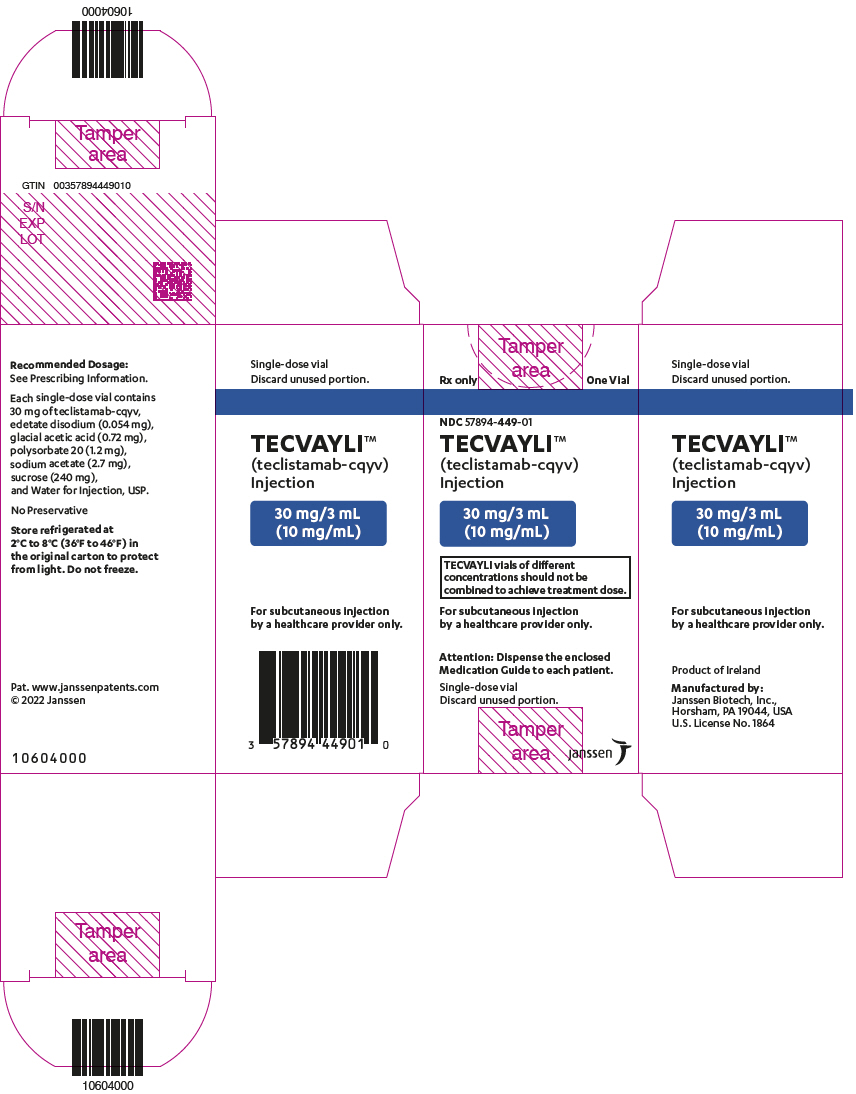
- 30 mg/3 mL (10 mg/mL) clear to slightly opalescent, colorless to light yellow solution in a single-dose vial.
- 153 mg/1.7 mL (90 mg/mL) clear to slightly opalescent, colorless to light yellow solution in a single-dose vial.
Systemic Reactions
In patients who received TECVAYLI at the recommended dose in the clinical trial, 1.2% of patients experienced systemic-administration reactions, which included Grade 1 recurrent pyrexia and Grade 1 swollen tongue.
Local Reactions
In patients who received TECVAYLI at the recommended dose in the clinical trial, injection-site reactions occurred in 35% of patients with Grade 1 injection-site reactions in 30% and Grade 2 in 4.8%.
Withhold TECVAYLI or consider permanent discontinuation of TECVAYLI based on severity
[see
Dosage and Administration (2.4)]
.
Relapsed/Refractory Multiple Myeloma
MajesTEC-1
The safety of TECVAYLI was evaluated in MajesTEC-1
[see
Clinical Studies (14)]
which included adult patients with relapsed or refractory multiple myeloma. Patients received step-up doses of 0.06 mg/kg and 0.3 mg/kg of TECVAYLI followed by TECVAYLI 1.5 mg/kg, subcutaneously once weekly (N=165). Among patients who received TECVAYLI, 47% were exposed for 6 months or longer and 7% were exposed for one year or longer.
The median age of patients who received TECVAYLI was 64 years (range: 33 to 84 years); 58% were male; 81% were White, 13% were Black or African American, and 2% were Asian.
Serious adverse reactions occurred in 54% of patients who received TECVAYLI. Serious adverse reactions in >2% of patients included pneumonia (15%), cytokine release syndrome (8%), sepsis (6%), general physical health deterioration (6%), COVID-19 (6%), acute kidney injury (4.8%), pyrexia (4.8%), musculoskeletal pain (2.4%), and encephalopathy (2.4%).
Fatal adverse reactions occurred in 5% of patients who received TECVAYLI, including COVID-19 (1.8%), pneumonia (1.8%), septic shock (0.6%), acute renal failure (0.6%), and hemoperitoneum (0.6%).
Permanent discontinuation of TECVAYLI due to adverse reactions occurred in 1.2% of patients. Adverse reactions resulting in permanent discontinuation of TECVAYLI included pneumonia (adenoviral and pneumocystis jirovecii pneumonia in the same patient) and hypercalcemia.
Dosage interruptions of TECVAYLI due to an adverse reaction occurred in 73% of patients. Adverse reactions which required dosage interruption in >5% of patients included neutropenia, pneumonia, pyrexia, cytokine release syndrome, upper respiratory tract infection, and COVID-19.
The most common adverse reactions (≥20%) were pyrexia, CRS, musculoskeletal pain, injection site reaction, fatigue, upper respiratory tract infection, nausea, headache, pneumonia, and diarrhea. The most common Grade 3 to 4 laboratory abnormalities (≥20%) were decreased lymphocytes, decreased neutrophils, decreased white blood cells, decreased hemoglobin, and decreased platelets.
Table 10 summarizes the adverse reactions in MajesTEC-1.
Table 10: Adverse Reactions (≥10%) in Patients with Multiple Myeloma Who Received TECVAYLI in MajesTEC-1| Adverse Reactions | TECVAYLI
(N=165)
|
|---|
Any Grade
(%)
| Grade 3 or 4
(%)
|
|---|
| Adverse reactions were graded based on CTCAE Version 4.03, with the exception of CRS, which was graded per ASTCT 2019 criteria. |
| General disorders and administration site conditions | | |
| Pyrexia | 76 | 3
|
| Injection site reaction
Injection site reaction includes application site erythema, injection site bruising, injection site cellulitis, injection site discomfort, injection site erythema, injection site hematoma, injection site induration, injection site inflammation, injection site edema, injection site pruritus, injection site rash, injection site reaction and injection site swelling. | 37 | 0.6
|
| Fatigue
Fatigue includes asthenia and fatigue. | 33 | 2.4
|
| Chills | 16 | 0 |
| Pain
Pain includes ear pain, flank pain, groin pain, oropharyngeal pain, pain, pain in jaw, toothache and tumor pain. | 15 | 1.8
|
| Edema
Edema includes face edema, fluid overload, fluid retention, edema peripheral and peripheral swelling. | 13 | 0 |
| Immune system disorders | | |
| Cytokine release syndrome | 72 | 0.6
|
| Hypogammaglobulinemia
Hypogammaglobulinemia includes hypogammaglobulinemia and hypoglobulinemia. | 11 | 1.2
|
| Musculoskeletal and connective tissue disorders | | |
| Musculoskeletal pain
Musculoskeletal pain includes arthralgia, back pain, muscle discomfort, musculoskeletal chest pain, musculoskeletal pain, myalgia, neck pain, non-cardiac chest pain and pain in extremity. | 44 | 4.2
|
| Bone pain | 16 | 3
|
| Infections | | |
| Upper respiratory tract infection
Upper respiratory tract infection includes bronchitis, influenza like illness, nasopharyngitis, pharyngitis, respiratory tract infection, respiratory tract infection bacterial, rhinitis, rhinovirus infection, sinusitis, tracheitis, upper respiratory tract infection and viral upper respiratory tract infection. | 26 | 2.4
|
| Pneumonia
Pneumonia includes COVID-19 pneumonia, enterobacter pneumonia, lower respiratory tract infection, metapneumovirus pneumonia, pneumocystis jirovecii pneumonia, pneumonia, pneumonia adenoviral, pneumonia klebsiella, pneumonia moraxella, pneumonia pneumococcal, pneumonia pseudomonal, pneumonia respiratory syncytial viral, pneumonia staphylococcal and pneumonia viral. | 24 | 15 |
| Urinary tract infection
Urinary tract infection includes cystitis, cystitis escherichia, cystitis klebsiella, escherichia urinary tract infection, urinary tract infection and urinary tract infection bacterial. | 11 | 5
|
| Gastrointestinal disorders | | |
| Nausea | 25 | 0.6
|
| Diarrhea | 21 | 2.4
|
| Constipation | 18 | 0 |
| Vomiting | 12 | 0.6
|
| Nervous system disorders | | |
| Headache | 25 | 0.6
|
| Motor dysfunction
Motor dysfunction includes cogwheel rigidity, dysgraphia, dysphonia, gait disturbance, hypokinesia, muscle rigidity, muscle spasms, muscular weakness, peroneal nerve palsy, psychomotor hyperactivity, tremor and VI
th nerve paralysis.
| 16 | 0 |
| Sensory neuropathy
Sensory neuropathy includes dysesthesia, hypoesthesia, hypoesthesia oral, neuralgia, paresthesia, paresthesia oral, peripheral sensory neuropathy, sciatica and vestibular neuronitis. | 15 | 1.2
|
| Encephalopathy
Encephalopathy includes agitation, apathy, aphasia, confusional state, delirium, depressed level of consciousness, disorientation, dyscalculia, hallucination, lethargy, memory impairment, mental status changes and somnolence. | 13 | 0 |
| Vascular disorders | | |
| Hypotension | 18 | 1.2
|
| Hemorrhage
Hemorrhage includes conjunctival hemorrhage, epistaxis, hematoma, hematuria, hemoperitoneum, hemorrhoidal hemorrhage, lower gastrointestinal hemorrhage, melena, mouth hemorrhage and subdural hematoma. | 12 | 1.8 |
| Hypertension
Hypertension includes essential hypertension and hypertension. | 12 | 4.8
|
| Respiratory, thoracic, and mediastinal disorders | | |
| Hypoxia | 18 | 1.8 |
| Cough
Cough includes allergic cough, cough, productive cough and upper-airway cough syndrome. | 15 | 0 |
| Cardiac disorders | | |
| Cardiac arrhythmia
Cardiac arrhythmia includes atrial flutter, cardiac arrest, sinus bradycardia, sinus tachycardia, supraventricular tachycardia, tachycardia and ventricular tachycardia. | 16 | 1.8 |
| Metabolism and nutrition disorders | | |
| Decreased appetite | 11 | 0.6
|
| Renal and urinary disorders | | |
| Acute kidney injury
Acute kidney injury includes acute kidney injury and renal impairment. | 11 | 3.6 |
Clinically relevant adverse reactions in <10% of patients who received TECVAYLI included febrile neutropenia, sepsis, ICANS, seizure, Guillain-Barré syndrome, hepatic failure, and new onset or reactivated viral infections (including adenovirus, hepatitis B virus (HBV), cytomegalovirus (CMV), varicella zoster virus (VZV), and herpes simplex virus (HSV)).
Table 11 summarizes laboratory abnormalities in MajesTEC-1.
Table 11: Select Laboratory Abnormalities (≥30%) That Worsened from Baseline in Patients with Multiple Myeloma Who Received TECVAYLI in MajesTEC-1| Laboratory Abnormality | TECVAYLI
(N=165
The denominator used to calculate the rate varied from 164 to 165 based on the number of patients with a baseline value and at least one post-treatment value. )
|
|---|
| All Grades (%) | Grade 3 or 4 (%) |
|---|
| Laboratory toxicity grades are derived based on the NCI CTCAE (National Cancer Institute Common Terminology Criteria for Adverse Events) Version 4.03. |
| Hematology | | |
| Lymphocyte count decreased | 92 | 84 |
| White blood cell decreased | 86 | 41 |
| Neutrophil count decreased | 84 | 56 |
| Platelet count decreased | 71 | 22 |
| Hemoglobin decreased | 67 | 33 |
| Chemistry | | |
| Albumin decreased | 68 | 6 |
| Alkaline phosphatase increased | 42 | 2.4 |
| Phosphorus decreased | 38 | 13 |
| Gamma-glutamyl transferase increased | 37 | 8 |
| Sodium decreased | 35 | 10 |
| Aspartate aminotransferase increased | 34 | 1.2 |
| Calcium (corrected) decreased | 31 | 1.2 |
| Creatinine increased | 30 | 3 |
Risk Summary
Based on the mechanism of action, TECVAYLI may cause fetal harm when administered to a pregnant woman
[see
Clinical Pharmacology (12.1)]
. There are no available data on the use of TECVAYLI in pregnant women. No animal reproductive or developmental toxicity studies have been conducted with TECVAYLI. Teclistamab-cqyv causes T-cell activation and cytokine release; immune activation may compromise pregnancy maintenance. Human immunoglobulin G (IgG) is known to cross the placenta; therefore, teclistamab-cqyv has the potential to be transmitted from the mother to the developing fetus. Advise women of the potential risk to the fetus.
TECVAYLI is associated with hypogammaglobulinemia, therefore, assessment of immunoglobulin levels in newborns of mothers treated with TECVAYLI should be considered.
In the U.S. general population, the estimated background risk of major birth defects and miscarriage in clinically recognized pregnancies is 2% to 4% and 15% to 20%, respectively.
Risk Summary
There are no data on the presence of teclistamab-cqyv in human milk, the effect on the breastfed child, or the effects on milk production. Maternal IgG is known to be present in human milk. The effects of local gastrointestinal exposure and limited systemic exposure in the breastfed child to TECVAYLI are unknown. Because of the potential for serious adverse reactions in a breastfed child, advise patients not to breastfeed during treatment with TECVAYLI and for 5 months after the last dose.
Pregnancy Testing
Verify pregnancy status of females of reproductive potential prior to initiating TECVAYLI.
Contraception
Females
Advise females of reproductive potential to use effective contraception during treatment and for 5 months after the last dose of TECVAYLI.
Absorption
The mean bioavailability of teclistamab-cqyv was 72% when administered subcutaneously. The median (range) T
max of teclistamab-cqyv after the first and 13
th treatment doses were 139 (19 to 168) hours and 72 (24 to 168) hours, respectively.
Distribution
The mean (coefficient of variation [CV]%) volume of distribution of teclistamab-cqyv was 5.63 L (29%).
Elimination
Teclistamab-cqyv clearance decreases over time, with a mean (CV%) maximal reduction from baseline to the 13
th treatment dose of 40.8% (56%). The geometric mean (CV%) clearance is 0.472 L/day (64%) at the 13
th treatment dose. Patients who discontinue teclistamab-cqyv after the 13
th treatment dose are expected to have a 50% reduction from C
max in teclistamab-cqyv concentration at a median (5
th to 95
th percentile) time of 15 (7 to 33) days after T
max and a 97% reduction from C
max in teclistamab-cqyv concentration at a median time of 69 (32 to 163) days after T
max.
Specific Populations
The volume of distribution and clearance of teclistamab-cqyv increase with increasing body weight (41 kg to 139 kg).
There were no clinically significant differences in the pharmacokinetics of teclistamab-cqyv based on age (24 to 84 years), sex, race (White, Black or African American), ethnicity (Hispanic/Latino, not Hispanic/Latino), mild or moderate renal impairment (estimated glomerular filtration rate [eGFR] by Modification of Diet in Renal Disease [MDRD] method: 30 to 89 mL/min), or mild hepatic impairment (total bilirubin less than or equal to upper limit of normal [ULN] with AST greater than ULN or total bilirubin greater than 1 to 1.5 times ULN with any AST). The effects of severe renal impairment (eGFR less than 30 mL/min) or moderate to severe hepatic impairment (total bilirubin greater than 1.5 times ULN with any AST) on the pharmacokinetics of teclistamab-cqyv are unknown.
Drug Interaction Studies
No clinical studies evaluating the drug interaction potential of teclistamab-cqyv have been conducted.
Cytokine Release Syndrome (CRS)
Discuss the signs and symptoms associated with CRS, including fever, hypoxia, chills, hypotension, sinus tachycardia, headache, and elevated liver enzymes. Advise patients to immediately contact their healthcare provider if they experience any signs or symptoms of CRS. Advise patients that they will be hospitalized for 48 hours after administration of all doses within the TECVAYLI step-up dosing schedule
[see
Dosage and Administration (2.4) and
Warnings and Precautions (5.1)].
Neurologic Toxicity including ICANS
Discuss the signs and symptoms associated with neurologic toxicity, including ICANS, including headache, confusion, dysgraphia, motor dysfunction, neuropathy, or encephalopathy. Advise patients to immediately contact their healthcare provider if they experience any signs or symptoms of neurologic toxicity. Advise patients to refrain from driving or operating heavy or potentially dangerous machinery during and for 48 hours after completion of TECVAYLI step-up dosing schedule and in the event of new onset of any neurologic toxicity symptoms until neurologic toxicity resolves
[see
Dosage and Administration (2.4) and
Warnings and Precautions (5.2)].
TECVAYLI REMS
TECVAYLI is available only through a restricted program called TECVAYLI REMS. Inform patients that they will be given a TECVAYLI Patient Wallet Card that they should carry with them at all times and show to all of their healthcare providers. This card describes signs and symptoms of CRS and neurologic toxicity which, if experienced, should prompt the patient to immediately seek medical attention
[see
Warnings and Precautions (5.3)].
Hepatotoxicity
Advise patients that liver enzyme elevations may occur and that they should report symptoms that may indicate liver toxicity, including fatigue, anorexia, right upper abdominal discomfort, dark urine, or jaundice
[see
Warnings and Precautions (5.4)].
Infections
Discuss the signs and symptoms of infection
[see
Dosage and Administration (2.4) and
Warnings and Precautions (5.5)]
.
Neutropenia
Discuss the signs and symptoms associated with neutropenia and febrile neutropenia
[see
Dosage and Administration (2.4) and
Warnings and Precautions (5.6)]
.
Hypersensitivity and Other Administration Reactions
Advise patients to immediately seek medical attention for any signs and symptoms of systemic administration-related reactions. Advise patients that local injection-site reactions may occur and to report any severe reactions
[see
Warnings and Precautions (5.7)].
Embryo-Fetal Toxicity
Advise pregnant women to inform their healthcare provider if they are pregnant or become pregnant. Advise females of reproductive potential of the potential risk to a fetus and to use effective contraception during treatment with TECVAYLI and for 5 months after the last dose
[see
Warnings and Precautions (5.8) and
Use in Specific Populations (8.1,
8.3)]
.
Lactation
Advise women not to breastfeed during treatment with TECVAYLI and for 5 months after the last dose
[see
Use in Specific Populations (8.2)]
.
Manufactured by:
Janssen Biotech, Inc.
Horsham, PA 19044
U.S. License Number 1864
© 2022 Janssen Pharmaceutical Companies
For patent information: www.janssenpatents.com