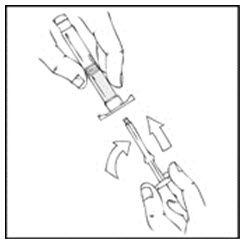
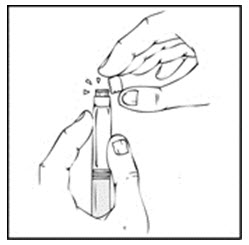
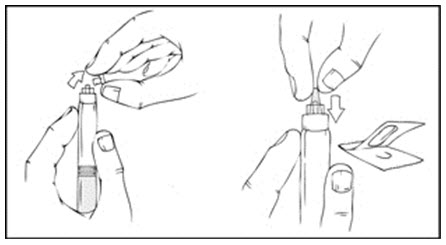
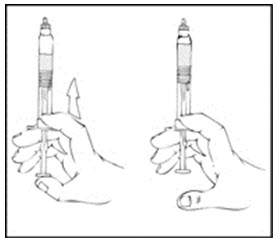
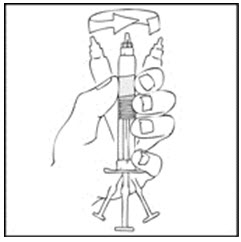
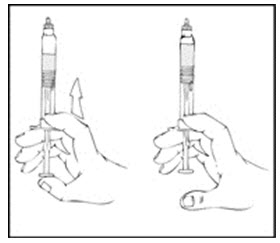
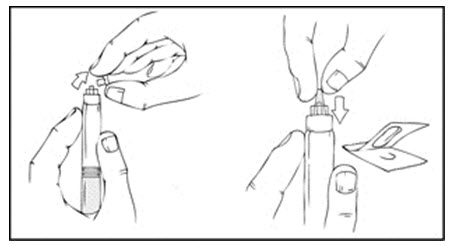
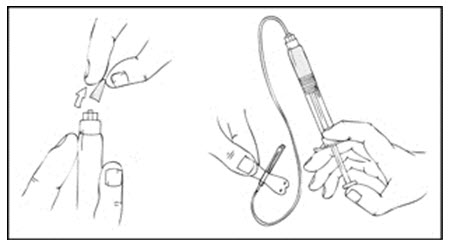
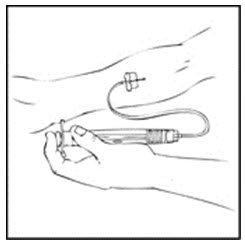
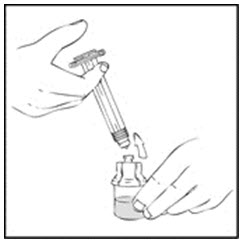
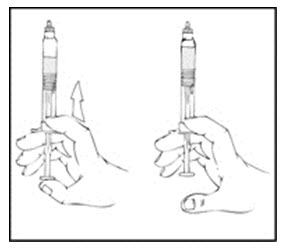
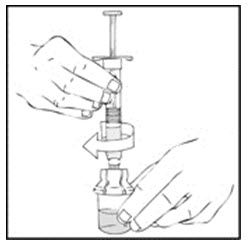
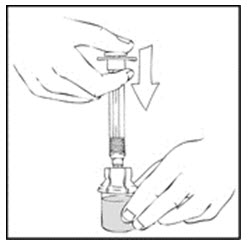
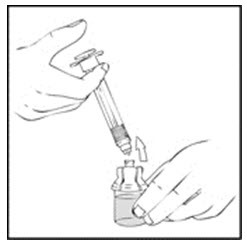
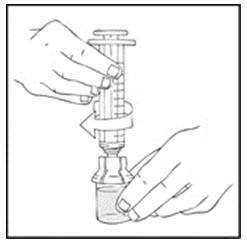
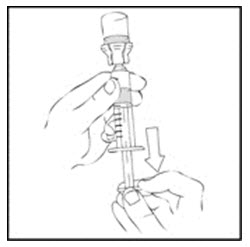
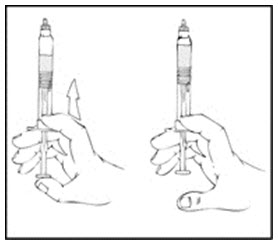
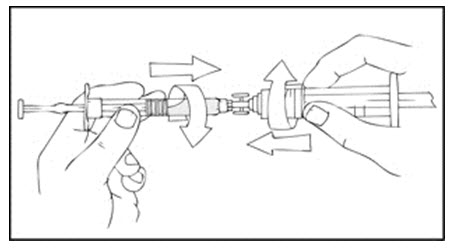
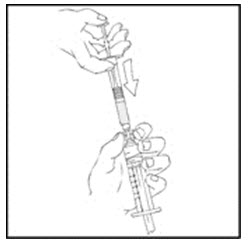
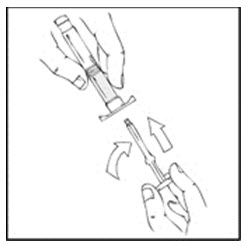
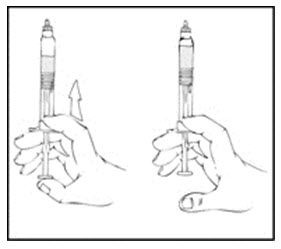
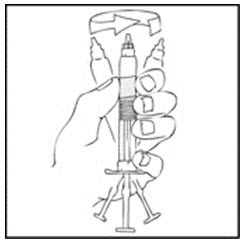
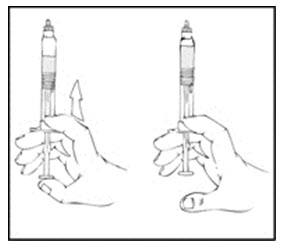
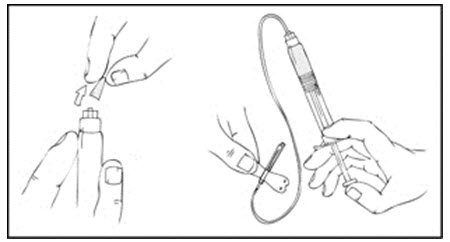
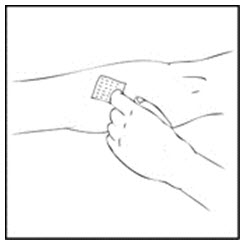
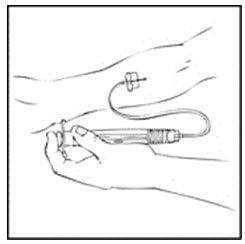
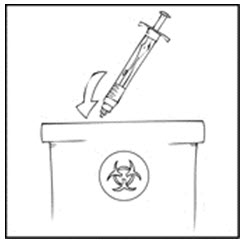
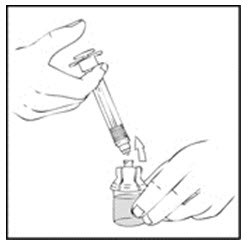
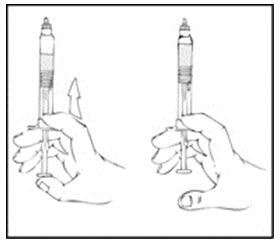
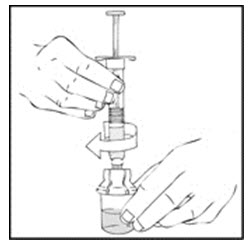
- If the solution is not to be used immediately, store the syringe upright, leaving the protective blue vent cap on the XYNTHA SOLOFUSE until ready to infuse.
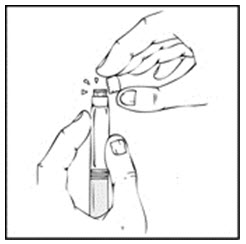
- Store the reconstituted solution at room temperature prior to administration, but use within 3 hours after reconstitution or after removal of the grey rubber tip cap.
- XYNTHA, when reconstituted, contains polysorbate 80, which is known to increase the rate of di-(2-ethylhexyl) phthalate (DEHP) extraction from polyvinyl chloride (PVC). This should be considered during the preparation and administration of XYNTHA, including storage time elapsed in a PVC container following reconstitution. The tubing of the infusion set included with this kit does not contain DEHP.
Pregnancy Category C. Animal reproduction studies have not been conducted with XYNTHA. It is not known whether XYNTHA can cause fetal harm when administered to a pregnant woman or can affect reproduction capacity. XYNTHA should be given to a pregnant woman only if clinically indicated.
Safety and Efficacy Study
In an open label safety and efficacy study (n=94), subjects received XYNTHA in a routine prophylaxis treatment regimen with on-demand treatment administered as clinically indicated. All 94 subjects were treated with at least one dose and all are included in the intent-to-treat (ITT) population. All subjects had been previously treated (previously treated patients or PTPs) with factor VIII. Eighty-nine (89) subjects accrued ≥ 50 exposure days (EDs). Median age for the 94 treated subjects was 24 years (mean 27.7 and range 12–60 years). All subjects had ≥ 150 previous exposure days with baseline FVIII activity level of ≤ 2%. Of the 94 subjects enrolled in this study, 30 evaluable subjects participated in a randomized crossover pharmacokinetics study. Twenty-five (25/30) of these subjects with FVIII:C ≤ 1% completed both the first (PK1) and the second (PK2) pharmacokinetic assessments [see Clinical Pharmacology (12.3)].16
For routine prophylaxis, XYNTHA was administered at a dose of 30 ± 5 IU/kg 3 times a week with provisions for dose escalation based on pre-specified criteria. Seven dose escalations were prescribed for 6 subjects during the course of the study. Forty-three subjects (43/94 or 45.7%) reported no bleeding while on routine prophylaxis. The median annualized bleeding rate (ABR) for all bleeding episodes was 1.9 (mean 3.9, range 0–42.1).
Fifty-three subjects (53/94) received XYNTHA on-demand treatment for a total of 187 bleeding episodes. Seven of these bleeding episodes occurred in subjects prior to switching to a prophylaxis treatment regimen. One hundred ten of 180 bleeds (110/180 or 61.1%) occurred ≤ 48 hours after the last dose and 38.9% (70/180 bleeds) occurred > 48 hours after the last dose. The majority of bleeds reported to occur ≤ 48 hours after the last prophylaxis dose were traumatic (64/110 bleeds or 58.2%). Forty-two bleeds (42/70 or 60%) reported to occur > 48 hours after the last prophylaxis dose were spontaneous. The on-demand treatment dosing regimen was determined by the investigator. The median dose for on-demand treatment was 30.6 IU/kg (range, 6.4 to 74.4 IU/kg).
The majority of bleeding episodes (173/187 or 92.5%) resolved with 1 or 2 infusions (Table 5). Subjects rated the outcomes of infusions on a pre-specified four (4) point hemostatic efficacy scale. One hundred thirty-two of 187 bleeding episodes (132/187 or 70.6%) treated with XYNTHA were rated excellent or good in their response to initial treatment, 45 (24.1%) were rated moderate. Five (2.7%) were rated no response, and 5 (2.7%) were not rated.
Table 5: Summary of Response to Infusions to Treat New Bleeding Episode by Number of Infusions Needed for Resolution | Number of Infusions (%) |
|---|
| Response to 1st Infusion | 1 | 2 | 3 | 4 | > 4 | Total Number of Bleeds |
|---|
| Excellent Excellent: Definite pain relief and/or improvement in signs of bleeding starting within 8 hours after an infusion, with no additional infusion administered. | 42 (95.5) | 2 (4.5) | 0 (0.0) | 0 (0.0) | 0 (0.0) | 44 |
| Good Good: Definite pain relief and/or improvement in signs of bleeding starting within 8 hours after an infusion, with at least one additional infusion administered for complete resolution of the bleeding episode. | 69 (78.4) | 16 (18.2) | 3 (3.4) | 0 (0.0) | 0 (0.0) | 88 |
| Moderate Moderate: Probable or slight improvement starting after 8 hours following the infusion, with at least one additional infusion administered for complete resolution of the bleeding episode. | 24 (53.3) | 16 (35.6) | 2 (4.4) | 0 (0.0) | 3 (6.7) | 45 |
| No Response No Response: No improvement at all between infusions or during the 24 hour interval following an infusion, or condition worsens. | 0 (0.0) | 0 (0.0) | 2 (40.0) | 2 (40.0) | 1 (20.0) | 5 |
| Not Assessed | 4 (80.0) | 0 (0.0) | 0 (0.0) | 1 (20.0) | 0 (0.0) | 5 Includes one infusion with commercial FVIII that occurred before routine prophylaxis began. |
| Total | 139 (74.3) | 34 (18.2) | 7 (3.7) | 3 (1.6) | 4 (2.1) | 187 |
Perioperative Management Study
In an open-label study (n=30) for surgical prophylaxis in subjects with hemophilia A, XYNTHA was administered to 25 efficacy-evaluable PTPs with severe or moderately severe (FVIII:C ≤ 2%) hemophilia A undergoing major surgical procedures (11 total knee replacements, 1 hip replacement, 5 synovectomies, 1 left ulnar nerve transposition release, 1 ventral hernia repair/scar revision, 1 knee arthroscopy, 1 revision and debridement of the knee after a total knee replacement, 1 hip arthroplasty revision, 1 stapes replacement, 1 ankle arthrodesis, and 1 pseudotumor excision).17
The results of the hemostatic efficacy ratings for these subjects are presented in Table 6. Investigator's ratings of efficacy at the end of surgery and at the end of the initial postoperative period were "excellent" or "good" for all assessments. Intraoperative blood loss was reported as "normal" or "absent" for all subjects. Thirteen of the subjects (13/25 or 52%) had blood loss in the postoperative period. The postoperative blood loss was rated as "normal" for ten of these cases while three cases were rated "abnormal" (1 due to hemorrhage following surgical trauma to the epigastric artery, 1 due to an 800 mL blood loss after hip replacement surgery, and 1 after an elbow synovectomy where the blood loss could not be measured by the investigator).
Table 6: Summary of Hemostatic Efficacy| Time of Hemostatic Efficacy Assessment | Excellent Excellent : Achieved hemostasis comparable to that expected after similar surgery in a patient without hemophilia. | Good Good: Prolonged time to hemostasis, with somewhat increased bleeding compared with that expected after similar surgery in a patient without hemophilia. | Number of subjects |
|---|
| End of surgery | 18 (72%) | 7 (28%) | 25 |
| End of initial postoperative period End of initial postoperative period is date of discharge or postoperative Day 6, whichever occurs later. | 23 (92%) | 2 (8%) | 25 |
How Supplied
XYNTHA SOLOFUSE is supplied in a kit that includes the XYNTHA lyophilized powder containing nominally 250, 500, 1000, 2000 or 3000 IU and 4 mL 0.9 % Sodium Chloride solution for reconstitution in a prefilled dual-chamber syringe:
250 International Units Kit: NDC 58394-022-03
500 International Units Kit: NDC 58394-023-03
1000 International Units Kit: NDC 58394-024-03
2000 International Units Kit: NDC 58394-025-03
3000 International Units Kit: NDC 58394-016-03
Each XYNTHA SOLOFUSE Kit contains: one plunger rod for assembly, one sterile infusion set, two alcohol swabs, one bandage, one gauze pad, one vented sterile cap, and one package insert.
Actual factor VIII activity in International Units is stated on the label of each XYNTHA SOLOFUSE.
License no: 3
LAB-0500-9.0