Other
Thrombotic Events
Serious thrombotic events have occurred in QFITLIA-treated patients with risk factors for thromboembolism including persistent antithrombin (AT) activity less than 15%, use of QFITLIA 80 mg once monthly, presence of indwelling venous catheters, and in the post-operative setting when bleed management guidelines were not followed.
Monitor AT activity using an FDA-cleared test and target AT activity 15–35% to reduce the risk of thrombosis. Monitor patients for signs and symptoms of thrombotic events. Interrupt QFITLIA in patients with a thrombotic event and manage as clinically indicated. (5.1)
Acute and Recurrent Gallbladder Disease
Acute and recurrent gallbladder disease, including cholelithiasis and cholecystitis have occurred in QFITLIA-treated patients, some of whom required cholecystectomy or had complications (e.g., pancreatitis) related to gallbladder disease. Monitor patients for signs and symptoms of acute and recurrent gallbladder disease.
Consider interruption or discontinuation of QFITLIA if gallbladder disease occurs. Consider alternative treatment for hemophilia in patients with a history of symptomatic gallbladder disease. (5.2)
Missed dose
If a dose of QFITLIA is missed, administer as soon as possible; thereafter, resume the patient's usual dosing schedule of either once every month or once every two months, as applicable, from the last dose.
Breakthrough Bleed Management
If breakthrough bleeding requiring on-demand treatment with CFC or BPA occurs during the first 7 days after QFITLIA initiation, manage the bleed using the patient's prior dosing regimen of CFC or BPA.
If breakthrough bleeding occurs after 7 days from the first QFITLIA dose, bleeds should be managed with a reduced dose and frequency of CFC/BPA to minimize the risk of thrombotic events. Initially, the weight-based dose of a CFC/BPA should be reduced, and the dosing interval doubled compared to the standard dose. This reduced dosing is shown in Table 2. If adequate hemostatic control is not achieved, higher doses may be used based on clinical judgement. Combination use of antifibrinolytics with CFC or BPA has not been studied.
| Factor VIII | Factor IX (SHL) | Factor IX (EHL) | aPCC | rFVIIa | |
|---|---|---|---|---|---|
| aPCC = activated prothrombin complex concentrate, EHL = extended half-life, rFVIIa = activated recombinant FVII, SHL = standard half-life. | |||||
| Recommended dose | 10 IU/kg (maximum: 20 IU/kg) Use clinical judgement for situations requiring higher doses, more frequent administration, or multiple repeat doses. | 20 IU/kg (maximum: 30 IU/kg) | 20 IU/kg (maximum: 30 IU/kg) | 30 U/kg (maximum: 50 U/kg) | ≤45 μg/kg |
| Repeat dosing | Should not repeat in <24 hours | Should not repeat in <24 hours | Should not repeat in <5–7 days | Should not repeat in <24 hours | Should not repeat in <2 hours |
Use of QFITLIA During Surgical Interventions
In clinical studies, patients with hemophilia A or B with or without inhibitors have undergone both major (N=60) and minor (N=71) surgical procedures without discontinuing QFITLIA prophylaxis. Utilize bleed management guidelines during the perioperative period for hemostatic management.
Clinically relevant adverse reactions in less than 5% of patients include:
- Dyspepsia
- Abdominal pain
- Store refrigerated at 2°C to 8°C (36°F to 46°F) in the original carton to protect from light.
- QFITLIA may be stored at room temperature between 15°C to 30°C (59°F to 86°F) for a single period of up to 3 months within the expiration date printed on the label. Discard no later than 3 months after removal from the refrigerator or at the expiration date, whichever comes first. After storage at room temperature, do not return the product to the refrigerator.
- Store QFITLIA either in the refrigerator at 2°C to 8°C (36°F to 46°F) or at room temperature between 15°C to 30°C (59°F to 86°F), in the original carton to protect from light. After storage at room temperature, do not return the product to the refrigerator.
Risk Summary
There are no available data on QFITLIA use in pregnant women to evaluate for a drug-associated risk of major birth defects, miscarriage, or other adverse maternal or fetal outcomes. Reproduction studies in pregnant animals have not been conducted with fitusiran. It is not known whether QFITLIA can cause fetal harm when administered to a pregnant woman or can affect reproduction capacity. QFITLIA should be used during pregnancy only if the potential benefit justifies the potential risks, including those to the fetus.
The estimated background risk of major birth defects and miscarriage for the indicated population is unknown. All pregnancies have a background risk of birth defect, loss, or other adverse outcomes. In the U.S. general population, the estimated background risk of major birth defects and miscarriage in clinically recognized pregnancies is 2–4% and 15–20%, respectively.
Risk Summary
There are no data on the presence of fitusiran or its metabolite in human milk, the effects on the breastfed child, or the effects on milk production. It is not known whether QFITLIA is safe for use during breastfeeding. The developmental and health benefits of breastfeeding should be considered along with the mother's clinical need for QFITLIA and any potential adverse effects on the breastfed infant from QFITLIA or from the underlying maternal condition.
Contraception
Females
Use of QFITLIA in women using hormonal contraceptives may increase the risk of thrombotic events. Estrogen based hormonal contraceptives are an established risk factor for thrombosis in women with inherited AT deficiency. Advise patients using hormonal contraceptives to use an alternative non-hormonal contraception prior to starting treatment with and while receiving QFITLIA.
Specific Populations
QFITLIA has only been studied in male patients. The pharmacokinetics of fitusiran is not influenced by race. QFITLIA has not been studied in children <12 years old.
No clinical study to evaluate the effect of hepatic impairment or renal impairment on the pharmacokinetics of QFITLIA was conducted. In the pivotal studies, 12 patients had mild renal impairment (eGFR ≥60 to <90 mL/min/1.73 m2) and 1 patient had moderate renal impairment (eGFR 30 mL/min/1.73 m2 to <60 mL/min/1.73 m2). Population PK analysis indicated no impact of renal impairment on the exposure (Cmax and AUC) of QFITLIA in patients with mild renal impairment.
Drug Interaction Studies
Clinical Studies
No clinical drug-drug interaction studies have been conducted to evaluate the potential of QFITLIA to interact with other co-administered drugs which are either substrates, inhibitors or inducers of CYP isozymes, or are substrates or inhibitors of drug transporters.
In Vitro Studies
Results from in vitro studies evaluating the potential of co-administered drugs to increase the PK exposure of QFITLIA, and the potential of QFITLIA to increase the PK exposure of co-administered drugs, indicate that CYP- or transporter-mediated interactions between QFITLIA and co-administered drugs are unlikely at clinically relevant concentrations.
ATLAS-INH
ATLAS-INH was a randomized, multicenter, open-label clinical study in 57 adult and pediatric males (aged ≥12 years) with hemophilia A or B with inhibitory antibodies to factor VIII (FVIII) or factor IX (FIX), who previously received on-demand (episodic) treatment with BPAs for bleeding. Eligible patients were randomized in a 2:1 ratio to receive QFITLIA prophylaxis at a fixed dose 80 mg SC monthly (N=38) or BPA on-demand for treatment of breakthrough bleeding episodes (N=19) for 9 months. The 80 mg dose of QFITLIA is not approved because of an increased risk of serious thrombotic events, gallbladder events (including the need for cholecystectomy) and hepatotoxicity [see Boxed Warning and Warnings and Precautions (5.1, 5.2, 5.3)].
Of the 57 enrolled patients all had inhibitors; 45 patients had Hemophilia A and 12 had Hemophilia B. All patients in the study were male. The mean age of patients was 28.4 years, and 10 (17.5%) patients were 12–17 years of age. A total of 68.4% of patients were Asian, 28.1% were White, 1.8% were other, and 1.8% were multiple races; 5.3% patients identified as Hispanic or Latino and 94.7% identified as not Hispanic or Latino. Generally, the demographic and patient characteristics at baseline were comparable between the patients with hemophilia A and B.
ATLAS A/B
ATLAS A/B was a randomized, multicenter, open-label clinical study in 120 adult and pediatric males (aged ≥12 years) with hemophilia A or B without inhibitory antibodies to FVIII or FIX, who previously received on-demand (episodic) treatment with CFC for bleeding. Eligible patients were randomized in a 2:1 ratio to receive QFITLIA prophylaxis at a fixed dose of 80 mg SC monthly (N=80) or CFCs on-demand to treat breakthrough bleeding episodes (N=40) for 9 months. The 80 mg dose of QFITLIA is not approved because of an increased risk of serious thrombotic events, gallbladder events (including the need for cholecystectomy) and hepatotoxicity [see Boxed Warning and Warnings and Precautions (5.1, 5.2, 5.3)].
Of the 120 enrolled patients none had inhibitors; 93 patients had Hemophilia A and 27 had Hemophilia B. All patients in the study were male. The mean age of patients was 33.8 years, and 14 (11.7%) patients were 12–17 years of age. A total of 59.2% of patients were Asian, 37.5% were White, 1.7% were Black or African American, and 1.7% were multiple races; 3.3% of patients identified as Hispanic or Latino, 90.8% identified as not Hispanic or Latino, and 5.8% had ethnicity information unreported. Generally, the demographic and patient characteristics at baseline were comparable between the patients with hemophilia A and B.
ATLAS-OLE
A total of 227 patients rolled over from two clinical studies (ATLAS-INH and ATLAS-A/B) and ATLAS-PPX, a crossover study in patients previously on CFC or BPA prophylaxis, and were treated with QFITLIA in ATLAS-OLE. This multicenter open-label extension study evaluated the long-term safety and efficacy of QFITLIA in adult and pediatric males aged ≥12 years with hemophilia A or B, with or without inhibitory antibodies to FVIII or FIX. Eligible patients initially received QFITLIA 80 mg SC once monthly. The study was amended to evaluate the efficacy and safety of the AT-DR. A total of 213 patients were subsequently transitioned to AT-DR targeting AT activity of 15–35%.
In the AT-DR, the QFITLIA starting dose was 50 mg every two months, and dosing was individually adjusted based on AT activity level using the INNOVANCE Antithrombin assay. The dose could be increased to 50 mg every month or 80 mg every month or decreased to 20 mg every two months or 20 mg every month. QFITLIA was discontinued if AT activity was <15% at the lowest dose. No patients required escalation to 80 mg every month to achieve the target AT range. The dose required to maintain AT activity 15–35% in patients who initiated dosing on 50 mg every two months was: 50 mg every two months (35.8% of patients), 50 mg every month (15.7% of patients), 20 mg every two months (30.9% of patients), or 20 mg every month (2.9% of patients). A total of 14.7% of patients discontinued QFITLIA due to more than one AT activity <15%.
Patients with known co-existing coagulation disorders other than hemophilia A or B, increased risk of thrombosis as assessed by history of arterial or venous thromboembolism, significant valvular disease or atrial fibrillation, or co-existing thrombophilic disorder (e.g., Factor V Leiden mutation), AT activity <60% at screening, platelet count ≤100,000/μL, eGFR ≤45 mL/min (using the MDRD), or clinically significant liver disease were not eligible for enrollment.
The efficacy of QFITLIA AT-DR in ATLAS-OLE was evaluated for a duration of 7 months (primary efficacy period) following a 6-month dose adjustment period. The median observed annualized bleeding rate (IQR) for treated bleeds was 3.7 (0.0; 7.5) overall, 1.9 (0.0; 5.6) in inhibitor patients and 3.8 (0.0; 11.2) in non-inhibitor patients.
QFITLIA Prophylaxis Compared to On-Demand BPA or CFC
The efficacy results of QFITLIA prophylaxis using AT-DR in ATLAS-OLE compared to on-demand BPA or CFC control data from studies ATLAS-INH and ATLAS-A/B with respect to rate of treated bleeds, treated spontaneous bleeds, and treated joint bleeds are shown in Table 5 (patients with inhibitors) and Table 6 (patients without inhibitors) below.
| Endpoint | QFITLIA AT-DR (N=38) | On-Demand BPA (N=19) |
|---|---|---|
| ABR = annualized bleed rate; AT-DR = AT-Dosing Regimen; BPA = bypassing agents; CI = confidence interval. | ||
| All Treated Bleeds | ||
| ABR (95% CI) Based on negative binomial regression model. | 5.1 (2.8, 9.5) | 19.1 (11.8, 31.0) |
| % reduction p-value | 73% p=0.0006 | |
| Treated Spontaneous Bleeds | ||
| ABR (95% CI) | 3.1 (1.8, 5.4) | 17.1 (9.9, 29.6) |
| % reduction p-value | 82% <0.0001 | |
| Treated Joint Bleeds | ||
| ABR (95% CI) | 4.0 (2.5, 6.2) | 14.4 (9.0, 23.1) |
| % reduction p-value | 73% p=0.0001 | |
| Endpoint | QFITLIA AT-DR (N=80) | On-Demand CFC (N=40) |
|---|---|---|
| ABR = annualized bleed rate; AT-DR = AT-Dosing Regimen; CFC = clotting factor concentrate; CI = confidence interval. | ||
| All Treated Bleeds | ||
| ABR (95% CI) Based on negative binomial regression model. | 9.0 (5.6, 14.5) | 31.4 (20.5, 48.2) |
| % reduction p-value | 71% p<0.0001 | |
| Treated Spontaneous Bleeds | ||
| ABR (95% CI) | 5.4 (3.7, 8.0) | 21.0 (14.0, 31.6) |
| % reduction p-value | 74% p<0.0001 | |
| Treated Joint Bleeds | ||
| ABR (95% CI) | 6.2 (4.2, 9.2) | 21.6 (14.6, 31.9) |
| % reduction p-value | 71% p<0.0001 | |
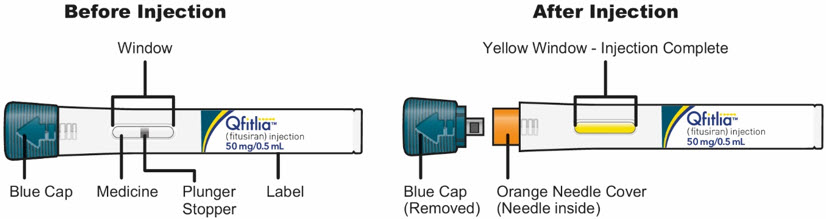
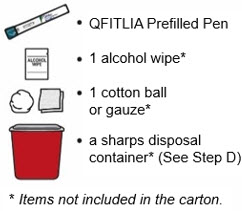
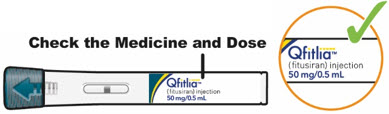
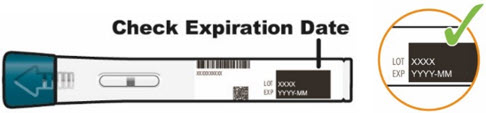
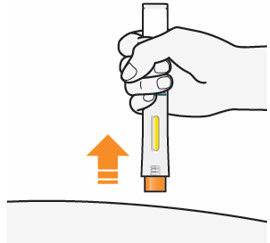
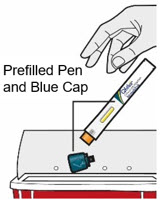
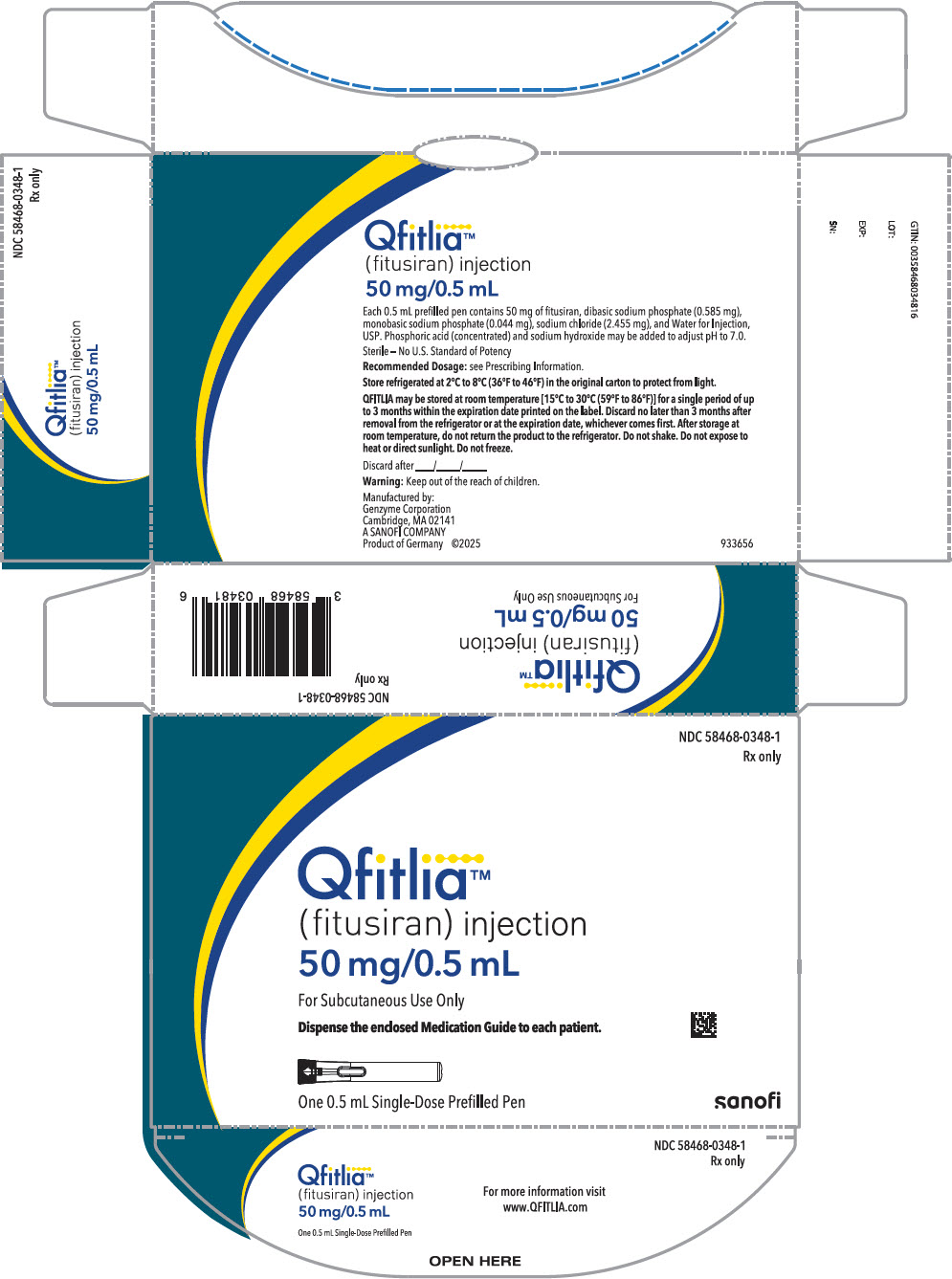
50 mg Prefilled Pen
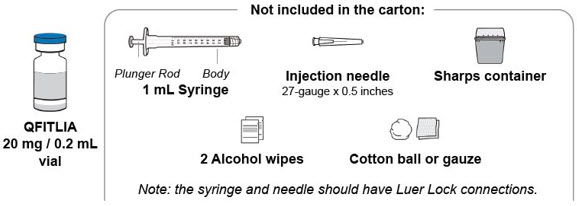
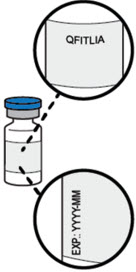
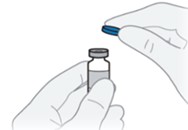
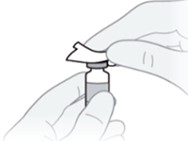
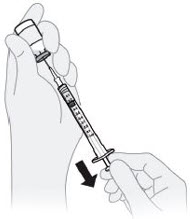
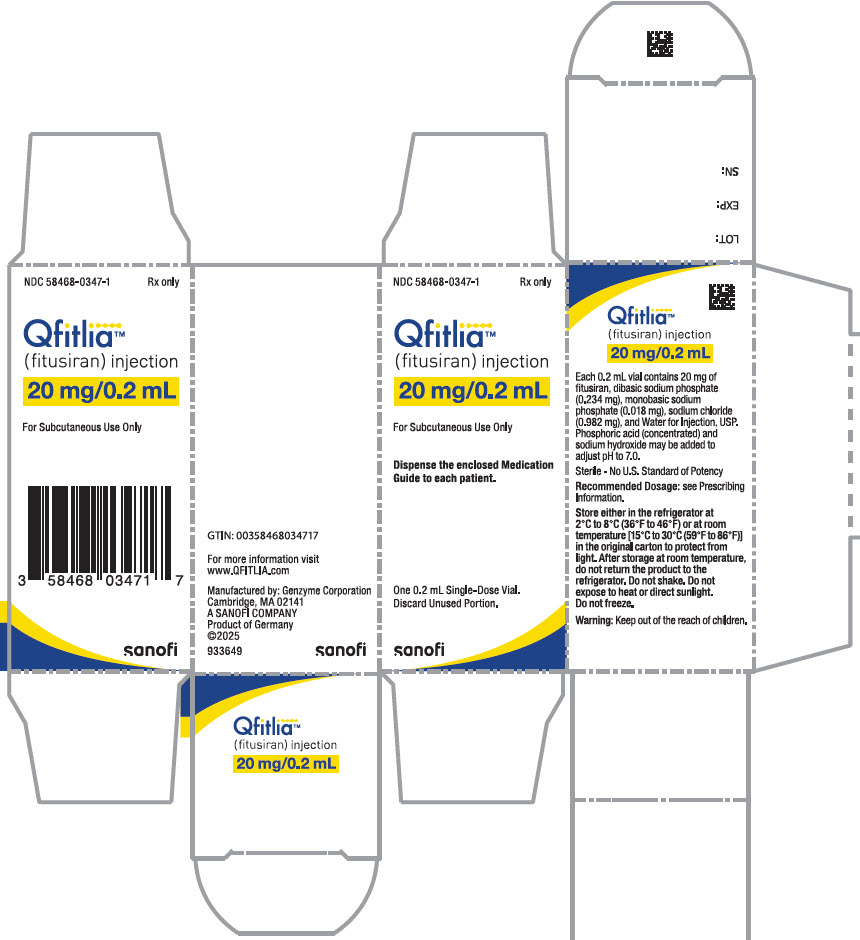
20 mg Vial
Do not shake QFITLIA at any time. Do not heat QFITLIA. Do not freeze. Do not put into direct sunlight.
Use of BPAs or CFCs
Advise the patient and/or caregiver to discontinue prophylactic use of BPA or CFC no later than 7 days after starting QFITLIA to reduce the risk of thrombotic events. Discuss the appropriate dosing and frequency of BPA or CFC for breakthrough bleed management with the patient and/or caregiver prior to starting QFITLIA prophylaxis [see Dosage and Administration (2.3)].
Thrombotic Events
Advise the patient and/or caregiver of the risk of thrombotic events while receiving QFITLIA. Inform the patient and/or caregiver of the need for periodic measurements of AT activity that may result in changes to the QFITLIA dose and/or frequency of administration to reduce the risk for thrombosis. Educate patients on the signs and symptoms of thrombotic events and to seek immediate medical attention if new symptoms of thrombotic events occur [see Warnings and Precautions (5.1)].
Acute and Recurrent Gallbladder Disease
Inform the patient and/or caregiver of the risk of acute and recurrent gallbladder disease while receiving QFITLIA. Educate patients on the signs and symptoms of gallbladder disease and to seek medical attention if new symptoms of gallbladder disease occur [see Warnings and Precautions (5.2)].
Hepatotoxicity
Inform the patient and/or caregiver of the risk of hepatotoxicity and that blood tests to monitor for this risk will be obtained before starting QFITLIA and periodically during treatment. Inform patients to seek medical attention if symptoms of hepatotoxicity occur [see Warnings and Precautions (5.3)].
Administration Instructions
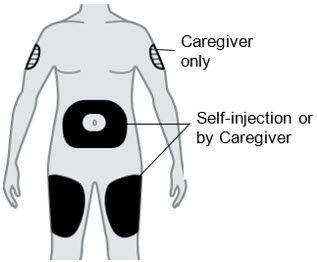
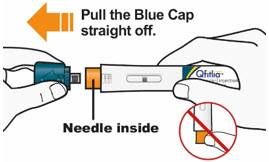
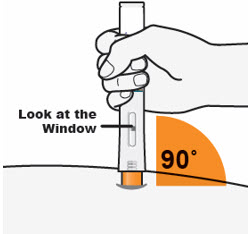
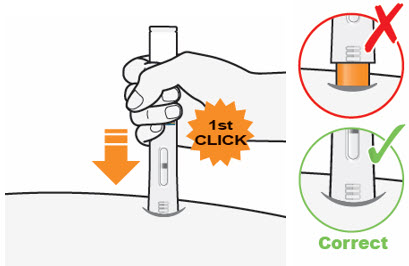
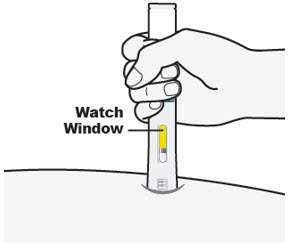
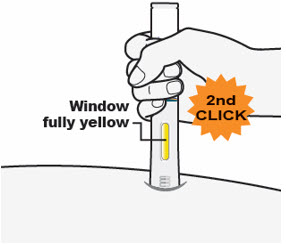
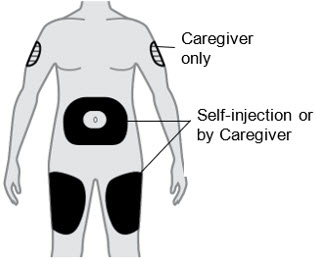
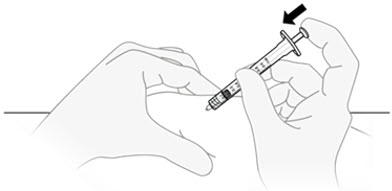
Provide training to the patient and/or caregiver on proper subcutaneous injection technique, including aseptic technique, and the preparation and administration of QFITLIA prior to use [see Dosage and Administration (2.4)].
Manufactured by:
Genzyme Corporation
Cambridge, MA 02141
A SANOFI COMPANY
© 2025 GENZYME CORPORATION. All rights reserved.
For patent information: https://www.sanofi.us/en/products-and-resources/patents
QFITLIA is a trademark of GENZYME CORPORATION