Other
Cytopenias: Serious, including fatal, pancytopenia/marrow hypoplasia, autoimmune idiopathic thrombocytopenia, and autoimmune hemolytic anemia can occur in patients receiving CAMPATH. Single doses of CAMPATH greater than 30 mg or cumulative doses greater than 90 mg per week increase the incidence of pancytopenia [see Warnings and Precautions (5.1)].
Infusion Reactions: CAMPATH administration can result in serious, including fatal, infusion reactions. Carefully monitor patients during infusions and withhold CAMPATH for Grade 3 or 4 infusion reactions. Gradually escalate CAMPATH to the recommended dose at the initiation of therapy and after interruption of therapy for 7 or more days [see Dosage and Administration (2) and Warnings and Precautions (5.2)].
Infections: Serious, including fatal, bacterial, viral, fungal, and protozoan infections can occur in patients receiving CAMPATH. Administer prophylaxis against Pneumocystis jiroveci pneumonia (PCP) and herpes virus infections [see Dosage and Administration (2.2) and Warnings and Precautions (5.3)].
Lymphopenia
Severe lymphopenia and a rapid and sustained decrease in lymphocyte subsets occurred in previously untreated and previously treated patients following administration of CAMPATH. In previously untreated patients, the median CD4+ was 0 cells/μL at one month after treatment and 238 cells/μL [25%–75% interquartile range 115 to 418 cells/μL at 6 months post treatment [see Warnings and Precautions (5.3)].
Neutropenia
In previously untreated patients, the incidence of Grade 3 or 4 neutropenia was 42% with a median time to onset of 31 days and a median duration of 37 days. In previously treated patients, the incidence of Grade 3 or 4 neutropenia was 64% with a median duration of 28 days. Ten percent of previously untreated patients and 17% of previously treated patients received granulocyte colony stimulating factors.
Anemia
In previously untreated patients, the incidence of Grade 3 or 4 anemia was 12% with a median time to onset of 31 days and a median duration of 8 days. In previously treated patients, the incidence of Grade 3 or 4 anemia was 38%. Seventeen percent of previously untreated patients and 66% of previously treated patients received either erythropoiesis stimulating agents, transfusions or both.
Thrombocytopenia
In previously untreated patients, the incidence of Grade 3 or 4 thrombocytopenia was 14% with a median time to onset of 9 days and a median duration of 14 days. In previously treated patients, the incidence of Grade 3 or 4 thrombocytopenia was 52% with a median duration of 21 days. Autoimmune thrombocytopenia was reported in 2% of previously treated patients with one fatality.
Infusion Reactions
Infusion reactions, which included pyrexia, chills, hypotension, urticaria, and dyspnea, were common. Grade 3 and 4 pyrexia and/or chills occurred in approximately 10% of previously untreated patients and in approximately 35% of previously treated patients. The occurrence of infusion reactions was greatest during the initial week of treatment and decreased with subsequent doses of CAMPATH. All patients were pretreated with antipyretics and antihistamines; additionally, 43% of previously untreated patients received glucocorticoid pre-treatment.
Infections
In the study of previously untreated patients, patients were tested weekly for CMV using a PCR assay from initiation through completion of therapy, and every 2 weeks for the first 2 months following therapy. CMV infection occurred in 16% (23/147) of previously untreated patients; approximately one-third of these infections were serious or life threatening. In studies of previously treated patients in which routine CMV surveillance was not required, CMV infection was documented in 6% (9/149) of patients; nearly all of these infections were serious or life threatening.
Other infections were reported in approximately 50% of patients across all studies. Grade 3 to 5 sepsis ranged from 3% to 10% across studies and was higher in previously treated patients. Grade 3 to 4 febrile neutropenia ranged from 5% to 10% across studies and was higher in previously treated patients. Infection-related fatalities occurred in 2% of previously untreated patients and 16% of previously treated patients. There were 198 episodes of other infection in 109 previously untreated patients; 16% were bacterial, 7% were fungal, 4% were other viral, and in 73% the organism was not identified.
Cardiac
Cardiac dysrhythmias occurred in approximately 14% of previously untreated patients. The majority were tachycardias and were temporally associated with infusion; dysrhythmias were Grade 3 or 4 in 1% of patients.
Previously Untreated Patients
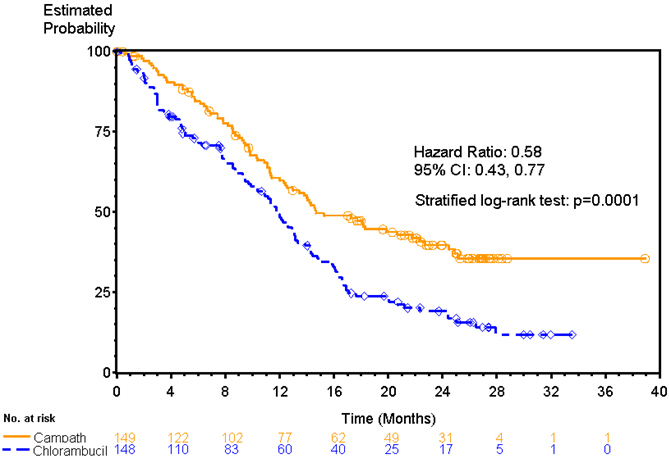
Table 1 contains selected adverse reactions observed in 294 patients randomized (1:1) to receive CAMPATH or chlorambucil as first line therapy for B-CLL. CAMPATH was administered at a dose of 30 mg intravenously three times weekly for up to 12 weeks. The median duration of therapy was 11.7 weeks with a median weekly dose of 82 mg (25–75% interquartile range: 69–90 mg).
| CAMPATH (n=147) | Chlorambucil (n=147) | ||||
|---|---|---|---|---|---|
| All Grades NCI CTC version 2.0 for adverse reactions; NCI CTCAE version 3.0 for laboratory values % | Grades 3–4 % | All Grades % | Grades 3–4 % | ||
| Blood and Lymphatic System Disorders | Lymphopenia | 97 | 97 | 9 | 1 |
| Neutropenia | 77 | 42 | 51 | 26 | |
| Anemia | 76 | 13 | 54 | 18 | |
| Thrombocytopenia | 71 | 13 | 70 | 14 | |
| General Disorders and Administration Site Conditions | Pyrexia | 69 | 10 | 11 | 1 |
| Chills | 53 | 3 | 1 | 0 | |
| Infections and Infestations | CMV viremia CMV viremia (without evidence of symptoms) includes both cases of single PCR positive test results and of confirmed CMV viremia (≥2 occasions in consecutive samples 1 week apart). For the latter, ganciclovir (or equivalent) was initiated per protocol. | 55 | 4 | 8 | 0 |
| CMV infection | 16 | 5 | 0 | 0 | |
| Other infections | 74 | 21 | 65 | 10 | |
| Skin and Subcutaneous Tissue Disorders | Urticaria | 16 | 2 | 1 | 0 |
| Rash | 13 | 1 | 4 | 0 | |
| Erythema | 4 | 0 | 1 | 0 | |
| Vascular Disorders | Hypotension | 16 | 1 | 0 | 0 |
| Hypertension | 14 | 5 | 2 | 1 | |
| Nervous System Disorders | Headache | 14 | 1 | 8 | 0 |
| Tremor | 3 | 0 | 1 | 0 | |
| Respiratory, Thoracic and Mediastinal Disorders | Dyspnea | 14 | 4 | 7 | 3 |
| Gastrointestinal Disorders | Diarrhea | 10 | 1 | 4 | 0 |
| Psychiatric Disorders | Insomnia | 10 | 0 | 3 | 0 |
| Anxiety | 8 | 0 | 1 | 0 | |
| Cardiac Disorders | Tachycardia | 10 | 0 | 1 | 0 |
Previously Treated Patients
Additional safety information was obtained from 3 single arm studies of 149 previously treated patients with CLL administered 30 mg CAMPATH intravenously three times weekly for 4 to 12 weeks (median cumulative dose 673 mg [range 2–1106 mg]; median duration of therapy 8.0 weeks). Adverse reactions in these studies not listed in Table 1 that occurred at an incidence rate of >5% were fatigue, nausea, emesis, musculoskeletal pain, anorexia, dysesthesia, mucositis, and bronchospasm.
Fatal infusion reactions
Cardiovascular: congestive heart failure, cardiomyopathy, decreased ejection fraction (some patients had been previously treated with cardiotoxic agents).
Gastrointestinal: Acute acalculous cholecystitis
Immune disorders: Goodpasture's syndrome, Graves' disease, aplastic anemia, Guillain Barré syndrome, chronic inflammatory demyelinating polyradiculoneuropathy, serum sickness, fatal transfusion associated graft versus host disease.
Infections: Epstein-Barr virus (EBV) including EBV-associated lymphoproliferative disorder, progressive multifocal leukoencephalopathy (PML), reactivation of latent viruses.
Metabolic: tumor lysis syndrome.
Neurologic: optic neuropathy.
Pregnancy Category C
Animal reproduction studies have not been conducted with CAMPATH. IgG antibodies, such as CAMPATH, can cross the placental barrier. It is not known whether CAMPATH can cause fetal harm when administered to a pregnant woman or can affect reproduction capacity. CAMPATH should be given to a pregnant woman only if clearly needed.
Cardiac Electrophysiology
The effect of multiple doses of alemtuzumab (12 mg/day for 5 days) on the QTc interval was evaluated in a single-arm study in 53 patients without malignancy. No large changes in the mean QTc interval (i.e. >20 ms) were detected in the study. A mean increase in heart rate of 22 to 26 beats/min was observed for at least 2 hours following the initial infusion of alemtuzumab. This increase in heart rate was not observed with subsequent doses.
Manufactured and distributed by:
Genzyme Corporation, Cambridge, MA 02142
CAMPATH is a registered trademark of Genzyme Corporation.
© 2017 Genzyme Corporation.