Clarins - Roll-on Deodorant Aluminum Chlorohydrate - Antiperspirant, Long-lasting, Alcohol-free Liquid
Product Images NDC 58668-5971

View Photos of Packaging, Regulatory Labels, and Product Appearance

Product Visual Gallery

This gallery contains 4 technical images submitted to the FDA as part of the official labeling for Clarins - Roll-on Deodorant Aluminum Chlorohydrate - Antiperspirant, Long-lasting, Alcohol-free (NDC 58668-5971). Unlike standard consumer photos, these assets often include clinical data figures, molecular chemical structures, and official manufacturer packaging layouts.

As provided by Laboratoires Clarins, these visuals offer a comprehensive scientific overview of the product's physical and chemical identity, aiding pharmacists and researchers in product verification and study.

FDA Label Image

Bottle (Bottle)

Bottle (Bottle)
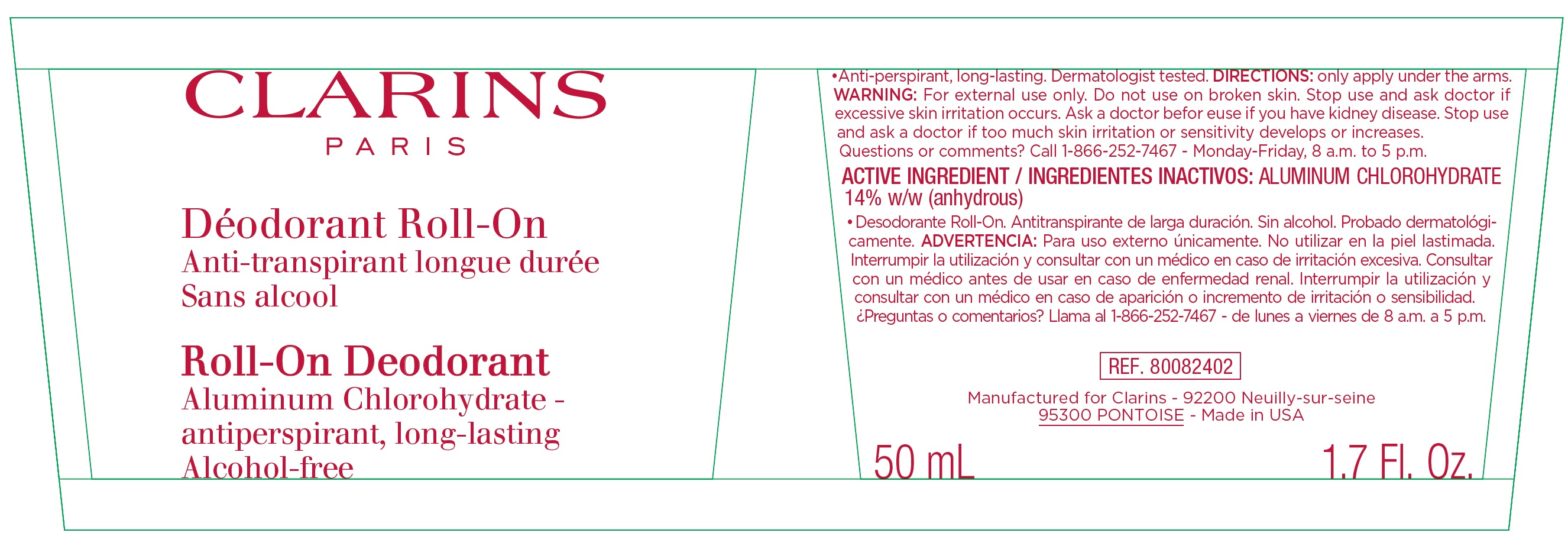
This is a long-lasting antiperspirant roll-on deodorant that has been dermatologist tested. The active ingredient is 14% anhydrous aluminum chlorohydrate, and it contains no alcohol. It should only be applied under the arms, and not on broken skin. If excessive skin irritation occurs, or if the user has kidney disease, the use should be stopped immediately and a doctor should be consulted. The product comes in a 50mL bottle and was manufactured for Clarins in Neuilly-sur-seine, France, but made in the USA.*
FDA Label Image

Box (Box)

Box (Box)
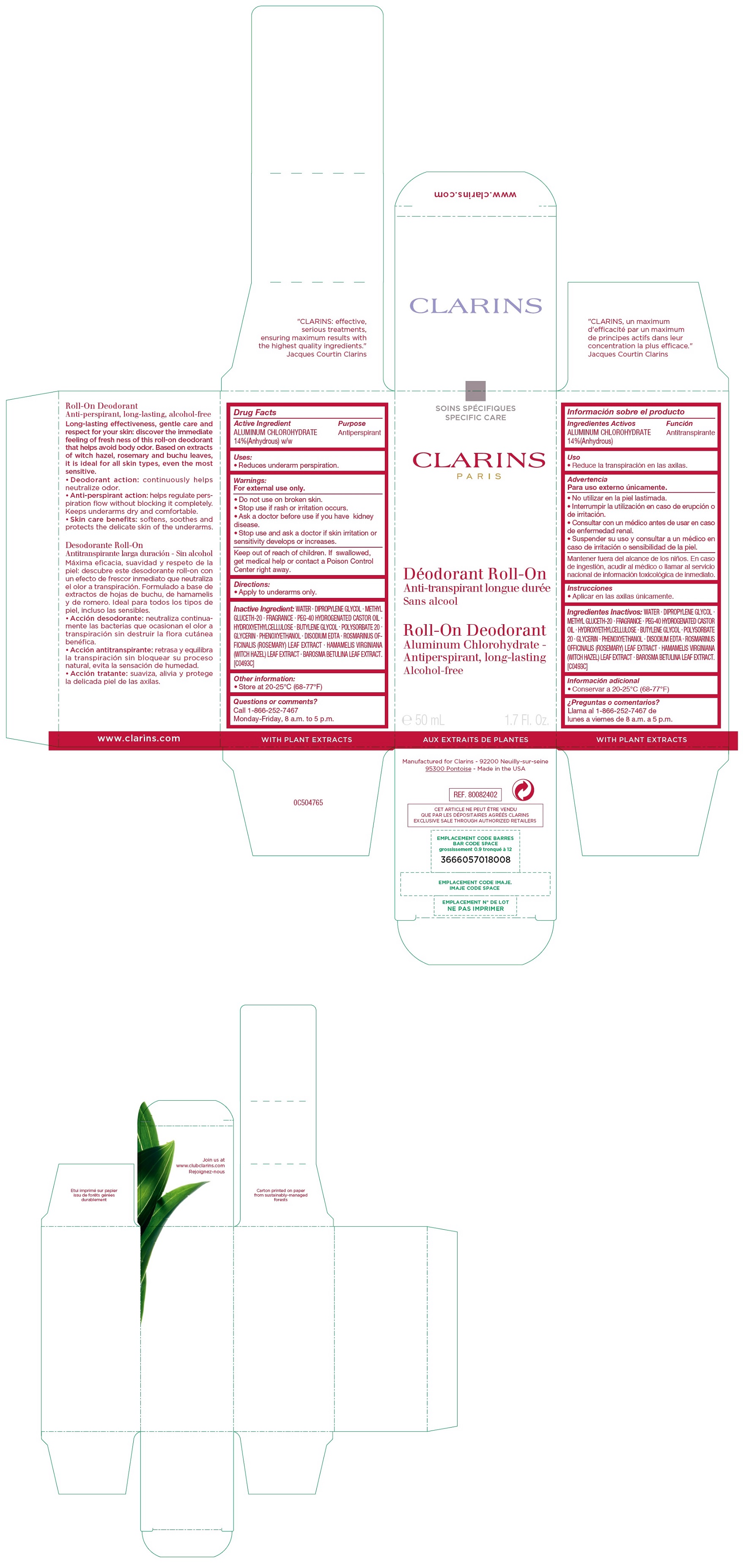
This is a description of a Roll-On Deodorant by Clarins, which is an antiperspirant, long-lasting, alcohol-free product. It is formulated with extracts of witch hazel, rosemary, and buchu leaves, making it ideal for all skin types, including sensitive ones. It neutralizes odor and delays and balances perspiration while protecting the skin of the underarms and keeping them dry and comfortable. The drug facts indicate that the active ingredient is Aluminum Chlorohydrate, and the product comes with a list of warnings, directions, and other information.*
FDA Label Image

Label (Label)

FDA Label Image

Label2 (Label2)

* These product label images have been analyzed using experimental machine learning. Please verify findings with the primary label text.