An examination of population subgroups was performed across demographic subgroup categories for adverse reactions experienced by at least 5% of ABILIFY MAINTENA subjects at least twice rate of the placebo (i.e., increased weight, akathisia, injection site pain, and sedation) in the double-blind placebo-controlled trial. This analysis did not reveal evidence of differences in safety differential adverse reaction incidence on the basis of age, gender, or race alone; however, there were few subjects ≥65 years of age.
In the data from the short-term, double-blind, placebo-controlled trial with ABILIFY MAINTENA in patients with schizophrenia, the percent of patients reporting any injection site-related adverse reaction (all reported as injection site pain) was 5.4% for patients treated with gluteal administered ABILIFY MAINTENA and 0.6% for placebo. The mean intensity of injection pain reported by subjects using a visual analog scale (0=no pain to 100=unbearably painful) approximately one hour after injection was 7.1 (SD 14.5) for the first injection and 4.8 (SD 12.4) at the last visit in the double-blind, placebo-controlled phase.
In an open-label study comparing bioavailability of ABILIFY MAINTENA administered in the deltoid or gluteal muscle, injection site pain was observed in both groups at approximately equal rates.
In the short-term, placebo-controlled trial of ABILIFY MAINTENA in adults with schizophrenia, the incidence of reported EPS-related events, excluding events related to akathisia, for ABILIFY MAINTENA-treated patients was 9.6% vs. 5.2% for placebo. The incidence of akathisia-related events for ABILIFY MAINTENA-treated patients was 11.5% vs. 3.5% for placebo.
Symptoms of dystonia, prolonged abnormal contractions of muscle groups, may occur in susceptible individuals during the first few days of treatment. Dystonic symptoms include: spasm of the neck muscles, sometimes progressing to tightness of the throat, swallowing difficulty, difficulty breathing, and/or protrusion of the tongue. While these symptoms can occur at low doses, they occur more frequently and with greater severity with high potency and at higher doses of first-generation antipsychotic drugs. An elevated risk of acute dystonia is observed in males and younger age groups. In the short-term, placebo-controlled trial of ABILIFY MAINTENA in adults with schizophrenia, the incidence of dystonia was 1.8% for ABILIFY MAINTENA vs. 0.6% for placebo.
In the short-term, placebo-controlled trial of ABILIFY MAINTENA in adults with schizophrenia, the incidence of neutropenia (absolute neutrophil count ≤1.5 thous/mcL) for ABILIFY MAINTENA-treated patients was 5.7% vs. 2.1% for placebo. An absolute neutrophil count of <1 thous/mcL (i.e., 0.95 thous/mcL) was observed in only one patient on ABILIFY MAINTENA and resolved spontaneously without any associated adverse events [see Warnings and Precautions (5.9)].
The following is a list of additional adverse reactions that have been reported in clinical trials with oral aripiprazole and not reported above for ABILIFY MAINTENA:
- Cardiac Disorders: palpitations, cardiopulmonary failure, myocardial infarction, cardio-respiratory arrest, atrioventricular block, extrasystoles, angina pectoris, myocardial ischemia, atrial flutter, supraventricular tachycardia, ventricular tachycardia
- Eye Disorders: photophobia, diplopia, eyelid edema, photopsia
- Gastrointestinal Disorders: gastroesophageal reflux disease, swollen tongue, esophagitis, pancreatitis, stomach discomfort, toothache
- General Disorders and Administration Site Conditions: asthenia, peripheral edema, chest pain, face edema, angioedema, hypothermia, pain
- Hepatobiliary Disorders: hepatitis, jaundice
- Immune System Disorders: hypersensitivity
- Injury, Poisoning, and Procedural Complications: heat stroke
- Investigations: blood prolactin increased, blood urea increased, blood creatinine increased, blood bilirubin increased, blood lactate dehydrogenase increased, glycosylated hemoglobin increased
- Metabolism and Nutrition Disorders: anorexia, hyponatremia, hypoglycemia, polydipsia, diabetic ketoacidosis
- Musculoskeletal and Connective Tissue Disorders: muscle rigidity, muscular weakness, muscle tightness, decreased mobility, rhabdomyolysis, musculoskeletal stiffness, pain in extremity, muscle spasms
- Nervous System Disorders: coordination abnormal, speech disorder, hypokinesia, hypotonia, myoclonus, akinesia, bradykinesia, choreoathetosis
- Psychiatric Disorders: loss of libido, suicide attempt, hostility, libido increased, anger, anorgasmia, delirium, intentional self-injury, completed suicide, tic, homicidal ideation, catatonia, sleep walking
- Renal and Urinary Disorders: urinary retention, polyuria, nocturia
- Reproductive System and Breast Disorders: menstruation irregular, erectile dysfunction, amenorrhea, breast pain, gynecomastia, priapism
- Respiratory, Thoracic, and Mediastinal Disorders: nasal congestion, dyspnea, pharyngolaryngeal pain, cough
- Skin and Subcutaneous Tissue Disorders: rash (including erythematous, exfoliative, generalized, macular, maculopapular, papular rash; acneiform, allergic, contact, exfoliative, seborrheic dermatitis, neurodermatitis, and drug eruption), hyperhidrosis, pruritus, photosensitivity reaction, alopecia, urticaria
Pregnancy Exposure Registry
There is a pregnancy exposure registry that monitors pregnancy outcomes in women exposed to ABILIFY during pregnancy. For more information contact the National Pregnancy Registry for Atypical Antipsychotics at 1-866-961-2388 or visit http://womensmentalhealth.org/clinical-and-research-programs/pregnancyregistry/.
Risk Summary
Neonates exposed to antipsychotic drugs, including ABILIFY MAINTENA, during the third trimester of pregnancy are at risk for extrapyramidal and/or withdrawal symptoms. There are insufficient data with ABILIFY MAINTENA use in pregnant women to inform a drug-associated risk. In animal reproduction studies, oral and intravenous aripiprazole administration during organogenesis in rats and/or rabbits at doses 10 and 11 times, respectively, the maximum recommended human dose (MRHD) produced fetal death, decreased fetal weight, undescended testicles, delayed skeletal ossification, skeletal abnormalities, and diaphragmatic hernia. Oral and intravenous aripiprazole administration during the pre- and post-natal period in rats at doses 10 times the MRHD produced prolonged gestation, stillbirths, decreased pup weight, and decreased pup survival. Consider the benefits and risks of ABILIFY MAINTENA and possible risks to the fetus when prescribing ABILIFY MAINTENA to a pregnant woman. Advise pregnant women of potential fetal risk.
The background risk of major birth defects and miscarriage for the indicated population are unknown. In the U.S. general population, the estimated background risk of major birth defects and miscarriage in clinically recognized pregnancies is 2 to 4% and 15 to 20%, respectively.
Clinical Considerations
Fetal/Neonatal Adverse Reactions
Extrapyramidal and/or withdrawal symptoms, including agitation, hypertonia, hypotonia, tremor, somnolence, respiratory distress and feeding disorder have been reported in neonates who were exposed to antipsychotic drugs (including oral aripiprazole) during the third trimester of pregnancy. These symptoms have varied in severity. Some neonates recovered within hours or days without specific treatment; others required prolonged hospitalization. Monitor neonates exhibiting extrapyramidal and/or withdrawal symptoms and manage symptoms appropriately.
Animal Data
In animal studies, aripiprazole demonstrated developmental toxicity, including possible teratogenic effects in rats and rabbits.
Pregnant rats were treated with oral doses of 3, 10, and 30 mg/kg/day which are approximately 1 to 10 times the MRHD of 30 mg/day on mg/m2 basis of aripiprazole during the period of organogenesis. Treatment at the highest dose caused a slight prolongation of gestation and delay in fetal development, as evidenced by decreased fetal weight and undescended testes. Delayed skeletal ossification was observed at 3 and 10 times the oral MRHD on mg/m2 basis.
At 3 and 10 times the oral MRHD on mg/m2 basis, delivered offspring had decreased body weights. Increased incidences of hepatodiaphragmatic nodules and diaphragmatic hernia were observed in offspring from the highest dose group (the other dose groups were not examined for these findings). Postnatally, delayed vaginal opening was seen at 3 and 10 times the oral MRHD on mg/m2 basis and impaired reproductive performance (decreased fertility rate, corpora lutea, implants, live fetuses, and increased post-implantation loss, likely mediated through effects on female offspring) along with some maternal toxicity were seen at the highest dose; however, there was no evidence to suggest that these developmental effects were secondary to maternal toxicity.
In pregnant rats treated with aripiprazole intravenously at doses of 3, 9, and 27 mg/kg/day, which are 1 to 9 times the oral MRHD on mg/m2 basis, during the period of organogenesis, decreased fetal weight and delayed skeletal ossification were seen at the highest dose which also caused maternal toxicity.
In pregnant rabbits treated with oral doses of 10, 30, and 100 mg/kg/day which are 2 to 11 times human exposure at the oral MRHD based on AUC and 6 to 65 times the oral MRHD of aripiprazole on mg/m2 basis during the period of organogenesis, decreased maternal food consumption and increased abortions were seen at the highest dose as well as increased fetal mortality. Decreased fetal weight and increased incidence of fused sternebrae were observed at 3 and 11 times the MRHD based on AUC.
In pregnant rabbits receiving aripiprazole injection intravenously at doses of 3, 10, and 30 mg/kg/day, which are 2 to 19 times the oral MRHD on mg/m2 basis during the period of organogenesis, the highest dose caused pronounced maternal toxicity that resulted in decreased fetal weight, increased fetal abnormalities (primarily skeletal), and decreased fetal skeletal ossification. The fetal no-effect dose was 5 times the human exposure at the oral MRHD based on AUC and is 6 times the oral MRHD on mg/m2 basis.
In rats treated with oral doses of 3, 10, and 30 mg/kg/day, which are 1 to 10 times the oral MRHD of aripiprazole on mg/m2 basis, peri- and post-natally (from Day 17 of gestation through Day 21 postpartum), slight maternal toxicity and slightly prolonged gestation were seen at the highest dose. An increase in stillbirths and decreases in pup weight (persisting into adulthood) and survival were also seen at this dose.
In rats treated with aripiprazole intravenously at doses of 3, 8, and 20 mg/kg/day which are 1 to 6 times the oral MRHD on mg/m2 basis from Day 6 of gestation through Day 20 postpartum, increased stillbirths were seen at 3 and 6 times the MRHD on mg/m2 basis, and decreases in early postnatal pup weight and survival were seen at the highest dose; these doses produced some maternal toxicity. There were no effects on postnatal behavioral and reproductive development.
Risk Summary
Aripiprazole is present in human breast milk; however, there are insufficient data to assess the amount in human milk, the effects on the breastfed infant, or the effects on milk production. The development and health benefits of breastfeeding should be considered along with the mother's clinical need for ABILIFY MAINTENA and any potential adverse effects on the breastfed infant from ABILIFY MAINTENA or from the underlying maternal condition.
Juvenile Animal Studies
Aripiprazole in juvenile rats caused mortality, CNS clinical signs, impaired memory and learning, and delayed sexual maturation when administered at oral doses of 10, 20, 40 mg/kg/day from weaning (21 days old) through maturity (80 days old). At 40 mg/kg/day, mortality, decreased activity, splayed hind limbs, hunched posture, ataxia, tremors and other CNS signs were observed in both genders. In addition, delayed sexual maturation was observed in males. At all doses and in a dose-dependent manner, impaired memory and learning, increased motor activity, and histopathology changes in the pituitary (atrophy), adrenals (adrenocortical hypertrophy), mammary glands (hyperplasia and increased secretion), and female reproductive organs (vaginal mucification, endometrial atrophy, decrease in ovarian corpora lutea) were observed. The changes in female reproductive organs were considered secondary to the increase in prolactin serum levels. A No Observed Adverse Effect Level (NOAEL) could not be determined and, at the lowest tested dose of 10 mg/kg/day, there is no safety margin relative to the systemic exposures (AUC0-24) for aripiprazole or its major active metabolite in adolescents at the maximum recommended pediatric dose of 15 mg/day. All drug-related effects were reversible after a 2-month recovery period, and most of the drug effects in juvenile rats were also observed in adult rats from previously conducted studies.
Aripiprazole in juvenile dogs (2 months old) caused CNS clinical signs of tremors, hypoactivity, ataxia, recumbency and limited use of hind limbs when administered orally for 6 months at 3, 10, 30 mg/kg/day. Mean body weight and weight gain were decreased up to 18% in females in all drug groups relative to control values. A NOAEL could not be determined and, at the lowest tested dose of 3 mg/kg/day, there is no safety margin relative to the systemic exposures (AUC0-24) for aripiprazole or its major active metabolite in adolescents at the maximum recommended pediatric dose of 15 mg/day. All drug-related effects were reversible after a 2-month recovery period.
Alcohol
There was no significant difference between oral aripiprazole coadministered with ethanol and placebo coadministered with ethanol on performance of gross motor skills or stimulus response in healthy subjects. As with most psychoactive medications, patients should be advised to avoid alcohol while taking ABILIFY MAINTENA.
Drug Interaction Studies
No specific drug interaction studies have been performed with ABILIFY MAINTENA. The information below is obtained from studies with oral aripiprazole.
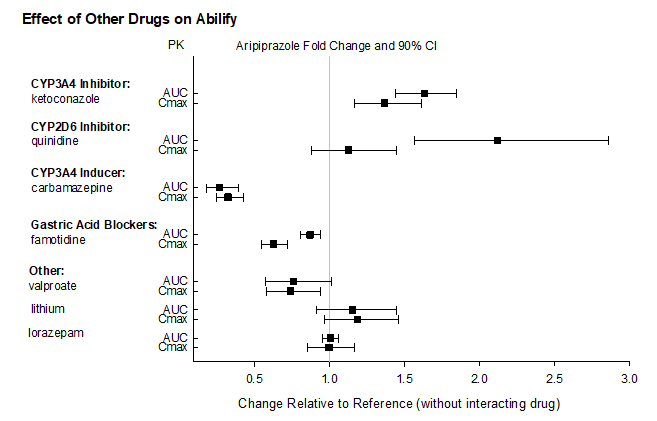
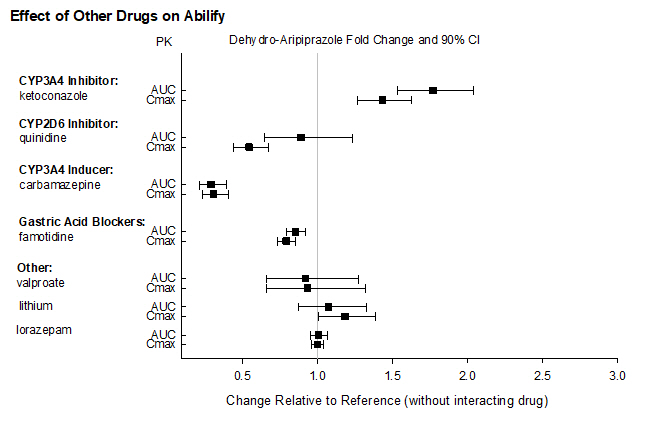
Effects of other drugs on the exposures of aripiprazole and dehydro-aripiprazole are summarized in Figure 19 and Figure 20, respectively. Based on simulation, a 4.5-fold increase in mean Cmax and AUC values at steady-state is expected when extensive metabolizers of CYP2D6 are administered with both strong CYP2D6 and CYP3A4 inhibitors. After oral administration, a 3-fold increase in mean Cmax and AUC values at steady-state is expected in poor metabolizers of CYP2D6 administered with strong CYP3A4 inhibitors.
Figure 19: The effects of other drugs on aripiprazole pharmacokinetics
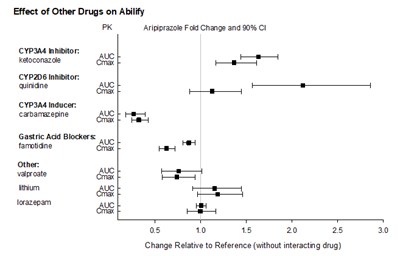
Figure 19 (Abilify Figure 19)
Figure 20: The effects of other drugs on dehydro-aripiprazole pharmacokinetics
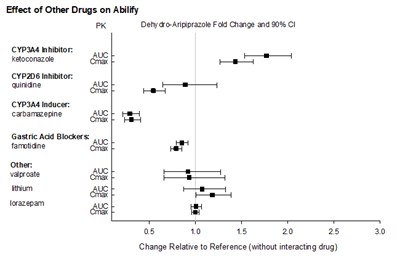
Figure 20 (Abilify Figure 20)
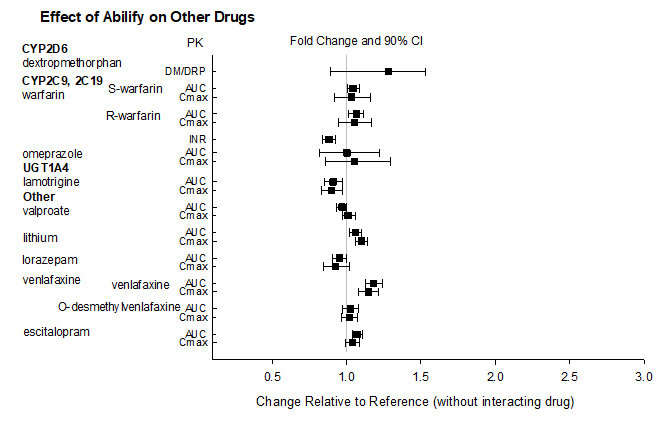
The effects of ABILIFY on the exposures of other drugs are summarized in Figure 21. A population PK analysis in patients with major depressive disorder showed no substantial change in plasma concentrations of fluoxetine (20 mg/day or 40 mg/day), paroxetine CR (37.5 mg/day or 50 mg/day), or sertraline (100 mg/day or 150 mg/day) dosed to steady-state. The steady-state plasma concentrations of fluoxetine and norfluoxetine increased by about 18% and 36%, respectively, and concentrations of paroxetine decreased by about 27%. The steady-state plasma concentrations of sertraline and desmethylsertraline were not substantially changed when these antidepressant therapies were coadministered with aripiprazole.
Figure 21: The effects of oral aripiprazole on pharmacokinetics of other drugs
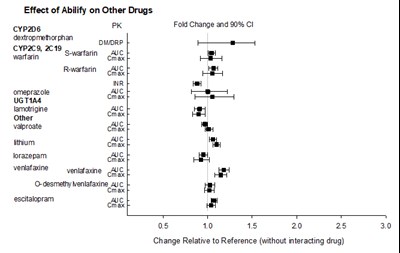
Figure 21 (Abilify Figure 21)
Studies in Specific Populations
No specific pharmacokinetic studies have been performed with ABILIFY MAINTENA in specific populations. All the information is obtained from studies with oral aripiprazole.
Exposures of aripiprazole and dehydro-aripiprazole in specific populations are summarized in Figure 22 and Figure 23, respectively. In addition, in pediatric patients (10 to 17 years of age) administered with oral aripiprazole (20 mg to 30 mg), the body weight corrected aripiprazole clearance was similar to the adults.
Figure 22 Effects of intrinsic factors on aripiprazole pharmacokinetics

Figure 22 (Abilify Figure 22)
Figure 23: Effects of intrinsic factors on dehydro-aripiprazole pharmacokinetics:
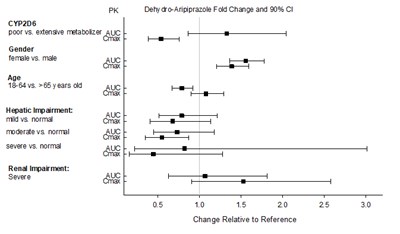
Figure 23 (Abilify Figure 23)
Carcinogenesis
Lifetime carcinogenicity studies were conducted in ICR mice, Sprague-Dawley (SD) rats, and F344 rats. Aripiprazole was administered for 2 years in the diet at doses of 1, 3, 10, and 30 mg/kg/day to ICR mice and 1, 3, and 10 mg/kg/day to F344 rats (0.2 to 5 times and 0.3 to 3 times the maximum recommended human dose [MRHD] based on mg/m2, respectively). In addition, SD rats were dosed orally for 2 years at 10, 20, 40, and 60 mg/kg/day (3 to 19 times the MRHD based on mg/m2). Aripiprazole did not induce tumors in male mice or male rats. In female mice, the incidences of pituitary gland adenomas and mammary gland adenocarcinomas and adenoacanthomas were increased at dietary doses of 3 to 30 mg/kg/day (0.1 to 0.9 times human exposure at MRHD based on AUC and 0.5 to 5 times the MRHD based on mg/m2). In female rats, the incidence of mammary gland fibroadenomas was increased at a dietary dose of 10 mg/kg/day (0.1 times human exposure at MRHD based on AUC and 3 times the MRHD based on mg/m2); and the incidences of adrenocortical carcinomas and combined adrenocortical adenomas/carcinomas were increased at an oral dose of 60 mg/kg/day (14 times human exposure at MRHD based on AUC and 19 times the MRHD based on mg/m2).
Proliferative changes in the pituitary and mammary gland of rodents have been observed following chronic administration of other antipsychotic agents and are considered prolactin-mediated. Serum prolactin was not measured in the aripiprazole carcinogenicity studies. However, increases in serum prolactin levels were observed in female mice in a 13-week dietary study at the doses associated with mammary gland and pituitary tumors. Serum prolactin was not increased in female rats in 4-week and 13-week dietary studies at the dose associated with mammary gland tumors. The relevance for human risk of the findings of prolactin-mediated endocrine tumors in rodents is unknown.
Mutagenesis
The mutagenic potential of aripiprazole was tested in the in vitro bacterial reverse-mutation assay, the in vitro bacterial DNA repair assay, the in vitro forward gene mutation assay in mouse lymphoma cells, the in vitro chromosomal aberration assay in Chinese hamster lung (CHL) cells, the in vivo micronucleus assay in mice, and the unscheduled DNA synthesis assay in rats. Aripiprazole and a metabolite (2,3-DCPP) were clastogenic in the in vitro chromosomal aberration assay in CHL cells with and without metabolic activation. The metabolite, 2,3-DCPP, produced increases in numerical aberrations in the in vitro assay in CHL cells in the absence of metabolic activation. A positive response was obtained in the in vivo micronucleus assay in mice; however, the response was due to a mechanism not considered relevant to humans.
Impairment of Fertility
Female rats were treated with oral doses of 2, 6, and 20 mg/kg/day (0.6, 2, and 6 times the MRHD on mg/m2 basis) of aripiprazole from 2 weeks prior to mating through Day 7 of gestation. Estrus cycle irregularities and increased corpora lutea were seen at all doses, but no impairment of fertility was seen. Increased pre-implantation loss was seen at 6 and 20 mg/kg/day and decreased fetal weight was seen at 20 mg/kg/day.
Male rats were treated with oral doses of 20, 40, and 60 mg/kg/day (6, 13, and 19 times the MRHD on mg/m2 basis) of aripiprazole from 9 weeks prior to mating through mating. Disturbances in spermatogenesis were seen at 60 mg/kg and prostate atrophy was seen at 40 and 60 mg/kg, but no impairment of fertility was seen.
Oral Aripiprazole
Aripiprazole produced retinal degeneration in albino rats in a 26-week chronic toxicity study at a dose of 60 mg/kg and in a 2-year carcinogenicity study at doses of 40 and 60 mg/kg. The 40 and 60 mg/kg/day doses are 13 and 19 times the MRHD based on mg/m2 and 7 to 14 times human exposure at MRHD based on AUC. Evaluation of the retinas of albino mice and of monkeys did not reveal evidence of retinal degeneration. Additional studies to further evaluate the mechanism have not been performed. The relevance of this finding to human risk is unknown.
Intramuscular Aripiprazole
The toxicological profile for aripiprazole administered to experimental animals by intramuscular injection is generally similar to that seen following oral administration at comparable plasma levels of the drug. With intramuscular injection, however, injection-site tissue reactions are observed that consist of localized inflammation, swelling, scabbing and foreign-body reactions to deposited drug. These effects gradually resolved with discontinuation of dosing.
After 26 weeks of treatment in rats, the no-observed-adverse-effect level (NOAEL) was 50 mg/kg in male rats and 100 mg/kg in female rats, which are approximately 1 and 2 times, respectively, the maximum recommended human 400-mg dose of aripiprazole extended-release injectable suspension on mg/m2 body surface area. At the NOAEL in rats, the AUC7d values were 14.4 mcg∙h/mL in males and 104.1 mcg∙h/mL in females. In dogs at 52 weeks of treatment at the NOAEL of 40 mg/kg, which is approximately 3 times the MRHD (400 mg) on mg/m2 body surface area, the AUC7d values were approximately 59 mcg∙h/mL in males and 44 mcg∙h/mL in females. In patients at the MRHD of 400 mg, the AUCτ (0-28 days) was 163 mcg∙h/mL. For comparison to this human AUC, extrapolating the animal AUC7d values to an AUC28d results in AUC28d values of approximately 58 and 416 mcg∙h/mL for male and female rats, respectively, and 236 and 175 mcg∙h/mL for male and female dogs, respectively.
Short-Term Efficacy
In the short-term (12-week), randomized, double-blind, placebo-controlled trial in acutely relapsed adults (Study 1), the primary measure used for assessing psychiatric signs and symptoms was the Positive and Negative Syndrome Scale (PANSS). The PANSS is a 30-item scale that measures positive symptoms of schizophrenia (7 items), negative symptoms of schizophrenia (7 items), and general psychopathology (16 items), each rated on a scale of 1 (absent) to 7 (extreme); total PANSS scores range from 30 to 210. The primary endpoint was the change from baseline in PANSS total score to week 10.
The inclusion criteria for this short-term trial included adult inpatients who met DSM-IV-TR criteria for schizophrenia. In addition, all patients entering the trial must have experienced an acute psychotic episode as defined by both PANSS Total Score ≥80 and a PANSS score of >4 on each of four specific psychotic symptoms (conceptual disorganization, hallucinatory behavior, suspiciousness/persecution, unusual thought content) at screening and baseline. The key secondary endpoint was the change from baseline in Clinical Global Impression-Severity (CGI-S) assessment scale to week 10. The CGI-S rates the severity of mental illness on a scale of 1 (normal) to 7 (among the most extremely ill) based on the total clinical experience of the rater in treating patients with schizophrenia. Patients had a mean PANSS total score of 103 (range 82 to 144) and a CGI-S score of 5.2 (markedly ill) at entry.
In this 12-week study (n=339) comparing ABILIFY MAINTENA (n=167) to placebo (n=172), patients were administered 400 mg ABILIFY MAINTENA or placebo on Days 0, 28, and 56. The dose could be adjusted down and up within the range of 400 to 300 mg on a one-time basis. ABILIFY MAINTENA was superior to placebo in improving the PANSS total score at the end of week 10 (see Table 9).
Table 9: Schizophrenia Short-term Study| Study Number | Treatment Group | Primary Efficacy Measure: PANSS Total Score |
|---|
| Mean Baseline Score (SD) | LS Mean Change from Baseline (SE) | Placebo-subtracted Difference Difference (drug minus placebo) in least-squares mean change from baseline. (95% CI) |
|---|
| SD: standard deviation; SE: standard error; LS Mean: least-squares mean; CI: unadjusted confidence interval. |
| Study 1 | ABILIFY MAINTENA (400 to 300 mg) | 102.4 (11.4) | -26.8 (1.6) | -15.1 (-19.4, -10.8) |
| Placebo | 103.4 (11.1) | -11.7 (1.6) | -- |
The change in PANSS total score by week is shown in Figure 24. ABILIFY MAINTENA also showed improvement in symptoms represented by CGI-S score mean change from baseline to week 10. The results of exploratory subgroup analyses by gender, race, age, ethnicity, and BMI were similar to the results of the overall population.
| Figure 24: Weekly PANSS Total Score-Change in the 12-Week, Placebo-Controlled Study with ABILIFY MAINTENA |
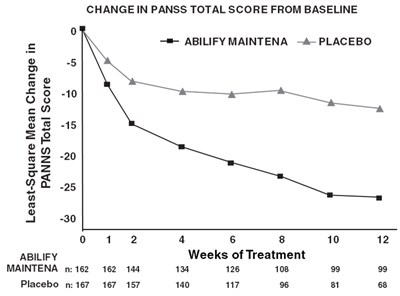 Figure 24 (Abilify Figure 24) |
n = the number of patients remaining in the respective study arm at each time point
Longer-Term Efficacy
The efficacy of ABILIFY MAINTENA in maintaining symptomatic control in schizophrenia was established in a double-blind, placebo-controlled, randomized-withdrawal trial in adult patients (Study 2) who met DSM-IV-TR criteria for schizophrenia and who were being treated with at least one antipsychotic medication. Patients had at least a 3-year history of illness and a history of relapse or symptom exacerbation when not receiving antipsychotic treatment.
In addition to the PANSS and CGI-S, clinical ratings during this trial included the: