Northside Hospital Amenity Kit--gi Dept Kit
Product Images NDC 59448-201

View Photos of Packaging, Regulatory Labels, and Product Appearance

Product Visual Gallery

This gallery contains 2 technical images submitted to the FDA as part of the official labeling for Northside Hospital Amenity Kit--gi Dept (NDC 59448-201). Unlike standard consumer photos, these assets often include clinical data figures, molecular chemical structures, and official manufacturer packaging layouts.

As provided by Asp Global, Llc, these visuals offer a comprehensive scientific overview of the product's physical and chemical identity, aiding pharmacists and researchers in product verification and study.

FDA Label Image

Principal Display Panel (53 mL Bottle Label)

Principal Display Panel (53 mL Bottle Label)
This is an antiseptic hand sanitizer distributed by ASP Global, LLC. The active ingredient is ethyl alcohol, which makes up 62% of the formula. It is intended for external use only, and should not be used near the eyes or on broken skin. It is recommended to wet hands thoroughly with product and allow it to dry without wiping. The product contains other inactive ingredients such as water, aloe vera, and glycerin. It is essential to keep this product out of reach of children, and if swallowed, medical help should be sought. The sanitizer is made in China and distributed in the USA.*
FDA Label Image

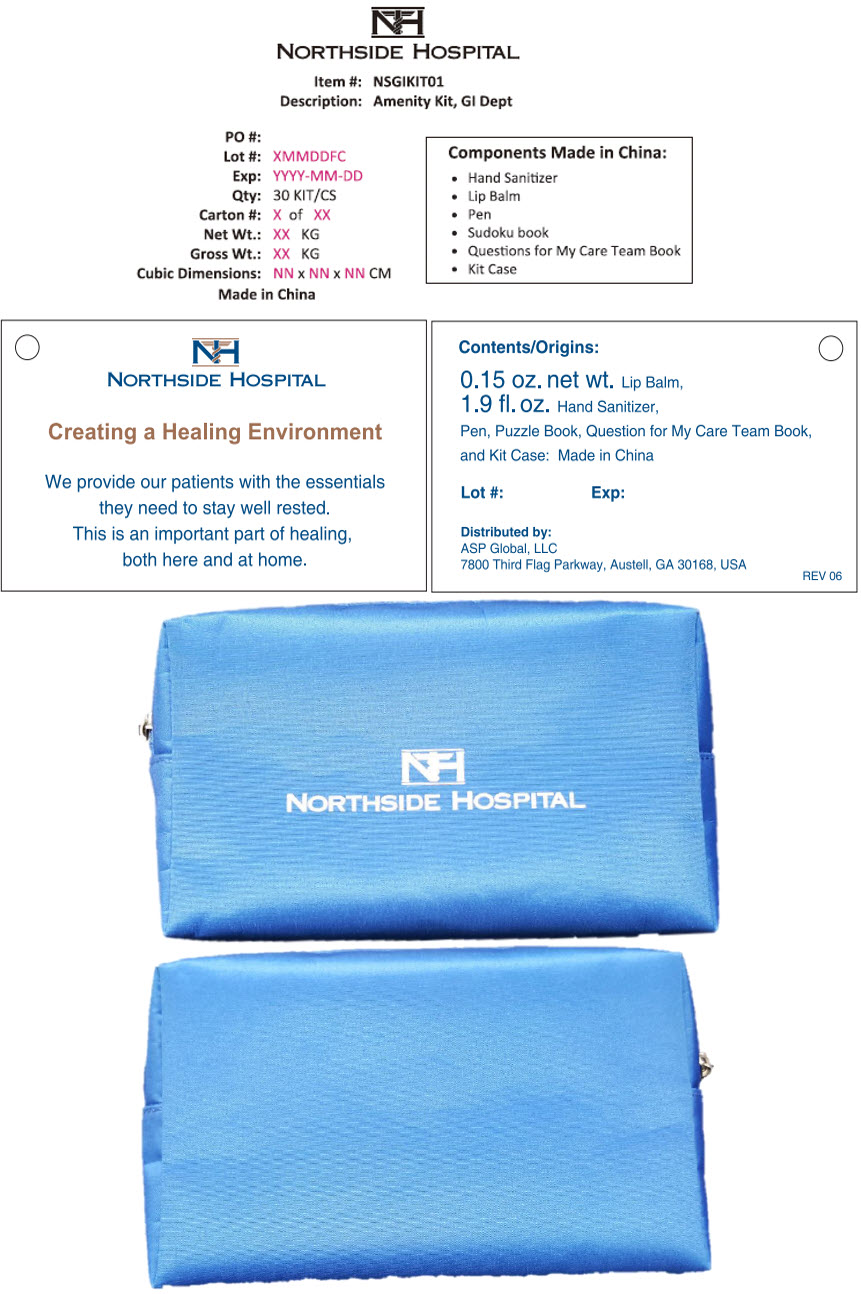
Principal Display Panel (Kit Label)

Principal Display Panel (Kit Label)
This is a description of an Amenity Kit for the gastrointestinal department of Northside Hospital. The kit contains 0.15 oz. of lip balm, 1.9 fl. oz. of hand sanitizer, a pen, a puzzle book, and a "Questions for My Care Team" book. The kit case is made in China and distributed by AASP Global, LLC. The cubic dimensions of the kit case are not specified. Northside Hospital aims to provide healing to their patients by giving them the essential items they need to rest comfortably. Lot number and expiration date are not available.*

* These product label images have been analyzed using experimental machine learning. Please verify findings with the primary label text.