1 Indications And Usage
XOCOVA is indicated for post-exposure prophylaxis of coronavirus disease 2019 (COVID-19) in adults and adolescents 12 years of age and older following contact with an individual who has COVID-19.
The following Structured Product Label (SPL) was submitted to the FDA by Shionogi Inc. for the product Xocova (NDC 59630-711). This document serves as the official prescribing information, containing essential scientific data and clinical materials required for healthcare providers and patients.
This specific version of the label includes detailed information regarding 1 indications and usage, 2.1 pregnancy evaluation prior to initiating xocova, 2.2 recommended dosage, 3 dosage forms and strengths, 4 contraindications, 5.1 embryofetal toxicity, 5.2 risk of serious adverse reactions due to drug interactions, 5.3 hypersensitivity reactions including anaphylaxis, and other regulatory disclosures. Use the navigation below to review specific sections of the FDA submission.
XOCOVA is indicated for post-exposure prophylaxis of coronavirus disease 2019 (COVID-19) in adults and adolescents 12 years of age and older following contact with an individual who has COVID-19.
Verify pregnancy status of females of reproductive potential prior to initiating XOCOVA [see Warnings and Precautions (5.1) and Use in Specific Populations (8.1, 8.3)].
The recommended dosage of XOCOVA in adults and adolescents 12 years of age and older is 375 mg (three 125-mg tablets taken together) orally on Day 1 and 125 mg (one 125-mg tablet) orally on Days 2 to 5 with or without food [see Clinical Pharmacology (12.3)].
Begin XOCOVA as soon as possible and within 72 hours following contact with an individual who has COVID-19. The tablets should be taken at approximately the same time each day. If a dose of XOCOVA is missed, take the missed dose as soon as possible on the same day, and then take the next dose as scheduled the following day.
Tablets: white to light yellow-white, round tablets containing 125 mg of ensitrelvir, debossed with the Shionogi trademark (

Image (Xocova 01)
XOCOVA is contraindicated in patients with a history of clinically significant hypersensitivity reactions to ensitrelvir or any other components of the product.
XOCOVA is contraindicated in patients taking drugs that are:
Based on animal reproduction studies, XOCOVA may cause fetal harm when administered to a pregnant woman. In rabbits, embryofetal toxicity (including skeletal malformations and embryofetal lethality) was observed in rabbit offspring following exposure of pregnant rabbits to ensitrelvir at 7 times the human exposures at the recommended human dose (RHD). Likewise in rats, fetal growth retardation, low fetal body weight, skeletal variations, offspring lethality, low body weight in offspring, and retardation of morphological development were observed following exposure during gestation and lactation at exposures 9 times the human exposures at the RHD [see Use in Specific Populations (8.1)].
Advise pregnant women and females of reproductive potential that XOCOVA may cause fetal harm. Verify pregnancy status of females of reproductive potential prior to initiating XOCOVA. Advise females of reproductive potential to use effective contraception during XOCOVA use and for 2 weeks after the final dose [see Use in Specific Populations (8.1, 8.3)].
XOCOVA is a strong CYP3A inhibitor and an inhibitor of P-gp and BCRP. In patients receiving or initiating medications metabolized by CYP3A or transported by P-gp or BCRP, XOCOVA may increase plasma concentrations of those medications and may potentially lead to severe, life-threatening, or fatal events from increased exposure of concomitant medications. In addition, medications that induce CYP3A may decrease concentrations of ensitrelvir, leading to loss of therapeutic effect of XOCOVA.
Prior to prescribing XOCOVA, review all medications taken by the patient to assess potential drug-drug interactions and determine if concomitant medications require a dose adjustment, interruption, and/or additional monitoring (e.g., calcineurin inhibitors) [see Contraindications (4) and Drug Interactions (7)]. Consider the benefit of XOCOVA and whether the risk of potential drug-drug interactions can be appropriately managed [see Drug Interactions (7)].
Hypersensitivity reactions, including anaphylaxis, anaphylactic shock, and angioedema, have been reported with XOCOVA [see Adverse Reactions (6.2)]. If signs and symptoms of a clinically significant hypersensitivity reaction occur, immediately discontinue XOCOVA and initiate appropriate treatment.
The following clinically significant adverse reactions are described elsewhere in the labeling:
Because clinical trials are conducted under widely varying conditions, adverse reaction rates observed in the clinical trials of a drug cannot be directly compared to rates in the clinical trials of another drug and may not reflect the rates observed in practice.
The overall safety profile of XOCOVA is based on data from 2,831 adults and adolescents exposed to the recommended dosage and duration of XOCOVA in controlled clinical trials.
Trial SCORPIO-PEP was a randomized, double-blind, placebo-controlled trial in which 1,190 subjects received oral XOCOVA (375 mg [Day 1]/125 mg [Days 2-5]) and 1,187 subjects received oral placebo (Days 1-5). The most common adverse events (regardless of causality) occurring in ≥1% of the XOCOVA group and at a greater frequency compared to placebo were headache (2.9% and 2.6%, respectively), diarrhea (1.7% and 1.3%, respectively), and cough (1.1% and 0.6%, respectively). The proportion of subjects who discontinued study intervention due to an adverse event was <0.1% in both the XOCOVA and placebo groups.
Laboratory Abnormalities:
Asymptomatic hemoglobin declines from baseline of >2 g/dL occurred in 3% of XOCOVA recipients versus 1% of placebo recipients.
The following adverse reactions have been identified during post approval use of XOCOVA outside of the United States. Because these reactions are reported voluntarily from a population of uncertain size, it is not always possible to reliably estimate their frequency or establish a causal relationship to drug exposure.
Ensitrelvir is a strong inhibitor of CYP3A and an inhibitor of P-gp and BCRP. Co-administration of XOCOVA with drugs that are primarily metabolized by CYP3A or are transported by P-gp or BCRP may result in increased plasma concentrations of such drugs and increase the risk of adverse events [see Contraindications (4), Warnings and Precautions (5.2), Drug Interactions (7.3), and Clinical Pharmacology (12.3)]. For drugs that are CYP3A substrates and contraindicated with XOCOVA, initiation of XOCOVA should be considered only after careful evaluation of relevant clinical and pharmacokinetic factors related to the concomitant medication. In addition, re-initiation of contraindicated CYP3A substrates should be considered based on an assessment of the duration of CYP3A inhibition and patient‑specific considerations. Refer to individual drug prescribing information for additional information.
Ensitrelvir is a CYP3A substrate; therefore, drugs that induce CYP3A may decrease ensitrelvir plasma concentrations and reduce XOCOVA therapeutic effect [see Drug Interactions (7.3) and Clinical Pharmacology (12.3)]. Therefore, use of XOCOVA with strong CYP3A4 inducers is contraindicated [see Contraindications (4)]. No dose adjustment is recommended when XOCOVA is used concomitantly with moderate or weak CYP3A inducers [see Warnings and Precautions (5.2)]. Refer to individual drug prescribing information for additional information.
Table 1 provides examples of drugs that are contraindicated with XOCOVA [see Contraindications (4) and Warnings and Precautions (5.2)]. Table 1 is provided as a guide and is not a comprehensive list of all possible drugs that may interact with XOCOVA. The healthcare provider should consult other appropriate resources, such as the prescribing information for the interacting drug, for comprehensive information on dosing and monitoring with concomitant use of a strong CYP3A inhibitor, like XOCOVA [see Drug Interactions (7.1)].
| Drug Class | Drug(s) within Class | Effect on Drug Concentration | Clinical Comment |
|---|---|---|---|
| Antiarrhythmics | quinidine | ↑ antiarrhythmic | Co-administration is contraindicated due to potential for cardiac arrhythmias. |
| Anticancer drugs | apalutamide, enzalutamide | ↓ ensitrelvir | Co-administration is contraindicated due to potential loss of virologic response. |
| Anticonvulsants | carbamazepine, phenytoin | ↓ ensitrelvir | Co-administration is contraindicated due to potential loss of virologic response. |
| Antigout agents | colchicine | ↑ colchicine | Co-administration is contraindicated due to potential for serious and/or life-threatening reactions in patients with renal and/or hepatic impairment. |
| Antimycobacterials | rifampin | ↓ ensitrelvir | Co-administration is contraindicated due to potential loss of virologic response. |
| Antipsychotics | lurasidone, pimozide | ↑ lurasidone, pimozide | Co-administration is contraindicated due to serious and/or life-threatening reactions, such as cardiac arrhythmias. |
| Cardiovascular drugs | eplerenone, ivabradine | ↑ eplerenone, ivabradine | Co-administration is contraindicated. |
| Cystic fibrosis transmembrane conductance regulator potentiators | lumacaftor/ivacaftor | ↓ ensitrelvir | Co-administration is contraindicated due to potential loss of virologic response. |
| Ergot derivatives | dihydroergotamine, ergotamine, methylergonovine | ↑ dihydroergotamine, ergotamine, methylergonovine | Co-administration is contraindicated due to potential for acute ergot toxicity characterized by vasospasm and ischemia of the extremities and other tissues, including the central nervous system. |
| Herbal products (for depression) | St. John's wort | ↓ ensitrelvir | Co-administration is contraindicated due to potential loss of virologic response. |
| HMG-CoA reductase inhibitors (statins) | simvastatin | ↑ simvastatin | Co-administration is contraindicated. Discontinue use of simvastatin at least 12 hours prior to initiation of XOCOVA. |
| Immunosuppressants | voclosporin | ↑ voclosporin | Co-administration is contraindicated due to potential for acute and/or chronic nephrotoxicity. |
| Microsomal triglyceride transfer protein (MTTP) inhibitors | lomitapide | ↑ lomitapide | Co-administration is contraindicated due to potential for hepatotoxicity and gastrointestinal adverse reactions. |
| Mineralocorticoid receptor antagonists | finerenone | ↑ finerenone | Co-administration is contraindicated due to potential for serious adverse reactions, including hyperkalemia, hypotension, and hyponatremia. |
| Sedatives | triazolam | ↑ triazolam | Co-administration is contraindicated. |
Risk Summary
Based on animal reproduction studies, XOCOVA may cause fetal harm when administered to a pregnant woman. Embryofetal toxicity (including skeletal malformations and embryofetal lethality) was observed in rabbits during the period of organogenesis at ensitrelvir exposures 7 times the human exposures at the recommended human dose (RHD). In rats, fetal growth retardation, low fetal body weight, and skeletal variations were observed during the period of organogenesis at ensitrelvir exposures 9 times the RHD. In addition, lethality, low body weight, and retardation of morphological development were observed in pre-weaning pups during gestation and lactation at ensitrelvir exposures 9 times the RHD (see Data). Advise pregnant women and females of reproductive potential that XOCOVA may cause fetal harm.
The available clinical data on the use of XOCOVA during pregnancy are insufficient to identify a drug-associated risk of major birth defects, miscarriage, or other adverse maternal or fetal outcomes.
The background risk of major birth defects and miscarriage for the indicated population is unknown. All pregnancies have a risk of birth defects, loss, and other adverse outcomes. In the general population in the United States, the estimated background risk of major birth defects and miscarriage in clinically recognized pregnancies is 2% to 4% and 15% to 20%, respectively.
Data
Animal Data
In an embryofetal development study in pregnant rabbits, ensitrelvir was administered at oral doses of 30, 100, or 300 mg/kg/day on gestation days (GD) 6-19. Embryofetal lethality, skeletal malformations and variations, abortion, and post-implantation loss were observed with maternal toxicity (decreased food consumption and body weight and body weight gain) at doses ≥100 mg/kg/day. Malformations of the axial skeleton included fused sternebra, branched rib, fused cervical centrum, supernumerary thoracic vertebra, fused thoracic arch, and fused caudal centrum. Skeletal variations included splitting of the thoracic centrum and increased frequencies of full supernumerary rib and/or supernumerary lumbar vertebra. No effects were observed at 30 mg/kg/day, which is estimated to be 3 times the human exposure at the RHD based on the area under the curve (AUC). In a second embryofetal development study in pregnant rabbits, ensitrelvir was administered at 300 mg/kg/day on GD 6-9, 10-12, 13-15, and 16-19. Similar malformations of the axial skeleton were observed, with most of the abnormalities present in animals dosed on GD 6-9; maternal toxicity (presenting as low food consumption) was also present during each segmented dosing period.
In an embryofetal development study in pregnant rats, ensitrelvir was administered at oral doses of 20, 60, or 1000 mg/kg/day on GD 6-17. A delay in fetal development (as measured by decreased bone ossification and fetal body weight), as well as an increased incidence of short supernumerary rib, were observed at 1000 mg/kg/day. Decreased food consumption and body weight were also observed at this dose. No effects were observed at 60 mg/kg/day, which is estimated to be 5 times the human exposure at the RHD based on AUC.
In a pre- and postnatal development study, ensitrelvir was administered to pregnant rats at oral doses of 20, 60, or 1000 mg/kg/day from GD 6 to postnatal day (PND) 20. Lethality, low body weight, and retardation of morphological development (delayed eyelid opening and sexual maturation) were observed at the highest dose of 1000 mg/kg/day, accompanied by maternal toxicity (total litter loss, decreased body weight and body weight gain, and decreased food consumption). No effects were observed at 60 mg/kg/day, which is estimated to be 5 times the human exposure at the RHD based on AUC.
Risk Summary
There are no data on the presence of ensitrelvir in human milk, the effects on the breastfed infant, or the effects on milk production. Ensitrelvir was present in the milk of lactating rats (see Data). When a drug is present in animal milk, it is likely that the drug will be present in human milk. Due to the potential for adverse effects in a breastfed child from XOCOVA, advise lactating women not to breastfeed while taking XOCOVA and for at least 2 weeks after the final dose [see Use in Specific Populations (8.4)].
Data
In rats, ensitrelvir was excreted into the milk of lactating rats following a single oral administration of 2 mg/kg. Milk concentrations of ensitrelvir were approximately 2 times that of maternal plasma concentrations, observed 4 hours post-dose. The concentration of ensitrelvir in animal milk does not necessarily predict the concentration of ensitrelvir in human milk.
Based on animal data, XOCOVA may cause fetal harm when administered to pregnant women [see Warnings and Precautions (5.1) and Use in Specific Populations (8.1)].
Pregnancy Testing
Verify pregnancy status of females of reproductive potential prior to initiating XOCOVA.
Contraception
Females
Advise females of reproductive potential to use effective contraception during use of XOCOVA and for 2 weeks after the final dose.
The safety and effectiveness of XOCOVA for the post-exposure prophylaxis of COVID-19 in adolescents is supported by results of SCORPIO-PEP, an adequate and well-controlled trial that enrolled adults and adolescents ≥12 years of age. Of the 139 adolescents enrolled in this trial, 72 received XOCOVA. The safety of XOCOVA in adolescents is further supported by data from 16 adolescents who received XOCOVA in another clinical trial. No overall differences in safety, pharmacokinetics, or efficacy of XOCOVA were observed between adolescents and adults [see Adverse Reactions (6.1), Clinical Pharmacology (12.3), and Clinical Studies (14.1)].
The safety and effectiveness of XOCOVA have not been established in pediatric patients less than 12 years of age.
Juvenile Animal Toxicity Data
In a juvenile toxicology study in rats, ensitrelvir was administered orally at 0, 10, 30 or 90 mg/kg for 8 or 9 days, from PND 4-11 or PND 12-20, respectively (PND 4-20 in rats is equivalent to approximately 0 to 2 years in humans). Femur bone shortening (accompanied by decreased body weight) was observed in rats dosed from PND 4-11 at 90 mg/kg, which is estimated to be 14 times the human exposure at the recommended human dose (RHD) in adults based on AUC. These effects were not observed in animals dosed from PND 4-11 with 90 mg/kg followed by a 41-day dose-free period. No effects were observed at 30 mg/kg for animals dosed from PND 4-11, which is estimated to be 8 times the human exposure at the RHD in adults. No effects were observed at 90 mg/kg for animals dosed from PND 12-20, which is estimated to be 12 times the human exposure at the RHD in adults.
In another juvenile toxicology study in rats, ensitrelvir was administered orally at 0, 30, 90 or 1000 mg/kg for 8 days from PND 21-28 or PND 29-36, or 9 days from PND 37-45 (PND 21-45 in rats is equivalent to approximately 2 to 12 years in humans). Femur bone shortening (accompanied by decreased body weight and food consumption) was observed in rats dosed from PND 21-28 at 1000 mg/kg which is estimated to be 11 times the human exposure at the RHD in adults based on AUC. These effects were not observed in animals dosed from PND 21-28 with 1000 mg/kg followed by a 22-day dose-free period. No effects were observed at 90 mg/kg, which is estimated to be 6 times the human exposure at the RHD in adults. No effects were observed at 1000 mg/kg for animals dosed from PND 29-36 or PND 37-45, which is estimated to be approximately 10 times the human exposure at the RHD in adults.
Clinical studies of XOCOVA included subjects 65 years of age and older and their data contributes to the overall assessment of safety and efficacy [see Adverse Reactions (6.1) and Clinical Studies (14.1)]. Among XOCOVA recipients in Trial SCORPIO-PEP, 114 (10%) were 65 years of age or older, and 41 (3%) were 75 years of age and older. No overall differences in efficacy and safety were observed between these subjects and younger subjects, and other reported clinical experience has not identified differences in safety between the elderly and younger patients, but greater sensitivity of some older individuals cannot be ruled out.
No dosage adjustment for XOCOVA is recommended in patients with mild, moderate, or severe renal impairment [see Clinical Pharmacology (12.3)].
No dosage adjustment for XOCOVA is recommended in patients with mild (Child-Pugh Class A) or moderate (Child-Pugh Class B) hepatic impairment [see Clinical Pharmacology (12.3)]. The impact of severe hepatic impairment on the pharmacokinetics of ensitrelvir is unknown.
Treatment of overdose with XOCOVA should consist of general supportive measures, including monitoring of vital signs and observation of the clinical status of the patient. There is no specific antidote for overdose with XOCOVA.
XOCOVA tablets contain ensitrelvir, a SARS-CoV-2 main protease (Mpro) inhibitor. Ensitrelvir is present as a 1:1 co-crystal with fumaric acid and has the following chemical name:
(6E)-6-[(6-Chloro-2-methyl-2H-indazol-5-yl)imino]-3-[(1-methyl-1H-1,2,4-triazol-3-yl)methyl]-1-[(2,4,5-trifluorophenyl)methyl]-1,3,5-triazinane-2,4-dione monofumaric acid
The molecular formula is C22H17ClF3N9O2∙C4H4O4 and the molecular weight is 647.96.
The structural formula is:
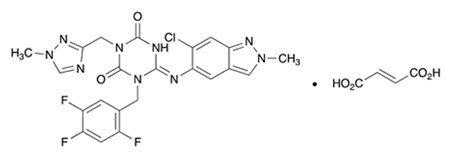
Chemical Structure (Xocova 02)
Ensitrelvir fumaric acid is a white powder that is freely soluble in dimethyl sulfoxide; slightly soluble in acetone, ethanol, and methanol; and practically insoluble in water.
XOCOVA is provided as tablets for oral use containing 125 mg of ensitrelvir.
Inactive ingredients are colloidal silicon dioxide, croscarmellose sodium, hydroxypropyl cellulose, mannitol, microcrystalline cellulose, and magnesium stearate.
Ensitrelvir is a severe acute respiratory syndrome coronavirus 2 (SARS-CoV-2) antiviral drug [see Microbiology (12.4)].
Exposure-Response
Within the ensitrelvir arm of SCORPIO-PEP, there was no association between plasma ensitrelvir concentration and the primary endpoint (COVID-19 symptoms and RT-PCR-positive), consistent with the determination that dose adjustments are not needed based on age, sex, race/ethnicity, or body weight.
Cardiac Electrophysiology
No QT prolongation was observed based on concentration-QTc analysis after a single dose of ensitrelvir ranging from 20 mg to 2000 mg. A single dose of ensitrelvir 2,000 mg resulted in Cmax that was approximately 3.4-fold higher than the mean Cmax observed on Day 5 at the recommended dose.
| Parameter | Ensitrelvir | |||
|---|---|---|---|---|
| General Information | ||||
| N/A, not applicable. | ||||
| Exposure Represents data at the recommended clinical dose in Trial SCORPIO-PEP predicted by population PK analysis. Data represents geometric mean (coefficient of variation, CV%). | Day 1 | Day 5 | Day 10 The primary endpoint was assessed at Day 10. | |
| Cmax (mcg/mL) | 18.1 (22.6) | 18.2 (40.5) | N/A | |
| Cmin (mcg/mL) | 13.2 (31.3) | 13.0 (59.4) | N/A | |
| AUC0-tau (mcg*hr/mL) | 345.9 (28.4) | 380.8 (47.0) | N/A | |
| Cday10 (mcg/mL) | N/A | N/A | 1.48 (374.8) | |
| Dose Proportionality | Cmax and AUC0-inf exposures increase in an almost dose-proportional manner across the single dose range of 20 to 2000 mg in healthy adult individuals. | |||
| Absorption | ||||
| Median Tmax (hours) (range) Ensitrelvir 375 mg on Day 1 followed by 125 mg on Days 2 to 5; tau is dosing interval of 24 hours. | Day 1: 2.50 (1.50, 8.00) hours Day 5: 2.00 (1.00, 8.00) hours | |||
| Effect of Food High-fat, high-calorie meal. Total calories were 863 kcal (27.2% carbohydrates, 17.3% proteins, and 55.4% fat). | No clinically significant differences in ensitrelvir pharmacokinetics were observed following administration of a high-fat, high-calorie meal. | |||
| Distribution | ||||
| Apparent (Oral) Volume of Distribution in Central Compartment Data from population pharmacokinetic analysis. | 16.7 (22.9) L | |||
| Human Serum Protein Binding | 97.7% to 98.7% (in vitro) | |||
| Blood to Plasma Ratio | 0.538 | |||
| Elimination | ||||
| Major Route of Elimination | Primarily eliminated via the biliary route | |||
| Terminal Half-Life (hours) | 42.2 to 48.1 hours Following a single-dose administration of ensitrelvir 20 to 2000 mg. | |||
| Apparent (Oral) Clearance | 0.316 (52.6) L/hour | |||
| Metabolism | Unchanged ensitrelvir (≥90%) was the primary drug component detected in plasma. | |||
| Primary Responsible Metabolic Enzyme | CYP3A | |||
| Excretion | ||||
| Feces | 64.8% of dose (50.7% unchanged) | |||
| Urine | 25.8% of dose (19.0% unchanged) | |||
Specific Populations
There were no clinically significant differences in the pharmacokinetics of ensitrelvir based on age (12-91 years), sex, body weight (32-190 kg), race/ethnicity (77% Asian, 20% White, 2% Black, 1% Other). No clinically significant differences in the pharmacokinetics of ensitrelvir was observed in mild (estimated glomerular filtration rate [eGFR] 60 to <90 mL/min as determined by MDRD equation), moderate (eGFR 30-<60 mL/min), or severe (eGFR 15-<30 mL/min) renal impairment, or mild (Child-Pugh Class A) or moderate (Child-Pugh Class B) hepatic impairment. The pharmacokinetics and safety of ensitrelvir have not been studied in patients with severe hepatic impairment (Child-Pugh Class C) or patients with kidney failure receiving dialysis.
Pediatric Patients
The pharmacokinetics of ensitrelvir in children under 12 years of age has not been established.
Drug Interaction Studies
Clinical Drug Interaction Studies
Effect of CYP3A4 Inducers on the Pharmacokinetics of Ensitrelvir
Strong CYP3A4 Inducers: Coadministration with the strong CYP3A inducer carbamazepine (titrated from 100 mg twice daily to 300 mg twice daily over 1 week and then maintained at 300 mg twice daily dose for 11 days with some subjects requiring dose reduction) decreased the AUC of ensitrelvir by approximately 40-45% [see Contraindications (4) and Drug Interactions (7.2)].
Moderate CYP3A4 Inducers: Ensitrelvir AUC is predicted to decrease by approximately 28% following concomitant administration with efavirenz (moderate CYP3A4 inducer) and 10% with bosentan (moderate CYP3A4 inducer) [see Drug Interactions (7.2)].
Effect of Ensitrelvir on Pharmacokinetics of Other Drugs
CYP3A Substrates: Concomitant administration of midazolam (2-mg single oral dose) with ensitrelvir at the clinical dose (375 mg on Day 1 and 125 mg on Days 2-5) on Day 5 resulted in an approximately 2.80-fold increase in Cmax and a 6.77-fold increase in AUC0-inf of midazolam compared to midazolam administered alone [see Contraindications (4) and Drug Interactions (7.1)].
Concomitant administration of dexamethasone (1-mg single dose) with ensitrelvir (750 mg on Day 1 and 250 mg on Days 2-5, two fold of the recommended dose) on Day 5 and administered alone on Day 9 (5 days after the last ensitrelvir dose) and Day 14 (10 days after the last ensitrelvir dose) resulted in an approximately 1.47-fold increase in Cmax and a 3.47-fold increase in AUC0-inf of dexamethasone on Day 5, a 1.24-fold increase in Cmax and 2.38-fold increase in AUC0-inf on Day 9, and a 1.17-fold increase in Cmax and a 1.58-fold increase in AUC0-inf on Day 14, compared to dexamethasone administered alone [see Drug Interactions (7.1)].
P-gp Substrates: Concomitant administration of ensitrelvir (500-mg single dose, not a recommended dosage of ensitrelvir) with a single oral dose of a transporter cocktail containing 0.25 mg digoxin resulted in a 2.17-fold increase in Cmax and 1.31-fold increase in AUC0-inf of digoxin [see Drug Interactions (7.1)].
BCRP substrate: Concomitant administration of ensitrelvir (500-mg single dose, not a recommended dosage of ensitrelvir) with a single oral dose of a transporter cocktail containing 2.5 mg rosuvastatin resulted in a 1.97-fold increase in Cmax and 1.65-fold increase in AUC0-inf of rosuvastatin [see Drug Interactions (7.1)].
Other Drugs
No clinically significant differences in the pharmacokinetics of the following drugs were observed following concomitant use with ensitrelvir: prednisolone (CYP3A4 substrate), combined oral contraceptives containing ethinyl estradiol and drospirenone (CYP3A4 substrates), itraconazole (a strong CYP3A inhibitor and P-gp inhibitor), metformin (OCT1 and MATE1 substrate), and coproporphyrin I (an endogenous OATP1B substrate).
In Vitro Drug Interaction Studies
Transporter Systems: Ensitrelvir is a substrate of P-gp and BCRP, but not a substrate of OATP1B1, OATP1B3, OCT1, OCT2, OAT1, OAT3, MATE1, or MATE2-K. Ensitrelvir inhibited P-gp, BCRP, OATP1B1, OATP1B3, OCT1, OCT2, OAT1, OAT3, and MATE1, but no clinically significant interactions are expected between ensitrelvir and OCT2, OAT1, OAT3, and MATE1.
Cytochrome P450 Enzymes: Ensitrelvir exhibits a time-dependent inhibitory effect on CYP3A. Ensitrelvir inhibits CYP2C8, but is not expected to cause clinically significant interactions. Ensitrelvir does not inhibit CYP1A2, CYP2B6, CYP2C9, CYP2C19, and CYP2D6. Ensitrelvir induces CYP1A2, CYP2B6, CYP2C8, CYP2C9, CYP2C19, and CYP3A4, but is not expected to cause clinically significant interactions.
Uridine diphosphate-glucuronosyl transferase (UGT) enzymes: Ensitrelvir does not inhibit UGT1A1, UGT1A3, UGT1A4, UGT1A6, UGT1A9, UGT2B7, and UGT2B15.
Mechanism of Action
Ensitrelvir is an inhibitor of the SARS-CoV-2 main protease (Mpro), also referred to as 3C-like protease (3CLpro) or nonstructural protein 5 (nsp5) protease. Inhibition of SARS-CoV-2 Mpro renders it incapable of processing the viral polyproteins pp1a and pp1ab, preventing viral replication. Ensitrelvir inhibited the activity of recombinant SARS-CoV-2 Mpro in a biochemical assay with an IC50 value of 13.2 nM. Ensitrelvir was found to bind directly to the SARS-CoV-2 Mpro active site by X-ray crystallography.
Antiviral Activity
Cell Culture Antiviral Activity
Ensitrelvir exhibited antiviral activity against infection of the SARS-CoV-2 Delta and Omicron BA.1, BE.1, and XBB.1.5 variants in primary human nasal or bronchial epithelial cells, with EC50 and EC90 values ranging from 11-115 nM (5.9-61 ng/mL) and 49-194 nM (26-103 ng/mL), respectively, after 2-4 days of drug exposure.
The antiviral activity of ensitrelvir against the SARS-CoV-2 Omicron sub-variants BA.1, BA.1.1, BA.2, BA.2.12.1, BA.2.75, BA.2.86, BA.4, BA.4.6, BA.5.2.1, BE.1, BF.7, BF.7.4.1, BQ.1.1, CH.1.1.11, EG.5.1, JN.1, KP.3.1.1, LF.7.6.2, LP.8.1, NB.1.8.1, XBB.1, XBB.1.5, XBB.1.9.1, XBB.1.16, XBF, XE, XEC, and XFG.11 was assessed in Vero E6-TMPRSS2 cells. Ensitrelvir had a median EC50 value of 348 nM (range: 132-980 nM) against the Omicron sub-variants, reflecting EC50 value fold changes ≤2.7 relative to the Japan/TY/WK-521/2020 ancestral isolate. The antiviral activity of ensitrelvir against the SARS-CoV-2 Alpha, Beta, Gamma, Delta, Theta, Lambda, and Mu variants was also assessed in Vero E6-TMPRSS2 cells. Ensitrelvir had a median EC50 value of 407 nM (range: 260-502 nM) against the variants, reflecting EC50 value fold changes ≤1.4 relative to WK-521/2020.
In addition, the antiviral activity of ensitrelvir against the SARS-CoV-2 Alpha, Beta, Gamma, Delta, and Omicron BA.1 variants was assessed in 293T-ACE2-TMPRSS2 cells. Ensitrelvir had a median EC50 value of 44 nM (range: 26-58 nM) against the variants, reflecting EC50 value fold changes ≤2.2 relative to WK-521/2020. Ensitrelvir EC50 values were likely lower in primary human airway epithelial cells and 293T-ACE2-TMPRSS2 cells than in Vero E6-TMPRSS2 cells due to lower P-gp expression in these cell types.
Clinical Antiviral Activity
In Trial SCORPIO-PEP, among mITT subjects who developed SARS-CoV-2 infection (regardless of symptoms) through Day 10, XOCOVA use was associated with a 1.45, 1.24, and 0.94 log10 copies/mL greater mean decline in viral RNA shedding levels in nasopharyngeal samples through Days 3, 6, and 10, respectively, relative to placebo. In addition, among subjects who had a negative screening test for SARS-CoV-2 at the local laboratory, but were subsequently found to be RT-PCR-positive at baseline by central laboratory testing (i.e., the ITT baseline positive population), XOCOVA use was associated with a 1.36 and 0.49 log10 copies/mL greater mean decline in viral RNA shedding levels in nasopharyngeal samples through Days 3 and 6, respectively, relative to placebo.
Antiviral Resistance
SARS-CoV-2 Mpro residues associated with reduced susceptibility to ensitrelvir have been identified using a variety of methods, including SARS-CoV-2 resistance selection experiments, testing of recombinant SARS-CoV-2 viruses, replicons, or enzymes with laboratory-engineered Mpro substitutions in cell culture or biochemical assays, and evaluation of samples collected from subjects treated with XOCOVA in clinical trials.
In Cell Culture and Biochemical Assays
In cell culture, ensitrelvir selected the SARS-CoV-2 Mpro D48G, M49L, P52S, S144A, E166A, and T169I substitutions, as well as combinations of these substitutions, all of which reduced ensitrelvir activity ≥3-fold in cell culture (Table 3). Mpro cleavage site substitutions have not been associated with reduced ensitrelvir susceptibility in cell culture.
| Single Substitutions (EC50 value fold change in cell culture) | D48G (3.7-6.5), M49L (12-71), P52S (3.7-5.5), S144A (8.5-34), E166A (3.4-9.1), T169I (1.4-4.8) |
| ≥2 Substitutions (EC50 value fold change in cell culture) | M49L+S144A (100-290), M49L+E166A (133-197), M49L+S144A+T169I (131-660) |
In cell culture or biochemical assays using recombinant SARS-CoV-2 viruses, replicons, or enzymes with laboratory-engineered Mpro substitutions, the following Mpro substitutions and deletions reduced ensitrelvir activity ≥3-fold: T25E/V, C44Y, M49T, P52H, Y54A/C, L57F, N133H, F140A, N142S, G143S, H164N, M165V, E166C/G/H/I/L/Q/S/V, L167F, P168del, A173V, R188S, A191T/V, and Q192L/T, as well as combinations of these and other substitutions. However, these Mpro substitutions and deletions were not observed in SARS-CoV-2 resistance selection experiments using ensitrelvir in cell culture or in XOCOVA-treated subjects in clinical trials, and the clinical significance of these substitutions is unknown.
In Clinical Trials
In Trial SCORPIO-PEP, post-baseline sequencing data were provided for 29% (93/318) of XOCOVA-treated ITT subjects who had at least one SARS-CoV-2 RT-PCR-positive post-baseline sample. SARS-CoV-2 Mpro amino acid changes (relative to the Wuhan-Hu-1 reference sequence) were classified as XOCOVA resistance-associated substitutions (RAS) based on the number of subjects in each arm with the substitution, the frequency of the substitution within the samples, and the impact of the substitution on ensitrelvir susceptibility in cell culture (generally a ≥3-fold decrease). The following Mpro amino acid changes were considered XOCOVA RAS (n: number of XOCOVA-treated subjects): T25A/I/N (n=9), D48G (n=2), M49I/L (n=29), P52S (n=5), S144A (n=1), and E166A (n=1). In some subjects, multiple Mpro substitutions were observed, either as single substitutions in different viruses or as combinations in the same virus, with T25A+E166A and M49I+S144A detected as combinations in the same virus. All of the single Mpro substitutions except T25I reduced ensitrelvir activity ≥3-fold in cell culture, whereas the combinations have not been tested (Table 4). The proportion of XOCOVA-treated subjects with XOCOVA RAS was 3.4% (40/1,190) in the ITT, 1.9% (20/1,030) in the mITT, and 18% (20/114) in the ITT baseline positive populations. There were insufficient numbers of subjects to determine the impact of XOCOVA RAS on viral RNA shedding and clinical outcomes.
| Single Substitutions (EC50 value fold change in cell culture) | T25A (7.0-14), T25I (2.9), T25N (4.8-28), D48G (3.7-6.5), M49I (5.3), M49L (12-71), P52S (3.7-5.5), S144A (8.5-34), E166A (3.4-9.1), E166K (ND) |
| ≥2 Substitutions (EC50 value fold change in cell culture) | T25A+E166A (ND), M49I+S144A (ND) |
In other clinical trials, the following Mpro amino acid changes were considered XOCOVA RAS (n: number of XOCOVA-treated subjects): T25A/I/N (n=7), M49I/L (n=40), P52S (n=1), S144A (n=2), and E166A/K (n=2). Some of these Mpro substitutions were observed as combinations in the same subject. Most of these Mpro substitutions reduced ensitrelvir activity ≥3-fold in cell culture (Table 4). In other trials, the proportion of XOCOVA-treated subjects with XOCOVA RAS was 2.1% (47/2,226).
XOCOVA RAS have been detected at frequencies <1% among globally circulating viruses based on analysis of public sequence databases. In clinical trials, only a single subject had a XOCOVA RAS (T25I) identified in a pre-treatment sample.
Cross-Resistance
Ensitrelvir and nirmatrelvir are both SARS-CoV-2 Mpro inhibitors and exhibit partial cross-resistance. Nirmatrelvir had activity against the most common ensitrelvir RAS T25A/I/N and M49I/L in cell culture (EC50 value fold changes: 0.2-1.8) and biochemical assays (IC50/Ki value fold changes: 0.2-2.2). Conversely, ensitrelvir activity was either unchanged or reduced to variable extents by the nirmatrelvir RAS E166V in cell culture (EC50 value fold changes: 1.0-23) and biochemical assays (IC50/Ki value fold changes: 1.1-599). Cross-resistance is not expected between ensitrelvir and remdesivir or any other SARS-CoV-2 antivirals with different mechanisms of action (i.e., antivirals that are not Mpro inhibitors).
Carcinogenesis
Carcinogenesis studies with ensitrelvir have not been conducted.
Mutagenesis
Ensitrelvir was not genotoxic in the reverse mutation bacterial (Ames) test, in vitro micronucleus assay using human lymphoblastoid TK6 cells, or in vivo rat micronucleus assays.
Impairment of Fertility
There were no effects on fertility, mating performance, or early embryonic development when ensitrelvir was administered to rats at systemic exposures (AUC) approximately 9 times the exposure in humans at the RHD.
Trial SCORPIO-PEP was a randomized, double-blind, placebo-controlled, multinational post-exposure prophylaxis trial in 5 countries [NCT05897541] evaluating XOCOVA in asymptomatic standard- or high-risk adult and adolescent subjects considered not to have SARS-CoV-2 infection. Eligible subjects were 12 years of age or older, had a negative screening test for SARS-CoV-2 as determined by nucleic acid amplification test or antigen test at the local laboratory, and lived in a household with the index patient for the duration of the study. The trial excluded individuals who were using or were anticipating use of any medications prohibited with XOCOVA. The primary endpoint was the incidence of COVID-19 (defined as the onset of COVID-19 symptoms with duration for at least 48 hours and RT-PCR-confirmed SARS-CoV-2 infection) within 10 days of randomization in the modified intention-to-treat (mITT) population, which excluded subjects subsequently found to be SARS-CoV-2 RT-PCR-positive at baseline by central laboratory testing. A key secondary endpoint, which was the same as the primary endpoint but analyzed in the intention-to-treat (ITT) population, was evaluated in all subjects (including those subsequently found to be RT-PCR-positive at baseline by central laboratory testing).
Subjects were randomized (1:1) to study intervention (XOCOVA 375 mg on Day 1 followed by 125 mg on Days 2-5 or matching placebo on Days 1-5) and enrolled within 72 hours of symptom onset in an index patient of COVID-19 within their household.
A total of 2,387 subjects were randomized to receive either XOCOVA or placebo. In the mITT analysis population of 2,041 subjects (including 118 adolescents), the mean age was 42 years (range: 12 to 91 years); 59% were female; 61% were White, 32% were Asian, 5% were Black or African American, and 2% were others; 61% were Hispanic or Latino; 70% had a history of COVID-19 vaccination; and more than 99% had a seropositive SARS-CoV-2 antibody test at screening. Thirty-seven percent of subjects had at least one risk factor associated with severe COVID-19, including 2 subjects who were considered immunocompromised. Baseline demographic and disease characteristics were balanced between the XOCOVA and placebo arms.
The primary and key secondary endpoints were met. A 67% reduction in confirmed symptomatic COVID-19 (with symptom duration of at least 48 hours) on Day 10 (primary endpoint) was achieved with XOCOVA (relative risk ratio: 0.33; 95% CI: [0.22, 0.49]; p <0.0001) (Table 5). For the key secondary endpoint (Day 10 [ITT population]), the risk reduction with XOCOVA was 57% (relative risk ratio: 0.43; 95% CI: [0.32, 0.59]; p<0.0001) (Table 5). Results were consistent regardless of risk factors. The Kaplan-Meier curve for time to incidence of symptomatic COVID-19 through Day 10 in the mITT population is shown in Figure 1.
| XOCOVA 375 mg (Day 1), 125 mg (Days 2-5) n (%) | Placebo (Days 1-5) n (%) | Risk Ratio Risk ratio of symptomatic COVID-19 through Day 10 in subjects randomized to ensitrelvir vs subjects randomized to placebo. Estimate (95% CI) Confidence interval was calculated from generalized estimating equations (GEE) Poisson regression model. | |
|---|---|---|---|
| CI, confidence interval; ITT, intention to treat; mITT, modified intention to treat. | |||
| Primary endpoint: Confirmed symptomatic SARS-CoV-2 infection through Day 10, mITT population | N=1,030 30 (2.9%) | N=1,011 91 (9.0%) | 0.33 (0.22, 0.49) p <0.0001 [GEE Poisson model]. |
| Key secondary endpoint: Confirmed symptomatic SARS-CoV-2 infection through Day 10, ITT population | N=1,194 52 (4.4%) | N=1,193 122 (10.2%) | 0.43 (0.32, 0.59) p <0.0001 [GEE Poisson model]. |
Figure 1 Kaplan-Meier Curve for Time to Incidence of SARS-CoV-2 Infection with Symptom Onset Through Day 10: mITT Population
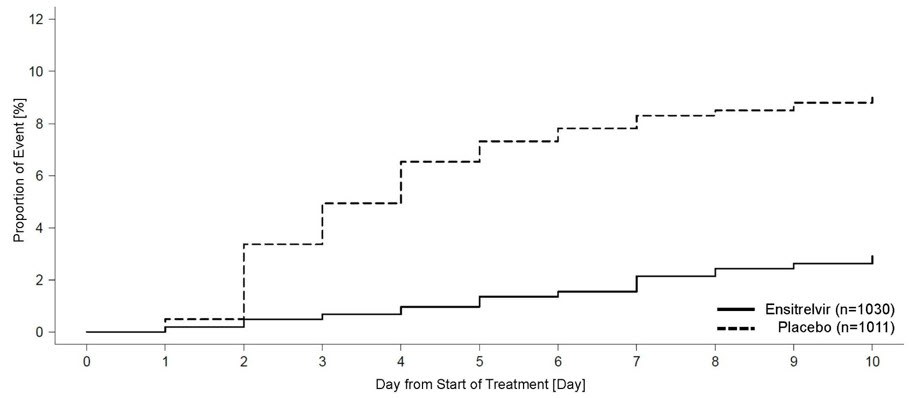
Figure 1 (Xocova 03)
XOCOVA (ensitrelvir) tablets 125 mg are white to light yellow-white, round, debossed with the Shionogi trademark (

Image (Xocova 04)
Store XOCOVA in the original package at 20°C to 25°C (68°F to 77°F); excursions permitted between 15°C to 30°C (59°F to 86°F) [See USP Controlled Room Temperature].
Advise the patient to read the FDA-approved patient labeling (Patient Information).
Embryofetal Toxicity
Advise pregnant women and females of reproductive potential that XOCOVA may cause fetal harm. Advise females of reproductive potential to inform their healthcare providers of a known or suspected pregnancy. Advise females of reproductive potential to use effective contraception during use of XOCOVA and for 2 weeks after the final dose [see Warnings and Precautions (5.1) and Use in Specific Populations (8.1, 8.3)].
Verify Pregnancy Status Before Initiating XOCOVA
Inform patients that they need to verify pregnancy status prior to initiating XOCOVA [see Dosage and Administration (2.1), Warnings and Precautions (5.1), and Use in Specific Populations (8.1, 8.3)].
Drug Interactions
Advise patients that XOCOVA can interact with certain drugs and is contraindicated for use with certain drugs; therefore, advise patients to report to their healthcare provider the use of any prescription or non-prescription medication or herbal products [see Contraindications (4), Warnings and Precautions (5.2), and Drug Interactions (7)].
Hypersensitivity Reactions Including Anaphylaxis
Advise patients that hypersensitivity reactions, including anaphylaxis, anaphylactic shock, and angioedema, have been reported with XOCOVA and to immediately discontinue XOCOVA and alert the healthcare provider if signs and symptoms of a clinically significant hypersensitivity reaction occur [see Warnings and Precautions (5.3) and Adverse Reactions (6.2)].
Administration Instructions
Advise to begin XOCOVA as soon as possible and within 72 hours following contact with an individual who has COVID-19. Advise patients to take three 125-mg tablets together orally on Day 1 and one 125-mg tablet on Days 2 to 5. Inform patients to take XOCOVA with or without food at approximately the same time each day as instructed [see Dosage and Administration (2.2)].
Lactation
Advise women not to breastfeed while on XOCOVA and for 2 weeks after the final dose [see Use in Specific Populations (8.2)].
XOCOVA is a registered trademark of Shionogi & Co., Ltd.
Manufactured for Shionogi Inc., Florham Park, NJ 07932.
ENS-TXT-001
| PATIENT INFORMATION XOCOVA® (zoe koe vah) (ensitrelvir) tablets, for oral use | ||||
|---|---|---|---|---|
| This Patient Information has been approved by the U.S. Food and Drug Administration. | Issued: 05/2026 | |||
| What is XOCOVA? XOCOVA is a prescription medicine that is used to help prevent coronavirus disease 2019 (COVID-19) in adults and children 12 years of age and older following contact with a person who has COVID-19 (post-exposure prophylaxis). It is not known if XOCOVA is safe and effective in children less than 12 years of age. | ||||
Do not take XOCOVA if you:
| ||||
|
|
| ||
| These are not the only medicines that may cause serious or life-threatening side effects if taken with XOCOVA. XOCOVA may increase or decrease the levels of many medicines in your body. It is very important to tell your healthcare provider about all of the medicines you take because additional laboratory tests or changes in the dose of your other medicines may be necessary during treatment with XOCOVA. Your healthcare provider may tell you about specific symptoms to watch for that may indicate that you need to stop or decrease the dose of some of your other medicines. | ||||
Before taking XOCOVA, tell your healthcare provider about all of your medical conditions, including if you:
| ||||
How should I take XOCOVA?
| ||||
| How to take XOCOVA | ||||
| XOCOVA package | 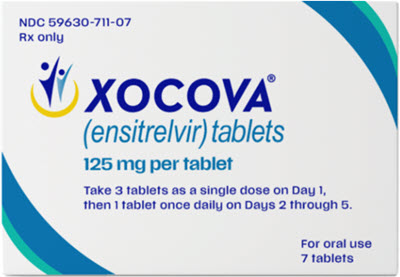 Image (Xocova 05) | |||
| On Day 1: Take 3 XOCOVA tablets together. | 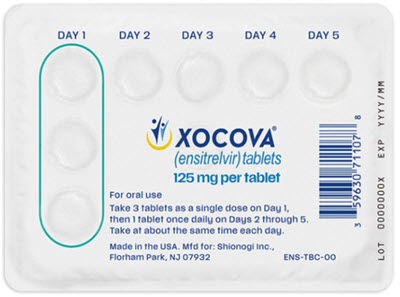 Image (Xocova 06) | |||
| For the next 4 days (Days 2 to 5): Take 1 XOCOVA tablet each day. | 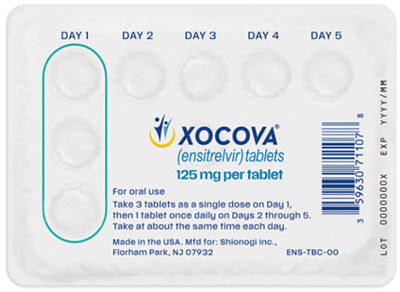 Image (Xocova 07) | |||
| What are the possible side effects of XOCOVA? XOCOVA may cause serious side effects, including:
| ||||
|
| |||
| The most common side effects of XOCOVA include: | ||||
|
|
| ||
| These are not all of the possible side effects of XOCOVA. Call your doctor for medical advice about side effects. You may report side effects to FDA at 1-800-FDA-1088. | ||||
How should I store XOCOVA?
| ||||
| General information about the safe and effective use of XOCOVA. Medicines are sometimes prescribed for purposes other than those listed in a Patient Information leaflet. Do not use XOCOVA for a condition for which it was not prescribed. Do not give XOCOVA to other people. It may harm them. You can ask your pharmacist or healthcare provider for information about XOCOVA that is written for healthcare professionals. | ||||
| What are the ingredients in XOCOVA? Active ingredient: ensitrelvir Inactive ingredients: colloidal silicon dioxide, croscarmellose sodium, hydroxypropyl cellulose, mannitol, microcrystalline cellulose, and magnesium stearate. Manufactured for: Shionogi Inc., Florham Park, NJ 07932 © Shionogi Inc. 2026 For more information, go to www.shionogi.com or call 1-800-849-9707. | ||||
ENS-PAT-001
NDC 59630-711-07
Rx only
XOCOVA®
(ensitrelvir) tablets
125 mg per tablet
Take 3 tablets as a single dose on Day 1,
then 1 tablet once daily on Days 2 through 5.
For oral use
7 tablets
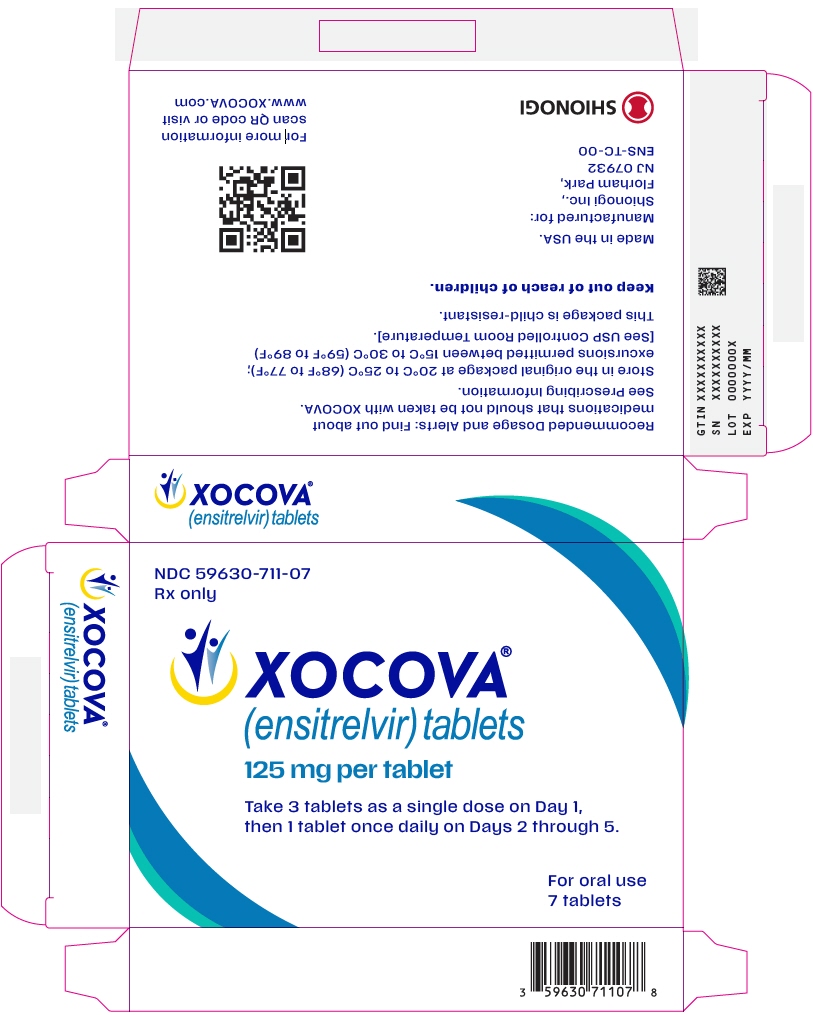
Principal Display Panel-125 mg Tablet Blister Carton (Xocova 08)
* Please review the disclaimer below.
