Because clinical trials are conducted under widely varying conditions, adverse reaction rates observed in the clinical trials of a drug cannot be directly compared to rates in the clinical trials of another drug and may not reflect the rates observed in clinical practice.
Clinical Trials with Metformin Hydrochloride Extended-Release in Adults with Type 2 Diabetes Mellitus
In placebo-controlled monotherapy trials of metformin hydrochloride extended-release, diarrhea and nausea/vomiting were reported in >5% of metformin-treated patients and more commonly than in placebo-treated patients (9.6% versus 2.6% for diarrhea and 6.5% versus 1.5% for nausea/vomiting). Diarrhea led to discontinuation of study medication in 0.6% of the patients treated with metformin hydrochloride extended-release.
Clinical Trials with Dapagliflozin in Adults
Dapagliflozin
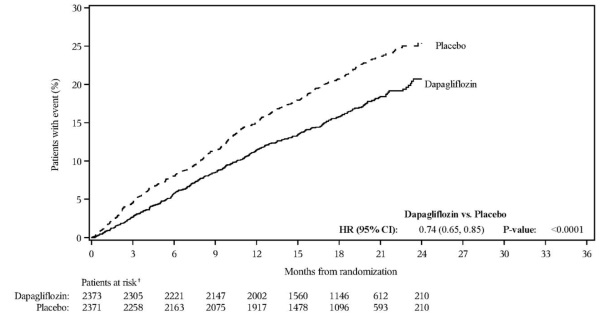
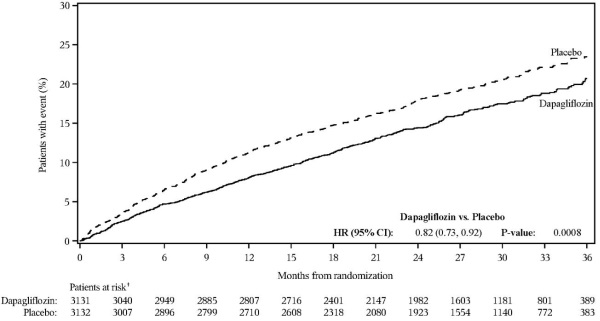
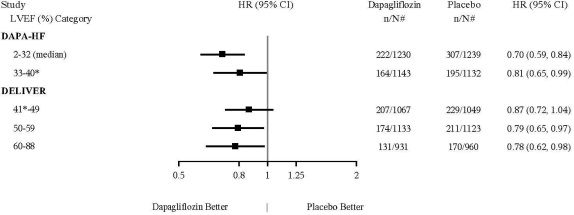
Dapagliflozin has been evaluated in clinical trials in adult patients with type 2 diabetes mellitus, in adult patients with heart failure, and in adult patients with chronic kidney disease. The overall safety profile of dapagliflozin was consistent across the studied indications. No new adverse reactions were identified in the DAPA-HF, DELIVER and DAPA-CKD trials.
Pools of Placebo-Controlled Clinical Trials for Glycemic Control in Adults
Pool of 8 Placebo-Controlled Adult Trials for Dapagliflozin and Metformin Hydrochloride for Glycemic Control
Data from a prespecified pool of adult patients from 8 short-term, placebo-controlled trials of dapagliflozin coadministered with metformin hydrochloride immediate- or extended-release was used to evaluate safety. This pool included several add-on trials (metformin hydrochloride alone and in combination with a dipeptidyl peptidase-4 [DPP4] inhibitor and metformin hydrochloride, or insulin and metformin hydrochloride, 2 initial combination with metformin hydrochloride trials, and 2 trials of patients with CVD and type 2 diabetes mellitus who received their usual treatment [with metformin hydrochloride as background therapy]). For trials that included background therapy with and without metformin hydrochloride, only patients who received metformin hydrochloride were included in the 8-trial placebo-controlled pool. Across these 8 trials, 983 patients were treated once daily with dapagliflozin 10 mg and metformin hydrochloride, and 1185 were treated with placebo and metformin hydrochloride. These 8 trials provide a mean duration of exposure of 23 weeks. The mean age of the population was 57 years and 2% were older than 75 years. Fifty-four percent (54%) of the population was male; 88% White, 6% Asian, and 3% Black or African American. At baseline, the population had diabetes for an average of 8 years, mean hemoglobin A1c (HbA1c) was 8.4%, and renal function was normal or mildly impaired in 90% of patients and moderately impaired in 10% of patients.
The overall incidence of adverse events for the 8-trial, short-term, placebo-controlled pool in adult patients treated with dapagliflozin 10 mg and metformin hydrochloride was 60.3% compared to 58.2% for the placebo and metformin hydrochloride group. Discontinuation of therapy due to adverse events in patients who received dapagliflozin 10 mg and metformin hydrochloride was 4% compared to 3.3% for the placebo and metformin hydrochloride group. The most commonly reported events leading to discontinuation and reported in at least 3 patients treated with dapagliflozin 10 mg and metformin hydrochloride were renal impairment (0.7%), increased blood creatinine (0.2%), decreased renal creatinine clearance (0.2%), and urinary tract infection (0.2%).
Table 2 shows common adverse reactions in adults associated with the use of dapagliflozin and metformin hydrochloride. These adverse reactions were not present at baseline, occurred more commonly on dapagliflozin and metformin hydrochloride than on placebo, and occurred in at least 2% of patients treated with either dapagliflozin 5 mg or dapagliflozin 10 mg.
Table 2: Adverse Reactions in Placebo-Controlled Trials Reported in ≥2% of Adult Patients Treated with Dapagliflozin and Metformin Hydrochloride
* Genital mycotic infections include the following adverse reactions, listed in order of frequency reported for females: vulvovaginal mycotic infection, vaginal infection, genital infection, vulvovaginitis, fungal genital infection, vulvovaginal candidiasis, vulval abscess, genital candidiasis, and vaginitis bacterial. (N for females: Placebo and metformin hydrochloride=534, dapagliflozin 5 mg and metformin hydrochloride=223, dapagliflozin 10 mg and metformin hydrochloride=430).
† Urinary tract infections include the following adverse reactions, listed in order of frequency reported: urinary tract infection, cystitis, pyelonephritis, urethritis, and prostatitis.
‡ Genital mycotic infections include the following adverse reactions, listed in order of frequency reported for males: balanitis, fungal genital infection, balanitis candida, genital candidiasis, genital infection, posthitis, and balanoposthitis. (N for males: Placebo and metformin hydrochloride=651, dapagliflozin 5 mg and metformin hydrochloride=187, dapagliflozin 10 mg and metformin hydrochloride=553).
§ Increased urination includes the following adverse reactions, listed in order of frequency reported: pollakiuria, polyuria, and urine output increased.
|
Adverse Reaction
| % of Patients
|
Pool of 8 Placebo-Controlled Trials
|
Placebo and Metformin Hydrochloride
N=1185
| Dapagliflozin
5 mg and Metformin Hydrochloride
N=410
| Dapagliflozin
10 mg and Metformin Hydrochloride
N=983
|
Female genital mycotic infections*
| 1.5
| 9.4
| 9.3
|
Nasopharyngitis
| 5.9
| 6.3
| 5.2
|
Urinary tract infections†
| 3.6
| 6.1
| 5.5
|
Diarrhea
| 5.6
| 5.9
| 4.2
|
Headache
| 2.8
| 5.4
| 3.3
|
Male genital mycotic infections‡
| 0
| 4.3
| 3.6
|
Influenza
| 2.4
| 4.1
| 2.6
|
Nausea
| 2.0
| 3.9
| 2.6
|
Back pain
| 3.2
| 3.4
| 2.5
|
Dizziness
| 2.2
| 3.2
| 1.8
|
Cough
| 1.9
| 3.2
| 1.4
|
Constipation
| 1.6
| 2.9
| 1.9
|
Dyslipidemia
| 1.4
| 2.7
| 1.5
|
Pharyngitis
| 1.1
| 2.7
| 1.5
|
Increased urination§
| 1.4
| 2.4
| 2.6
|
Discomfort with urination
| 1.1
| 2.2
| 1.6
|
Pool of 12 Placebo-Controlled Adult Trials for Dapagliflozin 5 and 10 mg for Glycemic Control
The data in Table 3 are derived from 12 glycemic control placebo-controlled trials in adults ranging from 12 to 24 weeks. In 4 trials dapagliflozin was used as monotherapy, and in 8 trials dapagliflozin was used as add-on to background antidiabetic therapy or as combination therapy with metformin hydrochloride [see Clinical Studies (14.1)].
These data reflect exposure of 2338 adult patients to dapagliflozin with a mean exposure duration of 21 weeks. Patients received placebo (N=1393), dapagliflozin 5 mg (N=1145), or dapagliflozin 10 mg (N=1193) once daily. The mean age of the population was 55 years and 2% were older than 75 years of age. Fifty percent (50%) of the population were male; 81% were White, 14% were Asian, and 3% were Black or African American. At baseline, the population had diabetes for an average of 6 years, had a mean HbA1c of 8.3%, and 21% had established microvascular complications of diabetes. Baseline renal function was normal or mildly impaired in 92% of patients and moderately impaired in 8% of patients (mean eGFR 86 mL/min/1.73 m2).
Table 3 shows common adverse reactions in adults associated with the use of dapagliflozin. These adverse reactions were not present at baseline, occurred more commonly on dapagliflozin than on placebo, and occurred in at least 2% of patients treated with either dapagliflozin 5 mg or dapagliflozin 10 mg.
Table 3: Adverse Reactions in Placebo-Controlled Trials of Glycemic Control Reported in ≥2% of Adults Treated with Dapagliflozin
* Genital mycotic infections include the following adverse reactions, listed in order of frequency reported for females: vulvovaginal mycotic infection, vaginal infection, vulvovaginal candidiasis, vulvovaginitis, genital infection, genital candidiasis, fungal genital infection, vulvitis, genitourinary tract infection, vulval abscess, and vaginitis bacterial. (N for females: Placebo=677, dapagliflozin 5 mg=581, dapagliflozin 10 mg=598).
† Urinary tract infections include the following adverse reactions, listed in order of frequency reported: urinary tract infection, cystitis, Escherichia urinary tract infection, genitourinary tract infection, pyelonephritis, trigonitis, urethritis, kidney infection, and prostatitis.
‡ Increased urination includes the following adverse reactions, listed in order of frequency reported: pollakiuria, polyuria, and urine output increased.
§ Genital mycotic infections include the following adverse reactions, listed in order of frequency reported for males: balanitis, fungal genital infection, balanitis candida, genital candidiasis, genital infection male, penile infection, balanoposthitis, balanoposthitis infective, genital infection, and posthitis. (N for males: Placebo=716, dapagliflozin 5 mg=564, dapagliflozin 10 mg=595).
|
Adverse Reaction
| % of Patients
|
Pool of 12 Placebo-Controlled Trials
|
Placebo
N=1393
| Dapagliflozin
5 mg
N=1145
| Dapagliflozin
10 mg
N=1193
|
Female genital mycotic infections*
| 1.5
| 8.4
| 6.9
|
Nasopharyngitis
| 6.2
| 6.6
| 6.3
|
Urinary tract infections†
| 3.7
| 5.7
| 4.3
|
Back pain
| 3.2
| 3.1
| 4.2
|
Increased urination‡
| 1.7
| 2.9
| 3.8
|
Male genital mycotic infections§
| 0.3
| 2.8
| 2.7
|
Nausea
| 2.4
| 2.8
| 2.5
|
Influenza
| 2.3
| 2.7
| 2.3
|
Dyslipidemia
| 1.5
| 2.1
| 2.5
|
Constipation
| 1.5
| 2.2
| 1.9
|
Discomfort with urination
| 0.7
| 1.6
| 2.1
|
Pain in extremity
| 1.4
| 2.0
| 1.7
|
Pool of 13 Placebo-Controlled Adult Trials for Dapagliflozin 10 mg for Glycemic Control
Dapagliflozin 10 mg was also evaluated in a larger glycemic control placebo-controlled trial pool in adult patients. This pool combined 13 placebo-controlled trials, including 3 monotherapy trials, 9 add-on to background antidiabetic therapy trials, and an initial combination with metformin hydrochloride trial. Across these 13 trials, 2360 patients were treated once daily with dapagliflozin 10 mg for a mean duration of exposure of 22 weeks. The mean age of the population was 59 years and 4% were older than 75 years. Fifty-eight percent (58%) of the population were male; 84% were White, 9% were Asian, and 3% were Black or African American. At baseline, the population had diabetes for an average of 9 years, had a mean HbA1c of 8.2%, and 30% had established microvascular disease. Baseline renal function was normal or mildly impaired in 88% of patients and moderately impaired in 11% of patients (mean eGFR 82 mL/min/1.73 m2).
Other Adverse Reactions with Dapagliflozin in Adults with Type 2 Diabetes Mellitus
Volume Depletion
Dapagliflozin causes an osmotic diuresis, which may lead to a reduction in intravascular volume. Adverse reactions related to volume depletion (including reports of dehydration, hypovolemia, orthostatic hypotension, or hypotension) for the 12-trial and 13-trial, short-term, placebo-controlled pools and for the DECLARE trial are shown in Table 4 [see Warnings and Precautions (5.3)].
Table 4: Adverse Reactions Related to Volume Depletion* in Adult Clinical Trials with Dapagliflozin
| * Volume depletion includes reports of dehydration, hypovolemia, orthostatic hypotension, or hypotension. |
| Pool of 12 Placebo-Controlled
Trials
| Pool of 13 Placebo-Controlled Trials
| DECLARE Trial
|
Placebo
| Dapagliflozin
5 mg
| Dapagliflozin
10 mg
| Placebo
| Dapagliflozin
10 mg
| Placebo
| Dapagliflozin
10 mg
|
Overall population N (%)
| N=1393
5
(0.4%)
| N=1145
7
(0.6%)
| N=1193
9
(0.8%)
| N=2295
17
(0.7%)
| N=2360
27
(1.1%)
| N=8569
207
(2.4%)
| N=8574
213
(2.5%)
|
Patient Subgroup n (%)
|
Patients on loop diuretics
| n=55
1
(1.8%)
| n=40
0
| n=31
3
(9.7%)
| n=267
4
(1.5%)
| n=236
6
(2.5%)
| n=934
57
(6.1%)
| n=866
57
(6.6%)
|
Patients with moderate renal impairment with eGFR ≥30 and <60 mL/min/1.73 m2
| n=107
2
(1.9%)
| n=107
1
(0.9%)
| n=89
1
(1.1%)
| n=268
4
(1.5%)
| n=265
5
(1.9%)
| n=658
30
(4.6%)
| n=604
35
(5.8%)
|
Patients ≥65 years of age
| n=276
1
(0.4%)
| n=216
1
(0.5%)
| n=204
3
(1.5%)
| n=711
6
(0.8%)
| n=665
11
(1.7%)
| n=3950
121
(3.1%)
| n=3948
117
(3.0%)
|
Hypoglycemia
The frequency of hypoglycemia in adult patients by trial [see Clinical Studies (14.1)] is shown in Table 5. Hypoglycemia was more frequent when dapagliflozin was added to sulfonylurea or insulin [see Warnings and Precautions (5.5)].
Table 5: Incidence of Severe Hypoglycemia* and Hypoglycemia with Glucose < 54 mg/dL† in Controlled Glycemic Control Clinical Trials in Adults
* Severe episodes of hypoglycemia were defined as episodes of severe impairment in consciousness or behavior, requiring external (third party) assistance, and with prompt recovery after intervention regardless of glucose level.
† Episodes of hypoglycemia with glucose < 54 mg/dL (3 mmol/L) were defined as reported episodes of hypoglycemia meeting the glucose criteria that did not also qualify as a severe episode.
‡ OAD = oral antidiabetic therapy.
|
| Placebo
| Dapagliflozin
5 mg
| Dapagliflozin
10 mg
|
Add-on to Metformin Hydrochloride (24 weeks)
| N=137
| N=137
| N=135
|
Severe [n (%)]
| 0
| 0
| 0
|
Glucose < 54 mg/dL [n (%)]
| 0
| 0
| 0
|
Add-on to DPP4 inhibitor (with or without Metformin Hydrochloride) (24 weeks)
| N=226
| -
| N=225
|
Severe [n (%)]
| 0
| -
| 1 (0.4)
|
Glucose < 54 mg/dL [n (%)]
| 1 (0.4)
| -
| 1 (0.4)
|
Add-on to Insulin with or without other OADs‡ (24 weeks)
| N=197
| N=212
| N=196
|
Severe [n (%)]
| 1 (0.5)
| 2 (0.9)
| 2 (1.0)
|
Glucose < 54 mg/dL [n (%)]
| 43 (21.8)
| 55 (25.9)
| 45 (23.0)
|
In the DECLARE trial [see Clinical Studies (14.3)], severe events of hypoglycemia were reported in 58 (0.7%) out of 8574 adult patients treated with dapagliflozin 10 mg and 83 (1.0%) out of 8569 adult patients treated with placebo.
Genital Mycotic Infections
In the glycemic control trials in adults, genital mycotic infections were more frequent with dapagliflozin treatment. Genital mycotic infections were reported in 0.9% of patients on placebo, 5.7% on dapagliflozin 5 mg, and 4.8% on dapagliflozin 10 mg, in the 12-trial placebo-controlled pool. Discontinuation from trial due to genital infection occurred in 0% of placebo-treated patients and 0.2% of patients treated with dapagliflozin 10 mg. Infections were more frequently reported in females than in males (see Table 3). The most frequently reported genital mycotic infections were vulvovaginal mycotic infections in females and balanitis in males. Patients with a history of genital mycotic infections were more likely to have a genital mycotic infection during the trial than those with no prior history (10.0%, 23.1%, and 25.0% versus 0.8%, 5.9%, and 5.0% on placebo, dapagliflozin 5 mg, and dapagliflozin 10 mg, respectively). In the DECLARE trial [see Clinical Studies (14.3)], serious genital mycotic infections were reported in <0.1% of patients treated with dapagliflozin 10 mg and <0.1% of patients treated with placebo. Genital mycotic infections that caused trial drug discontinuation were reported in 0.9% of patients treated with dapagliflozin 10 mg and <0.1% of patients treated with placebo.
Hypersensitivity Reactions
Hypersensitivity reactions (e.g., angioedema, urticaria, hypersensitivity) were reported with dapagliflozin treatment. In glycemic control trials in adults, serious anaphylactic reactions and severe cutaneous adverse reactions and angioedema were reported in 0.2% of comparator-treated patients and 0.3% of dapagliflozin-treated patients. If hypersensitivity reactions occur, discontinue use of dapagliflozin; treat per standard of care and monitor until signs and symptoms resolve.
Ketoacidosis
In the DECLARE trial [see Clinical Studies (14.3)], events of diabetic ketoacidosis (DKA) were reported in 27 out of 8574 adult patients in the dapagliflozin-treated group and in 12 out of 8569 adult patients in the placebo group. The events were evenly distributed over the trial period.
Laboratory Tests in Adults with Type 2 Diabetes Mellitus treated with Dapagliflozin or Metformin Hydrochloride
Dapagliflozin
Increases in Serum Creatinine and Decreases in eGFR
Initiation of SGLT2 inhibitors, including dapagliflozin, causes a small increase in serum creatinine and decrease in eGFR. These changes in serum creatinine and eGFR generally occur within two weeks of starting therapy and then stabilize regardless of baseline kidney function. Changes that do not fit this pattern should prompt further evaluation to exclude the possibility of acute kidney injury [see Warnings and Precautions (5.3)]. In two trials that included adult patients with type 2 diabetes mellitus with moderate renal impairment, the acute effect on eGFR reversed after treatment discontinuation, suggesting acute hemodynamic changes may play a role in the renal function changes observed with dapagliflozin.
Increase in Hematocrit
In the pool of 13 placebo-controlled trials of glycemic control, increases from baseline in mean hematocrit values were observed in dapagliflozin-treated adult patients starting at Week 1 and continuing up to Week 16, when the maximum mean difference from baseline was observed. At Week 24, the mean changes from baseline in hematocrit were -0.33% in the placebo group and 2.30% in the dapagliflozin 10 mg group. By Week 24, hematocrit values >55% were reported in 0.4% of placebo-treated patients and 1.3% of dapagliflozin 10 mg–treated patients.
Increase in Low-Density Lipoprotein Cholesterol
In the pool of 13 placebo-controlled trials of glycemic control, changes from baseline in mean lipid values were reported in dapagliflozin-treated adult patients compared to placebo-treated patients. Mean percent changes from baseline at Week 24 were 0.0% versus 2.5% for total cholesterol, and -1.0% versus 2.9% for LDL cholesterol in the placebo and dapagliflozin 10 mg groups, respectively. In the DECLARE trial [see Clinical Studies (14.3)], mean changes from baseline after 4 years were 0.4 mg/dL versus -4.1 mg/dL for total cholesterol, and -2.5 mg/dL versus -4.4 mg/dL for LDL cholesterol, in dapagliflozin 10 mg-treated and the placebo groups, respectively.
Decrease in Serum Bicarbonate
In a trial of concomitant therapy of dapagliflozin 10 mg with exenatide extended-release (on a background of metformin hydrochloride) in adults, four patients (1.7%) on concomitant therapy had a serum bicarbonate value of less than or equal to 13 mEq/L compared to one each (0.4%) in the dapagliflozin and exenatide extended-release treatment groups [see Warning and Precautions (5.2)].
Metformin hydrochloride
Vitamin B12 Concentrations
In metformin clinical trials of 29-week duration, a decrease to subnormal levels of previously normal serum vitamin B12 levels was observed in approximately 7% of patients.
Clinical Trials in Pediatric Patients Aged 10 to 17 Years with Type 2 Diabetes Mellitus
Metformin hydrochloride
In clinical trials with metformin hydrochloride immediate-release tablets in pediatric patients with type 2 diabetes mellitus, the profile of adverse reactions was similar to that observed in adults.
Pediatric use information is approved for AstraZeneca AB’s Xigduo® XR (dapagliflozin and metformin hydrochloride) Extended-Release Tablets. However, due to AstraZeneca AB’s marketing exclusivity rights, this drug product is not labeled with that information.