Sildenafil Citrate Powder, For Suspension
Product Images NDC 59651-420

View Photos of Packaging, Regulatory Labels, and Product Appearance

Product Visual Gallery

This gallery contains 22 technical images submitted to the FDA as part of the official labeling for Sildenafil Citrate (NDC 59651-420). Unlike standard consumer photos, these assets often include clinical data figures, molecular chemical structures, and official manufacturer packaging layouts.

As provided by Aurobindo Pharma Limited, these visuals offer a comprehensive scientific overview of the product's physical and chemical identity, aiding pharmacists and researchers in product verification and study.

FDA Label Image

Figure (Sildenafil Fig 20)
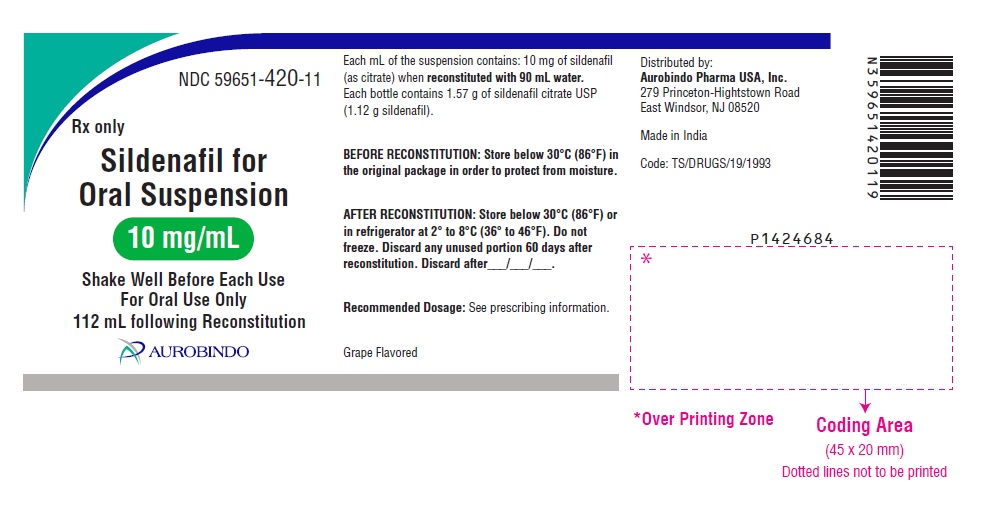
Figure (Sildenafil Fig 20)
Label for Sildenafil for Oral Suspension 10 mg/mL powder for suspension by Aurobindo Pharma Limited. The label instructs to shake well before each use and specifies 112 mL following reconstitution. It includes storage instructions before and after reconstitution and notes the product is grape flavored. The label also displays NDC 59651-420-11 and distributor information for Aurobindo Pharma USA, Inc.*
FDA Label Image

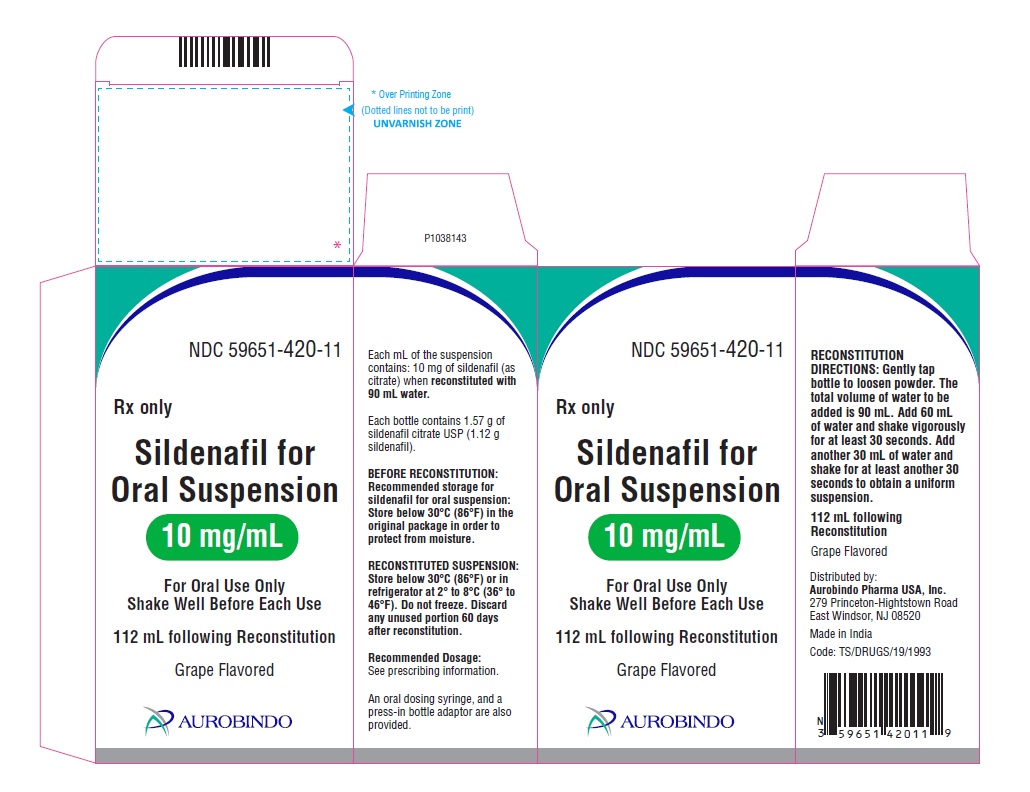
Figure (Sildenafil Fig 21)

Figure (Sildenafil Fig 21)
Box packaging label for sildenafil citrate oral suspension, 10 mg/mL, provided by Aurobindo Pharma Limited. The label states it is for oral use, with 112 mL volume following reconstitution and is grape flavored. Instructions for reconstitution and storage, dosage recommendations, and distributor information including barcode and NDC 59651-420-11 are visible.*
FDA Label Image

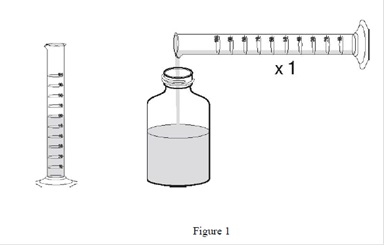
Figure 1 (Sildenafil Fig1)

Figure 1 (Sildenafil Fig1)
An instructional illustration showing a graduated cylinder, a bottle partially filled with liquid, and a syringe marked with volume measurements, labeled as Figure 1. The diagram likely relates to measuring and administering oral suspension, such as sildenafil citrate powder for suspension.*
FDA Label Image

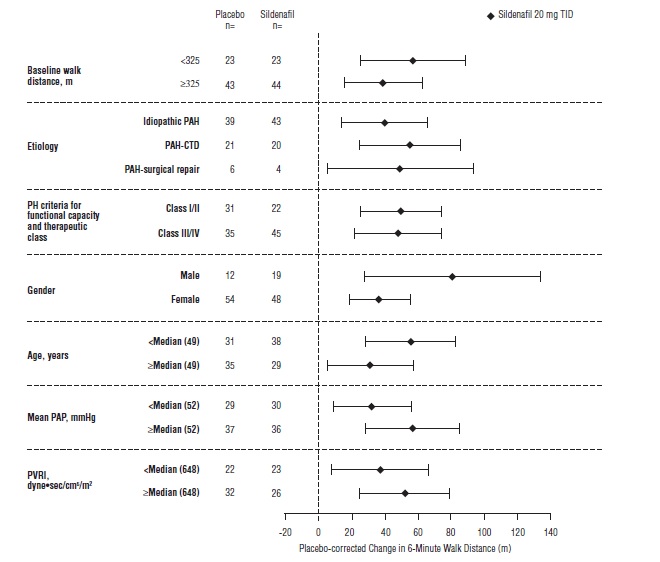
Figure 10. Placebo-corrected Change From Baseline In 6-minute Walk Distance (meters) At Week 12 By Study Subpopulation In Study 1: Mean (95% Confidence Interval) (Sildenafil Fig10)

Figure 10. Placebo-corrected Change From Baseline In 6-minute Walk Distance (meters) At Week 12 By Study Subpopulation In Study 1: Mean (95% Confidence Interval) (Sildenafil Fig10)
A forest plot chart showing placebo-corrected changes in 6-minute walk distance (m) for sildenafil 20 mg TID versus placebo across different patient subgroups. Subgroups include baseline walk distance, etiology, pulmonary hypertension criteria, gender, age, mean PAP, and PVRI. Horizontal lines indicate confidence intervals for each subgroup comparison.*
FDA Label Image

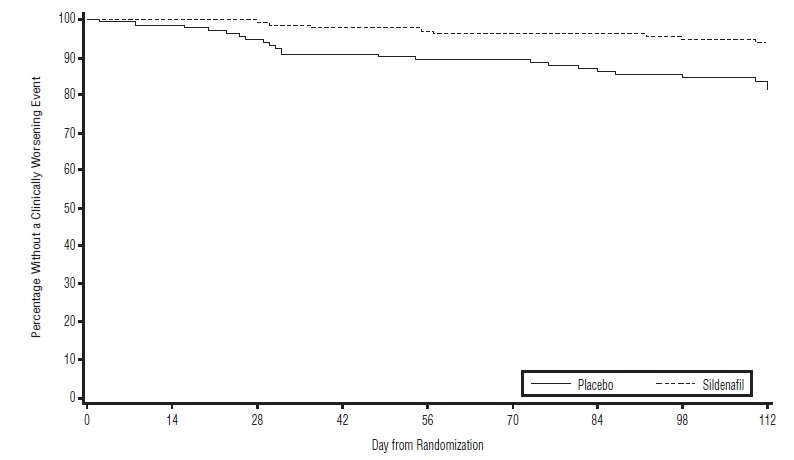
Figure 11. Kaplan-meier Plot Of Time (in Days) To Clinical Worsening Of Pah In Study 2 (Sildenafil Fig11)

Figure 11. Kaplan-meier Plot Of Time (in Days) To Clinical Worsening Of Pah In Study 2 (Sildenafil Fig11)
This line chart shows the percentage without a clinically worsening event over a 112-day period from randomization for two groups: placebo and sildenafil. The y-axis represents the percentage without worsening, and the x-axis represents days from randomization. Sildenafil group maintains a higher percentage over time compared to placebo.*
FDA Label Image

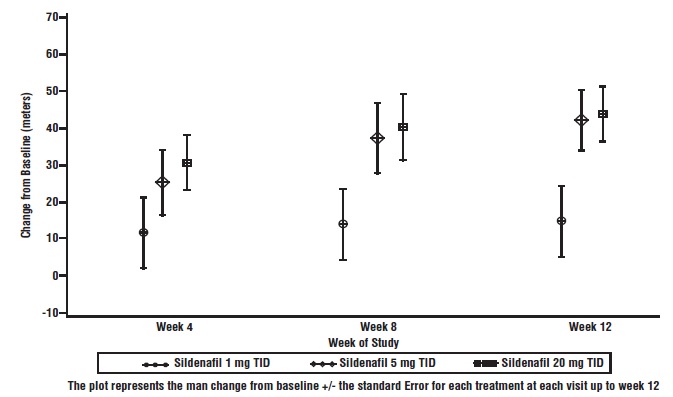
Figure 12. Mean Change From Baseline In Six Minute Walk (meters) By Visit To Week 12 – Itt Population Sildenafil Protocol A1481244 (Sildenafil Fig12)

Figure 12. Mean Change From Baseline In Six Minute Walk (meters) By Visit To Week 12 – Itt Population Sildenafil Protocol A1481244 (Sildenafil Fig12)
A line plot showing mean change from baseline in meters on the vertical axis across weeks 4, 8, and 12 on the horizontal axis. The graph compares three sildenafil dosing groups: 1 mg TID, 5 mg TID, and 20 mg TID, with error bars representing standard error for each treatment over the study duration.*
FDA Label Image

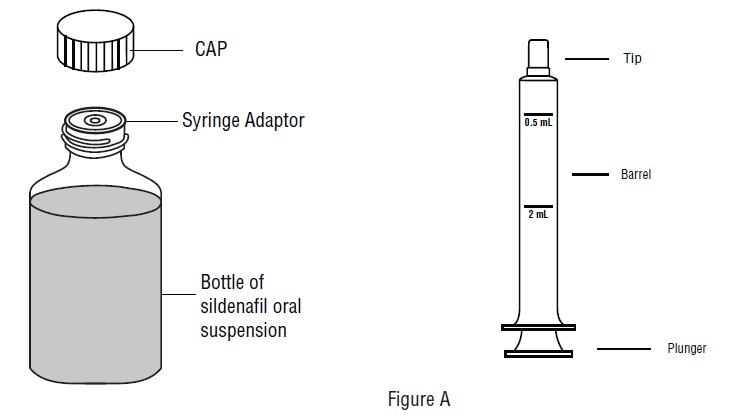
Figure A (Sildenafil Fig13)

Figure A (Sildenafil Fig13)
Diagram illustrating a bottle of sildenafil oral suspension with labeled parts including a cap, syringe adaptor, and the bottle itself, alongside a syringe labeled with tip, barrel, and plunger, showing volume markings for 0.5 mL and 2 mL.*
FDA Label Image

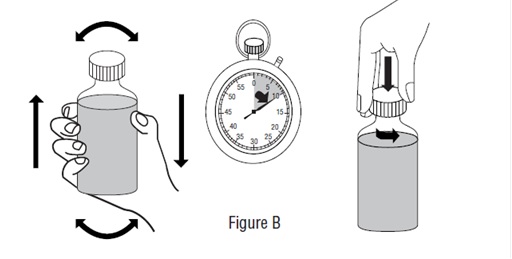
Figure B (Sildenafil Fig14)

Figure B (Sildenafil Fig14)
An instructional diagram showing steps to prepare a suspension from a bottle. It depicts hand movements to shake the bottle vertically and horizontally, a timing stopwatch, and rotating the bottle cap to open or close it.*
FDA Label Image

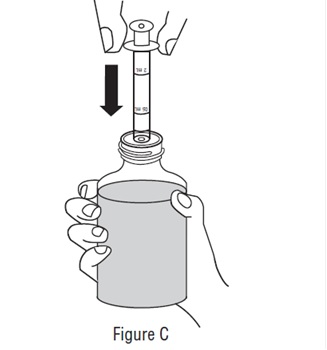
Figure C (Sildenafil Fig15)

Figure C (Sildenafil Fig15)
An instructional illustration showing a hand holding a bottle, with a syringe inserted into the bottle's neck. The syringe is being pressed down into the bottle, demonstrating a step in liquid withdrawal or mixing for a medication suspension.*
FDA Label Image

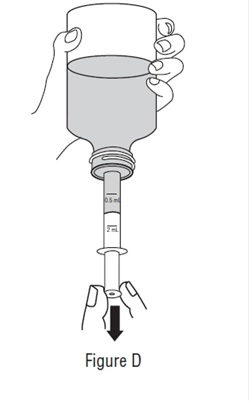
Figure D (Sildenafil Fig16)

Figure D (Sildenafil Fig16)
Illustration showing a bottle held upside down with a syringe attached to the bottle's neck. The syringe is marked with volume measurements and an arrow indicating the plunger should be pulled down to draw liquid from the bottle. Labeled as Figure D.*
FDA Label Image

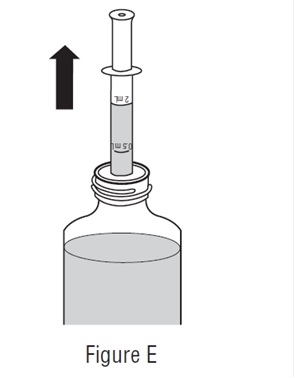
Figure E (Sildenafil Fig17)

Figure E (Sildenafil Fig17)
Instructional diagram showing the use of a syringe to withdraw liquid from a bottle, indicating measurement at 0.5 mL and 1 mL levels with an arrow pointing upward, demonstrating correct syringe removal technique from the bottle.*
FDA Label Image

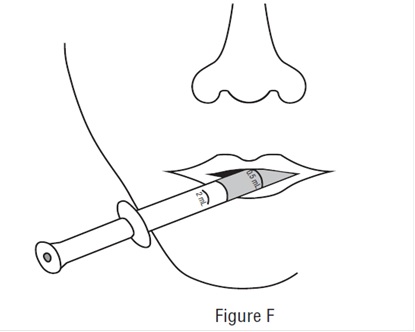
Figure F (Sildenafil Fig18)

Figure F (Sildenafil Fig18)
An instructional line drawing showing administration of an oral drug suspension using a syringe. The syringe tip is positioned at the mouth, illustrating the correct method to deliver the medication. The diagram is labeled as Figure F.*
FDA Label Image

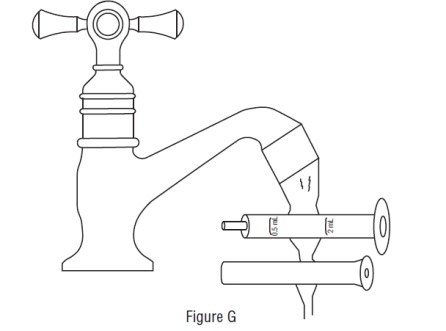
Figure G (Sildenafil Fig19)

Figure G (Sildenafil Fig19)
An instructional illustration labeled 'Figure G' showing a faucet dispensing water into two oral syringes, one marked with volume measurements including 0.5 mL and 2 mL, likely demonstrating how to measure or prepare a liquid dose for oral administration.*
FDA Label Image

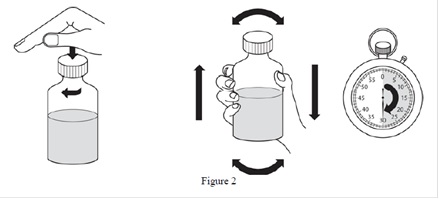
Figure 2 (Sildenafil Fig2)

Figure 2 (Sildenafil Fig2)
An instructional illustration showing steps to prepare a liquid medication. It depicts a hand twisting open the cap of a bottle, shaking the bottle up and down, and a stopwatch indicating timing, likely for proper mixing or administering.*
FDA Label Image

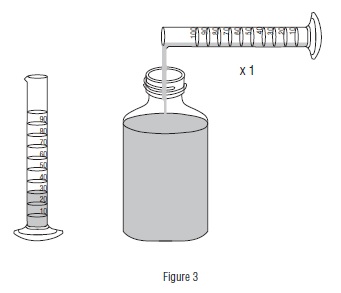
Figure 3 (Sildenafil Fig3)

Figure 3 (Sildenafil Fig3)
Illustration showing the process of measuring and pouring sildenafil citrate oral suspension from a graduated measuring device into the bottle. It includes a measuring cylinder with volume markings and a plunger-like measuring device dispensing the liquid into an open bottle.*
FDA Label Image

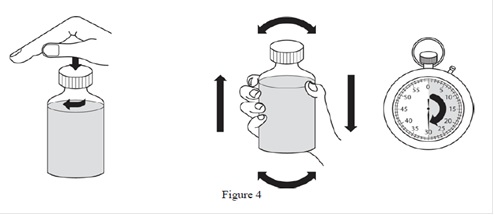
Figure 4 (Sildenafil Fig4)

Figure 4 (Sildenafil Fig4)
An instructional illustration showing three steps for handling a bottle with a child-resistant cap. The first step depicts twisting the cap to open. The second shows holding the bottle upright and moving it up and down. The third is a stopwatch indicating to wait or time an interval, possibly for suspension mixing or preparation.*
FDA Label Image

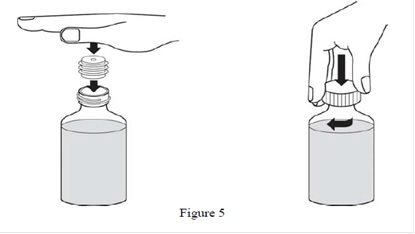
Figure 5 (Sildenafil Fig5)

Figure 5 (Sildenafil Fig5)
An instructional illustration showing two steps for opening or preparing a bottle. The first step depicts removing a cap from the bottle by lifting upwards, and the second step shows twisting the cap in a counterclockwise direction to open it.*
FDA Label Image

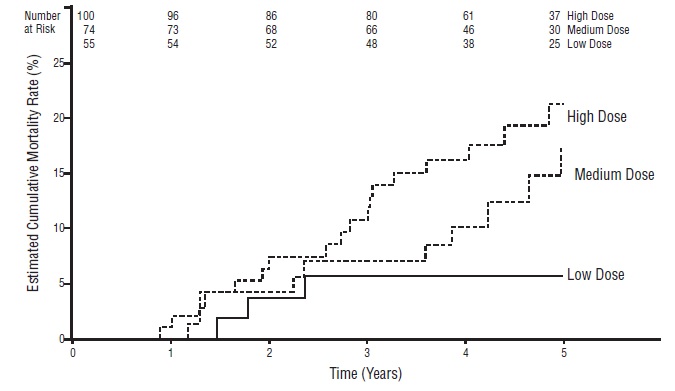
Figure 6 (Sildenafil Fig6)

Figure 6 (Sildenafil Fig6)
A line chart illustrating estimated cumulative mortality rate (%) over time (years) for three dose groups: High Dose, Medium Dose, and Low Dose. The chart includes separate lines for each dose group and displays the number at risk at various time points over a 5-year period.*
FDA Label Image

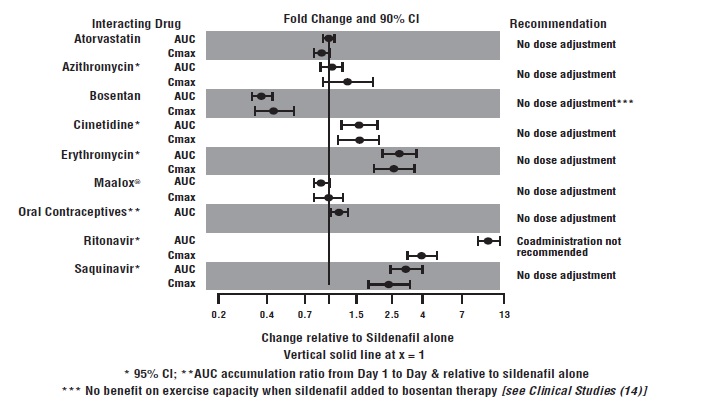
Figure 7 (Sildenafil Fig7)

Figure 7 (Sildenafil Fig7)
A horizontal bar graph illustrating the fold change and 90% confidence interval in pharmacokinetic parameters (AUC and Cmax) for sildenafil citrate when coadministered with various interacting drugs. The x-axis shows the change relative to sildenafil alone, with a vertical solid line at 1. The interacting drugs listed include atorvastatin, azithromycin, bosentan, cimetidine, erythromycin, Maalox, oral contraceptives, ritonavir, and saquinavir. Recommendations on dose adjustments are provided for each drug, indicating mostly no dose adjustment except for ritonavir where coadministration is not recommended.*
FDA Label Image

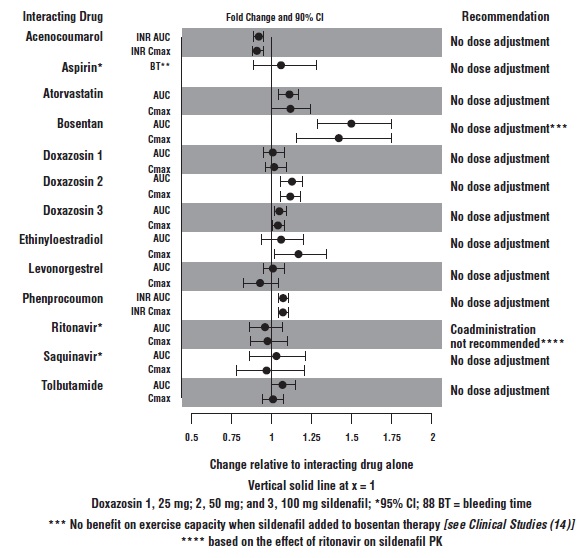
Figure 8 (Sildenafil Fig8)

Figure 8 (Sildenafil Fig8)
A drug interaction chart depicting fold change and 90% confidence intervals for sildenafil citrate when co-administered with various interacting drugs such as Acenocoumarol, Aspirin, Atorvastatin, Bosentan, Doxazosin, Ethinyloestradiol, Levonorgestrel, Phenprocoumon, Ritonavir, Saquinavir, and Tolbutamide. The chart includes recommendations on dose adjustments and highlights changes relative to the interacting drug alone, with a vertical reference line at fold change of 1.*
FDA Label Image

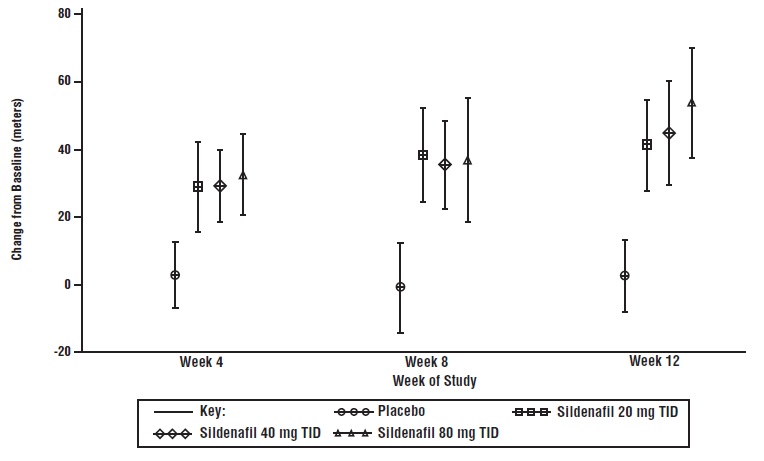
Figure 9. Change From Baseline In 6-minute Walk Distance (meters) At Weeks 4, 8, And 12 In Study 1: Mean (95% Confidence Interval) (Sildenafil Fig9)

Figure 9. Change From Baseline In 6-minute Walk Distance (meters) At Weeks 4, 8, And 12 In Study 1: Mean (95% Confidence Interval) (Sildenafil Fig9)
Line-dot graph showing change from baseline in meters over weeks of study (4, 8, and 12) for sildenafil citrate oral doses of 20 mg TID, 40 mg TID, 80 mg TID, and placebo. The vertical axis indicates change from baseline, with positive changes observed for sildenafil dose groups compared to placebo.*
FDA Label Image

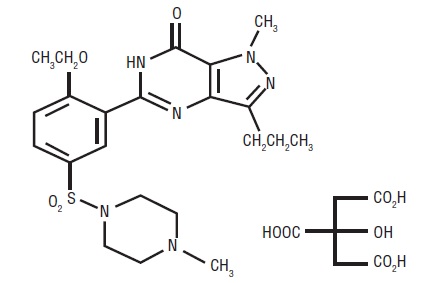
Chemical Structure (Sildenafil Str)

Chemical Structure (Sildenafil Str)
Chemical structure diagram of sildenafil citrate showing its molecular components, including aromatic rings, nitrogen-containing heterocycles, and carboxylic acid groups, as depicted in the image.*

* About these descriptions: Image descriptions on this page are generated by automated AI analysis of the product label images from the manufacturer's FDA label submission (SPL). They are provided for reference only and may contain errors or omissions. Always rely on the printed label itself and the official FDA labeling, and consult a pharmacist or healthcare professional with any questions about this product.