Additional Pooled Data from Clinical Trials
The following additional adverse reactions were reported in adult patients in dasatinib CML clinical studies and adult patients in Ph+ ALL clinical studies at a frequency of ≥10%, 1% to <10%, 0.1% to <1%, or <0.1%. These adverse reactions are included based on clinical relevance.
Gastrointestinal Disorders: 1% to <10% – mucosal inflammation (including mucositis/stomatitis), dyspepsia, abdominal distension, constipation, gastritis, colitis (including neutropenic colitis), oral soft tissue disorder; 0.1% to <1% – ascites, dysphagia, anal fissure, upper gastrointestinal ulcer, esophagitis, pancreatitis, gastroesophageal reflux disease; <0.1% – protein losing gastroenteropathy, ileus, acute pancreatitis, anal fistula.
General Disorders and Administration-Site Conditions: ≥10% – peripheral edema, face edema; 1% to <10% – asthenia, chest pain, chills; 0.1% to <1% – malaise, other superficial edema, peripheral swelling; <0.1% – gait disturbance.
Skin and Subcutaneous Tissue Disorders: 1% to <10% – alopecia, acne, dry skin, hyperhidrosis, urticaria, dermatitis (including eczema); 0.1% to <1% – pigmentation disorder, skin ulcer, bullous conditions, photosensitivity, nail disorder, neutrophilic dermatosis, panniculitis, palmar-plantar erythrodysesthesia syndrome, hair disorder; <0.1% – leukocytoclastic vasculitis, skin fibrosis.
Respiratory, Thoracic, and Mediastinal Disorders: 1% to <10% – lung infiltration, pneumonitis, cough; 0.1% to <1% – asthma, bronchospasm, dysphonia, pulmonary arterial hypertension; <0.1% – acute respiratory distress syndrome, pulmonary embolism.
Nervous System Disorders: 1% to <10%– neuropathy (including peripheral neuropathy), dizziness, dysgeusia, somnolence; 0.1% to <1% – amnesia, tremor, syncope, balance disorder; <0.1% – convulsion, cerebrovascular accident, transient ischemic attack, optic neuritis, VIIth nerve paralysis, dementia, ataxia.
Blood and Lymphatic System Disorders: 0.1% to <1% – lymphadenopathy, lymphopenia; <0.1% – aplasia pure red cell.
Musculoskeletal and Connective Tissue Disorders: 1% to <10% – muscular weakness, musculoskeletal stiffness; 0.1% to <1% – rhabdomyolysis, tendonitis, muscle inflammation, osteonecrosis, arthritis; <0.1% – epiphyses delayed fusion (reported at 1% to <10% in the pediatric studies), growth retardation (reported at 1% to <10% in the pediatric studies).
Investigations: 1% to <10% – weight increased, weight decreased; 0.1% to <1% – blood creatine phosphokinase increased, gamma-glutamyltransferase increased.
Infections and Infestations: 1% to <10% – pneumonia (including bacterial, viral, and fungal), upper respiratory tract infection/inflammation, herpes virus infection, enterocolitis infection, sepsis (including fatal outcomes [0.2%]).
Metabolism and Nutrition Disorders: 1% to <10% – appetite disturbances, hyperuricemia; 0.1% to <1% – hypoalbuminemia, tumor lysis syndrome, dehydration, hypercholesterolemia; <0.1% – diabetes mellitus.
Cardiac Disorders: 1% to <10% – arrhythmia (including tachycardia), palpitations; 0.1% to <1% – angina pectoris, cardiomegaly, pericarditis, ventricular arrhythmia (including ventricular tachycardia), electrocardiogram T-wave abnormal, troponin increased; <0.1% – cor pulmonale, myocarditis, acute coronary syndrome, cardiac arrest, electrocardiogram PR prolongation, coronary artery disease, pleuropericarditis.
Eye Disorders: 1% to <10% – visual disorder (including visual disturbance, vision blurred, and visual acuity reduced), dry eye; 0.1% to <1% – conjunctivitis, visual impairment, lacrimation increased, <0.1% – photophobia.
Vascular Disorders: 1% to <10% – flushing, hypertension; 0.1% to <1% – hypotension, thrombophlebitis, thrombosis; <0.1% – livedo reticularis, deep vein thrombosis, embolism.
Psychiatric Disorders: 1% to <10% – insomnia, depression; 0.1% to <1% – anxiety, affect lability, confusional state, libido decreased.
Pregnancy, Puerperium, and Perinatal Conditions: <0.1% – abortion.
Reproductive System and Breast Disorders: 0.1% to <1% – gynecomastia, menstrual disorder.
Injury, Poisoning, and Procedural Complications: 1% to <10% – contusion.
Ear and Labyrinth Disorders: 1% to <10% – tinnitus; 0.1% to <1% – vertigo, hearing loss.
Hepatobiliary Disorders: 0.1% to <1% – cholestasis, cholecystitis, hepatitis.
Renal and Urinary Disorders: 0.1% to <1% – urinary frequency, renal failure, proteinuria; <0.1% – renal impairment.
Immune System Disorders: 0.1% to <1% – hypersensitivity (including erythema nodosum).
Endocrine Disorders: 0.1% to <1% – hypothyroidism; <0.1% – hyperthyroidism, thyroiditis.
Pediatric use information is approved for Bristol-Myers Squibb Company’s Sprycel (dasatinib) tablets. However, due to Bristol-Myers Squibb Company’s marketing exclusivity rights, this drug product is not labeled with that pediatric information.
How Supplied
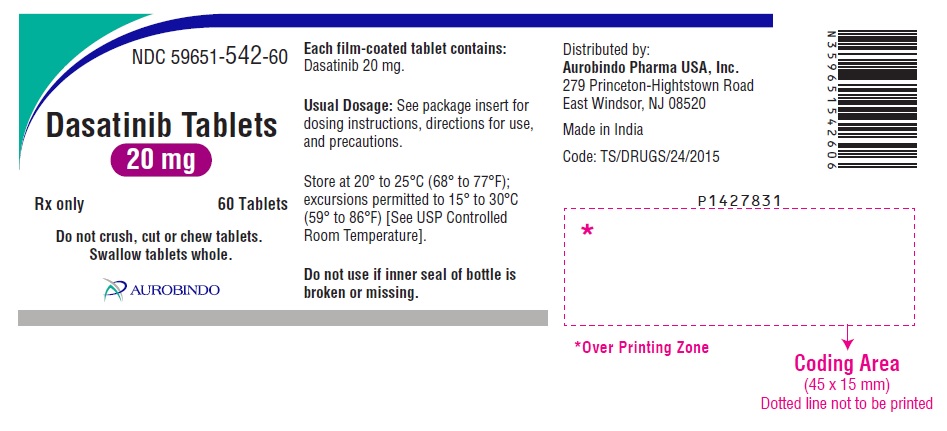
Dasatinib Tablets, 20 mg are white to off-white, biconvex, round, film-coated tablet with “D” debossed on one side and “20” on the other side and are supplied as follows:
Bottles of 60 NDC 59651-542-60
Cartons of 15 (1 x 15) Unit-dose Tablets NDC 59651-542-15
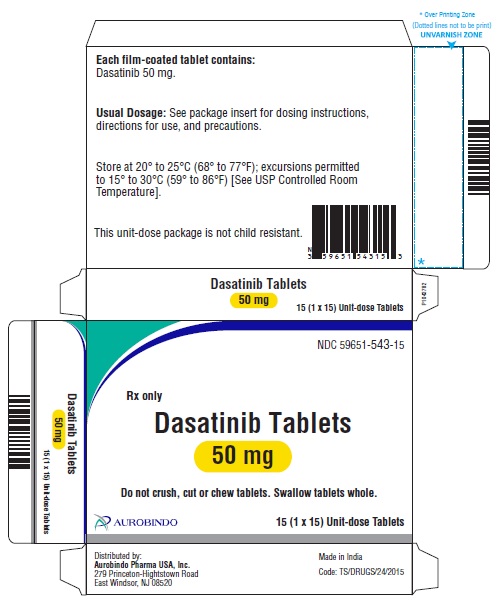
Dasatinib Tablets, 50 mg are white to off-white, biconvex, oval, film-coated tablet with “D” debossed on one side and “50” on the other side and are supplied as follows:
Bottles of 60 NDC 59651-543-60
Cartons of 15 (1 x 15) Unit-dose Tablets NDC 59651-543-15
Dasatinib Tablets, 70 mg are white to off-white, biconvex, round, film-coated tablet with “D” debossed on one side and “70” on the other side and are supplied as follows:
Bottles of 60 NDC 59651-544-60
Cartons of 15 (1 x 15) Unit-dose Tablets NDC 59651-544-15
Dasatinib Tablets, 80 mg are white to off-white, biconvex, triangle, film-coated tablet with “D” debossed on one side and “80” on the other side and are supplied as follows:
Bottles of 30 NDC 59651-545-30
Cartons of 15 (1 x 15) Unit-dose Tablets NDC 59651-545-15
Dasatinib Tablets, 100 mg are white to off-white, biconvex, oval, film-coated tablet with “D” debossed on one side and “100” on the other side and are supplied as follows:
Bottles of 30 NDC 59651-546-30
Cartons of 15 (1 x 15) Unit-dose Tablets NDC 59651-546-15
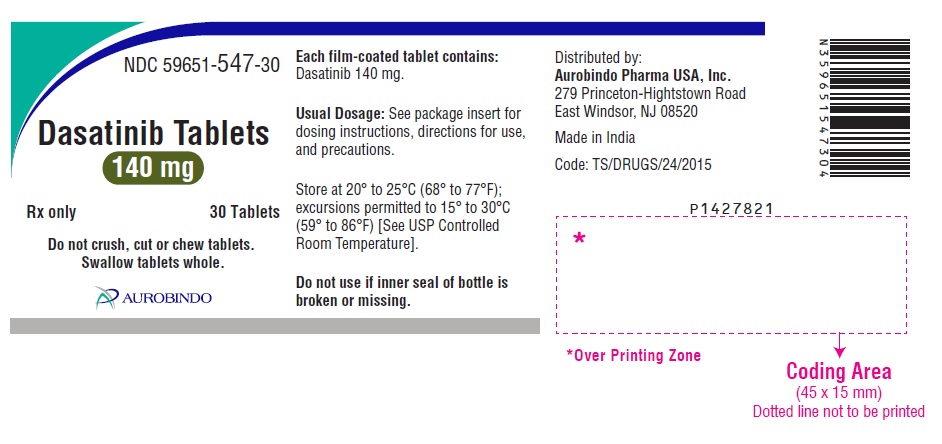
Dasatinib Tablets, 140 mg are white to off-white, biconvex, round, film-coated tablet with “D” debossed on one side and “140” on the other side and are supplied as follows:
Bottles of 30 NDC 59651-547-30
Cartons of 15 (1 x 15) Unit-dose Tablets NDC 59651-547-15
Storage
Dasatinib tablets should be stored at 20° to 25°C (68° to 77°F); excursions permitted to 15° to 30°C (59° to 86°F) [see USP Controlled Room Temperature].
Handling and Disposal
Dasatinib is an antineoplastic product. Follow special handling and disposal procedures.1
Personnel who are pregnant should avoid exposure to crushed or broken tablets.
Dasatinib tablets consist of a core tablet, surrounded by a film coating to prevent exposure of healthcare professionals to the active substance. The use of latex or nitrile gloves for appropriate disposal when handling tablets that are inadvertently crushed or broken is recommended, to minimize the risk of dermal exposure.