HIV Genotypic Testing
HIV genotypic testing is recommended for antiretroviral treatment-experienced patients. However, when HIV genotypic testing is not feasible, PREZCOBIX can be used in protease inhibitor-naïve patients, but is not recommended in protease inhibitor-experienced patients.
Creatinine Clearance
Prior to starting PREZCOBIX, assess estimated creatinine clearance because cobicistat decreases estimated creatinine clearance due to inhibition of tubular secretion of creatinine without affecting actual renal glomerular function [see Warnings and Precautions (5.3)]. When co-administering PREZCOBIX with tenofovir disoproxil fumarate (tenofovir DF) assess estimated creatinine clearance, urine glucose, and urine protein at baseline [see Warnings and Precautions (5.4)].
Pregnancy Exposure Registry
There is a pregnancy exposure registry that monitors pregnancy outcomes in women exposed to PREZCOBIX during pregnancy. Healthcare providers are encouraged to register patients by calling the Antiretroviral Pregnancy Registry (APR) 1-800-258-4263.
Risk Summary
There are insufficient data with PREZCOBIX in pregnant women from the APR to inform a drug-associated risk of pregnancy outcomes. Available data from the APR show no difference in rate of overall birth defects for darunavir compared with the background rate for major birth defects of 2.7% in a U.S. reference population of the Metropolitan Atlanta Congenital Defects Program (MACDP) [see Data]. The APR uses the MACDP as the U.S. reference population for birth defects in the general population. The MACDP evaluates women and infants from a limited geographic area and does not include outcomes for births that occurred at less than 20 weeks gestation.
The rate of miscarriage is not reported in the APR. The estimated background rate of miscarriage in clinically recognized pregnancies in the U.S. general population is 15–20%. The background risk of major birth defects and miscarriage for the indicated population is unknown.
In animal reproduction studies, no adverse developmental effects were observed when the components of PREZCOBIX were administered separately at darunavir exposures less than 1 (mice and rabbits) and 3-times (rats), and at cobicistat exposures 1.6 (rats) and 3.8 (rabbits) times human exposures at the recommended daily dose of these components in PREZCOBIX [see Data]. No adverse developmental effects were seen when cobicistat was administered to rats through lactation at cobicistat exposures up to 1.2 times the human exposure at the recommended therapeutic dose.
Clinical Considerations
Dose Adjustment During Pregnancy and the Postpartum Period
Dosing recommendations cannot be made because the pharmacokinetics, safety, and efficacy of PREZCOBIX cannot be predicted from studies of other darunavir-containing regimens in pregnant women.
Data
Human Data
Darunavir: Based on prospective reports to the APR of 615 live births following exposure to darunavir-containing regimens during pregnancy (including 385 exposed in the first trimester and 230 exposed in the second/third trimester), there was no difference in rate of overall birth defects for darunavir compared with the background rate for major birth defects in a U.S. reference population of the MACDP.
The prevalence of birth defects in live births was 2.6% (95% CI: 1.2% to 4.7%) with first trimester exposure to darunavir-containing regimens and 1.7% (95% CI: 0.5% to 4.4%) with second/third trimester exposure to darunavir-containing regimens.
Cobicistat: Insufficient numbers of pregnancies with exposure to cobicistat have been reported to the APR to estimate the rate of birth defects.
Animal Data
Darunavir: Reproduction studies conducted with darunavir showed no embryotoxicity or teratogenicity in mice (doses up to 1000 mg/kg from gestation day (GD) 6–15 with darunavir alone) and rats (doses up to 1000 mg/kg from GD 7–19 in the presence or absence of ritonavir) as well as in rabbits (doses up to 1000 mg/kg/day from GD 8–20 with darunavir alone). In these studies, darunavir exposures (based on AUC) were higher in rats (3-fold), whereas in mice and rabbits, exposures were lower (less than 1-fold) compared to those obtained in humans at the recommended clinical dose of darunavir co-administered with ritonavir.
Cobicistat: Cobicistat was administered orally to pregnant rats at doses up to 125 mg/kg/day on GD 6–17. Increases in post-implantation loss and decreased fetal weights were observed at a maternal toxic dose of 125 mg/kg/day. No malformations were noted at doses up to 125 mg/kg/day. Systemic exposures (AUC) at 50 mg/kg/day in pregnant females were 1.6 times higher than human exposures at the recommended daily dose of cobicistat.
In pregnant rabbits, cobicistat was administered orally at doses up to 100 mg/kg/day during GD 7–20. No maternal or embryo/fetal effects were noted at the highest dose of 100 mg/kg/day. Systemic exposures (AUC) at 100 mg/kg/day were 3.8 times higher than human exposures at the recommended daily dose of cobicistat.
In a pre/postnatal developmental study in rats, cobicistat was administered orally at doses up to 75 mg/kg from GD 6 to postnatal day 20, 21, or 22. At doses of 75 mg/kg/day, neither maternal nor developmental toxicity was noted. Systemic exposures (AUC) at this dose were 1.2 times the human exposures at the recommended daily dose of cobicistat.
Risk Summary
The Centers for Disease Control and Prevention recommend that HIV infected mothers in the United States not breastfeed their infants to avoid risking postnatal transmission of HIV.
There are no data on the presence of darunavir or cobicistat in human milk, the effects on the breastfed infant, or the effects on milk production. Darunavir and cobicistat are secreted into the milk of lactating rats [see Data]. Because of the potential for (1) HIV transmission (in HIV-negative infants), (2) developing viral resistance (in HIV-positive infants), and (3) serious adverse reactions in breastfed infants, instruct mothers not to breastfeed if they are receiving PREZCOBIX.
Data
Animal Data
Darunavir: Studies in rats (with darunavir alone or with ritonavir) have demonstrated that darunavir is secreted in the milk. In the rat pre- and postnatal development study, a reduction in pup body weight gain was observed due to exposure of pups to drug substances via milk. The maximal maternal plasma exposures achieved with darunavir (up to 1000 mg/kg with ritonavir) were approximately 50% of those obtained in humans at the recommended clinical dose of darunavir with ritonavir.
Cobicistat: During the pre/postnatal developmental toxicology study at doses up to 75 mg/kg/day, mean cobicistat milk to plasma ratio of up to 1.9 was measured 2 hours after administration to rats on lactation day 10.
Juvenile Animal Toxicity Data
Darunavir: In a juvenile toxicity study where rats were directly dosed with darunavir (up to 1000 mg/kg), deaths occurred from post-natal day 5 at plasma exposure levels ranging from 0.1 to 1.0 of the human exposure levels. In a 4-week rat toxicology study, when dosing was initiated on post-natal day 23 (the human equivalent of 2 to 3 years of age), no deaths were observed with a plasma exposure (in combination with ritonavir) 2 times the human plasma exposure levels.
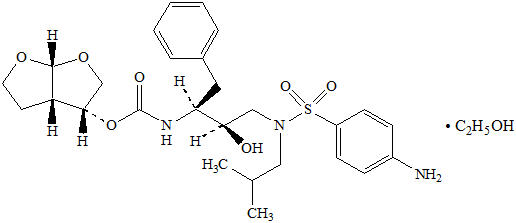
Darunavir: Darunavir, in the form of darunavir ethanolate, has the following chemical name: [(1S,2R)-3-[[(4-aminophenyl)sulfonyl](2-methylpropyl)amino]-2-hydroxy-1-(phenylmethyl)propyl]-carbamic acid (3R,3aS,6aR)-hexahydrofuro[2,3-b]furan-3-yl ester monoethanolate. Its molecular formula is C27H37N3O7S ∙ C2H5OH and its molecular weight is 593.73. Darunavir ethanolate has the following structural formula:

Chemical Structure (Prezcobix 01)
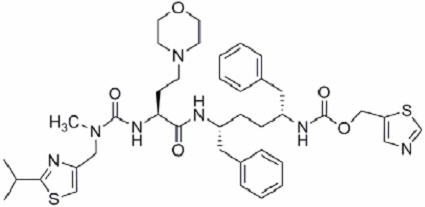
Cobicistat: Cobicistat is adsorbed onto silicon dioxide. The chemical name for cobicistat is 1,3-thiazol-5-ylmethyl[(2R,5R)-5-{[(2S)2-[(methyl{[2-(propan-2-yl)-1,3-thiazol-4-yl]methyl}carbamoyl)amino]-4-(morpholin-4yl)butanoyl]amino}-1,6-diphenylhexan-2-yl]carbamate. It has a molecular formula of C40H53N7O5S2 and a molecular weight of 776.0. It has the following structural formula:

Chemical Structure (Prezcobix 02)
Cardiac Electrophysiology
Separate thorough QT trials have been conducted for darunavir co-administered with ritonavir and for cobicistat. The effect of darunavir co-administered with cobicistat on the QT interval has not been evaluated.
Darunavir: In a thorough QT/QTc study in 40 healthy subjects, darunavir doses (co-administered with 100 mg ritonavir) of approximately 2 times the recommended darunavir dose did not affect the QT/QTc interval.
Cobicistat: The effect of a single dose of cobicistat 250 mg and 400 mg (approximately 1.7 and 2.7 times the recommended dose) on QTc interval was evaluated in a randomized, placebo- and active-controlled (moxifloxacin 400 mg) four-period crossover thorough QT trial in 48 healthy subjects. In this trial, no significant QTc prolongation effect of cobicistat was detected. The dose of 400 mg cobicistat is expected to provide information on a high exposure clinical scenario. Prolongation of the PR interval was noted in subjects receiving cobicistat in the same trial. The maximum mean (95% upper confidence bound) difference in PR from placebo after baseline-correction was 9.5 (12.1) msec for 250 mg and 20.2 (22.8) msec for 400 mg of cobicistat.
Effects on Serum Creatinine
Cobicistat: The effect of cobicistat on serum creatinine was investigated in a trial in subjects with normal renal function (eGFR ≥ 80 mL/min, N=12) and mild-to-moderate renal impairment (eGFR 50–79 mL/min, N=18). A statistically significant decrease in the estimated glomerular filtration rate, calculated by Cockcroft-Gault method (eGFRCG) from baseline, was observed after 7 days of treatment with cobicistat 150 mg among subjects with normal renal function (-9.9 ± 13.1 mL/min) and mild-to-moderate renal impairment (-11.9 ± 7.0 mL/min). No statistically significant changes in eGFRCG were observed compared to baseline for subjects with normal renal function or mild-to-moderate renal impairment 7 days after cobicistat was discontinued. The actual glomerular filtration rate, as determined by the clearance of probe drug iohexol, was not altered from baseline following treatment of cobicistat among subjects with normal renal function and mild-to-moderate renal impairment, indicating that cobicistat inhibits tubular secretion of creatinine, reflected as a reduction in eGFRCG, without affecting the actual glomerular filtration rate.
Absorption and Bioavailability
In healthy subjects, under fed conditions, when single doses of the darunavir and cobicistat fixed dose combination tablet were administered, the maximum plasma concentration was achieved within approximately 4 to 4.5 hours for darunavir and approximately 4 to 5 hours for cobicistat.
Effects of Food on Oral Absorption
When compared to fasted conditions, administration of PREZCOBIX to healthy adult subjects with a high-fat meal (965 total kcal: 129 kcal from protein, 236 kcal from carbohydrates and 600 kcal from fat) resulted in a 70% increase in AUC(0–inf) and a 127% increase in Cmax for darunavir. Cobicistat exposures were not affected by food. PREZCOBIX should be taken with food.
Distribution
Darunavir: Darunavir is approximately 95% bound to plasma proteins. Darunavir binds primarily to plasma alpha 1-acid glycoprotein (AAG).
Cobicistat: Cobicistat is 97–98% bound to human plasma proteins and the mean blood–to-plasma ratio was approximately 0.5.
Metabolism
Darunavir: In vitro experiments with human liver microsomes (HLMs) indicate that darunavir primarily undergoes oxidative metabolism. Darunavir is extensively metabolized by CYP enzymes, primarily by CYP3A. A mass balance trial in healthy subjects showed that after single dose administration of 400 mg 14C-darunavir co-administered with 100 mg ritonavir, the majority of the radioactivity in the plasma was due to darunavir. At least 3 oxidative metabolites of darunavir have been identified in humans; all showed activity that was at least 90% less than the activity of darunavir against wild-type HIV-1.
Cobicistat: Cobicistat is metabolized by CYP3A and to a minor extent by CYP2D6 enzymes and does not undergo glucuronidation.
Elimination
Darunavir: A mass balance trial in healthy subjects showed that after single dose administration of 400 mg 14C-darunavir co-administered with 100 mg ritonavir, approximately 79.5% and 13.9% of the administered dose of 14C-darunavir was recovered in the feces and urine, respectively. Unchanged darunavir accounted for approximately 41.2% and 7.7% of the administered dose in feces and urine, respectively.
When single doses of the darunavir and cobicistat fixed dose combination tablet were administered, the terminal elimination half-life of darunavir was approximately 7 hours under fed conditions.
Cobicistat: When single doses of the darunavir and cobicistat fixed dose combination tablet were administered, the terminal elimination half-life of cobicistat was approximately 4 hours under fed conditions. With single dose administration of 14C-cobicistat after multiple dosing of cobicistat for six days, the mean percent of the administered dose excreted in feces and urine was 86.2% and 8.2%, respectively.
Specific Populations
Hepatic Impairment
Darunavir: Darunavir is primarily metabolized by the liver. The steady-state pharmacokinetic parameters of darunavir were similar after multiple dose co-administration of darunavir 600 mg co-administered with ritonavir 100 mg twice daily to subjects with normal hepatic function (n=16), mild hepatic impairment (Child-Pugh Class A, n=8), and moderate hepatic impairment (Child-Pugh Class B, n=8). The effect of severe hepatic impairment on the pharmacokinetics of darunavir has not been evaluated [see Use in Specific Populations (8.6)].
Cobicistat: Cobicistat is primarily metabolized by the liver. A trial evaluating the pharmacokinetics of cobicistat was performed in non-HIV-1 infected subjects with moderate hepatic impairment. No clinically relevant differences in cobicistat pharmacokinetics were observed between subjects with moderate hepatic impairment (Child-Pugh Class B) and healthy subjects. The effect of severe hepatic impairment on the pharmacokinetics of cobicistat has not been evaluated [see Use in Specific Populations (8.6)].
Hepatitis B or Hepatitis C Virus Co-Infection
Darunavir: In HIV-infected subjects taking darunavir co-administered with ritonavir, the 48 week analysis of the data from clinical studies in HIV-1 infected subjects indicated that hepatitis B and/or hepatitis C virus co-infection status had no apparent effect on the exposure of darunavir.
The effect of hepatitis B and/or C virus infection on the pharmacokinetics of PREZCOBIX have not been evaluated.
Renal Impairment
Darunavir: Population pharmacokinetic analysis showed that the pharmacokinetics of darunavir were not significantly affected in HIV-1 infected subjects with moderate renal impairment taking darunavir co-administered with ritonavir (creatinine clearance between 30–60 mL/min, n=20). There are no pharmacokinetic data available in HIV-1 infected patients with severe renal impairment or end stage renal disease taking darunavir co-adminstered with either ritonavir or cobicistat [see Use in Specific Populations (8.7)].
Cobicistat: A trial of the pharmacokinetics of cobicistat was performed in non-HIV infected subjects with severe renal impairment (estimated creatinine clearance below 30 mL/min). No clinically relevant differences in cobicistat pharmacokinetics were observed between subjects with severe renal impairment and healthy subjects [see Use in Special Populations (8.7)].
Gender
Darunavir: In HIV-infected subjects taking darunavir co-administered with ritonavir, population pharmacokinetic analysis showed higher mean darunavir exposure in HIV-1 infected females compared to males. This difference is not clinically relevant.
Cobicistat: No clinically relevant pharmacokinetic differences have been observed between men and women for cobicistat.
Race
Darunavir: Population pharmacokinetic analysis of darunavir in HIV-1 infected subjects taking darunavir co-administered with ritonavir indicated that race had no apparent effect on the exposure to darunavir.
Cobicistat: Population pharmacokinetic analysis of cobicistat in HIV-1 infected subjects indicated that race had no clinically relevant effect on the exposure of cobicistat.
Geriatric Patients
Darunavir: In HIV-infected subjects taking darunavir co-administered with ritonavir, population pharmacokinetic analysis showed no considerable differences in darunavir pharmacokinetics for ages 18 to 75 years compared to ages greater than or equal to 65 years (n=12) [see Use in Specific Populations (8.5)].
Cobicistat: Insufficient data are available to determine whether potential differences exist in the pharmacokinetics of cobicistat in geriatric (65 years of age and older) subjects compared to younger subjects.
Pediatric Patients
The pharmacokinetics of PREZCOBIX in pediatric subjects have not been established.
Drug Interactions
Darunavir is metabolized by CYP3A. Cobicistat is metabolized by CYP3A, and to a minor extent, by CYP2D6. Darunavir co-administered with cobicistat is an inhibitor of CYP3A and CYP2D6. Cobicistat inhibits the following transporters: P-gp, BCRP, MATE1, OATP1B1 and OATP1B3. Based on in vitro data, cobicistat is not expected to induce CYP1A2 or CYP2B6 and based on in vivo data, cobicistat is not expected to induce MDR1 or, in general, CYP3A to a clinically significant extent. The induction effect of cobicistat on CYP2C9, CYP2C19, or UGT1A1 is unknown, but is expected to be low based on CYP3A in vitro induction data.
Mechanism of Action
Darunavir: Darunavir is an inhibitor of the HIV-1 protease. It selectively inhibits the cleavage of HIV-1 encoded Gag-Pol polyproteins in infected cells, thereby preventing the formation of mature virus particles.
Cobicistat: Cobicistat is a selective, mechanism-based inhibitor of cytochromes P450 of the CYP3A subfamily. Inhibition of CYP3A-mediated metabolism by cobicistat enhances the systemic exposure of CYP3A substrates.
Antiviral Activity
Darunavir: Darunavir exhibits activity against laboratory strains and clinical isolates of HIV-1 and laboratory strains of HIV-2 in acutely infected T-cell lines, human peripheral blood mononuclear cells, and human monocytes/macrophages with median EC50 values ranging from 1.2 to 8.5 nM (0.7 to 5.0 ng/mL). Darunavir demonstrates antiviral activity in cell culture against a broad panel of HIV-1 group M (A, B, C, D, E, F, G), and group O primary isolates with EC50 values ranging from less than 0.1 to 4.3 nM. The EC50 value of darunavir increases by a median factor of 5.4 in the presence of human serum. Darunavir did not show antagonism when studied in combination with the HIV protease inhibitors (PIs) amprenavir, atazanavir, indinavir, lopinavir, nelfinavir, ritonavir, saquinavir, or tipranavir, the N(t)RTIs abacavir, didanosine, emtricitabine, lamivudine, stavudine, tenofovir, zalcitabine, or zidovudine, the NNRTIs delavirdine, efavirenz, etravirine, rilpivirine, or nevirapine, and the fusion inhibitor enfuvirtide.
Cobicistat: Cobicistat does not inhibit recombinant HIV-1 protease in a biochemical assay and has no detectable antiviral activity in cell culture against HIV-1. The antiviral activity in cell culture of approved HIV-1 antiretroviral drugs was not antagonized by cobicistat.
Resistance
Cell Culture
Darunavir: HIV-1 isolates with a decreased susceptibility to darunavir have been selected in cell culture and obtained from subjects treated with darunavir co-administered with ritonavir. Darunavir-resistant virus derived in cell culture from wild-type HIV-1 had 21- to 88-fold decreased susceptibility to darunavir and developed 2 to 4 of the following amino acid substitutions S37D, R41E/T, K55Q, H69Q, K70E, T74S, V77I, or I85V in the protease. Selection in cell culture of darunavir resistant HIV-1 from nine HIV-1 strains harboring multiple PI resistance-associated substitutions resulted in the overall emergence of 22 mutations in the protease gene, coding for amino acid substitutions L10F, V11I, I13V, I15V, G16E, L23I, V32I, L33F, S37N, M46I, I47V, I50V, F53L, L63P, A71V, G73S, L76V, V82I, I84V, T91A/S, and Q92R, of which L10F, V32I, L33F, S37N, M46I, I47V, I50V, L63P, A71V, and I84V were the most prevalent. These darunavir-resistant viruses had at least eight protease substitutions and exhibited 50- to 641-fold decreases in darunavir susceptibility with final EC50 values ranging from 125 nM to 3461 nM.
Clinical Studies
The resistance profile of PREZCOBIX is driven by darunavir. Cobicistat does not select any HIV resistance substitutions, due to its lack of antiviral activity. For the clinical resistance profile of darunavir, refer to the darunavir full prescribing information.
Cross-resistance
Cross-resistance among PIs has been observed. Darunavir has a less than 10-fold decreased susceptibility in cell culture against 90% of 3309 clinical isolates resistant to amprenavir, atazanavir, indinavir, lopinavir, nelfinavir, ritonavir, saquinavir, and/or tipranavir showing that viruses resistant to these PIs remain susceptible to darunavir. A less than 10-fold decreased susceptibility was observed for the other PIs in 26% to 96% of these PI resistant clinical isolates [nelfinavir (26%), ritonavir (34%), lopinavir (46%), indinavir (57%), atazanavir (59%), saquinavir (64%), amprenavir (70%), and tipranavir (96%)].
Cross-resistance between darunavir and nucleoside/nucleotide reverse transcriptase inhibitors, non-nucleoside reverse transcriptase inhibitors, fusion inhibitors, CCR5 co-receptor antagonists, or integrase strand transfer inhibitors is unlikely because the viral targets are different.
Baseline Genotype/Phenotype and Virologic Outcome Analyses
Baseline International AIDS Society (IAS)-defined PI resistance substitutions confer reduced virologic response to darunavir. Please refer to the "Baseline Genotype/Phenotype and Virologic Outcome Analyses" section in the darunavir full prescribing information.
Carcinogenesis and Mutagenesis
Darunavir: Darunavir was evaluated for carcinogenic potential by oral gavage administration to mice and rats up to 104 weeks. Daily doses of 150, 450 and 1000 mg/kg were administered to mice and doses of 50, 150 and 500 mg/kg were administered to rats. A dose-related increase in the incidence of hepatocellular adenomas and carcinomas was observed in males and females of both species and an increase in thyroid follicular cell adenomas was observed in male rats. The observed hepatocellular findings in rodents are considered to be of limited relevance to humans. Repeated administration of darunavir to rats caused hepatic microsomal enzyme induction and increased thyroid hormone elimination, which predispose rats but not humans, to thyroid neoplasms. At the highest tested doses, the systemic exposures to darunavir (based on AUC) were between 0.4- and 0.7-fold (mice) and 0.7- and 1-fold (rats) of exposures observed in humans at the recommended therapeutic doses (darunavir 600 mg co-administered with ritonavir 100 mg twice daily or darunavir 800 mg co-administered with ritonavir 100 mg once daily).
Darunavir was not mutagenic or genotoxic in a battery of in vitro and in vivo assays including bacterial reverse mutation (Ames), chromosomal aberration in human lymphocytes, and in vivo micronucleus test in mice.
Cobicistat: In a long-term carcinogenicity study in mice, no drug-related increases in tumor incidence were observed at doses up to 50 and 100 mg/kg/day in males and females, respectively. Cobicistat exposures at these doses were approximately 7 (male) and 16 (females) times, respectively, the human systemic exposure at the therapeutic daily dose. In a long-term carcinogenicity study of cobicistat in rats, an increased incidence of follicular cell adenomas and/or carcinomas in the thyroid gland was observed at doses of 25 and 50 mg/kg/day in males, and at 30 mg/kg/day in females. The follicular cell findings are considered to be rat-specific, secondary to hepatic microsomal enzyme induction and thyroid hormone imbalance, and are not relevant for humans. At the highest doses tested in the rat carcinogenicity study, systemic exposures were approximately 2 times the human systemic exposure at the therapeutic daily dose.
Cobicistat was not genotoxic in the reverse mutation bacterial test (Ames test), mouse lymphoma or rat micronucleus assays.
Impairment of Fertility
Darunavir: No effects on fertility or early embryonic development were observed with darunavir in rats.
Cobicistat: Cobicistat did not affect fertility in male or female rats at daily exposures (AUC) approximately 4-fold higher than human exposures at the recommended 150 mg daily dose.
Fertility was normal in the offspring of rats exposed daily from before birth (in utero) through sexual maturity at daily exposures (AUC) of approximately 1.2-fold higher than human exposures at the recommended 150 mg daily dose.
Instructions for Use
Advise patients to take PREZCOBIX with food every day on a regular dosing schedule, as missed doses can result in development of resistance. Inform patients not to alter the dose of PREZCOBIX or discontinue therapy with PREZCOBIX without consulting their physician [see Dosage and Administration (2.2)].
Hepatotoxicity
Inform patients that drug-induced hepatitis (e.g., acute hepatitis, cytolytic hepatitis) and liver injury, including some fatalities, could potentially occur with PREZCOBIX. Advise patients to contact their healthcare provider immediately if signs and symptoms of liver problems develop [see Warnings and Precautions (5.1)].
Severe Skin Reactions
Inform patients that skin reactions ranging from mild to severe, including Stevens-Johnson Syndrome, drug rash with eosinophilia and systemic symptoms, and toxic epidermal necrolysis, could potentially occur with PREZCOBIX. Advise patients to contact their healthcare provider immediately if signs or symptoms of severe skin reactions develop, including but not limited to severe rash or rash accompanied with fever, general malaise, fatigue, muscle or joint aches, blisters, oral lesions, and/or conjunctivitis [see Warnings and Precautions (5.2)].
Renal Impairment
Inform patients that renal impairment, including cases of acute renal failure and Fanconi syndrome, has been reported when cobicistat is used in combination with a tenofovir DF-containing regimen [see Warnings and Precautions (5.4)].
Drug Interactions
PREZCOBIX may interact with many drugs; therefore, inform patients of the potential serious drug interactions with PREZCOBIX, and that some drugs are contraindicated with PREZCOBIX and other drugs may require dosage adjustment. Advise patients to report to their healthcare provider the use of any other prescription or nonprescription medication or herbal products, including St. John's wort.
Instruct patients receiving hormonal contraceptives to use additional or alternative contraceptive (non-hormonal) measures during therapy with PREZCOBIX [see Drug Interactions (7)].
Immune Reconstitution Syndrome
Advise patients to inform their healthcare provider immediately of any symptoms of infection, as in some patients with advanced HIV infection (AIDS), signs and symptoms of inflammation from previous infections may occur soon after anti-HIV treatment is started [see Warnings and Precautions (5.10)].
Fat Redistribution
Inform patients that redistribution or accumulation of body fat may occur in patients receiving antiretroviral therapy, including PREZCOBIX and that the cause and long-term health effects of these conditions are not known at this time [see Warnings and Precautions (5.9)].
Pregnancy Registry
Inform patients that there is an antiretroviral pregnancy registry to monitor fetal outcomes of pregnant women exposed to PREZCOBIX [see Use in Specific Populations (8.1)].
Lactation
Instruct women with HIV-1 infection not to breastfeed because HIV-1 can be passed to the baby in breast milk [see Use in Specific Populations (8.2)].
Manufactured by:
Janssen Ortho LLC, Gurabo, PR 00778
Manufactured for:
Janssen Therapeutics, Division of Janssen Products, LP, Titusville NJ 08560
© 2015 Janssen Pharmaceutical Companies